 By
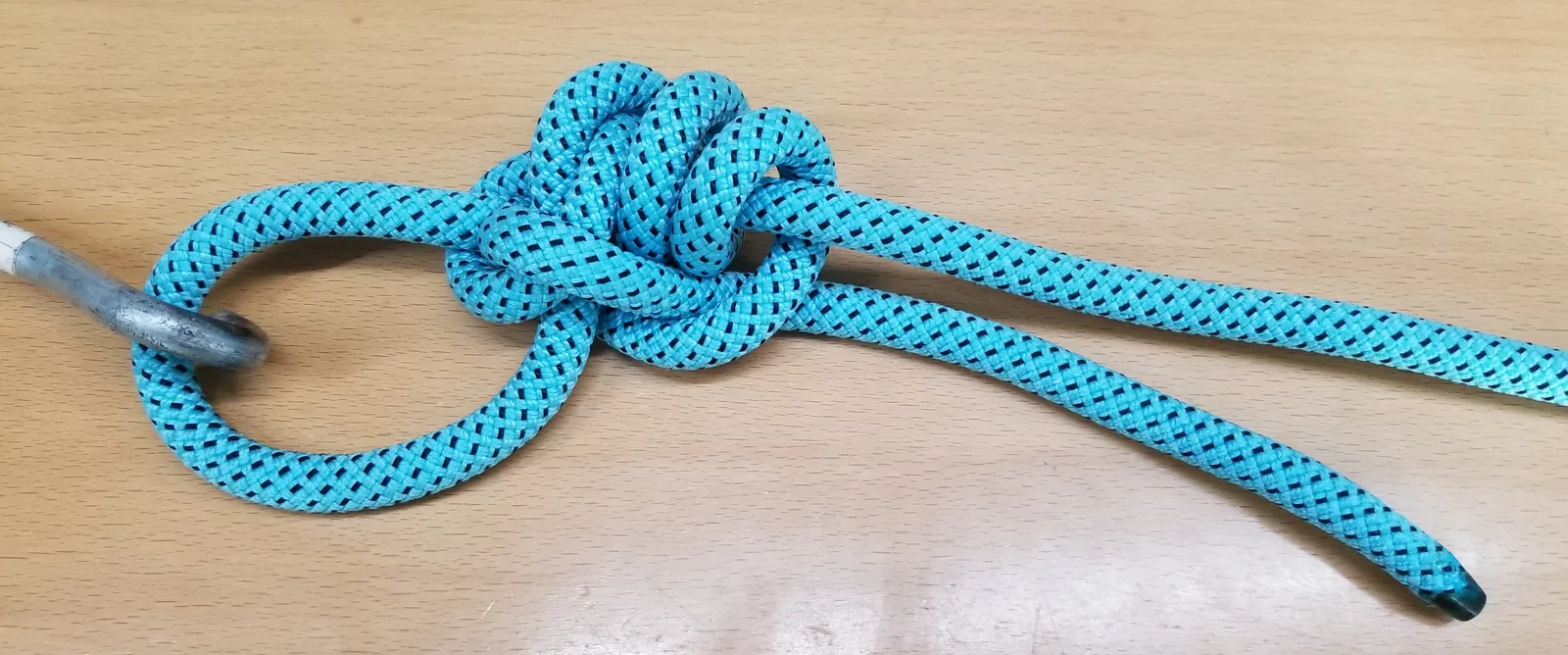
A loop knot ties line to a lure with a small fixed loop through the eye, so the lure swings on the line instead of being pinned by a knot cinched against it. Two are worth knowing for lures, Lefty Kreh’s non-slip loop and the Rapala knot: jerkbaits, walking topwaters, jigs and streamer flies. For a loop in the end of a leader, the one to tie is the perfection loop.
Lefty Kreh’s non-slip loop finishes with the tag pointing at the hook, “so it doesn’t catch grass and other things on the retrieve”. The Rapala knot’s tag points back up the line, and catches more.
What does a loop knot do?
A snug knot such as the Palomar or the improved clinch closes on the eye. The lure then hangs from a fixed point, and every twitch of the rod has to work against the knot. A loop knot leaves a small open loop, and the lure pivots inside it. Because the loop does not grip the lure, it “makes a flexible attachment and allows a more natural action,” as Animated Knots puts it.
That freedom matters most on lures whose action is a side-to-side swing or a fall on slack line. A jerkbait should dart, a popper or walking bait should glide, a jig should fall level.
The second job of a loop is a connection. A fixed loop in the end of a leader joins a matching loop in a fly line or a butt section, loop to loop. The leader then comes off and goes on in seconds, with no knot to tie on the water.
Which lures want a loop?
| Lure | Knot | Why |
|---|---|---|
| Jerkbait, walking topwater, popper | Loop | The side-to-side action needs a free pivot |
| Fluke, swimbait on a jig head | Loop | Falls on slack line and swims level |
| Ned rig, darter head, jig-head minnow | Loop | Tackle Warehouse names all three as loop-knot baits |
| Streamer, Clouser, shrimp fly | Loop | Orvis: the fly moves through a far greater range of motion |
| Crankbait or any lure with a split ring or snap | Snug knot | The ring is already the pivot |
| Swinging-head jig | Snug knot | The hinged head already gives the freedom |
| Bait hooks, circle hooks | Snug knot or snell | No action to free |
The split-ring row answers a common question. Tackle Warehouse’s rule: “Make sure the lure you’re tying a loop knot onto doesn’t have a split ring or a swinging head.” That hardware already gives the lure the freedom a loop knot is for, so a loop on top of it adds a second hinge and nothing else.
Free PDF · Water temperature chart Which fish are biting at today's water temperature?
One reading, and the 16-page chart shows which of 26 fish are spawning, feeding hard or slowing down; for bass, crappie, bluegill and walleye, where they sit and what to throw. Every number sourced.
Enter your email, confirm it with one click, and the PDF is in your inbox. Plus one email a week on what's biting. Unsubscribe anytime. Privacy.
How do you tie the non-slip loop?
Lefty Kreh developed the non-slip loop “during his series of tests to create a strong loop knot”. It went into Practical Fishing Knots, the book he wrote with Mark Sosin. It is a stronger version of the older Homer Rhodes loop, in which the tag is hitched only once around the standing line. Kreh found that the knot keeps most of the line’s rated strength, “so much so that in some of his tests the strand broke rather than the knot.”
- Tie a loose overhand knot in the line, leaving a generous tag; Tackle Warehouse’s loop-knot guide asks for 4 to 5 in (10–13 cm). Leave it open.
- Pass the tag through the eye of the lure, then back through the overhand knot.
- Wrap the tag around the standing line the number of turns in the table below.
- Pass the tag back through the overhand knot once more.
- Size the loop now. “The size of the loop must be adjusted while the turns are still loose. Once tightened the size of the loop is fixed.” Slide the overhand knot toward the eye until the loop is as small as you want it; Tackle Warehouse ties it at about 1/4 to 3/8 in (6–10 mm).
- Wet, seat and trim. Lubricate, then pull the standing line and tag slowly so the wraps close on the overhand knot. Trim the tag close. It finishes facing the hook, which is why it does not pick up weed on the retrieve.
How many turns for your line?
Kreh’s rule runs the opposite way to most knots: the heavier the line, the fewer the turns.
| Line test | Turns |
|---|---|
| 6–8 lb (2.7–3.6 kg) | 7 |
| 8–12 lb (3.6–5.4 kg) | 5 |
| 15–40 lb (6.8–18 kg) | 4 |
| 50–60 lb (23–27 kg) | 3 |
| Over 60 lb (27 kg) | 2 |
Kreh’s table overlaps at 8 lb and has no row for 12–15 lb. Our reading for 14 lb line is the gap between the rows: five turns or four.
How do you tie the Rapala knot?
The Rapala brothers, the Finnish makers of Rapala lures, recommended a loop knot for their minnows. In Kreh’s account, the original “showed one turn around the main line with the tag end then one pass through the Overhand”. Kreh found it weak and added turns, which became his non-slip loop. Years later the Rapala instructions gained extra turns and a final tuck. Kreh tested that version and found the tuck “made it harder to tie and added no strength.”
- Tie an overhand knot in the line, leaving a long tag.
- Pass the tag through the eye and back through the overhand knot.
- Wrap the tag three times around the standing line.
- Pass the tag back through the overhand knot, then through the loop just formed beside it.
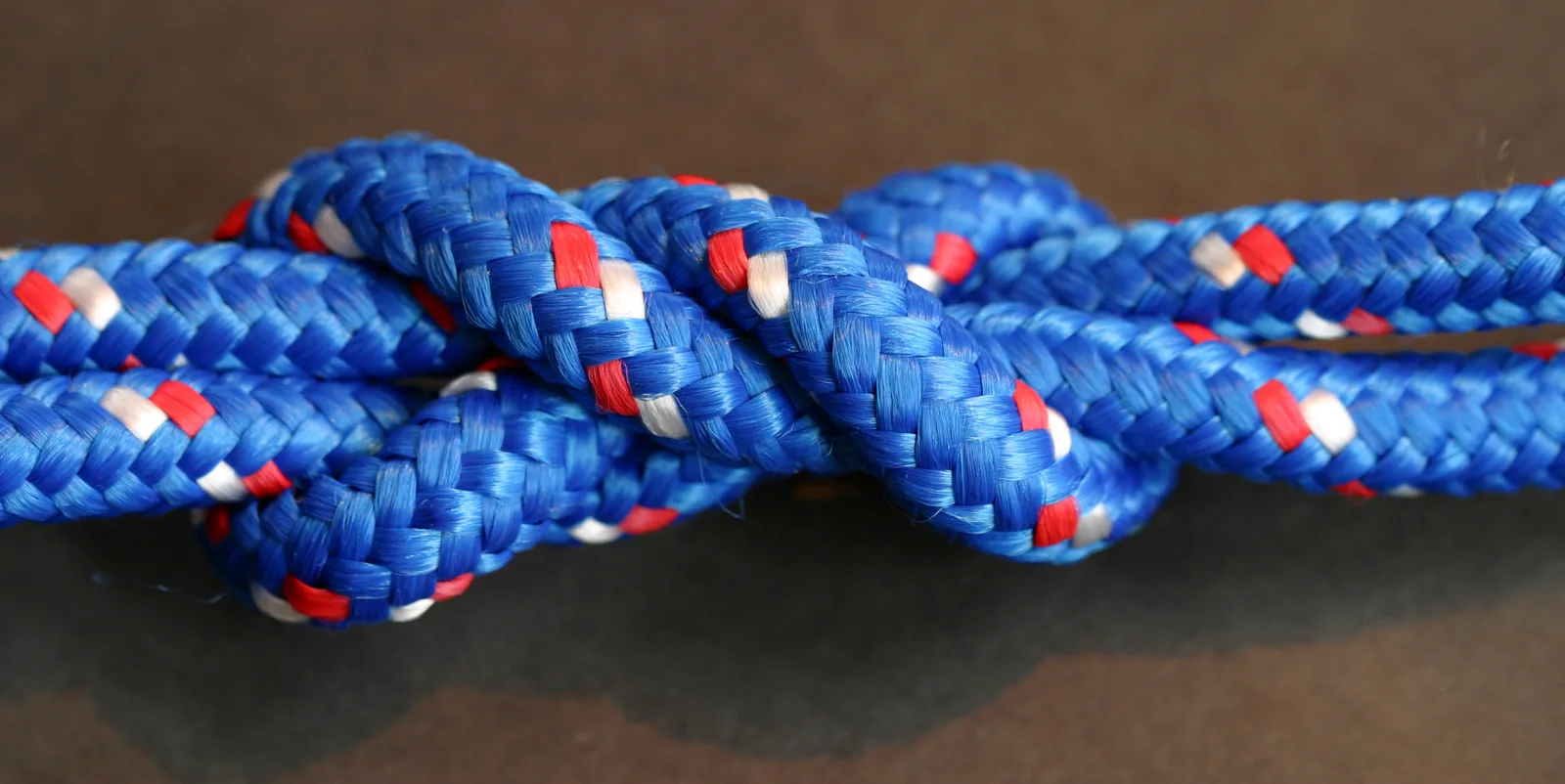
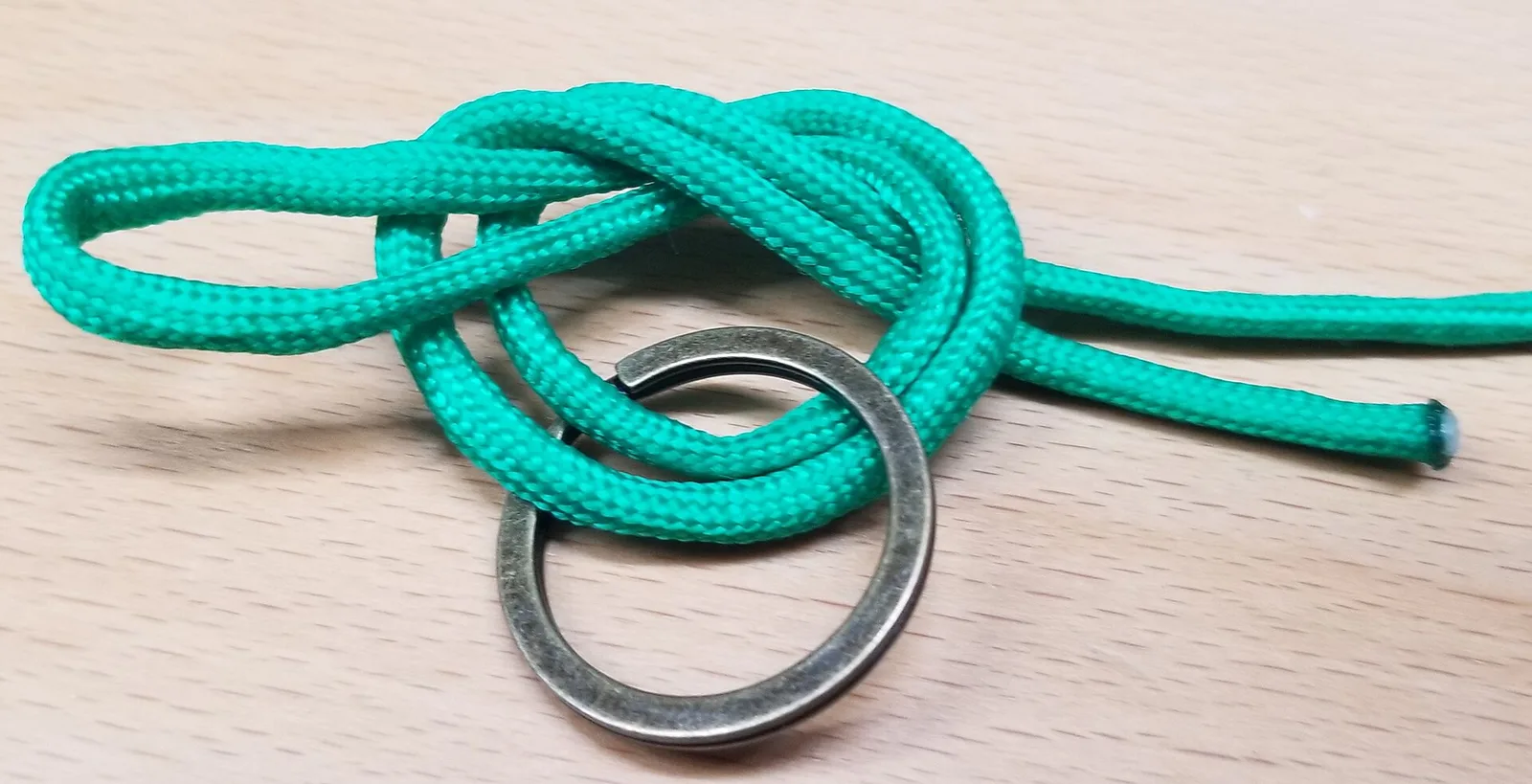
- Lubricate, tighten and trim. The tag finishes facing away from the hook, so it has a greater tendency to catch grass on the retrieve. The photo at the top shows it: tied in rope, the tag lies along the standing line, pointing away from the ring.
How do you tie a loop in a leader?
The perfection loop makes the fixed loop in the end of a leader or tippet, the Angler’s Loop, number 1017 in The Ashley Book of Knots. The loop lines up neatly with the standing end, which is why fly anglers use it on both sides of a loop-to-loop leader change. Two loops, the tag between them, the top loop pulled through the bottom one: that is the whole perfection loop knot.
The quick alternative for a loop in any line is the surgeon’s loop: a doubled bight tied in a double overhand knot, the same way as the surgeon’s join. It is reliable and easy to learn, and it is the loop form of the surgeon’s knot, the join tied the same way.
How do you tie a loop in the middle of the line?
The dropper loop makes a fixed loop in the middle of a line instead of at the end. Animated Knots describes a loop that stands out at right angles to the line: an extra attachment point in a leader or tippet for a second fly, or one of the loops on a multi-hook bottom rig. It can be left long enough to slip a hook straight onto it.
- Make a large loop in the middle of the line.
- Wrap the loop around the crossover point about six times, holding the point where the strands cross.
- Open a hole in the center of the wraps and pass the loop through it.
- Lubricate and pull both ends slowly. The wraps roll over as it closes, and the finished knot sits almost symmetrical on either side of the loop.
Keep the loop fairly short; a long one is more prone to fouling and twisting. Because the loop angles away from the line, it helps the hook avoid tangles.
Which loop knot is strongest?
| Knot | For | Tag points | Published tests |
|---|---|---|---|
| Non-slip (Kreh) loop | Lures, flies | Toward the hook; sheds weed | 83% on 10 lb fluorocarbon (Field & Stream); Salt Strong #2 and its overall pick |
| Rapala knot | Lures | Up the line; catches grass | Salt Strong #1 |
| Figure-8 loop | Lures | No weedless tag | Salt Strong #3, “very close” to the Rapala |
| Perfection loop | Leader ends, loop to loop | At a right angle; the loop lies in line | Salt Strong #4 as a lure loop; lost to the Kreh loop at 19–20 lb (Salt Strong 2017) |
Salt Strong’s 2018 ranking of loop knots to a lure or hook puts the Rapala knot first, the strongest loop knot its author had tested. The non-slip loop is second, “just a tad weaker”, then the figure-8 loop, the perfection loop and the Canoe Man loop. The Canoe Man was “great with traditional mono” but did not hold up nearly as well in fluorocarbon. The ranking gives no pound figures.
A year earlier Salt Strong ran a three-round loop contest on 10 lb PowerPro braid and 30 lb Ande fluorocarbon. It still named the Kreh loop the best overall, “not quite the strongest”. It is easier to tie than the Rapala, and its tag points straight down, toward the lure.
The one published percentage comes from John Merwin’s test for Field & Stream. He tied 10 lb InvizX fluorocarbon to a small Rapala and measured against the line’s actual unknotted strength. The non-slip loop held 83%, a Palomar 82% and a five-turn improved clinch 75%.
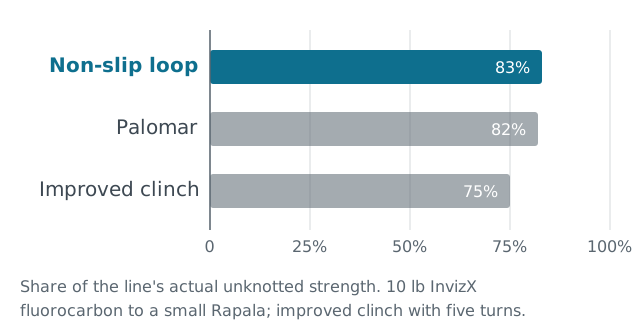
The honest reading: the top three loops are close, and the non-slip loop gives up nothing to a Palomar. Choose by the tag and by how fast you tie it. In grass, the non-slip loop’s downward tag is the one to have. The best fishing knots ranking sets the loop knots against the rest.
Mistakes that cost strength
- Sizing the loop after the knot seats. It cannot be resized once the turns are tight; set it while they are loose.
- Too many turns on heavy line. Kreh’s table drops to three turns at 50–60 lb and two above. More wraps than that is the wrong direction.
- Seating it dry. Every one of these knots is lubricated before it is pulled tight; fluorocarbon most of all.
- Tying the loop in the braid. Kreh’s turns are given for monofilament line tests, and Salt Strong’s contest tied its loops in a fluorocarbon leader. On braid, tie the loop in the leader and join the two with an FG knot.
When to use something else
Tie a Palomar for anything with a split ring, snap or swinging head. When you want a loop that swings on the cast and cinches down under a fish, leave a uni knot as a sliding loop. The knots hub has the full table by line and job.
Free PDF · 16 pages
Know what's biting before your first cast
The Water Temperature Fishing Chart. Take one water temperature reading, find it on the chart, and see which of 26 freshwater fish are spawning, feeding hard or slowing down. Six pages go deeper: bass, crappie, bluegill, walleye, catfish and trout. For your phone and the tackle box.
- Where they sit and what to throw at every temperature: bass, crappie, bluegill and walleye. Catfish, one by one. Trout: the 68 °F line where you stop, and where they hide
- A bass that drops 3 ft feels more pressure change than the biggest cold front: the front day by day, and what to throw on each
- The three thermometer mistakes that make a reading lie (the first one is the surface)
- The 26-fish chart: who's spawning, feeding hard or slowing down at your reading
The chart's numbers come from state fish and wildlife agencies and fisheries research: 61 sources, each listed on the site.
Enter your email, confirm it with one click, and the PDF is in your inbox. Plus one email a week on what's biting. Unsubscribe anytime. Privacy.
Related
Section guide
Fishing Knots: Which Knot for Which Line and JobFishing knots by job and line: the five to learn first (Palomar, uni, FG, surgeon's, loop), the knot for braid, and what three pull tests measured.
 Arbor Knot: How to Tie Line to a Reel Spool (and Why Braid Slips)
How to tie the arbor knot on a spinning, baitcast, spincast or fly reel, why it slips on braid, and the backing or tape that stops it.
 FG Knot: How to Tie It, and What the Pull Tests Show
The FG knot step by step: 12–15 pairs of wraps on a tight braid, the hitches, the setting pull, and what four named pull tests measured.
 Surgeon's Knot for Fishing: How to Tie It, and How Strong It Is
The fishing surgeon's knot in five steps, from 4–6 in of overlap to all four ends pulled, and what three pull tests measured: up to 64.6% of 50 lb braid.
 Uni Knot: One Knot for Hooks, Leaders, Snells and Loops
How to tie the uni knot in six steps, the turns for mono, fluorocarbon and braid, its six uses from hook to reel spool, and the pull tests.
 Palomar Knot: How to Tie It, How Strong It Is, When Not to Use It
How to tie the Palomar knot in six steps, its pull-test scores (89% on 10 lb mono, 82% on fluorocarbon), the double version for braid, and when to skip it.
Sources
- Animated Knots, Non-slip mono knot (Lefty Kreh's loop: origin, turns table, tag direction)
- Animated Knots, Rapala knot (steps, Kreh's history, the tag and grass)
- Animated Knots, Perfection loop knot (Ashley's Angler's Loop, ABoK #1017)
- Animated Knots, Surgeon's loop knot
- Salt Strong, The best fishing knots of all time, ranked (loop knots to lure or hook, May 2018)
- Salt Strong, Best loop knot for fluorocarbon leader (Kreh, perfection, Rapala and Canoe Man loops, October 2017)
- Popular Science / Field & Stream, The strongest fishing knots (John Merwin; percentages of unknotted line strength)
- Animated Knots, Dropper loop knot (a loop in the middle of the line)
- Tackle Warehouse, How to tie a loop knot (no split ring or swinging head; 1/4–3/8 in loop, 4–5 in tag; walking baits, Ned rigs, darter heads)
- Orvis, Non-slip loop knot (the fly moves through a greater range of motion)
- Wired2Fish, A simple loop knot (Jonathan Newton)