 By
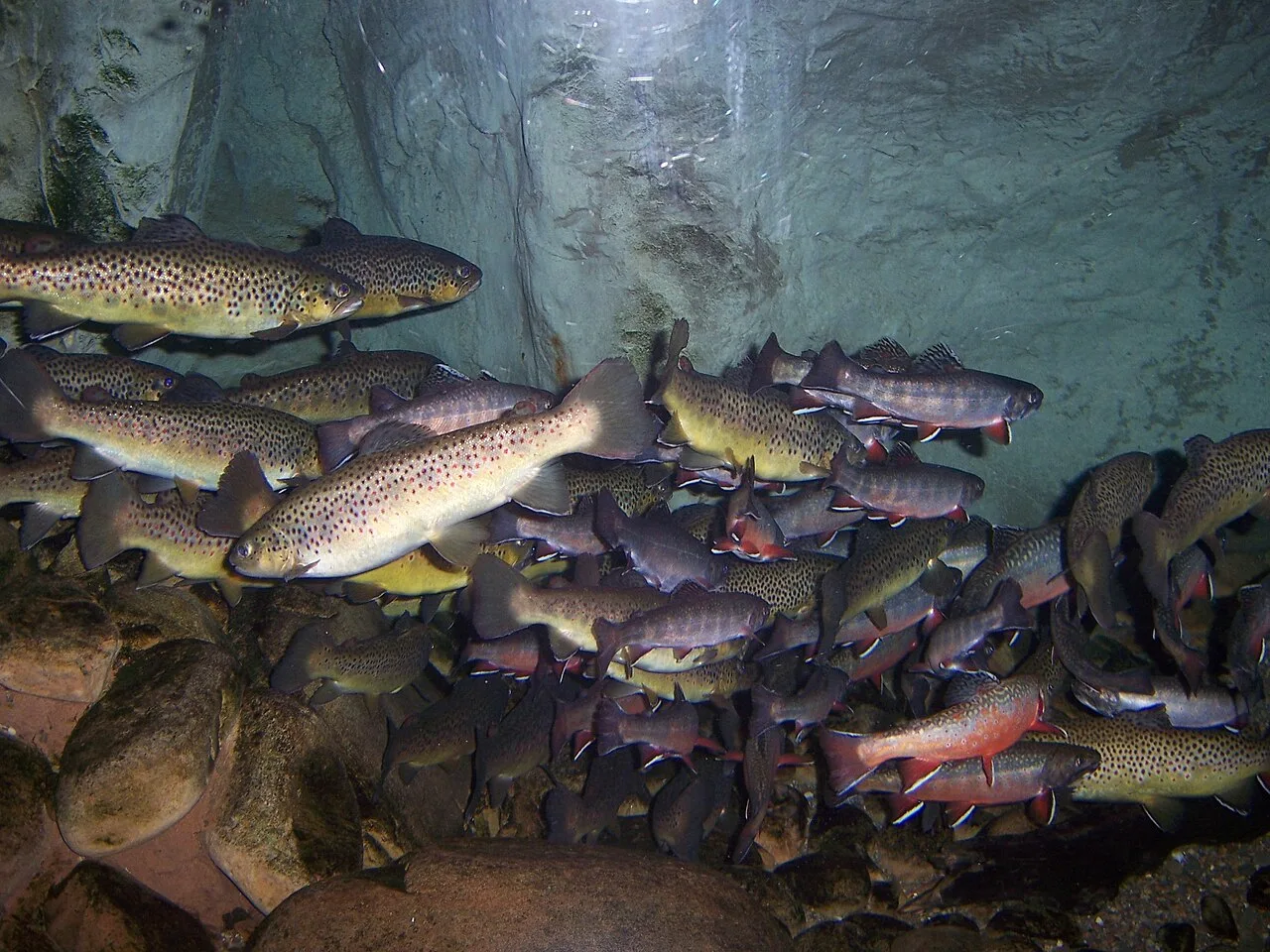
Anglers in the US catch more than 20 kinds of trout. All of them sit in the salmon family, Salmonidae, in one of three groups: the Pacific trout (rainbow, cutthroat and their kin), the brown trout from Europe, and the chars, such as the brook trout and the lake trout. The spots sort them fastest: black spots on a lighter body mean a true trout; pale, pink or red spots on a darker body mean a char. After that, one mark per fish settles the rest.
Maine’s lakes hold the only intact native Arctic char in the lower 48 states. When they were found in the Rangeley Lakes, anglers called them blueback trout.
How many types of trout are there?
There is no single count of trout species, because “trout” is a common name, not a branch of the family tree. The table holds 21 fish that American anglers call trout: wild species and subspecies, the chars, the hatchery hybrids and one color strain. The number keeps moving. In November 2023 the joint names committee of the American Fisheries Society and the American Society of Ichthyologists and Herpetologists split the cutthroat into four species, so the list of species grew without a single new fish being caught. The trout hub covers the season, the water and the tackle for the common ones.
| Fish | Group | Native range | The mark that tells it apart |
|---|---|---|---|
| Rainbow trout | Pacific trout | Pacific slope, Alaska to Baja California | Pink band down the side, small black spots over the whole tail |
| Steelhead | Pacific trout (sea-run rainbow) | Coastal rivers, Alaska to Southern California | A rainbow back from the sea: larger and bright silver |
| Redband trout | Pacific trout (rainbow subspecies) | Inland basins of Oregon, Washington, Idaho, Montana, Nevada and California | Larger, rounder spots than a rainbow; parr marks kept into adulthood |
| California golden trout | Pacific trout (rainbow subspecies) | South Fork Kern River and Golden Trout Creek, California | About ten parr marks on golden sides |
| Little Kern golden trout | Pacific trout (rainbow subspecies) | Little Kern River basin, California | Like the golden, with more spots on the head and below the lateral line |
| Apache trout | Pacific trout | White Mountains of eastern Arizona | A black spot either side of the pupil, like a mask |
| Gila trout | Pacific trout | Gila and San Francisco drainages, New Mexico and Arizona | Gold sides turning copper on the gill covers |
| Coastal cutthroat | Pacific trout (cutthroat) | Prince William Sound, Alaska, to the Eel River, California | Red-orange slash under the jaw; dense spots that cover the whole tail |
| Westslope cutthroat | Pacific trout (cutthroat) | Upper Missouri and Columbia basins | Jaw slash; small spots toward the tail, few on the front half below the lateral line |
| Rocky Mountain cutthroat (Yellowstone, greenback and kin) | Pacific trout (cutthroat) | Interior West, from Yellowstone south to northern New Mexico | Jaw slash; medium-large black spots massed toward the tail |
| Lahontan cutthroat | Pacific trout (cutthroat) | Lahontan Basin of Nevada, California and Oregon | Jaw slash; medium, roundish spots across the body and head |
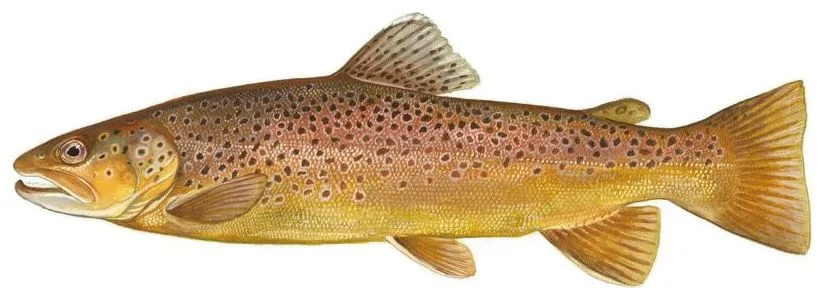
| Brown trout | Atlantic trout (Salmo) | Europe, northern Africa and western Asia | Black and red spots with pale halos; few or no spots on the tail |
| Brook trout | Char | Eastern Canada and the East, south to northern Georgia, west to Minnesota | Wavy, wormlike marks on the back, red spots in blue halos, white-edged lower fins |
| Lake trout | Char | Alaska to Nova Scotia and the Great Lakes | Deeply forked tail, large pale spots on gray |
| Bull trout | Char | Alaska to northern California; in the lower 48, Montana, Idaho, Oregon, Washington and northern Nevada | Pale spots about the size of its pupil, unusually large head and mouth |
| Dolly Varden | Char | Pacific coast from Washington around Alaska to the Arctic coast of Canada | More and smaller spots than an Arctic char, a shallower tail fork |
| Arctic char | Char | Scattered lakes of Alaska, from the Brooks Range to Kodiak and the Kenai Peninsula; lakes and ponds of Maine | Fewer, larger spots and a deeper fork than a Dolly Varden |
| Tiger trout | Hybrid: brown ♀ × brook ♂ | Hatchery | Bold maze pattern over the whole body |
| Splake | Hybrid: lake × brook | Hatchery | Brook trout colors, but a slightly forked tail |
| Cutbow | Hybrid: rainbow × cutthroat | Wild, wherever rainbows meet cutthroats | Cutthroat marks with rainbow spotting, such as spots on top of the head |
| Palomino trout | Rainbow color strain | Hatchery, West Virginia, 1955 | Solid yellow-gold, no parr marks and few or no spots |
The ranges are where each fish evolved. Rainbows and browns have been stocked far beyond them, brook trout have been stocked into the West, and lake trout into lakes west of the Rockies, so a fish’s address only narrows the list.
How do you tell a trout from a char?
Look at the spots before anything else. A true trout, from the rainbow to the brown, wears black spots on a lighter body. A char reverses it: its spots are pale, pink, red, orange or light yellow on a darker body. Oregon’s wildlife agency sums up the two differences that matter to an angler. Char have those light spots, and char prefer colder water than most trout.
There is a mark inside the mouth too. Alaska’s biologists note that chars lack teeth on the shaft of the vomer, the bone in the roof of the mouth. You will rarely need it, because the spots and the vermiculation, the wavy, wormlike marks on a brook trout’s back, settle most fish at a glance.
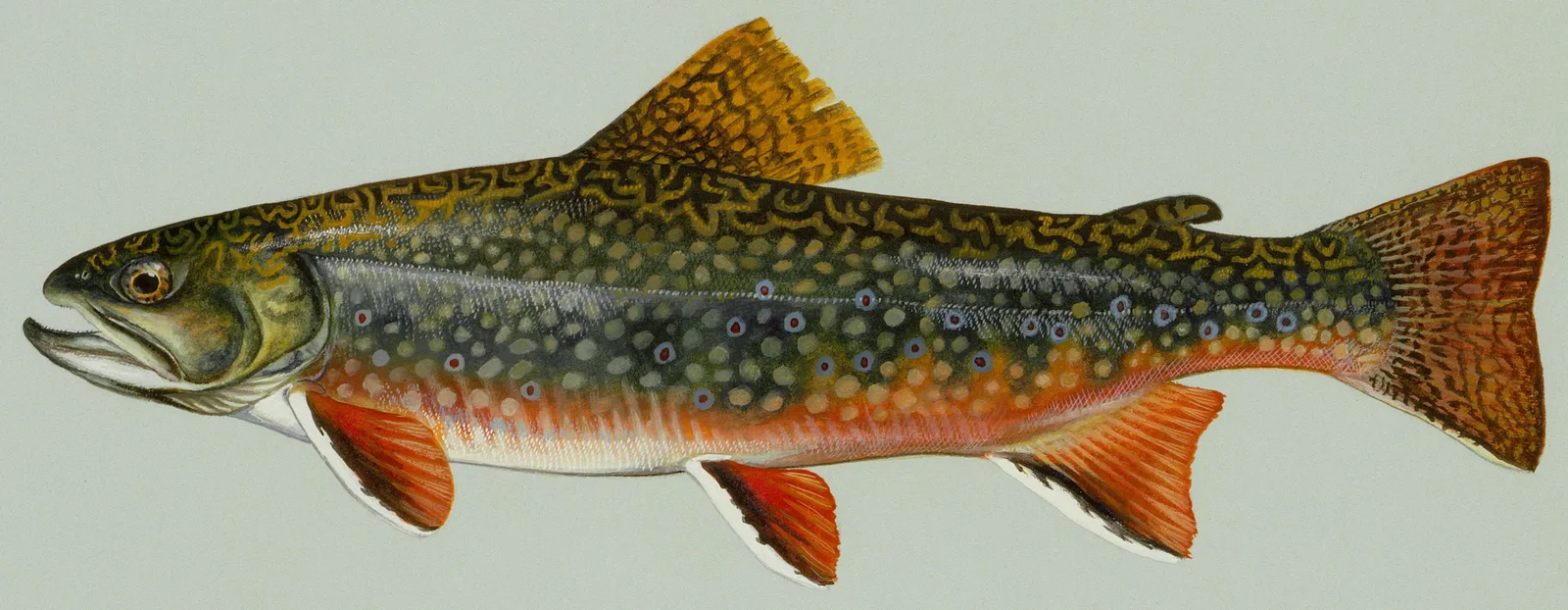
A brook trout, a char: pale marks on a dark body, the reverse of a rainbow’s black spots on a light one. Illustration: Duane Raver, U.S. Fish and Wildlife Service (public domain).
The chars are the genus Salvelinus, and five of them swim in American water. Two are among the most famous “trout” of all: the brook trout, the native char of the East, and the lake trout, the char of big, deep, cold lakes.
Free PDF · Water temperature chart When do trout bite?
One water temperature reading, and the 16-page chart tells you who's spawning, who's feeding hard, where they sit and what to throw. 26 fish, every number sourced.
Enter your email, confirm it with one click, and the PDF is in your inbox. Plus one email a week on what's biting. Unsubscribe anytime. Privacy.
What are the Pacific trout?
The Pacific trout are the genus Oncorhynchus, which they share with the Pacific salmon, and nearly every native trout of the West belongs here.
The rainbow is the root of a whole cluster. A steelhead is the same species: a rainbow that went to sea and came back to spawn, typically larger than the rainbows that stayed in fresh water. The redband trout of the desert basins is a rainbow subspecies; Oregon’s agency says that a native, unstocked rainbow caught in a river east of the Cascades is most likely a redband. The Kern River drainage of California holds three more rainbow subspecies: the California golden trout, the Little Kern golden trout and the Kern River rainbow. The golden keeps about ten parr marks, the dark ovals of a young trout, all its life.
The Apache trout of Arizona and the Gila trout of New Mexico and Arizona are close relatives and easy to confuse. The Apache’s mask through the eye settles it.
The cutthroats are named for the red-orange slash in the fold under each side of the lower jaw. Since 2023 they are four species:
- Coastal cutthroat: from Alaska to northern California, including sea-run fish that feed in estuaries for a few months a year.
- Westslope cutthroat: the native of western Montana and Idaho; Montana’s field guide says only genetic testing makes the ID certain.
- Lahontan cutthroat: the desert-lake fish of the Great Basin, and the largest of them.
- Rocky Mountain cutthroat: the group that takes in the Yellowstone, Bonneville, Colorado River, Rio Grande and greenback cutthroats.
The cutthroat trout page lists every form with its range and federal status. When a rainbow and a cutthroat interbreed, the offspring is a cutbow, and it is fertile. In Montana’s westslope water, spots on top of the head and on the front of the body below the lateral line are the sign of rainbow blood.
Is the brown trout a Pacific trout?
No. The brown trout belongs to Salmo, the genus of the Atlantic salmon, and it is the only Salmo trout in American water. Its native range is Europe, northern Africa and western Asia. It reached the US in 1883 and has since been stocked across the country.
It is also the easiest trout to tell from a rainbow or a cutthroat. Oregon’s biologists point to the tail: a brown has few or no spots there, while rainbows and cutthroats carry them. Its body spots are black and red, each with a pale halo.
Which chars do anglers call trout?
Besides the brook and lake trout, three more chars live in the US, most of them in the Northwest and Alaska.
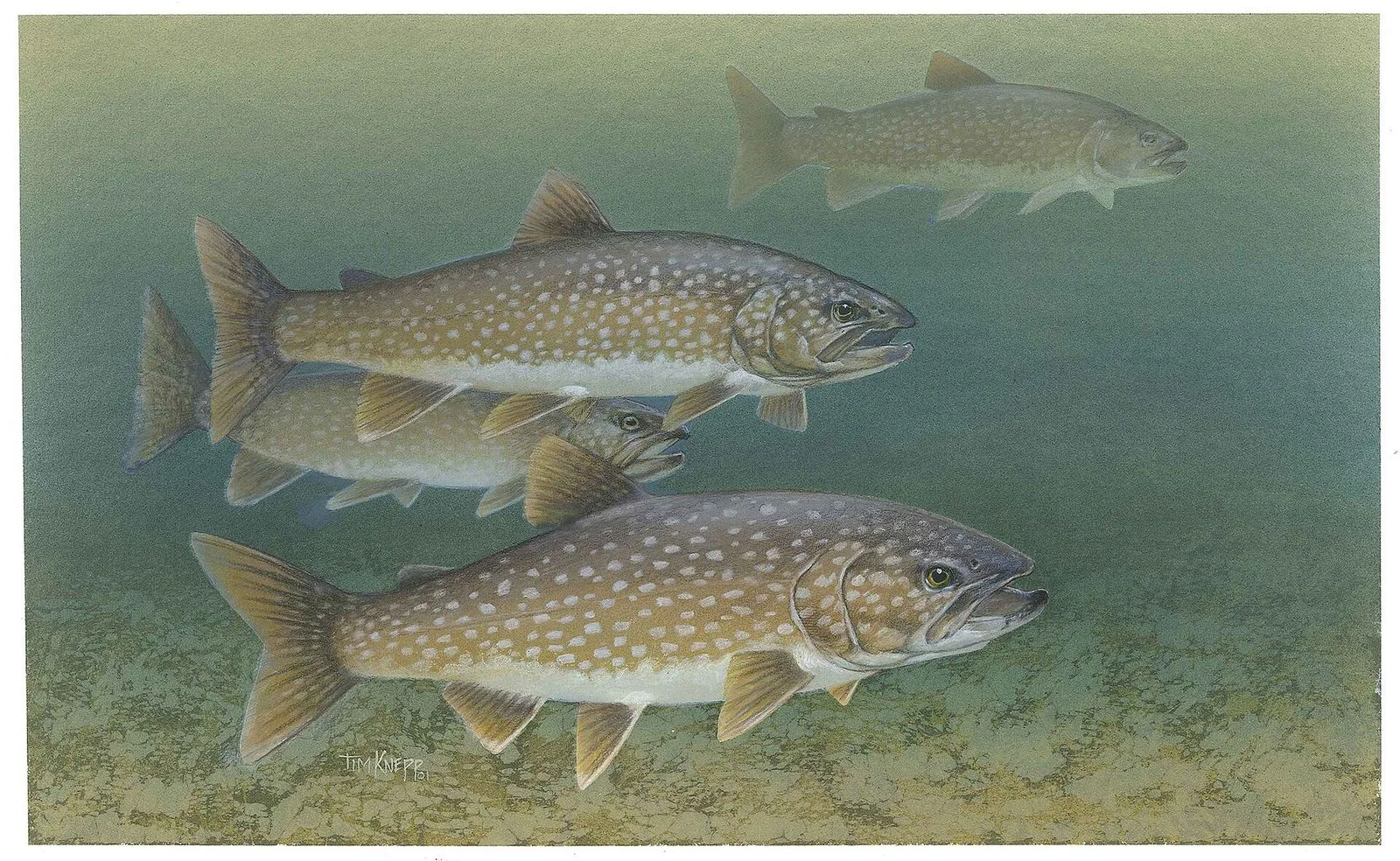
Lake trout, the char of big, deep, cold lakes: large pale spots on gray and a deeply forked tail. Illustration: Tim Knepp, U.S. Fish and Wildlife Service (public domain).
The bull trout is the char of the Northwest, with pale spots about the size of its pupil and a head and mouth that the Washington Department of Fish and Wildlife calls unusually large. It is federally threatened in the lower 48. In Washington most populations may not be fished for, and a bull trout hooked in water closed to bull trout fishing must be unhooked and released without being taken out of the water. Montana adds a reason it matters: introduced brook trout crowd bull trout out, and the two interbreed into sterile hybrids.
The Dolly Varden is the most widely distributed salmonid in Alaska. Its range reaches south to Washington, where it lives mainly in the Olympic Peninsula and Puget Sound drainages. The Arctic char looks so much like it that Alaska’s own biologists say a definite ID can take close examination of several body structures. The rule of thumb from the Alaska Department of Fish and Game: the Arctic char has fewer and larger spots, a more deeply forked tail and a narrower wrist in front of the tail.
The Arctic char also lives far from Alaska. It reproduces in 14 Maine lakes and ponds, two of them populations the state moved there by live transfer. The fish there often run small, about 6 in (15 cm) on average in some lakes, and Maine’s biologists count a charr over 2 lb as a fish of significant size.
What are hybrid trout?
A hybrid trout is a cross of two species, and most are made on purpose in a hatchery.
- Tiger trout: a female brown trout crossed with a male brook trout. It is sterile and carries the brook trout’s vermiculation exaggerated into a maze over the whole body.
- Splake: a lake trout crossed with a brook trout. Maine’s biologists say it is very hard for the untrained eye to tell from a brook trout; the slight fork in the tail, from the lake trout parent, is the clue.
- Cutbow: rainbow × cutthroat, which forms in the wild wherever stocked rainbows reach cutthroat water. It is fertile, which is why it puts pure cutthroat populations at risk.
- Bull × brook: a wild cross where introduced brook trout share streams with bull trout. Montana’s field guide notes the hybrids are sterile.
The palomino is not a hybrid at all. It is a color mutation of the rainbow, bred from a single mottled fingerling that turned up at a West Virginia hatchery in 1955, and first released in 1963.
Which trout is most like salmon?
The steelhead. It is a rainbow trout that does what a salmon does: it hatches in a river, grows at sea and comes back to fresh water to spawn. Many steelhead then return to the ocean and come back to spawn again in later years. The coastal cutthroat makes a shorter trip, staying near its home river’s estuary. That is the line between trout and salmon that matters in the water and on the plate.
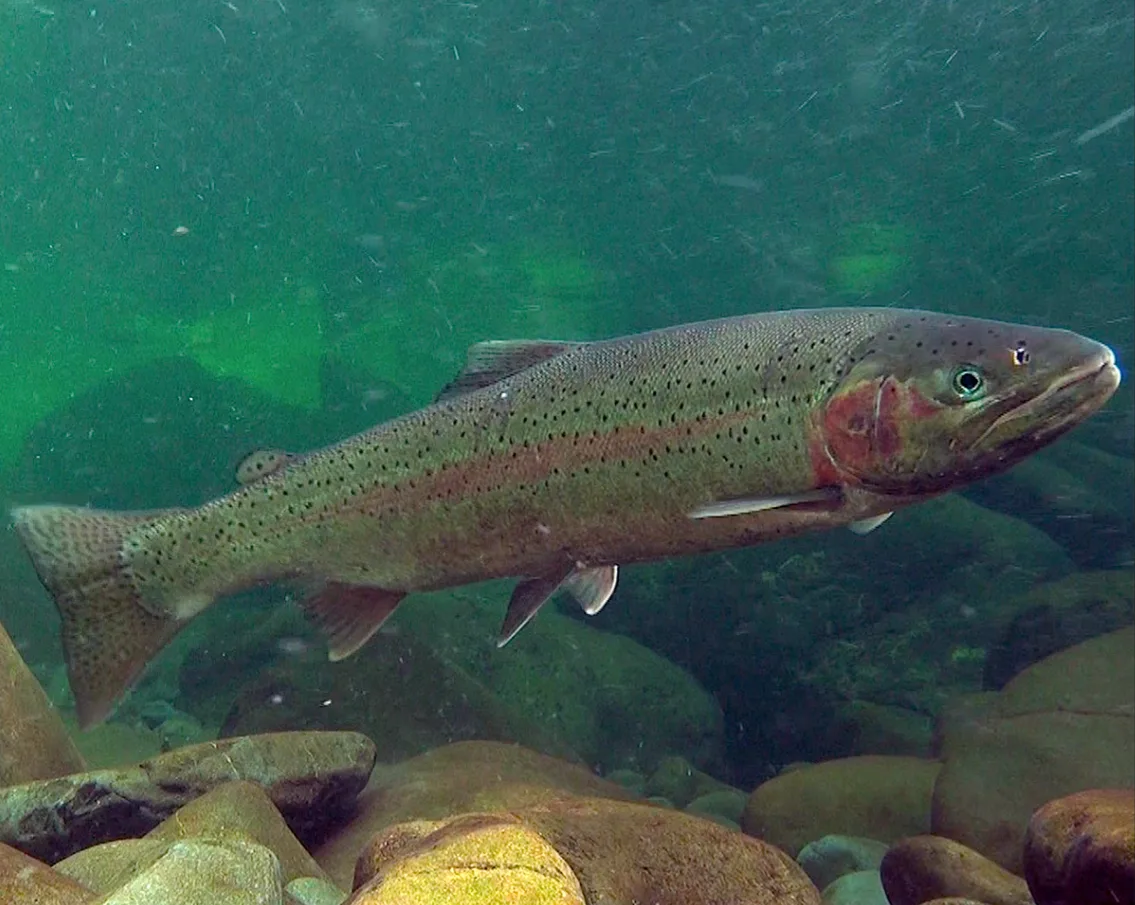
A steelhead back in its river: the same black spots and pink band as any rainbow, on a fish that grew up at sea. Photo: U.S. Fish and Wildlife Service (public domain).
What other names do trout go by?
Local names cause half the confusion at the bait shop. The lake trout is mackinaw in Oregon and togue in Maine, and Lake Superior names its forms: the lean laker you troll and jig, the deep, oily siscowet, and the humper and redfin that USGS researchers measured at Isle Royale. Maine’s Arctic char go by blueback trout and Sunapee trout. A palomino is sold as a golden rainbow, and it is not the California golden trout. In Maine, speckled trout means the brook trout: it is the “sp” in splake. On the Gulf Coast, the same name means the spotted seatrout, a saltwater member of the croaker family and no relation to any trout.
Which trout are the rarest?
The rarest are Western natives squeezed by stocked trout, hybridization and lost habitat. The Little Kern golden trout was listed as threatened in 1978. The Gila trout and the Lahontan, Paiute and greenback cutthroats are threatened too. The Apache trout is the comeback: in 2024 it became the first sportfish and the first trout delisted because it recovered.
Rare often means protected. Colorado makes it illegal to take a greenback cutthroat, and New Mexico keeps two Gila trout streams catch-and-release, single hook and artificial lure only. Read the state’s rules for a native-trout water before you fish it, and keep a fish you will release in the water; how to hold a trout shows the grip that does the least harm.
What are the most common types of trout?
For most anglers the list comes down to five: the rainbow, the brown, the brook trout, the cutthroat and the lake trout. Which one is on your line depends on where you are. In a stocked pond or a put-and-take stream, it is most likely a rainbow, then a brown: Pennsylvania’s 2026 stocking alone is about 2.3 million rainbows, 698,000 browns and 128,000 brook trout. In a small, cold Appalachian creek, a fish with wavy, wormlike marks on its back is a wild brook trout. In a deep northern lake, a forked tail means a lake trout. West of the Rockies, look under the jaw for the cutthroat’s slash, and in Alaska, count the spots to sort a Dolly Varden from an Arctic char.
Wild or stocked? Virginia’s Department of Wildlife Resources says no field mark settles it every time, but there are good clues. Recently stocked trout often have eroded fins, the tips of the tail and other fins worn down from rubbing against hatchery tanks and each other. Stocked fish are usually less colorful too. A wild brown often has a red-tipped adipose fin, the small fleshy fin behind the dorsal, and a wild brook trout brilliant orange flanks and lower fins. Fins heal, though: a fish stocked as a fingerling looks as wild as any after six to 10 months, so the water you caught it in counts as well.
Once you know the fish, trout fishing covers how to catch it through the season.
Free PDF · 16 pages
Know what's biting before your first cast
The Water Temperature Fishing Chart. Take one water temperature reading, find it on the chart, and you know which of 26 freshwater fish are feeding today, where they are and what to throw. For your phone and the tackle box.
- The 26-fish chart: who's spawning, feeding hard or shut down at your reading
- Where they sit and what to throw at every band: bass, crappie, bluegill, walleye, catfish and trout
- The best hours at your reading, the cold front day by day, and the spawn calendar from ice-out to midsummer
- The three thermometer mistakes that make a reading lie (the first one is the surface)
Every number from state fish and wildlife agencies and fisheries research: 61 sources, all on the site.
Enter your email, confirm it with one click, and the PDF is in your inbox. Plus one email a week on what's biting. Unsubscribe anytime. Privacy.
Related
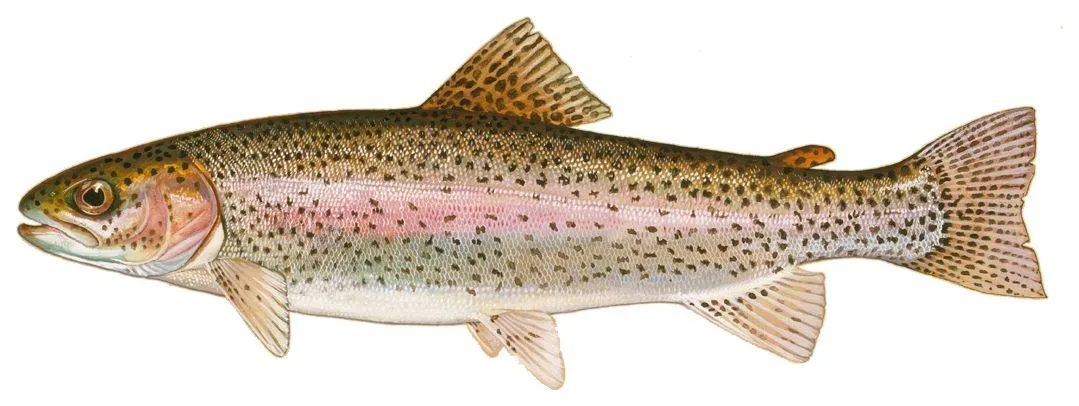
Section guide
Trout: The Fish, Where They Live, When They Bite and How to Catch ThemTrout are cold-water fish of the salmon family. The five you'll catch, the 68 °F line, when each spawns and how to catch them; every type on its own page.
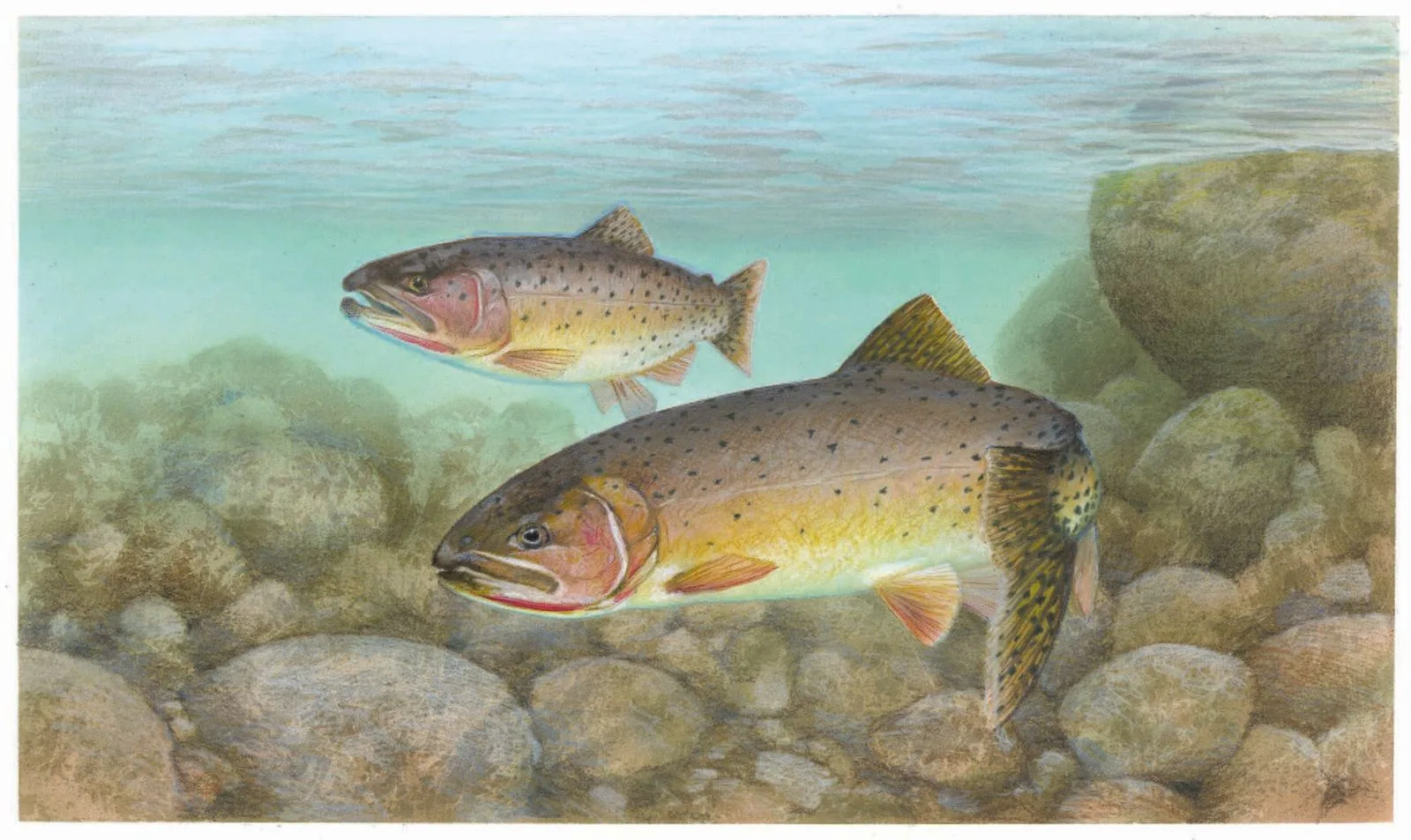 Cutthroat Trout: Subspecies, Identification and How to Fish
Cutthroat trout: how to tell one from a rainbow or cutbow, each subspecies with its range, size, spots and status, how to fish them, the 41 lb record.
- Lake Trout: The Deep-Water Char That Lives 60 Years
Lake trout are deep-water chars that live 60 years: how to tell one apart, where they hold by season, the 72 lb record and the Great Lakes comeback.
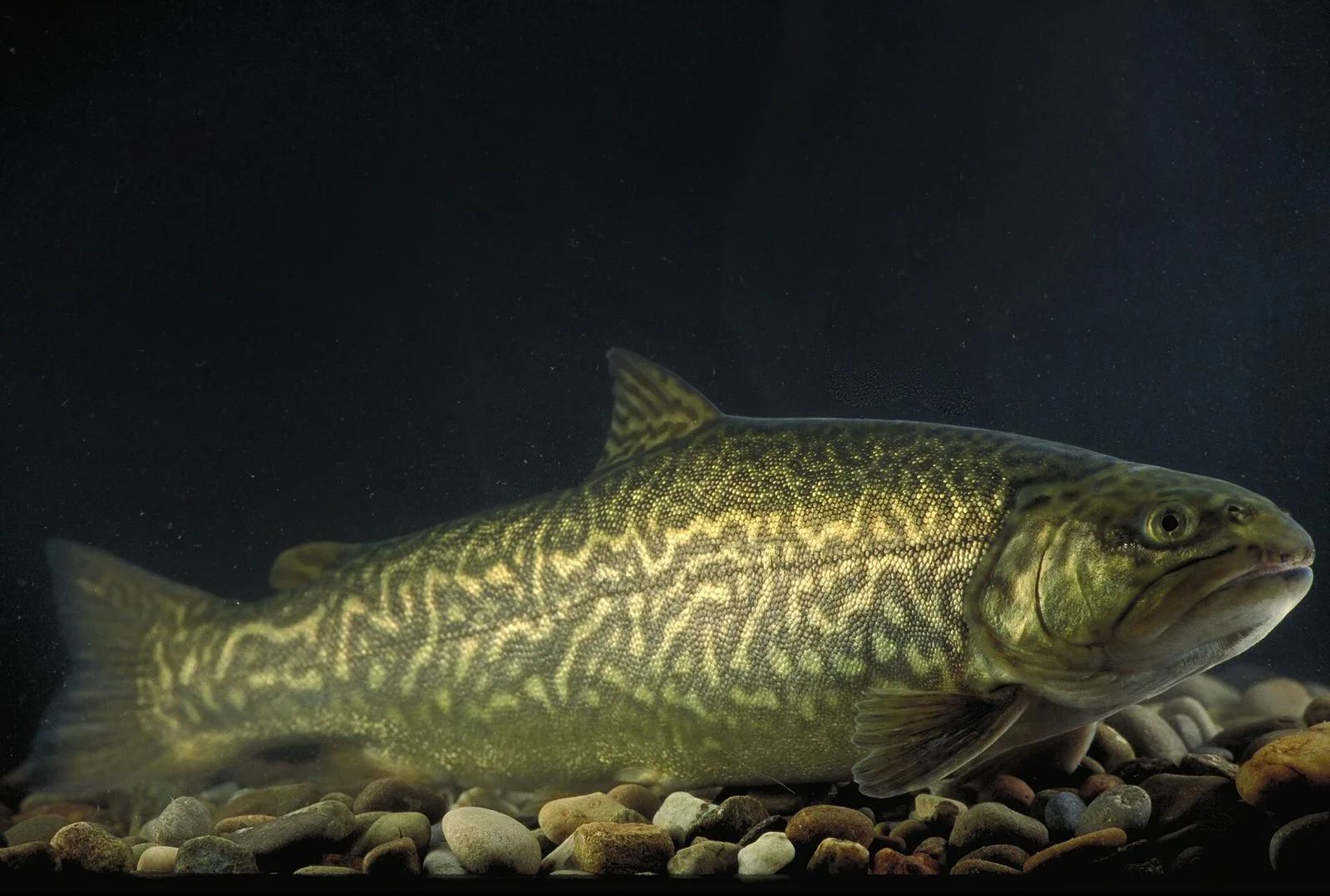 Tiger Trout: The Sterile Brown x Brook Hybrid Explained
Tiger trout are sterile brown x brook hybrids from hatcheries: how they are made, why states from Oregon to Virginia stock them, and the 27 lb 6 oz record.
 Trout Fishing for Beginners: Where, When and What to Use
Trout fishing peaks at 55–65 °F, and most beginners catch stocked fish first. Where trout hold in streams and lakes, the one outfit to buy, and when to go.
 Brown Trout: Identification, History, Habits and Records
Brown trout from the agency data: how to tell one from a rainbow or brook, the 1883 import, night feeding, the fall spawn and the 44 lb record.
- Brook Trout: The Char That Marks America's Coldest Water
The brook trout is a char, not a trout: how to tell it apart, where it still lives, why it lost 28% of its range, and the 1915 record.
Sources
- USGS Nonindigenous Aquatic Species, Rainbow Trout (Oncorhynchus mykiss) - Species Profile
- NOAA Fisheries, Steelhead
- Oregon Department of Fish and Wildlife, Oregon's trout species
- Western Native Trout Initiative, Redband Trout
- Western Native Trout Initiative, California Golden Trout
- Western Native Trout Initiative, Little Kern Golden Trout
- U.S. Fish & Wildlife Service, Apache Trout (Oncorhynchus apache)
- U.S. Fish & Wildlife Service, Removal of Apache Trout from Endangered Species List
- Western Native Trout Initiative, Gila Trout
- New Mexico Department of Game and Fish, Gila Trout Recovery & Angling
- Van Orden et al., Phylogeny of Cutthroat Trout (Oncorhynchus clarkii) Based on Full Mitochondrial Genomes With Comments on Species Delimitation and Taxonomy (PMC)
- Page, Bemis, Dowling et al. 2023, Common and Scientific Names of Fishes From the United States, Canada, and Mexico, 8th edition (American Fisheries Society Special Publication 37)
- Montana Field Guide, Westslope Cutthroat Trout
- Montana Field Guide, Rocky Mountain Cutthroat Trout
- Western Native Trout Initiative, Lahontan Cutthroat Trout
- Wikipedia, Lahontan cutthroat trout
- Western Native Trout Initiative, Coastal Cutthroat Trout
- Oregon Department of Fish and Wildlife, cutthroat trout (sea-run timing, bait rule on coastal streams)
- Western Native Trout Initiative, Paiute Cutthroat Trout
- Western Native Trout Initiative, Greenback Cutthroat Trout
- Wikipedia, Cutbow
- USGS Nonindigenous Aquatic Species, Brown Trout (Salmo trutta) - Species Profile
- ITIS, Report: Salmo
- USGS Nonindigenous Aquatic Species, Brook Trout (Salvelinus fontinalis) - Species Profile
- U.S. Fish & Wildlife Service, Lake Trout (Salvelinus namaycush)
- Michigan State University Extension, siscowet lake trout: everything you need to know
- USGS, Life history variation among four lake trout morphs at Isle Royale, Lake Superior
- U.S. Fish & Wildlife Service, Bull Trout (Salvelinus confluentus)
- Western Native Trout Initiative, Bull Trout
- Washington Department of Fish & Wildlife, Bull trout
- Montana Field Guide, Bull Trout
- Western Native Trout Initiative, Dolly Varden
- Alaska Department of Fish and Game, Arctic Char Species Profile
- Western Native Trout Initiative, Arctic Char
- Maine Department of Inland Fisheries and Wildlife, Arctic Charr: Species Information
- Maine Department of Inland Fisheries and Wildlife, Splake: Species Information
- Maine IFW, lake trout (togue) species information
- Maine IFW blog, The Great (Splake) Debate
- Virginia DWR, Tiger Trout in Virginia
- West Virginia DNR, West Virginia Gold Rush: a history of the golden rainbow trout
- Texas Parks and Wildlife, Spotted Seatrout (Cynoscion nebulosus)
- Colorado eRegulations, Statewide Bag & Possession Limits - Colorado Fishing (greenback cutthroat: illegal to take)
- Virginia DWR, Wild or Hatchery Trout? (Steve Reeser, 2020)
- Pennsylvania Fish and Boat Commission, 2026 Trout Stocking Schedules Now Available!