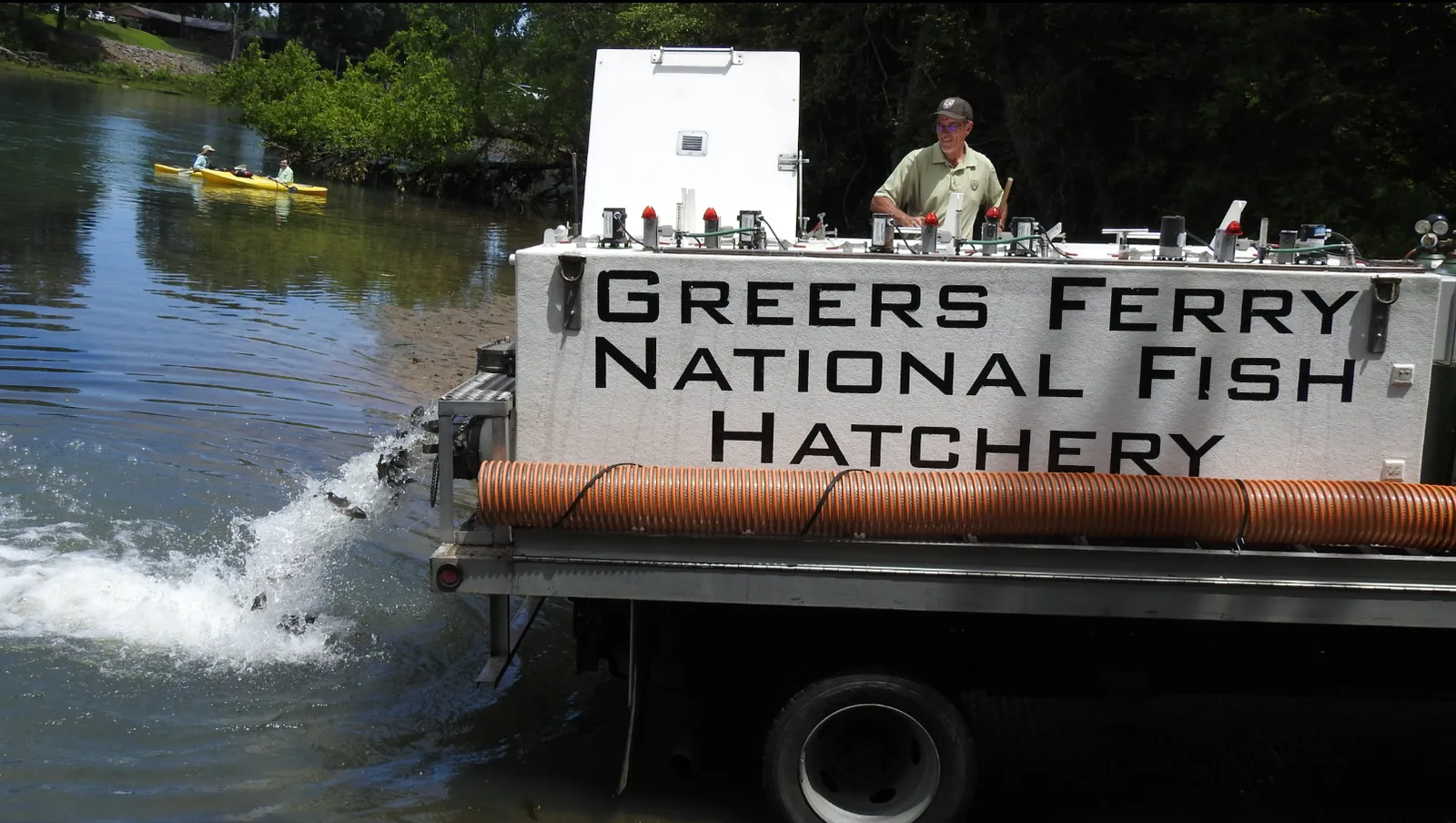
Trout fishing is cold-water fishing: trout feed hardest when the water is 55–65 °F (13–18 °C). Everything else follows from that number, from where they hold to when you go and what you throw. Most anglers catch their first trout from a hatchery truck; Pennsylvania alone stocks about 3.2 million adult trout a year, and Oregon more than 7 million. One light spinning outfit and a stream thermometer cover the first season.
A freshly stocked rainbow runs downstream from where the truck let it go and looks for the deep water below a run. Trout Magnet guide Jeff Smith’s advice: start there.
Stocked or wild: which trout are you fishing for?
A hatchery trout, a stocker in angler shorthand, grew up in a concrete raceway eating pellets thrown from above. Pennsylvania’s go into 684 streams and 130 lakes and average 11 inches and just over half a pound. For its first weeks in a stream a stocker schools, cruises and eats almost anything that looks like food. That is why a dough bait or a bright jig catches so many of them.
Where it goes after the release depends on the species, as Leland’s guides describe it:
- Rainbows run downstream to the deep water below a run.
- Brook trout drop down too, but hold in shallower water at the head of a run, near a current break.
- Browns look for deep pools. As they grow they become what the guides call nomadic ambush predators that favor dark water.
A wild trout was born in the stream and has spent its life avoiding herons and otters. It is shy, it spooks at a shadow, and it eats what the river brings: insect larvae drifting in the current, then minnows and crayfish as it grows. Wild trout want smaller lures, lighter line and a quieter approach.
The two Leland guides put the difference in one line. They work downstream when fishing for stocked trout and upstream for wild ones. The likely reason: a wild trout faces into the current, so an angler working upstream stays behind it. On pressured stocked water, Wired2Fish’s advice points the same way: stand well back from the bank and fish very small lures on light line.
Most anglers keep a few stocked trout to eat, which is what they are stocked for; many release the wild ones. The catch-and-release page has the handling.
What do you need for trout?
If you buy one outfit, buy the first row.
| Fishing | Rod | Line | Start with |
|---|---|---|---|
| Ponds, lakes and easy streams (the one outfit) | 6 ft (1.8 m) light spinning, 1000-size reel | 4–6 lb (1.8–2.7 kg) mono | 1/16 oz (1.8 g) spinners, size 8 bait hooks, a bobber, PowerBait, worms |
| Small, brushy streams | 4 ft 6 in–6 ft (1.4–1.8 m) ultralight | 2–4 lb (0.9–1.8 kg) | Small spinners, worms and other small natural baits |
| Trout Magnet drift, stocked streams | 6–9 ft (1.8–2.7 m) light, fast tip | 2 lb (0.9 kg) | A 1/64 oz jig under an E-Z Trout Float |
| Big rivers | 7–12 ft (2.1–3.7 m) spinning | 4–6 lb (1.8–2.7 kg) | Spinners, spoons, small crankbaits |
| Fly fishing | 9 ft (2.7 m) 5-weight | 4X–5X tippet | Nymphs, a few dry flies, a Woolly Bugger |
| Steelhead | 7 ft 6 in–8 ft 6 in (2.3–2.6 m) spinning | 6–8 lb (2.7–3.6 kg) | No. 3 and No. 4 Mepps Aglia spinners |
The one-outfit row is Oregon’s beginner’s shopping list. It calls for a lightweight 6 ft spinning or spincasting rod with a matching reel and 4–6 lb monofilament. Add a handful of 1/16 oz spinners, size 8 bait hooks, a couple of bobbers, a jar of PowerBait, #5 split shot and worms. Oregon names no reel size; a 1000-size spinning reel is the usual match for that rod.
The fly row is Oregon’s too: a 9 ft 5-weight, weight-forward line, 7½ ft 4X leaders and spools of 4X and 5X tippet. The small-stream line is Mepps’s rating for its smallest spinners, 2–4 lb; big rivers keep Oregon’s 4–6 lb. The steelhead line tests are Mepps’s recommendation, 6 lb in summer and 8 lb in winter. The Trout Magnet row is a system of its own for stocked streams.
Light line matters more in trout fishing than anywhere else. The Leland guides point out that 6 lb line drags a tiny lure through the current far less naturally than 2 lb line. Both of them say they have landed trout over 10 lb on 2 lb test.
The line and rods hubs explain the choices, and the hook for each bait is in the hook size chart. For the lure box, the lures hub covers the types, and the Rooster Tail page the 1/16 oz spinner that is the trout standard.
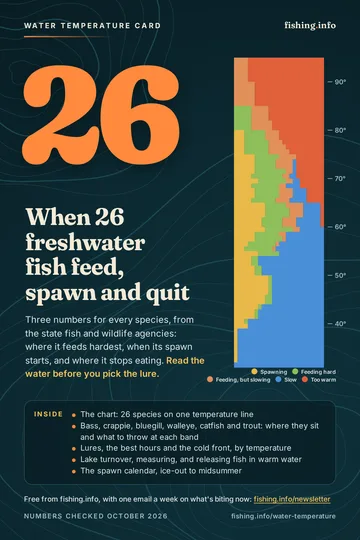
Free card: what 26 species do at your water temperature
Plus one email a week on what's biting now. No sales pitches. Privacy.
Where do trout hold in a stream?
In moving water a trout holds still and lets the current bring the food. It wants three things at once: a place out of the full force of the current, food drifting past, and cover overhead or nearby. That puts it behind rocks, where the surface looks bumpy; along steep or undercut banks; and in deeper, slower pools. Read the water in this order:
- Riffles, the shallow broken water over stones. Trout move up into them as the water warms.
- Runs, the deeper, smoother water below a riffle. The workhorse of any stream.
- Seams, the line where fast water meets slow. Follow the bubbles; where they bunch up and slow down, the food collects. The guides’ shorthand: the foam is home.
- Pocket water, the calm cushion in front of and behind a boulder, a log or a weed bed.
- Pools and tailouts, the deep slow water and the shallowing lip at its bottom end. Stocked fish stack up in pools; big browns hunt tailouts at last light.
Where do trout hold in a lake or pond?
In lakes and ponds, trout cruise instead of holding. Look near weed beds, logs and rocks, and at inlets, where a feeder stream brings cool water and food. In summer, trout go deeper for cooler water. Oregon’s guide names spring and fall as the best time on low-elevation lakes, because the water is cool and that is when most lakes are stocked.
How warm is too warm?
Trout are cold-blooded, and the thermometer runs their day. The bands below come from the trout water temperature page.
| Water | What trout do | What you do |
|---|---|---|
| Below 42 °F (6 °C) | Slow, deep, in soft water | Fish midday, slowly, near the bottom; small baits and flies |
| 42–55 °F (6–13 °C) | Waking up; rainbows spawn at 42–50 °F (6–10 °C) | Slow retrieves and drifts on the bottom, below the redds, never over them |
| 55–65 °F (13–18 °C) | Feeding hardest | Fish all day; cover water with spinners and spoons |
| 65–68 °F (18–20 °C) | Brook trout stressed; others slowing | Fish early; land fish fast |
| Afternoon above 68 °F (20 °C) | Rainbows stressed; browns hold to 70 °F (21 °C) | Fish dawn only; quit the moment the water touches 68 °F |
| 70 °F (21 °C) at dawn | Trout crowd the coldest seams | Leave the trout alone; find a tailwater or spring creek |
Take the reading in the current, not in a backwater, and take it again in the afternoon. A stream that reads 64 °F at dawn can pass 68 °F by three o’clock.
When is the best time of year for trout?
- Late winter: stocking starts. In Pennsylvania in 2026 the trucks began the week of Feb. 16. Stocked trout waters stayed closed from then until 8 a.m. on opening day, April 4, except on the statewide Mentored Youth Trout Day, March 28, and on waters in the year-round program. Many states work the same way; others stock year-round.
- Spring: the best trout fishing of the year for most anglers. Opening day and the weeks after it put the most stocked fish in front of the most people. Wild streams fish well as the water climbs through the 50s. Rainbows and cutthroats spawn in spring.
- Summer: fish at dawn and in the evening, and move to water that stays cold: tailwaters below deep dams, spring creeks, and high-elevation streams and lakes. In lakes, go deeper.
- Fall: the second best season. Lakes cool and are often stocked again. Brown and brook trout spawn, browns from September to December, keying on the tails of pools where water wells up through the gravel. West Virginia’s biologists ask anglers to learn to spot the redds, the pale patches of cleaned gravel, and leave them alone: fish around them and never wade through one.
- Winter: small lures and flies in slow water, fished slowly in the warmest hours. Tailwaters and spring creeks stay open and fishable.
Arkansas shows how a tailwater works. The Greers Ferry National Fish Hatchery trucks rainbows into the Little Red River below Greers Ferry Dam, where water released from the bottom of the lake keeps the river cold. The White River below Bull Shoals Dam works the same way, and the Norfork National Fish Hatchery, the largest trout hatchery in the country, restocks the tailwaters below Norfork and Bull Shoals dams.
For the daily clock, the best time of day page applies the temperature ladder, scaled down to hours.
Your first day, step by step
- Pick a stocked water and check the schedule. State agencies publish stocking schedules online; Pennsylvania’s can be searched by county. Go in the first days or weeks after a stocking.
- Check the regulations for that water: the season, the daily limit, and whether it is artificial-lures-only or catch-and-release.
- Walk downstream from the stocking point and look for the first deep, slower water below a run. Stocked rainbows stack up there.
- Keep low and quiet. Stand back from the edge, wear dull clothes, and do not cast your shadow over the water you are about to fish.
- Cast a 1/16 oz spinner slightly upstream and across. Reel in the slack, let the current swing it, then retrieve just fast enough to feel the blade turn. For browns, Mepps says never fish downstream, always upstream or across.
- If the spinner draws no strikes in ten minutes, slow down. Drift a worm or a PowerBait nugget with enough split shot to tick within a few inches of the bottom, or fish a Trout Magnet under a float. The bobber rig is built step by step on fishing for beginners.
- Set the hook with a smooth lift, not a jerk, and play the fish on the reel’s drag. Two-to-four-pound line breaks when you horse a fish.
- Decide before you land it whether it is a keeper. If it goes back, keep it in the water, wet your hands, hold it without squeezing and back the hook out with forceps.
Do you need a license for trout?
Yes. Every state sells a fishing license online through its fish and wildlife agency. In Oregon a general license is all a trout angler needs; Pennsylvania adds a trout permit to the license, so check your state before the first trip. Age rules vary: in Oregon, anglers 12 to 17 need a juvenile license and children under 12 fish free.
The regulations matter more in trout fishing than in any other freshwater fishing, because they change by the stretch of stream: bait bans, single-barbless-hook rules, size limits and seasons that close for the fall spawn.
When a spinning rod is no longer enough, the fly row in the table is the next step; the trout hub has every species.
Free download
The water temperature card
Read your water temperature and the card tells you who is spawning, who is feeding and what to throw. 26 species, 16 pages, for your phone and the tackle box.
Plus one email a week on what's biting now. No sales pitches. Privacy.
Related
Section guide
Trout: The Types of Trout and How to Tell Them ApartThe types of trout anglers catch, from rainbow and brown to brook and lake trout (two are chars): the marks that identify each, spawn seasons, records.
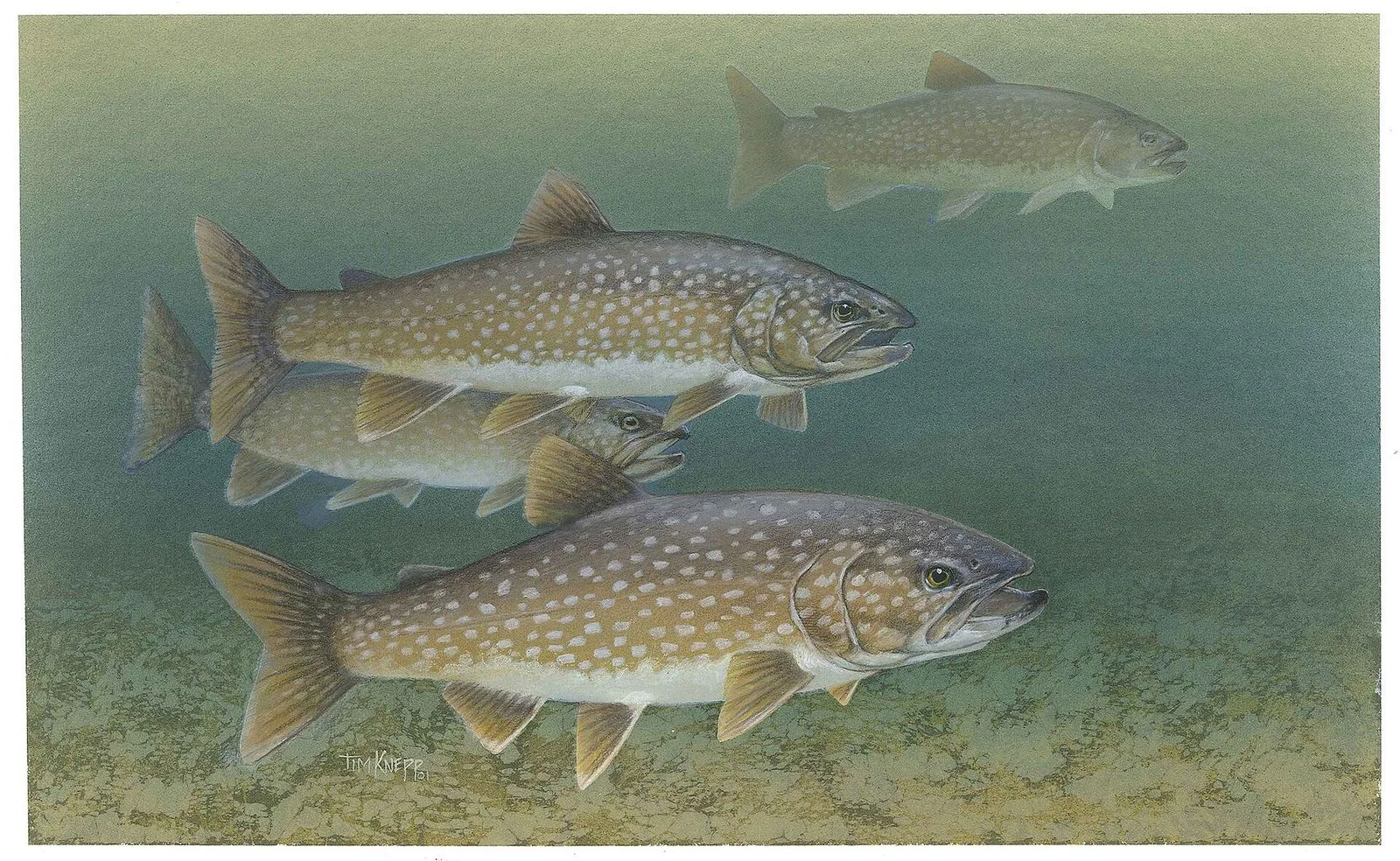 Lake Trout: The Deep-Water Char That Lives 60 Years
Lake trout are deep-water chars that live 60 years: how to tell one apart, where they hold by season, the 72 lb record and the Great Lakes comeback.
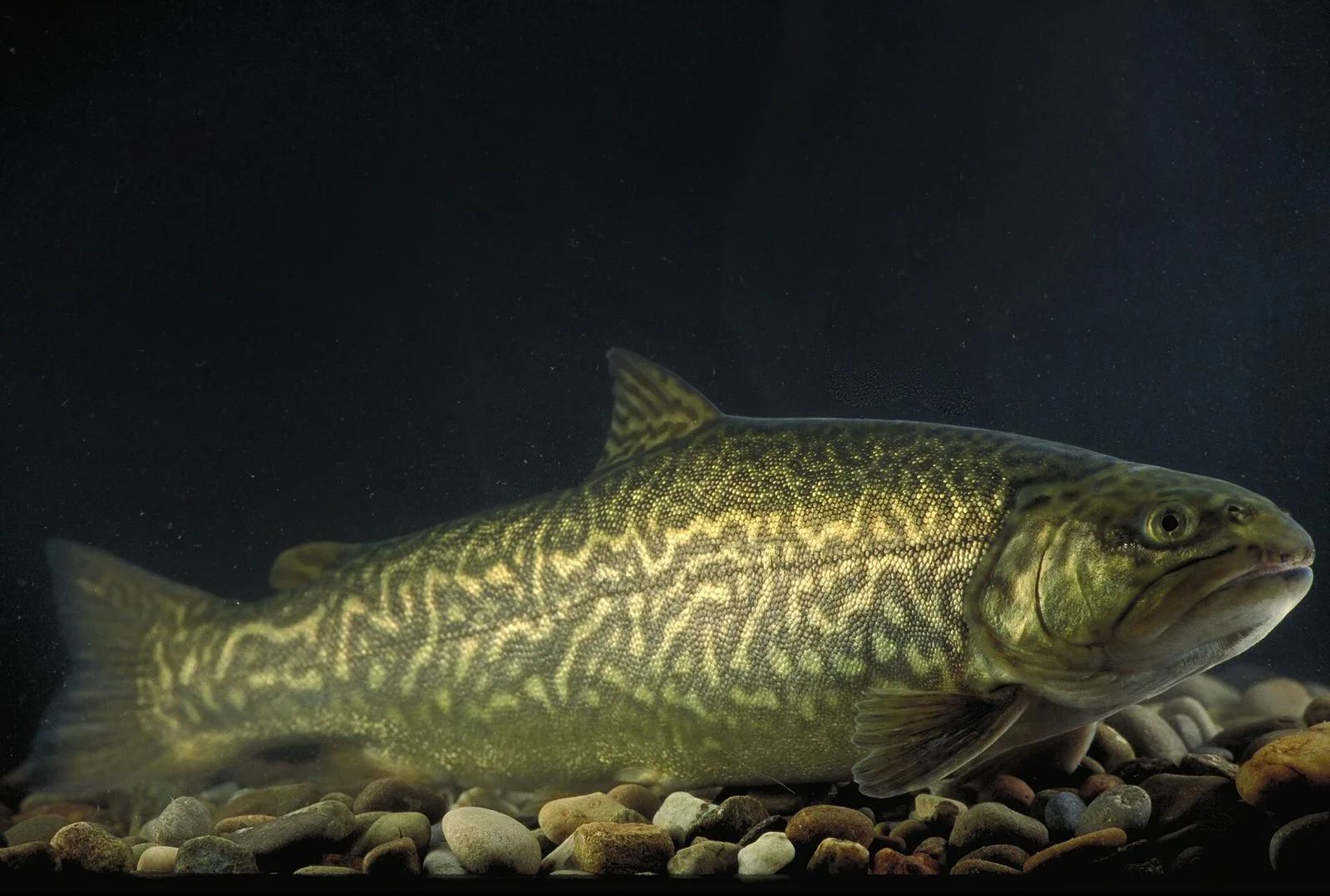 Tiger Trout: The Sterile Brown x Brook Hybrid Explained
Tiger trout are sterile brown x brook hybrids from hatcheries: how they are made, why states from Oregon to Virginia stock them, and the 27 lb 6 oz record.
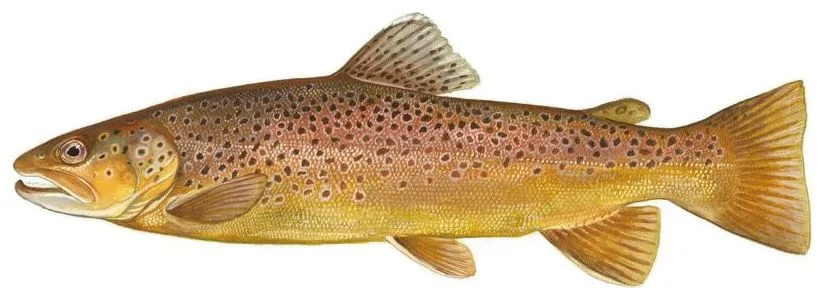 Brown Trout: Identification, History, Habits and Records
Brown trout from the agency data: how to tell one from a rainbow or brook, the 1883 import, night feeding, the fall spawn and the 44 lb record.
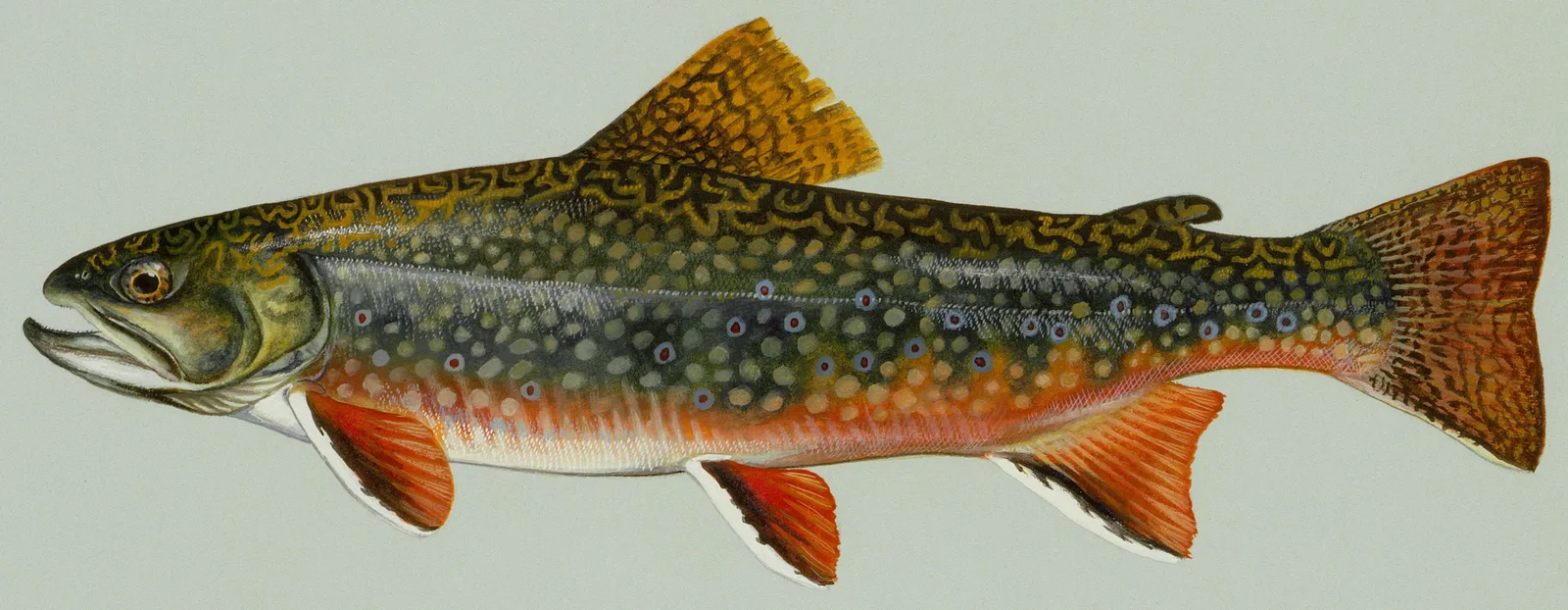 Brook Trout: The Char That Marks America's Coldest Water
The brook trout is a char, not a trout: how to tell it apart, where it still lives, why it lost 28% of its range, and the 1915 record.
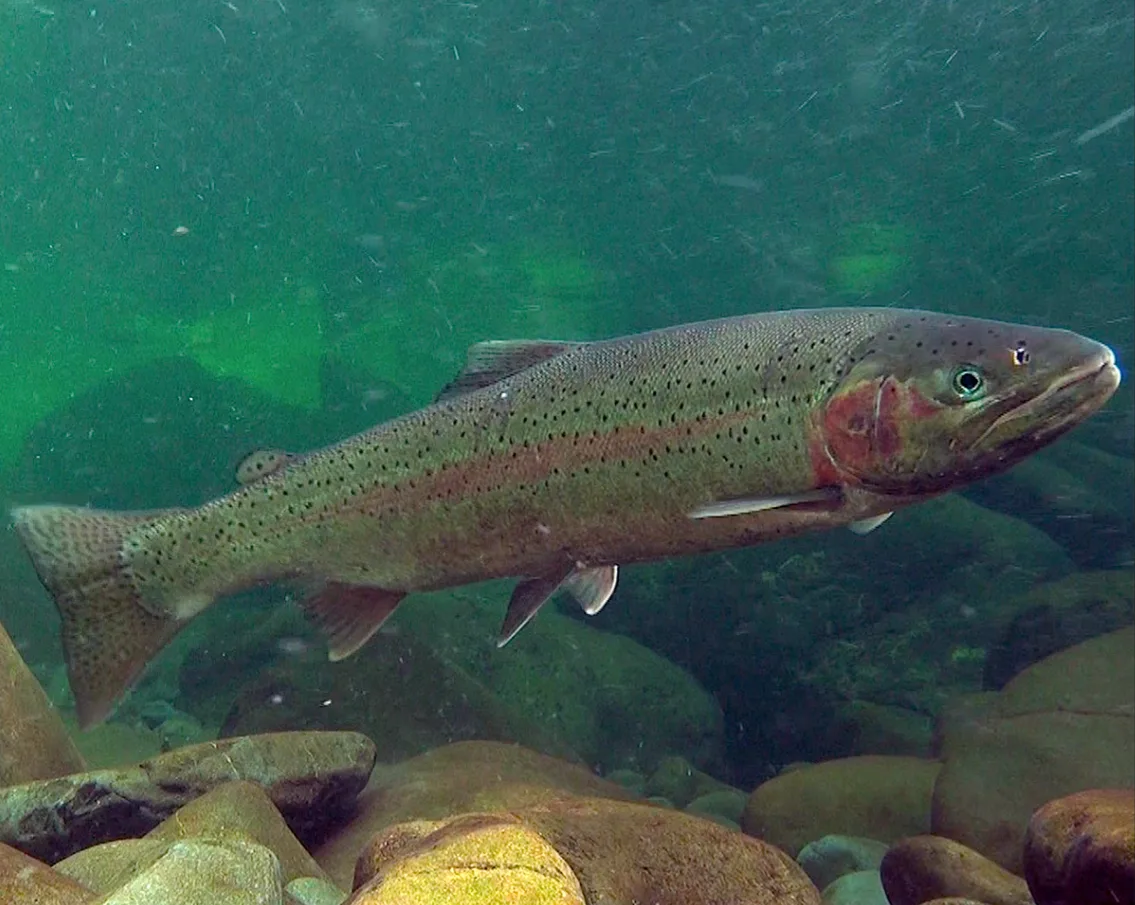 Steelhead Trout: The Rainbow That Goes to Sea
Steelhead trout are rainbows that run to sea or a Great Lake and come back to spawn, often more than once. Runs, the ESA listings, Great Lakes fish, records.
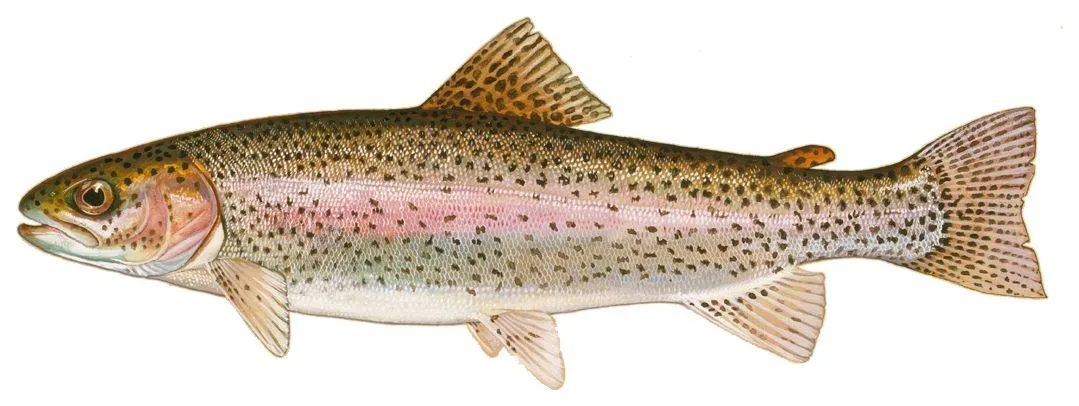
- Rainbow Trout: Identification, Range, Spawning and Record
Rainbow trout from the agency data: how to tell one from a steelhead, cutthroat or brown, the temperatures that matter, spawning, and the 48 lb record.
Sources
- Oregon Department of Fish and Wildlife, How to fish for trout
- Pennsylvania Fish and Boat Commission, 2026 trout stocking schedules now available
- Leland's Lures (Trout Magnet), Trout Fishing 101: best tips to catch trout quickly and easily
- Wired2Fish, Trout fishing 101: how to catch trout
- Mepps, Trout fishing with Mepps Aglia spinners
- Leland's Lures (Trout Magnet), Trout fishing: the system, rods and reels
- West Virginia DNR, brown trout (fall spawn and redds)
- U.S. Fish and Wildlife Service, Greers Ferry NFH stocking trout in the Greers Ferry Dam tailwaters
- USFWS, Norfork National Fish Hatchery (largest US trout hatchery, tailwater restocking) (archived copy)
- Trout Magnet, product page (1/64 oz jig heads)
- Mepps, Aglia and Dressed Aglia (sizes and line tests)
- Pennsylvania Fish and Boat Commission, Buy a fishing permit (trout permit)