 By
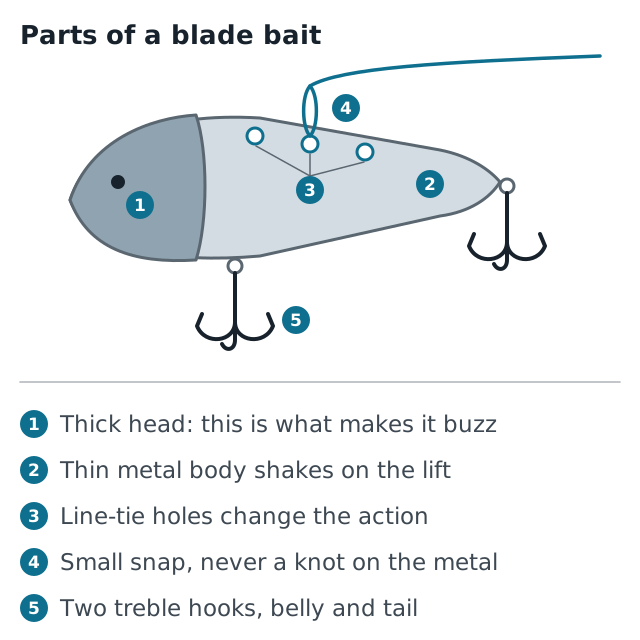
A blade bait is a thin metal lure with a thick head that buzzes hard when you pull it through the water. Let it sink to the bottom, lift your rod tip until you feel it shake, and let it fall. Tie one on when the water drops below about 60 °F (16 °C), mostly for smallmouth and walleye.
Lift just until the blade kicks once or twice. Most bites come on the way back down.
What is a blade bait?
It’s a flat piece of metal cut like a baitfish, with a weighted head and two treble hooks. The head is thicker than the back half, and that’s what makes the whole lure shake. It’s solid, with nothing rattling inside, so it isn’t a lipless crankbait, even though it looks like one. It isn’t a chatterbait either. That’s a jig with a blade on its nose.
A blade bait sinks fast, so it gets down to deep fish in a hurry. That’s why it’s mostly a smallmouth lure for clear, cold water.
They’ve been around a long time. Cotton Cordell sold the Gay Blade in 1954, and Heddon brought out the Sonar in 1959. Paul “Buddy” Banks designed the Silver Buddy in 1983, and you can still buy one today.
When should you throw a blade bait?
Throw it when the water’s cold and the fish have dropped deep, from the fall cooldown through the dead of winter and into early spring. Walleye will hit one from just above freezing to about 60 °F, and bass pros start at about the same point. Check your bass water temperature or walleye water temperature first, then find your row.
| Water | What’s going on | What to do |
|---|---|---|
| Above 60 °F (16 °C) | Past the usual window. Cory Schmidt still caught big largemouth on deep points at 67 °F | Try something faster first |
| 50–60 °F (10–16 °C) | Bass and walleye start taking it as the water cools | Hop it on deep points and steep drops near shad |
| Below 50 °F (10 °C) | Bass like it more the colder it gets | Short lifts, close to the bottom |
| Mid-40s °F (7 °C) | “Nothing else compares,” says Kevin VanDam | Make it your first smallmouth lure |
| About 40 °F (4 °C) | The peak for Great Lakes smallmouth | Reefs, and tight inside turns on breaklines |
| Below 40 °F (4 °C) | Slower, but you’ll still catch them | Pause 4 or 5 seconds between lifts |
| 33 °F (1 °C), ice-out | Jim Horn fishes it deep, 35–50 ft (11–15 m) | Lift 4–6 in, rest it 3 or 4 seconds |
Fish don’t read charts, so treat those as a place to start. Tackle Warehouse lists the Heddon Sonar as a “year-round producer.” Still, it’s the cold end where a blade earns its spot in the box.
Free PDF · What-to-throw pack Which lure at today's water temperature, and in what color?
One reading and one look at the water, and the 16-page pack gives you the lure, how to work it and the color: bass first, with a row each for trout, walleye, crappie, pike and catfish. Plus every family explained, the $60 first box, and the rod and line for each.
No card, nothing to buy, and the PDF is yours to keep. Confirm with one click and it's on its way. Then a few short emails and one a week on what's biting. Unsubscribe anytime. Privacy.
What do you need for blade bait fishing?
Get a 7 ft medium spinning rod and 10 lb fluorocarbon. That setup covers most bass fishing with a blade. Kevin VanDam rigs 10, 14 and 17 lb, with the lightest line for deep water and the heaviest for shallow. Thicker line slows the fall.
Not every pro fishes a blade on spinning gear. Gerry Gostenik and Joe Balog both use a 7 ft baitcaster.
| Fishing | Rod and line | Blade |
|---|---|---|
| Smallmouth, deep and clear | 7 ft (2.1 m) medium spinning rod, 6–12 lb fluorocarbon | 1/2 oz, silver |
| River walleye | 6 ft 10 in–7 ft 2 in (2.1–2.2 m), medium-light or medium, fast action, 10–15 lb braid to a 10–15 lb fluorocarbon leader | 1/4 oz, gold or firetiger |
| Bass around cover | 7 ft–7 ft 4 in (2.1–2.2 m), fluorocarbon, braid in thick cover | Double hooks instead of trebles |
Why fluorocarbon? It’s stiffer than braid, so the hooks are less likely to catch the line on the fall. It also lets you feel the lure. Gerry Gostenik says on mono it feels “like you’re jigging with a rubber band.”
Braid to a fluorocarbon leader works too, and it’s the common choice on walleye rivers. Put a tiny barrel swivel where the braid meets the leader.
The snap isn’t optional. Clip the lure on with a small snap, and skip the snap swivel. The holes are punched through metal, and a knot tied right to one frays almost at once. A split ring does the job too.
Check the hooks. “I’ve yet to find a bladebait that comes with the right hooks,” says Joe Balog. He puts two #6 round-bend trebles on split rings on a 1/2 oz Silver Buddy. Around heavy cover, a double hook keeps it from hanging up.
How to fish a blade bait, step by step
- Clip the snap to the middle hole. It’s the safest place to start.
- Cast and let it sink. Keep the line semi-slack, with no big loops. In current keep it tight, because loose line fouls the hooks.
- Let it hit bottom and sit. In cold water, give it 3 or 4 seconds. Fish often slurp it right off the bottom.
- Lift the rod tip 4 to 12 inches. Use your wrist. Stop as soon as you feel it kick once or twice.
- Drop the tip and follow it down. Most bites come now, so keep in touch with the lure.
- Set the hook on any tick. Then reel up the slack and do it again, all the way back.
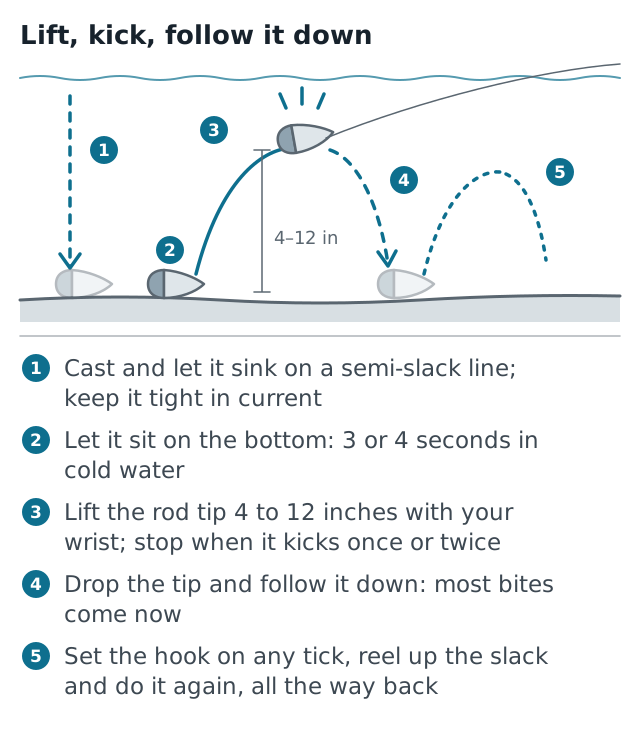
Drawing: fishing.info.
Most of your fishing will be that hop. These four change it up when the fish want something else.
| Retrieve | When | How |
|---|---|---|
| Slow roll | Any time. Mike Iaconelli calls it the easiest retrieve and the least used | Long cast, let it fall, reel slow and steady. Stop a second or two every 10 turns |
| Steady | Big flats at one depth | Reel just fast enough to feel it buzz and stay off bottom |
| Stroke or pump | Deep fish on your graph, deeper than 15 ft (5 m) | Drop to the fish, then a 3–5 ft pump. No hard rip |
| Swing | River current | Cast across the current and let it swing downstream |
What should a blade bait feel like?
You want a fast buzz coming up the rod the moment the lure starts to move. That buzz is your signal to stop lifting. No buzz at all? Lift a little more, then reel up and check that a hook hasn’t caught the line.
Bites are light. “You can feel both the vibration of the lure and when those fish just tick it,” Gostenik says. Guide Frank Campbell says smallmouth often bite at the top of the lift, right as the lure starts to drop. Walleye usually grab it as it falls, and they’ll even pick one up off the bottom. So a lift that comes up heavy may be a fish.
Which hole should you use on a blade bait?
Most blades have two or three holes along the back, and the Binsky has four. They change how the lure shakes. Start in the middle.
| Hole | On most baits | Use it for |
|---|---|---|
| Front | Tighter, subtler shake | Casting in shallow water, clear water |
| Middle | In between | Hopping and jigging over structure |
| Rear | Wider, heavier wobble | Deeper trolling runs, dirty water |
Don’t take that table as law, because not every bait agrees. Tackle Warehouse’s guide and Mike Iaconelli both say forward is tight and back is wide. The Tackle Warehouse listing for the Damiki Vault says the opposite: the closer to the head you clip, the bigger the wobble. On The Water likes the rear hole for jigging, while FishUSA’s listing for the Heddon Sonar Flash says the middle.
So test it. Clip into each hole, pull the lure along next to the boat or the bank, and watch the rod tip. Use the hole that shakes the way you want.
A steel blade like the SteelShad can also be bent a touch to change how it runs.
What size and color blade bait should you buy?
Buy 1/2 oz first if you fish for bass. It’s the sweet spot for 15 to 30 ft (5–9 m), and the standard 1/2 oz Silver Buddy is hard to beat. For river walleye start at 1/4 oz, then drop to 1/8 or 3/16 oz in shallow water. Use the lightest blade that still reaches bottom in your current and depth.
| Bait | Sizes | Worth knowing |
|---|---|---|
| Silver Buddy | 1/4 oz 1 1/2 in, 1/2 oz 2 in, 3/4 oz 2 1/2 in, 1 oz 3 in | The classic. Stock hooks are worth swapping |
| SteelShad | 1/4 oz 1 3/4 in, 3/8 oz 2 3/4 in, 1/2 oz 2 1/4 in, 3/4 oz 4 in | Stainless. The 1/2 oz is shorter than the 3/8 oz |
| Heddon Sonar | 1/4 oz 2 in, 1/2 oz 2 1/2 in | Three holes, shad shape |
| Binsky | 1/4 oz 2 in, 1/2 oz 2 1/4 in, 3/4 oz 2 1/2 in | Four line-tie positions |
| Damiki Vault | 1/4 oz 1.65 in, 3/8 oz 1.93 in, 1/2 oz 2.15 in, 3/4 oz 2.60 in | Three holes |
For color, start with silver. It looks like shad, herring and alewives. Go to gold in stained water or low light, and a bright white or chartreuse when the water’s dirty. River walleye anglers keep firetiger around too.
How do you fish blade baits for walleye?
Fish them in rivers in spring, and pitch to current seams, pools and back eddies. Depth runs from a foot to 3 ft up to about 20 ft early in the season. Keep your lifts small, a couple of inches to a foot, and use your wrist. Overworking the bait is the big mistake here.
In clear water, go with a longer leader. Dan Small of Game & Fish says 2 ft of mono will do in dark water, and to use 6 ft in clear.
How do you fish blade baits for bass?
Look for deep rock and hard breaks with shad nearby. On big lakes, try the reefs. On inland lakes, try breaklines with tight inside turns. In a river, find the deepest water around. Most people fish them in 20 to 30 ft (6–9 m), and they also work on shallow flats and around cover.
Smallmouth get most of the attention, but largemouth eat them too. Below about 38 °F (3 °C), you can sometimes find bass outside the weed edges, out in the basin. Our guide on how to catch bass covers what to throw the rest of the year.
Can you fish a blade bait from the bank?
Yes. It casts a long way and sinks fast, so you can reach deep water without a boat. Pick a place where deep water comes close, like a rocky point or a steep bank. Cast out, let it hit bottom, and hop it back up the slope. On a river you don’t even need depth. Walleye pro Brian Brosdahl says blades can be fished in 3 ft (1 m) of river water or less. Below a dam, try one for white bass and stripers.
You’ll lose a few, since it spends its life on the bottom. A Silver Buddy runs about $7 to $11 at Tackle Warehouse, so buy two.
What mistakes cost you fish?
- Working it too hard. This is the most common one. A big sweep pulls it away from the fish. Use short flicks of the wrist.
- Tying straight to the metal. The hole cuts the line. Use a snap.
- Too much slack. Loose line wraps the hooks, above all in current. Keep in touch on the fall.
- Dragging the bottom through weeds. You’ll just pick up salad. Speed up enough to keep it just off the bottom.
- Trusting the stock hooks on a big fish. Change them before the trip.
When does something else win?
Once the water’s over about 60 °F, reach for something faster. Above 50 °F a crankbait is normally the better choice for bass, and walleye readily hit fast baits at 70 °F or warmer. Heavy weeds are hard on a bare blade, so try a jig there. A blade always sinks, so when fish want a lure that hangs still, try a jerkbait. A jigging spoon is the closest cousin. Bassmaster’s Ed Harp says spoons are for schooled-up bass, and blades are best when the bass are scattered.
Check the rest of the options in our full lures guide, and if a word here was new, the fishing terms list has it.

Free PDF · 16 pages
Stop guessing. Know which lure to tie on, and what color, before the first cast
A full box, the wrong lure on all day, and a Saturday with nothing to show for it.
The What-To-Throw Pack. Take the water temperature, look at the water, and the two-page chart gives you the lure, how to work it and the color. Bass first, with a starting lure for five other fish.
- The lure for every water temperature, rising and falling, six families side by side
- Clear, stained or muddy: the color for each, and the two exceptions
- The first box for $60: five lures that fish nine months of the year
Every line from the lure pages on fishing.info and the 519 sources behind them, Florida FWC, In-Fisherman and Bassmaster among them.
No card, nothing to buy. Confirm with one click and the PDF is on its way, one version for your phone and one to print, yours to keep. Then a few short emails and one a week on what's biting, with an unsubscribe link in every one. Privacy.
Related
Section guide
Fishing Lures: How They Catch Fish, Which One to Tie On and WhenFishing lures explained: the six families and what each imitates, which lure for which fish, water temperature and clarity, color, cost and a first box.
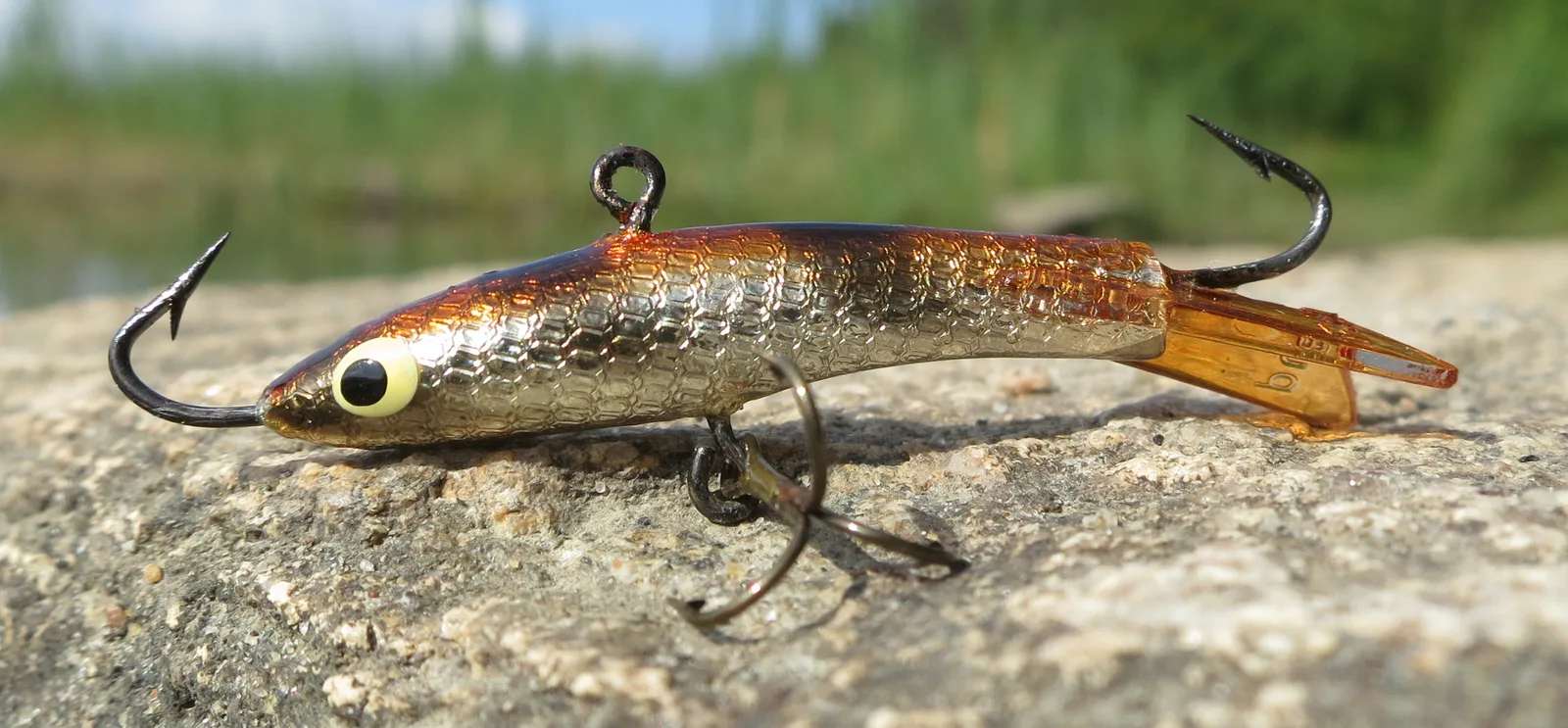 Ice Fishing Lures: The Jig, Spoon or Jigging Rap for Each Fish
The ice fishing lures that cover most days: which jig, spoon or Jigging Rap for each fish, what size, tungsten or lead, and how to jig them.
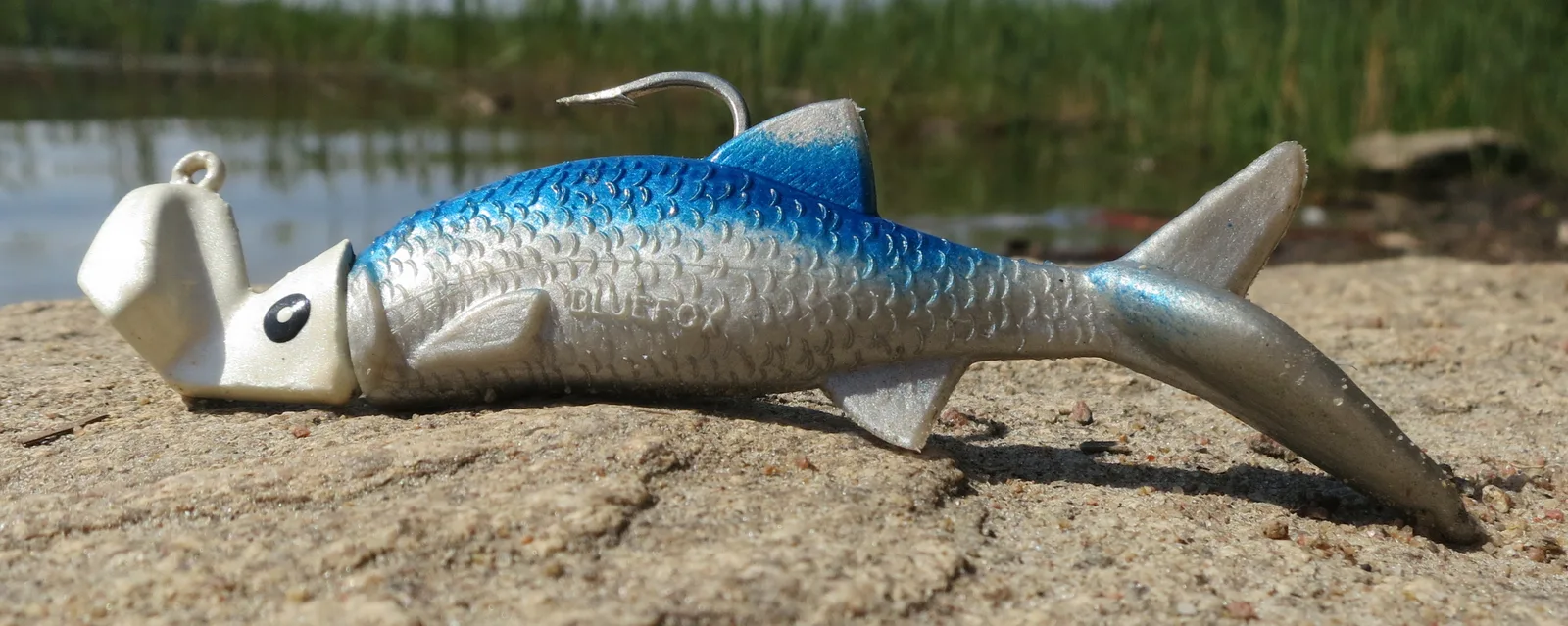 Alabama Rig: How to Rig and Fish It, and Where It Is Legal
The Alabama rig casts five swimbaits at once. How to rig it, the tackle, how and when to fish it, why the pro tours banned it, and hook limits by state.
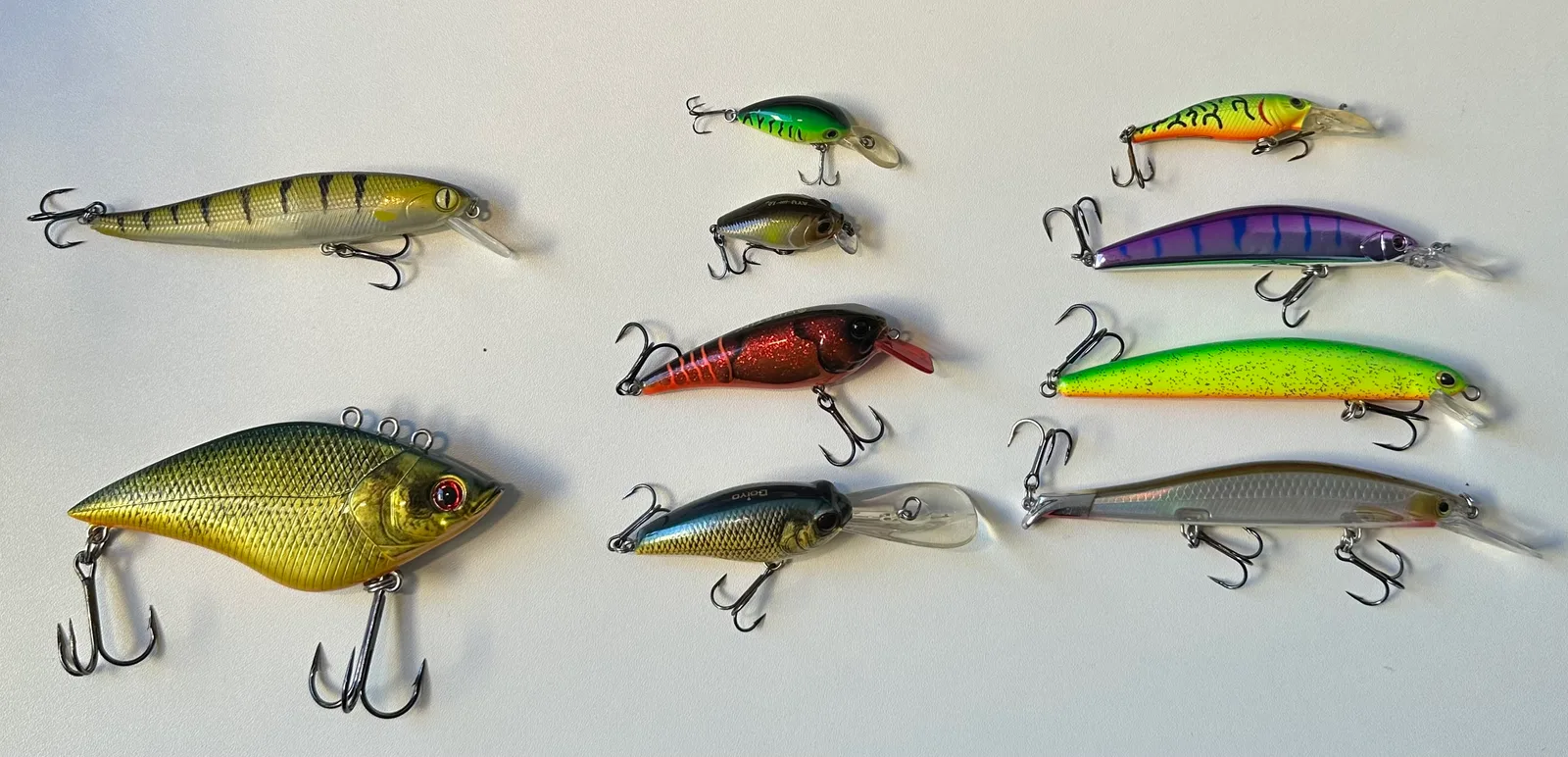 Best Fishing Lures: The Ten to Buy First, by What Each One Does
The best fishing lures for a first box: ten that cover every season and depth, what the pros threw in 2025, a season table, a species table and colors.
 Fishing Advent Calendars 2026: What Is Behind the Doors, Priced Per Door
Fishing advent calendars for 2026, door by door: 12 or 24 doors, 80 cents to $5 a door for US calendars, what is inside, and when to order.
 Types of Fishing Lures: The Six Families, What Each Does and When
Types of fishing lures by family: crankbaits, topwater, spinnerbaits, jigs, soft plastics, spoons, swimbaits and flies, with depth, retrieve and season.
Sources (19)
- Bassmaster (Bob Gwizdz), Blade Baits for Winter Smallies (2009)
- Bassmaster (Ed Harp), Bass Love Heavy Metal: Part 2 (2008)
- Bassmaster, How to fish blade baits (2023)
- In-Fisherman (Cory Schmidt), Blade Runners: Bass Bladebaits (2014)
- In-Fisherman (Jim Edlund), Spring River Walleyes On Blade Baits (2025)
Show all 19 sourcesShow fewer sources
- Game & Fish (Dan Small), Fall Walleyes on Blade Baits (2016)
- Game & Fish (Dan Small), Blade Bait Fishing Tactics For Walleye (2011)
- On The Water (Matt Haeffner), Sharpen Up on Blade Baits (2025)
- On The Water (Robbie Tartaglia), How to Catch Bass on Blade Baits (2025)
- MidWest Outdoors (Buck Mallory), Nuances of the Blade Bait (2016)
- Mike Iaconelli, Heavy Metal Blade Baits In The Winter (2021)
- Oklahoma Department of Wildlife Conservation, Blade Baits
- Tackle Warehouse, Blade Baits and Tail Spinners Gear Guide (2025)
- Tackle Warehouse, Silver Buddy Blade Bait (specifications)
- Tackle Warehouse, Steel Shad Blade Bait (specifications)
- Tackle Warehouse, Heddon Sonar Blade Bait (specifications)
- Tackle Warehouse, Binsky Vibrating Blade Bait (specifications)
- Tackle Warehouse, Damiki Vault Blade Baits (specifications)
- FishUSA, Heddon Sonar Flash Blade Baits