 By
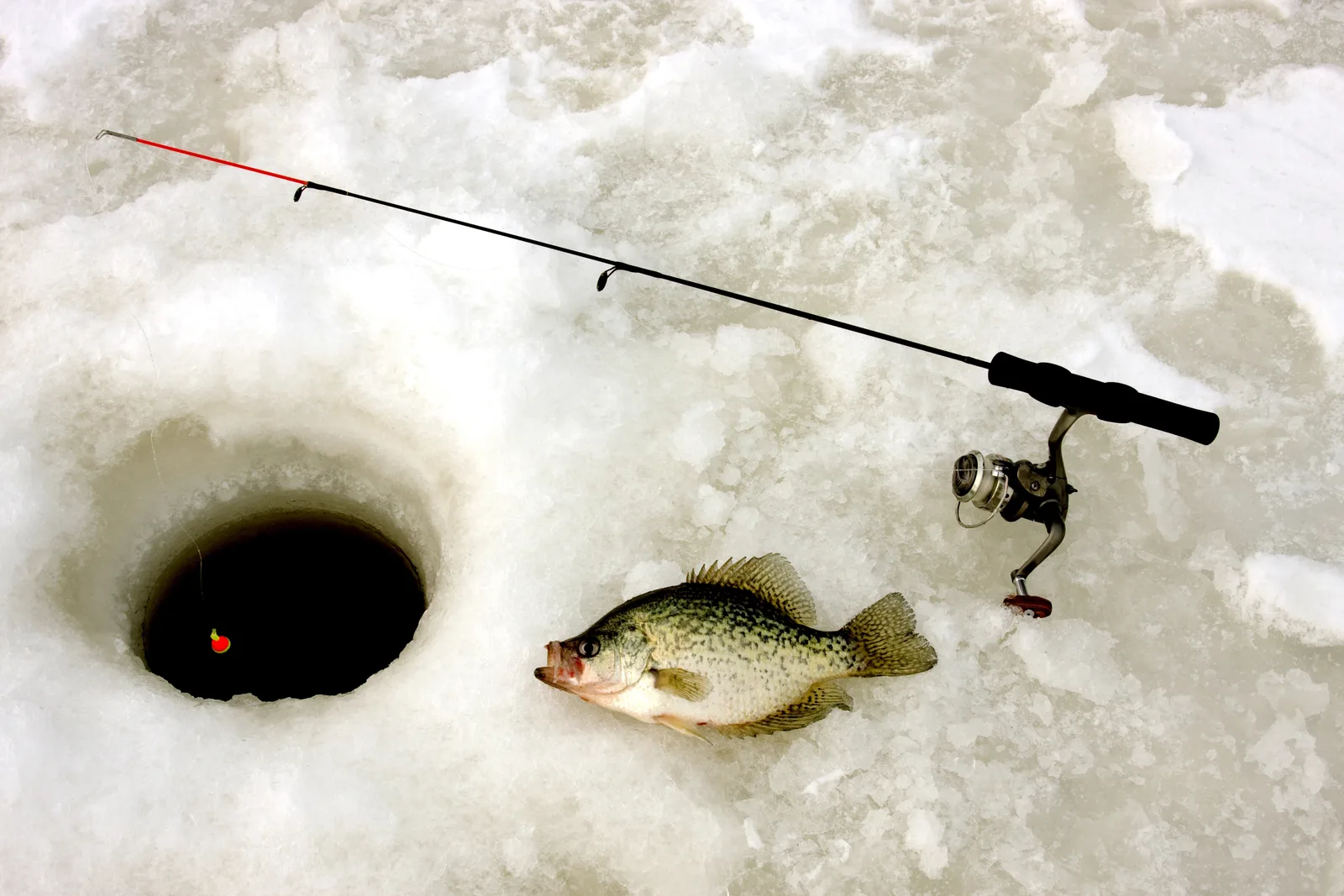
Under the ice, crappie hang suspended between the bottom and the top, often over the deepest holes in a lake, Minnesota DNR says. On clear lakes they often bite best at dawn and dusk. So crappie ice fishing is mostly a search. Find the school, drop a tiny jig or a crappie minnow to their level on 2–4 lb line, and you’re in business. Minnesota’s own line: if you find them, you generally can catch them.
Catching crappie in water deeper than 20 feet? Keep them. Minnesota DNR calls that “the ethical thing to do,” since a crappie put back down the hole is likely to die.
Where are crappie under the ice?
Start at the mouths of shallow bays that lead to deeper water. Minnesota DNR says that once ice forms, those shallow bays get colder than the deep water. So crappie slide deeper to save energy and find food. Under the ice the lake flips: the warmest water sits near the bottom, not the top.
From there, try drop-offs, shelves, points, narrows and weedy flats. Over weeds, fish just above the tops or along the edges, not down in them. New York DEC finds crappie along weed edges, or suspended anywhere from a few feet under the ice to within inches of the bottom.
The kind of lake decides a lot. In an In-Fisherman piece, Gord Pyzer, an Ontario resource manager for 25 years, sorts winter crappie lakes into three shapes. The fish sit differently in each. Add Minnesota’s starting spot and the late-ice spots of Wisconsin crappie angler Blake Tollefson, and you get this table. The name in brackets is who says it.
| Your lake | Where to drill | How high they sit | What to do |
|---|---|---|---|
| Any lake, as a start | Mouths of shallow bays that lead to deeper water (Minnesota) | Between the bottom and the top, a bit deeper than suspended bluegill (Minnesota) | Drill holes a little deeper and shallower too, since the school moves (Minnesota) |
| Shallow saucer-shaped lake, few points or humps | No one spot: keep moving and cut plenty of holes (Pyzer) | Within a foot (30 cm) of the bottom, usually less. Higher when oxygen runs low in mid to late winter (Pyzer) | Search fast, hole to hole (Pyzer) |
| Saucer lake with one deeper basin | The deep basin, not the shallow flat (Pyzer) | 1–3 ft (0.3–0.9 m) up. On the bottom after a cold front (Pyzer) | A tiny jig with a minnow, waxworm or maggot, even when the flasher shows nothing (Pyzer) |
| Big lake with structure and basins over 40 ft (12 m) | Open water next to points, sunken reefs and saddles (Pyzer) | 4, 8, 12 or more ft (1.2–3.7 m) off the bottom. Back up toward sunset (Pyzer) | Drop your lure to the depth where you mark fish (Minnesota) |
| Late ice, typically March | Shallower end of the basin, then 10–20 ft (3–6 m) flats next to it (Tollefson) | From 5–6 ft (1.5–1.8 m) under the ice right up to the ice (Tollefson) | Go bigger: rattle baits and minnow-style glide baits (In-Fisherman) |
High fish are good news. Crappie that float five, ten, fifteen or more feet off the bottom are the easiest crappie to catch, Pyzer writes. The tough ones lie an inch or two off the mud, where the flasher barely shows them.
Why do they rise in big lakes? Under a few feet of ice and snow, little daylight gets through. The tiny animals crappie eat (zooplankton) act as if it’s night and hold high in the water, and the crappie follow. Pyzer says that’s strongest in the deep, structure-rich lakes.
At late ice the fish start moving toward spawning areas in shallower bays, Tollefson says. That’s typically the northwestern end of a lake, where the ice melts first. He still starts his search in the basin.
How do you find suspended crappie?
Use a flasher. Minnesota DNR says anglers with sonar or an underwater camera “clearly have an advantage” in finding crappie. On the dial, fish, baitfish and your own lure all show between the zero mark and the bottom mark, Vexilar’s manual explains. Set the gain so your jig shows as a green mark. Then watch for a fish rising to it. A fish on the dial is a mark, and marking fish means they’re under you, biting or not.
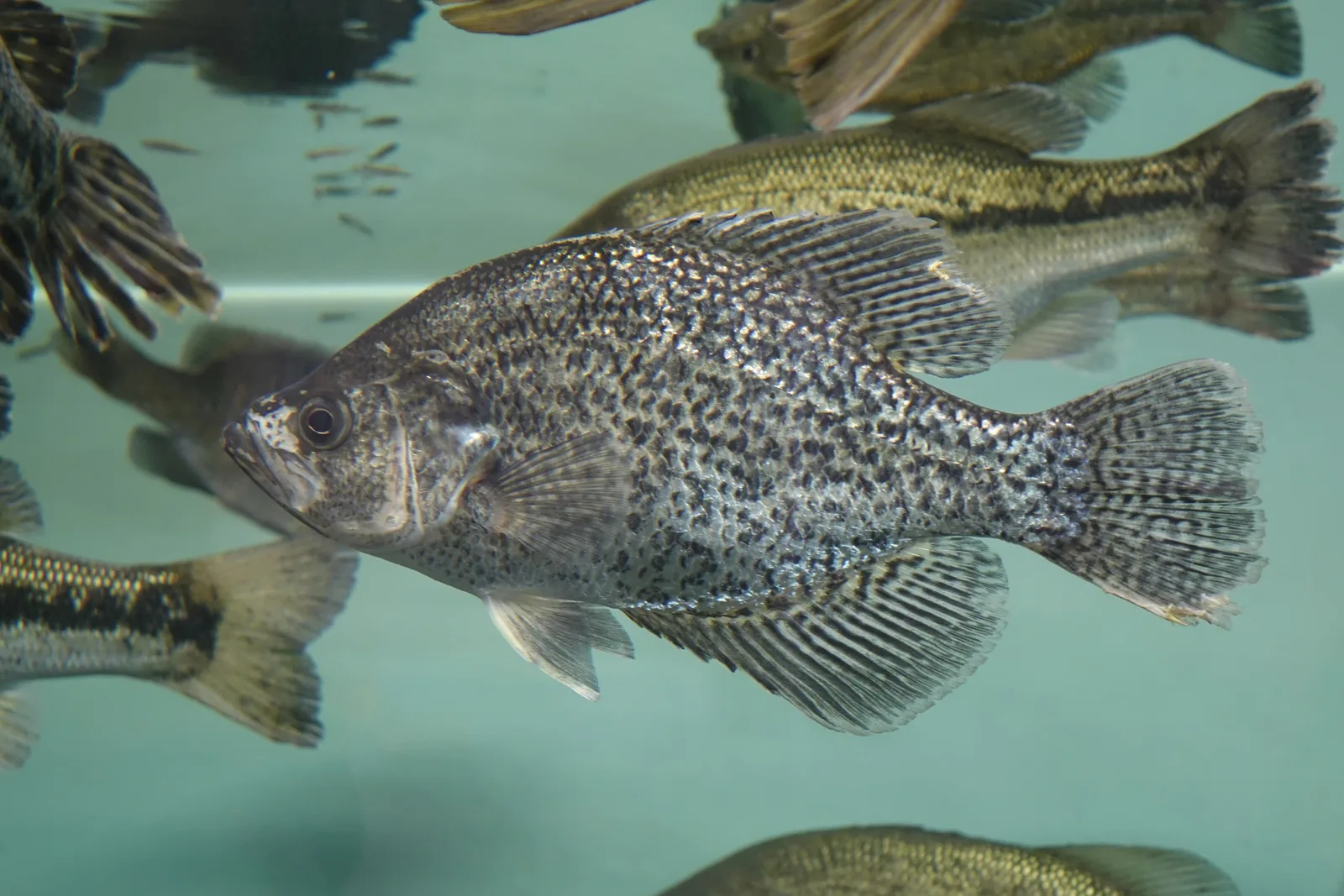
A black crappie in an aquarium. Under the ice they hang like this, off the bottom. Photo: Wirestock / Depositphotos.
The cone matters too. That’s the area the flasher’s sound waves cover, shaped like an upside-down ice cream cone, Vexilar’s manual says. A 19° cone suits suspended fish, while a 9° does better on fish holding tight to the bottom of a steep drop-off. Crappie are usually the first kind. At 20 ft (6 m), Vexilar’s chart has a 19° cone covering a circle about 6.7 ft (2 m) across.
No flasher? Drop your lure to the bottom, wait for the line to go slack, then lift it a few feet. Set the hook if the rod tip twitches, the line goes slack or it moves in an odd way. Without electronics, Minnesota says, start low and work higher until you find fish or move on. Walleye and perch usually feed within a foot or two of the bottom. Crappie usually hang above them.
How long should you fish a hole?
Don’t marry a hole. Minnesota DNR says to treat each hole like a cast: give it 5–10 minutes, then move. Drill all your holes in one go, not drill-fish-drill-fish, and keep quiet over shallow water.
A blank screen doesn’t always mean an empty hole. On a saucer lake with a deeper basin, the fish often hug the bottom after a cold front, and you won’t see them. Pyzer says you can catch what you can’t see, so fish a likely spot even when nothing shows. Once you catch a few from a hot hole, he says the school often hovers higher, waiting for the next bait.
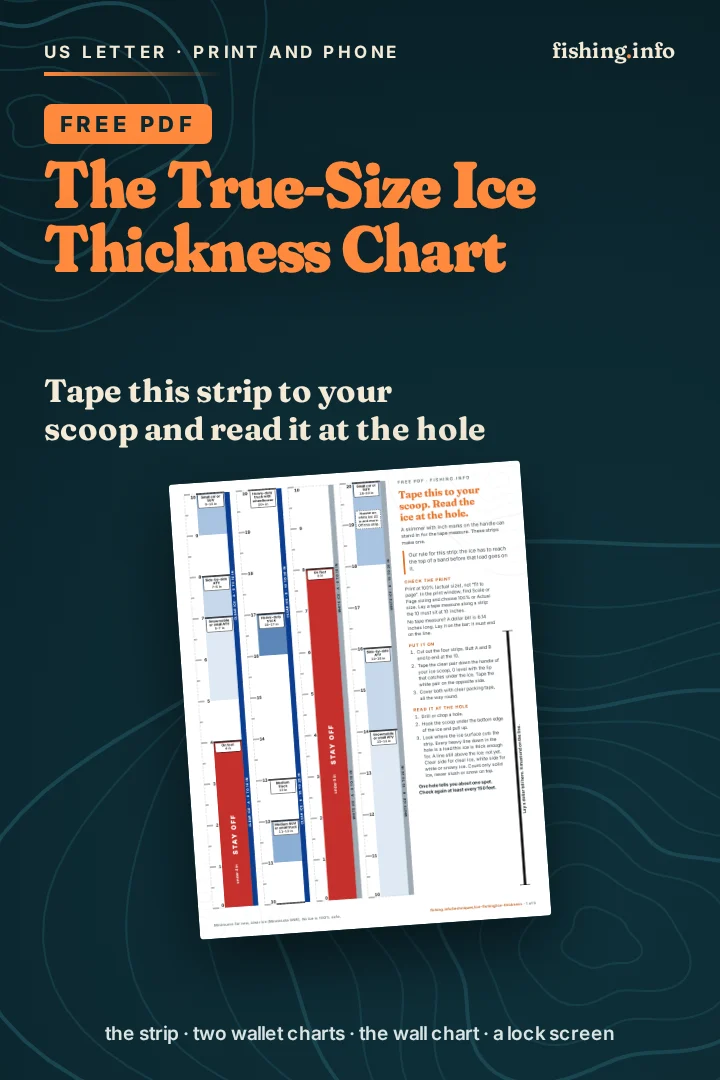
Free PDF · Ice thickness chart How thick is the ice? Read it at the hole.
Print the free chart, tape the strip to your scoop and hook it under the ice. It shows what that ice is thick enough for, clear or white. Two wallet charts and a wall chart come with it.
No card, nothing to buy, and the PDF is yours to keep. Confirm with one click and it's on its way. Then a few short emails and one a week on what's biting. Unsubscribe anytime. Privacy.
When do crappie bite through the ice?
On clear lakes, at dawn and dusk. Minnesota DNR says that’s often when crappie bite best there. Murky lakes are different: they can have a very good day bite. Even crappie that have dropped lower usually rise again as sunset approaches, Pyzer says. That’s when most anglers go home. Stay for the last hour.
Do crappie bite at night through the ice?
Yes. Iowa DNR says crappie often feed after sunset, which makes it a good time to catch them. New York DEC agrees that crappie fishing “can be very good after dark.”
Iowa’s tip: use jigs that glow in the dark. Our pick is the same two lines, with a glow jig on the calling rod and a minnow on the still one. Start before sunset, since Pyzer’s crappie rise as the light goes. And bring a headlamp, which Minnesota DNR puts on its crappie gear list for low light.
Is winter a good time for crappie?
It is. In Minnesota you can fish for crappie at any time of year, so the ice season is all yours. The DNR says early and late in the ice season are both productive. Late ice is when crappie start to feed heavily, often smashing bigger lures, In-Fisherman’s Jim Edlund writes. For the open-water seasons, the crappie fishing guide walks through spring to fall, and the crappie water temperature chart gives the temperatures.
What setup do you need for ice crappie?
Not much. Minnesota DNR’s list starts with a short, flexible rod, a reel and small ice lures. Add a bobber with a bobber stop, a clip-on weight to find the depth, split shot and live bait. The rest of the kit, from the auger to the scoop, is the same as for any ice fishing trip.
| Item | What to use |
|---|---|
| Rod | Short and flexible (Minnesota), ultralight power (New York) |
| Line | 2–4 lb test (Minnesota). New York goes 4–6 lb |
| Hook | Size 6–8 (New York) |
| Jigs | 1/16, 1/32 and 1/64 oz (Minnesota) |
| Bite indicator | A spring bobber on the rod tip (Minnesota) |
| Auger | 4–6 in (10–15 cm) for crappie (New York). A 6 in auger is plenty unless you’re after pike or lake trout (Minnesota) |
| Price to start | An entry rod-and-reel combo costs about $25 (Minnesota) |
Go light on the line. Crappie often look your lure over before they bite, Minnesota DNR says. So keep the line as close to invisible as you can. Even big crappie can bite very lightly. That’s why some anglers add a spring bobber, a very sensitive length of metal on the rod tip that shows bites you might not see or feel.
What is the best crappie jig for ice fishing?
Start with 1/32 oz. That’s our pick, the middle of Minnesota’s three common crappie sizes: 1/16, 1/32 and 1/64 oz. The DNR’s test is simple. The jig should be heavy enough to take the kinks out of the line, but small enough for a crappie to inhale.
Need it down faster? Use tungsten. Minnesota says tungsten jigs are denser than lead, so they fall faster than lead jigs of the same size. A split shot or two about a foot above the jig does the same job.
Don’t stay timid all day, either. Crappie eat minnows, darters and big insects too. So Minnesota DNR says to try louder or flashier jigs, even small jigging spoons, to pull crappie to the hole. At late ice they often smash bigger rattle baits and minnow-style glide baits, In-Fisherman says. The Jigging Rap on our best crappie lures list works through the ice too.
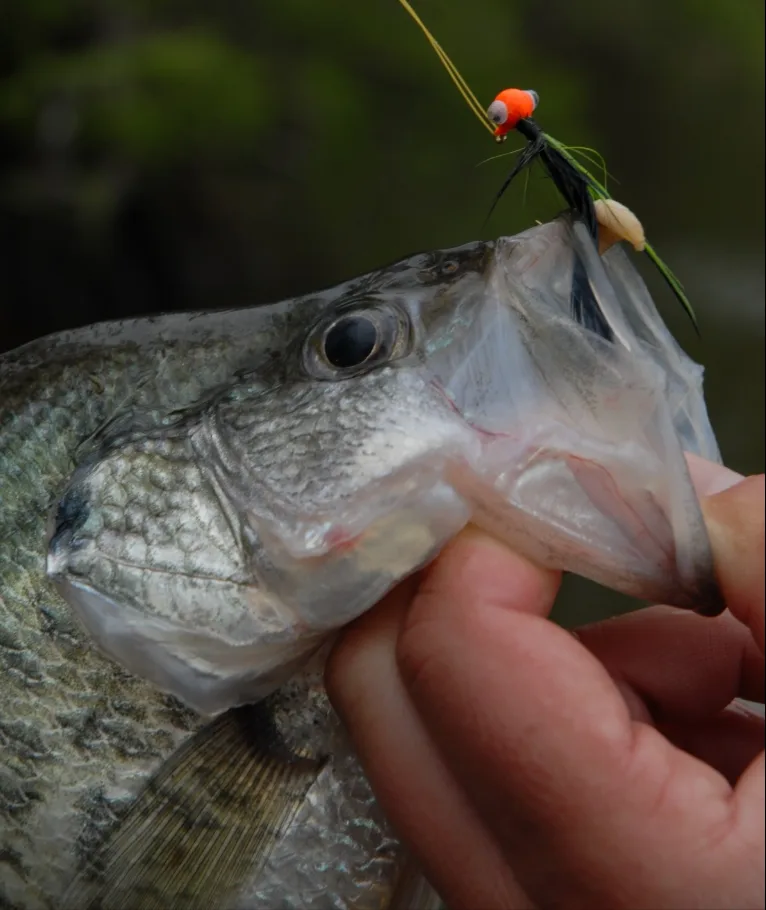
A crappie on a small hair jig. That thin mouth tears if you set the hook hard. Photo: U.S. Fish and Wildlife Service (public domain).
Tip every jig with bait. For heads, bodies and colors, the crappie jigs guide covers the open-water picks.
Minnows or wax worms?
Both. Minnesota DNR names crappie minnows (smaller, sorted fathead minnows), wigglers or Eurolarvae, meal worms and wax worms. New York DEC says to jig with small minnows, or small jigs tipped with spikes. Here’s what those are:
- Wax worm: the larva of the bee moth, ½ to 1 inch long, cream-colored with a brown head.
- Spike: a housefly or blowfly maggot. Its skin is tougher, so it stays on the hook better.
- Eurolarvae: blowfly maggots fed dyed food so they come in colors. Anglers often put three or four on a hook.
Our pick: a live crappie minnow on the still line and a wax worm or a few Eurolarvae on the jig. The still minnow is what Minnesota’s crappie anglers hang on the second line, where the jigging draws the fish.
Ask for bait by name, because the words vary. Minnesota DNR lists wigglers and Eurolarvae as one bait, while Iowa DNR uses wigglers for mayfly larvae. And ask what’s working: Minnesota DNR says bait shop staff tend to know the sizes, colors and styles that successful anglers are using.
Tip: Try Minnesota DNR’s trick: cut a crappie minnow in half and thread the head on the hook.
How do you fish two lines for crappie?
Jig one and leave the other alone. In Minnesota you can fish two lines through the ice, and the DNR says crappie anglers commonly do exactly that. Sometimes the jig catches most of the fish. Sometimes the still bait does. Check your state’s line limit first, in the table further down.
- Rig the still line. Thread a bobber stop and a slip bobber on the line, then tie on a small jig.
- Find the depth. Clip a heavy weight to the jig, drop it to the bottom, pull the line back up hand over hand, and take the weight off.
- Set the bait at the fish. Slide the bobber stop so the bait hangs where you marked fish, or a few feet off the bottom without a flasher. Hook on a crappie minnow and drop it down.
- Jig the second rod. Minnesota calls it a “calling rod”: it draws crappie to the hole, and they often bite the still minnow instead. Big jigging moves pull in fish from a distance. Small twitches work on fish already close.
- Pause. New York DEC says to jig a few times, then stop for a few seconds. Fish generally hit during the pause.
- Watch for the up bite. Crappie often rise to the bait and inhale it. The bobber goes slack or tips on its side, or the bend in your rod tip straightens.
- Lift, don’t snap. Raise the rod steadily, with just enough oomph to set the hook. A crappie’s mouth is soft and tears easily.
- Read the score. If the still line catches most of the fish, you may be jigging too hard. Tone it down.
Think of it this way: the jig rings the dinner bell, and the minnow is dinner.
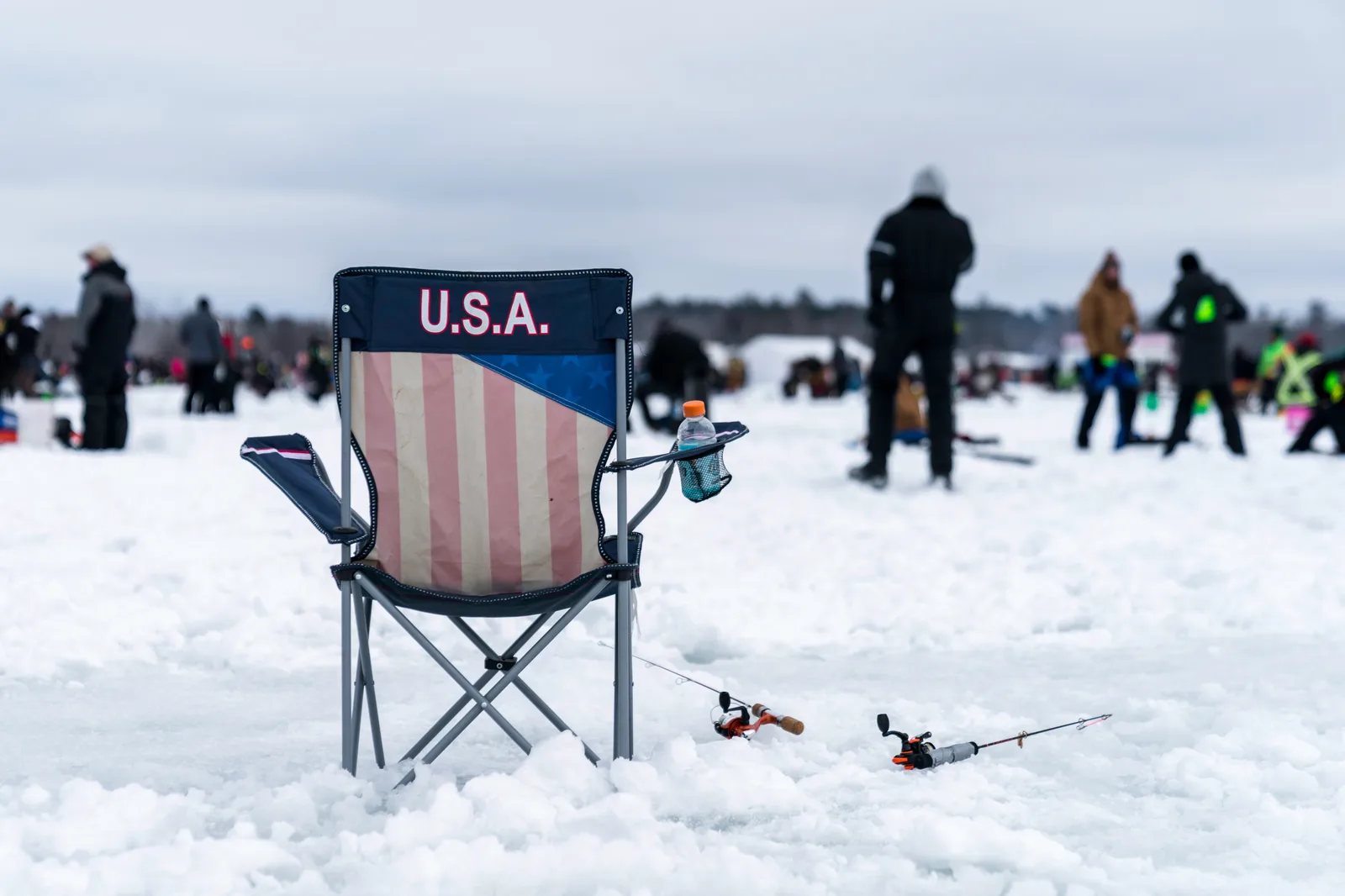
Two ice rods on Gull Lake, Minnesota, where you may fish two lines through the ice. Photo: Lorie Shaull, Wikimedia Commons (CC BY-SA 4.0).
Should you release crappie caught deep?
Not from deep water. Minnesota DNR says crappie often hang over the deepest holes in a lake. That makes them prone to barotrauma, an often fatal injury from being brought up fast. If you’re catching them in water deeper than 20 ft (6 m), the DNR’s advice is to keep what you catch.
Pyzer puts the bloating at 28 ft and deeper. Some anglers blow into a crappie’s throat or slap it on the water before letting it go. Pyzer calls those fixes “dubious at best.” A released fish swims halfway down, tires out and floats back up to drown under the ice.
His answer is simple. Decide how many you want for dinner before you start. Keep every fish until you have them, then go find shallower crappie you can let go. Know your limit first, since some lakes have special rules that let you keep fewer fish. Shallow fish are a different story, and catch and release covers how to do it right.
How many lines can you fish through the ice?
It depends on your state. Two lines fit the limits in all eight states below. Iowa counts a tip-up as one of your two lines, and a third line takes a permit. Wisconsin counts hooks, baits and lures instead of lines, three in all. Minnesota also changed its hook rule in November 2025. One line may now carry up to three hooks, no more than 18 inches apart in total along the line, up from 9. These are the line rules for eight states where crappie anglers fish the ice.
| State | Lines through the ice | Also know |
|---|---|---|
| Minnesota | 2 (1 on designated trout lakes and streams) | Stay within sight of the line, or within 200 ft of a tip-up |
| Wisconsin | 3 hooks, baits or lures in total | Holes no more than 12 in across |
| Michigan | 3 lines including tip-ups, 6 hooks or lures | Each hook on a crappie rig counts |
| Iowa | 2 lines, tip-ups count | A third line takes a permit. Keep your lines in sight |
| North Dakota | 4 poles, each tip-up counts as one | Poles visible and within 150 ft of you |
| South Dakota | 4 lines (2023 handbook) | 2 on the South Dakota-Minnesota border waters |
| New York | 7 lines in any combination | Stay in immediate attendance |
| Pennsylvania | 5 devices | Holes no more than 10 in across |
Rules change, and lakes have their own. Check your state’s current regulations before you set the second rod.
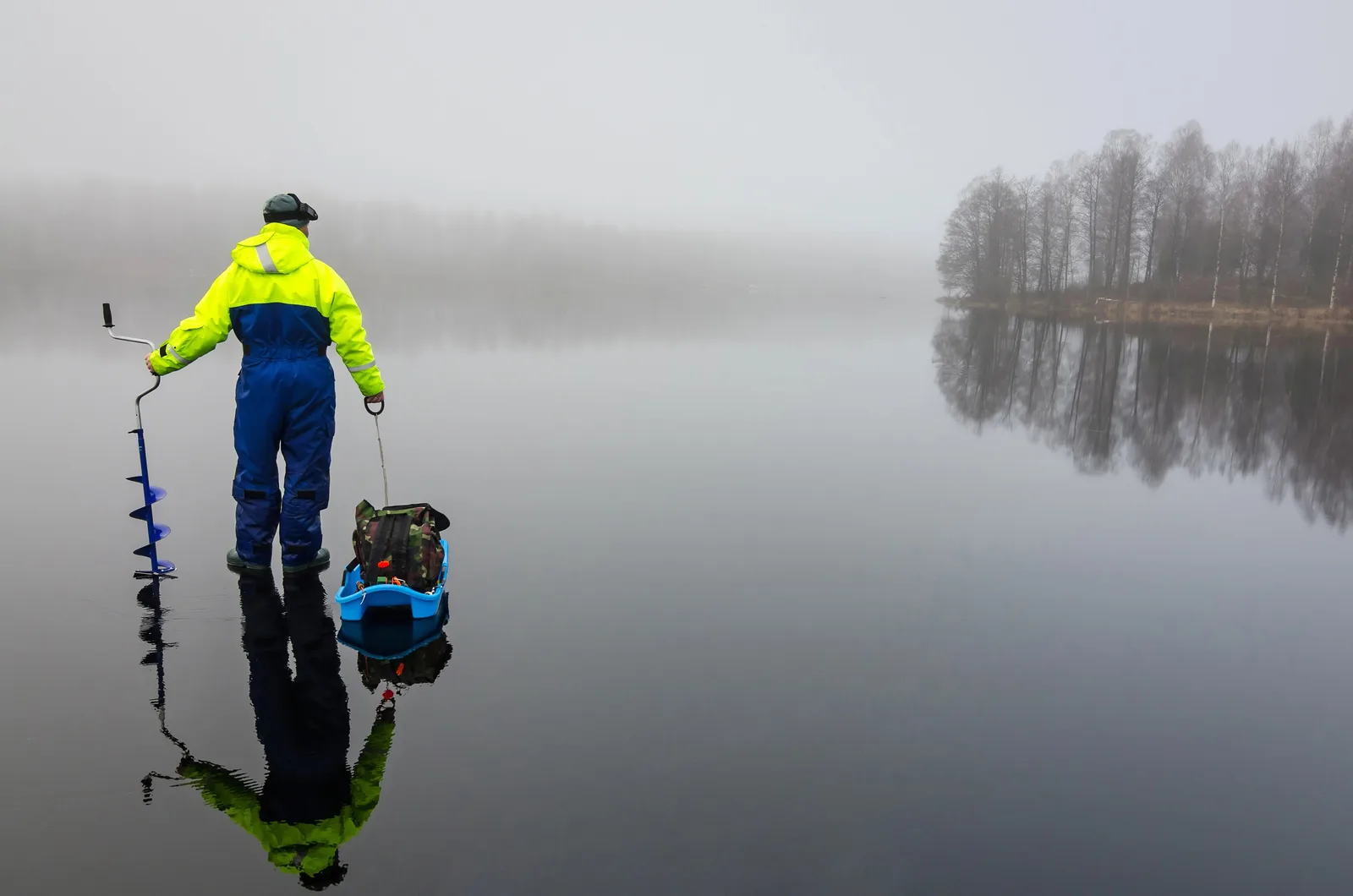
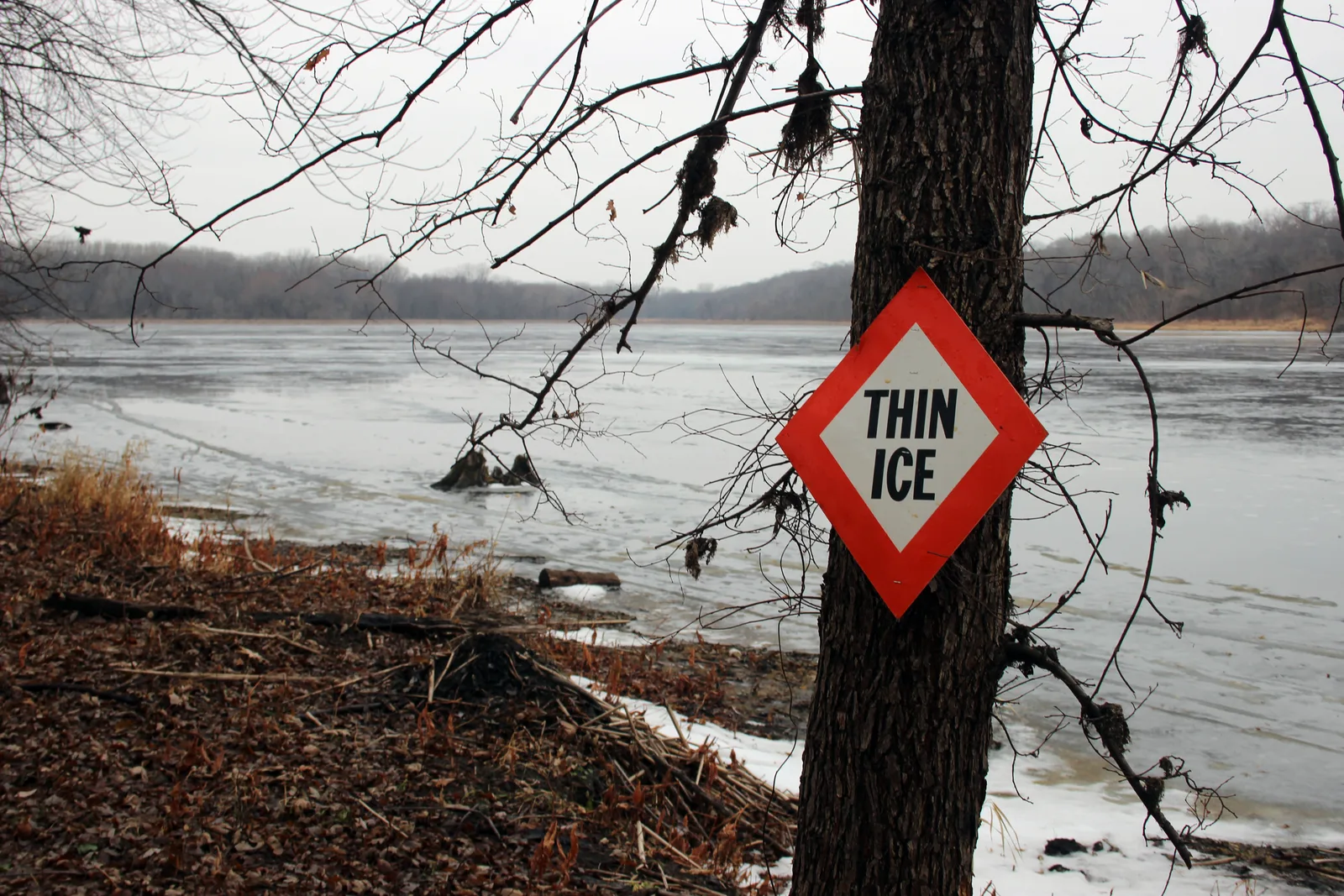
Check the ice before you check the rules. Minnesota DNR’s line is that no ice is ever safe. Read the ice thickness chart before your first step out, and again at late ice.
Why aren’t the crappie biting?
Usually it’s one of these:
- You may be jigging too hard. Minnesota DNR says you can over-jig and scare crappie away. Let the still line tell you.
- Your line is too heavy. Crappie look a lure over first. Drop to 2–4 lb.
- You’re on the bottom. Crappie usually hang higher, except in the shallow saucer lakes, where Pyzer finds them within a foot of the mud.
- You stayed too long. Five to ten minutes a hole, then move.
- You set the hook too hard. A steady lift keeps them on.
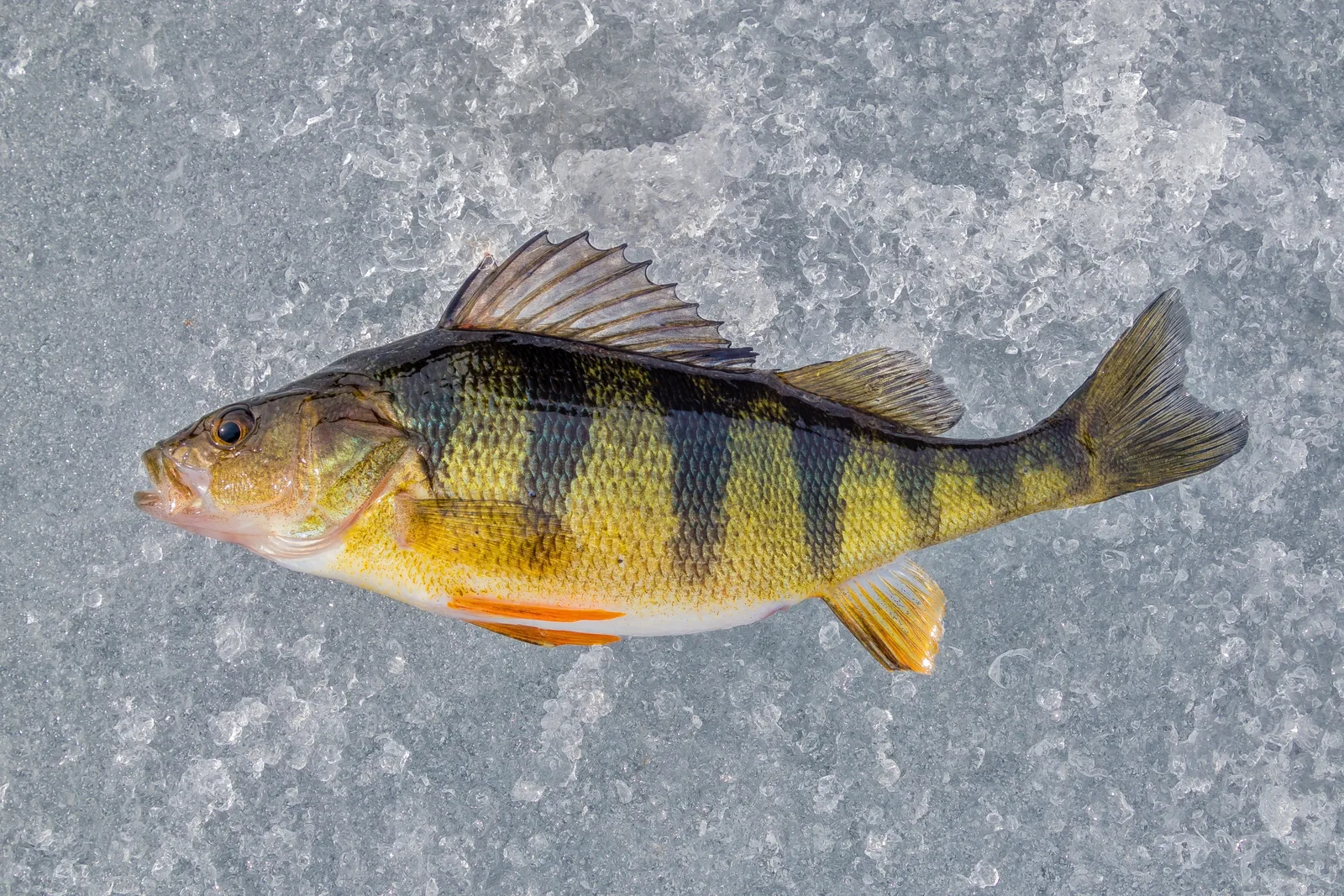
Marking fish right on the bottom instead? Those may be perch, which usually feed within a foot or two of it, Minnesota says. Perch through the ice is a game of its own.

Free PDF · 5 pages
Stop guessing the ice. Tape this strip to your scoop and read it at the hole
Ice that is 6 or 7 inches thick in one spot can be 2 inches close by. You can't tell by looking.
The True-Size Ice Thickness Chart. Print it, tape the strip to your ice scoop, hook it under the ice and read the band at the surface: on foot, sled or truck. One side for clear ice, one for white.
- A true-size strip for your scoop handle, marked from "stay off" to a truck with a wheelhouse
- Two wallet charts, one for your buddy, with five moves that get you out if you go through
- Why 8 inches of white ice counts as 4, and the ice to stay off at any thickness
Every clear-ice number is the Minnesota DNR's, set beside the 29 sources on the page, the Army Corps of Engineers among them.
No card, nothing to buy. Confirm with one click and the PDF is on its way, one version for your phone and one to print, yours to keep. Then a few short emails and one a week on what's biting, with an unsubscribe link in every one. Privacy.
Related
Section guide
Ice Fishing: How to Ice Fish, Step by StepHow to ice fish: wait for 4 in of clear ice, drill all your holes, fish one jigged line and one still. Gear, bait, tip-ups and line limits in 12 states.
 Ice Thickness Chart: How Thick Ice Must Be to Walk, Ride or Drive
Ice thickness chart for walking, snowmobiles, cars and trucks, with white ice doubled, what each inch holds in pounds, and how to measure it yourself.
 Perch Ice Fishing: Where Perch Sit Under the Ice and How to Catch Them
Perch ice fishing: fish near the bottom, from weeds under 10 ft to flats at 40 ft, with 1/64 to 1/16 oz jigs and spikes. Plus 8 steps to stay on a school.
 Ice Fishing for Pike: Tip-Ups, Bait, Depth and When to Set the Hook
Ice fishing for pike: where they sit under the ice, the tip-up spread, live or dead bait, how far off bottom, when to set the hook, and the state rules.
 Walleye Ice Fishing: Where, When and How to Catch Them
Walleye ice fishing peaks in the 90 minutes before and just after sunset. Where they sit, how deep by lake, spoon or Jigging Rap, tip-ups and line rules.
Sources (18)
- Minnesota DNR, Ice fishing for crappie
- Minnesota DNR, Learn to ice fish
- In-Fisherman (Gord Pyzer), Ice Fishing Crappie (November 27, 2016)
- In-Fisherman (Jim Edlund), Late-Ice Crappie Tips (March 6, 2023)
- New York State DEC, I FISH NY Guide to Ice Fishing
Show all 18 sourcesShow fewer sources
- Iowa DNR, Ice Fishing
- Vexilar, FLX-12 flasher instruction manual
- Outdoor Life (Dick Sternberg), Icefishing Tips: Guide to Live Bait (January 11, 2013)
- Minnesota DNR, General Regulations (fishing regulations on eRegulations)
- Minnesota DNR, Hook-setting devices allowed starting with the 2025-26 ice fishing season (November 17, 2025)
- Minnesota Revisor of Statutes, 97C.321 Restrictions on unattended lines
- Wisconsin DNR, Guide to Wisconsin Hook and Line Fishing Regulations 2026-2027
- Michigan DNR Fishing Guide, Lawful Fishing Methods
- Iowa General Fishing Regulations (eRegulations)
- North Dakota Game and Fish, Fishing regulations
- South Dakota GFP, 2023 South Dakota Fishing Handbook
- New York State DEC, General Freshwater Fishing Regulations
- 58 Pa. Code § 63.10, Ice fishing (Cornell LII)