 By
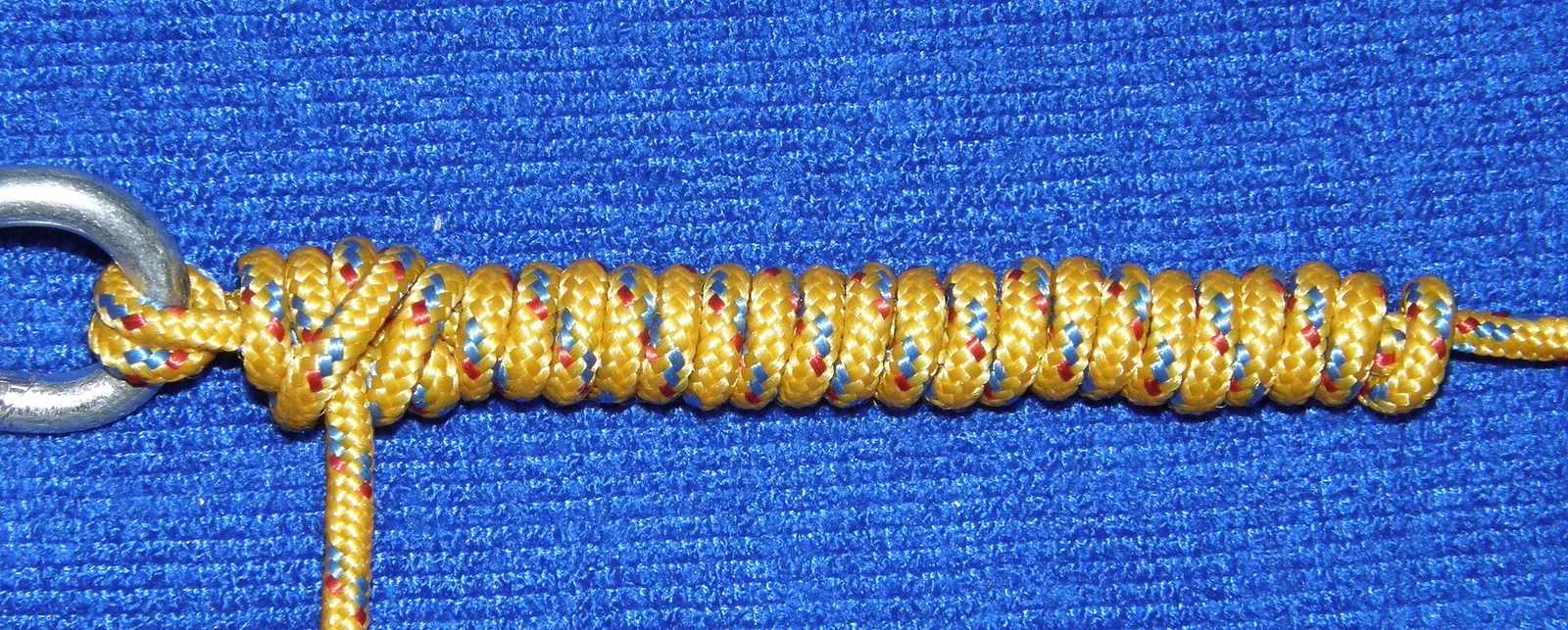
A Bimini twist turns the end of your line into a long doubled loop, so your leader knot grabs two strands instead of one. Twist the loop about 20 times on mono and 30 on braid. Pin it over your knee, let the tag roll back down the twists, and lock it with half hitches. It’s the old standard for a double line offshore, and it takes some practice before it comes out right.
One tester’s 50-twist Bimini in 30 lb braid broke at 58 percent of the line. His eight-twist knot held 94 percent. More twists didn’t buy him more strength.
What is a Bimini twist for?
It’s for putting two strands where one strand would be the weak spot. You tie the Bimini at the end of your main line, then tie your leader to the doubled part. Here’s what anglers use it for:
- Light line to a heavy leader. George Poveromo’s live-bait rig runs 20 lb mono, a 24-inch Bimini and a 40 or 50 lb fluorocarbon leader. That’s the classic offshore job.
- A loop for a wind-on leader, the long leader that winds onto your reel with the fish coming in.
- A spot to clip things. Trollers put a snap swivel on the double line. Poveromo clips a removable sinker to one leg of it with an open snap, about 40 feet from the bait.
- Protection from wear. Two strands take rubbing better than one.
- Fly backing. Fly anglers tie it to join their backing to the fly line.
Fishing bass or walleye on 10 lb braid with a short leader? You don’t need this yet. Tie an FG knot or a double uni and go fishing.
What you need
- Three to four feet of line to double over, plus a tag, the loose end, of 12 to 18 inches. Want a longer double line? Start with more. You’ll need that whole tag to finish the knot.
- Something to pull against. Your knee, your shoe or both feet all work.
- Clippers to trim the tag.
Free PDF · Hook size chart What size is that hook? Lay it on the chart.
Print the free chart, lay any hook on it and read its size: 14 hooks from 9/0 to #8 at actual size, a gap ladder from #32 to 12/0, and the size for 17 fish and 16 baits on the back.
No card, nothing to buy, and the PDF is yours to keep. Confirm with one click and it's on its way. Then a few short emails and one a week on what's biting. Unsubscribe anytime. Privacy.
How do you tie a Bimini twist?
Seven steps. The fifth is the whole knot.
-
Double the line into a loop. Fold the end back on itself and leave a 12- to 18-inch tag.
-
Twist the loop. Take the end of the loop and twist it over itself 20 times. On braid, make it 30. Count them.
-
Get the loop over your knee. Slip it under your shoe first and push a finger up inside the top of the loop to pack the twists. Then rest the loop over your knee. A longer loop goes over both knees or your feet.
-
Pull the twists tight. Hold the tag in one hand and the line to the reel in the other. Pull them apart so the twists pack down toward your knee.
-
Roll the tag back down the twists. Pull up on the line to the reel and ease off the tag. Spread the two legs of the loop wider. The tag starts rolling back over the twists on its own, in a tight barrel. Keep the tension on until it reaches the end.
-
Lock it with a half hitch on each leg. Tie a half hitch with the tag around one leg of the loop and pull it tight. Then do the other leg.
-
Finish around both legs and trim. Tie a half hitch around both legs and pass the tag through five times. The strongest braid Bimini in Sport Fishing’s reader contest finished with a five-turn hitch like this. Pull it tight and trim the tag close to the knot.
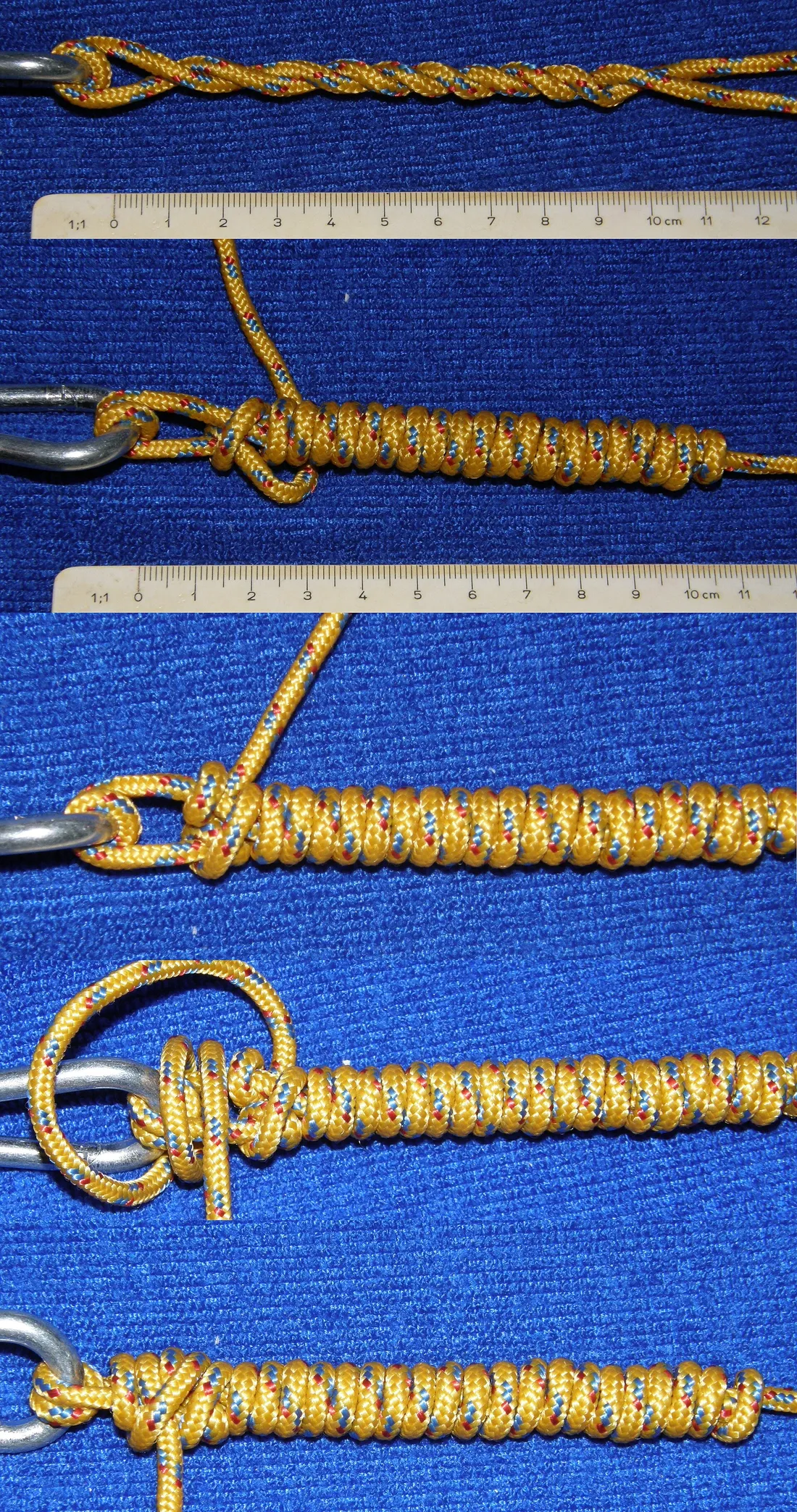
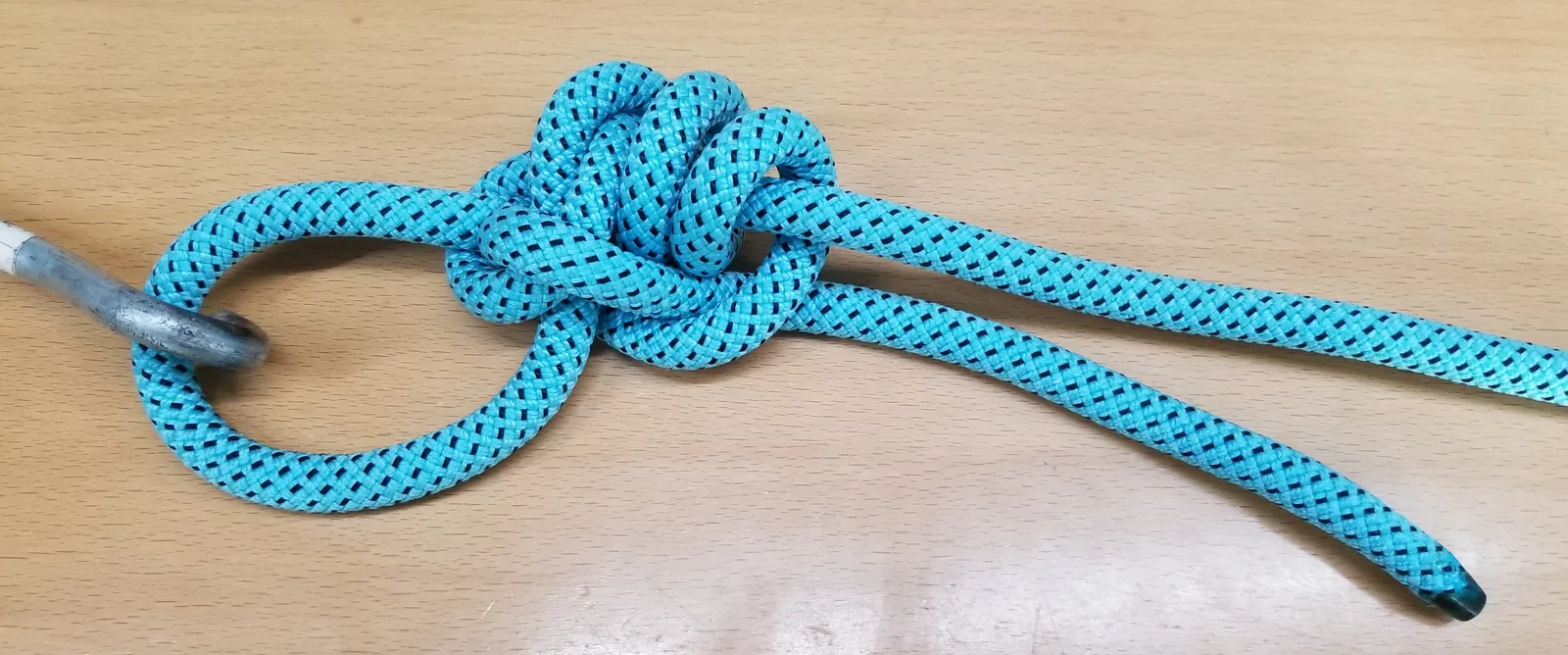
Top to bottom: twists, tag rolled back and first half hitch, second half hitch, the finish around both legs, the finished knot. Thick cord and only five twists, so you can see it. Photo: StromBer, Wikimedia Commons (CC BY-SA 3.0)
What should a finished Bimini look like?
A tight, even barrel with no gaps. The wraps should stack neatly, side by side, with the half hitches pulled tight against them. AFTCO puts it plainly: “A loose knot will fail under pressure.”
If the wraps look loose or lumpy, cut it off and start over. One entrant in Sport Fishing’s contest left the coils loose. That knot scored high in mono and near the bottom in braid. When the article’s author tied one with minimal tension himself, it didn’t tighten down as the load came on.
How many twists does a Bimini twist need?
Start with Dave Kostyo’s numbers: 20 on heavier mono, 22 to 25 on lighter mono, 30 on braid. Past that, nobody agrees.
| Who | Line | Twists |
|---|---|---|
| Capt. Dave Kostyo, Miami | Mono, 20 lb and up | 20 |
| Capt. Dave Kostyo | Lighter mono | 22–25 |
| Capt. Dave Kostyo | Braid | 30 |
| Capt. Anthony Mendillo Jr., Isla Mujeres | 20–30 lb mono | 27, for a double line of about 18 in (46 cm) |
| Capt. Brad Philipps, Guatemala | 25 lb mono | 40 |
| AFTCO | Any | 20–25 |
| Animated Knots | Any | At least 20 |
| The old standby, per Wikipedia | Mono / braid | 20–30 / 60 or more |
Line size and the finish change the answer too. The strongest braid Bimini in Sport Fishing’s reader contest had 40 turns, and the third strongest had only 11. Finishing that 11-turn knot took a half hitch on each leg, six more alternating around both, and a final four-turn half hitch.
Doug Olander’s point after those tests is worth keeping: the best number of turns might depend on how you finish the knot. So pick a count, tie it the same way every time and stop worrying about it.
How strong is a Bimini twist?
Close to the full strength of the line, when it’s tied well. Mono is the safer bet. On braid, the results swing more.
| Test | Line | What the Bimini did |
|---|---|---|
| Sport Fishing line test, 2011, 12 twists | 58 monos and fluorocarbons | 35 held 100%, 8 more held 98–99%, all but 2 held over 90% |
| Same test | 18 braids | 80–100%; 13 held 90% or more |
| Sport Fishing reader contest, IGFA machine | PowerPro braid, real break 43.1 lb (19.5 kg); Berkley mono, 44.1 lb (20 kg) | Winning 40-turn knot: 100.9% in braid, 96.8% in mono |
| Doug Olander’s own knots, IGFA machine | 30 lb braid | 8 turns 94%, 12 turns 93.5–96.8%, 20 turns 92%, 50 turns 58% |
| Sexyloops, 2017, two Biminis joined loop to loop | Nylon tippet | Averaged over 97.3%, and none failed at the knot |
A score over 100 percent looks odd, but the line sometimes breaks above the knot. So read that as “as strong as the line”.
Braid is where it can let you down. Salt Strong’s Luke Simonds pulled Biminis in 10 lb PowerPro and afterward wrote, “I no longer trust a bimini twist to not slip when using braid.” In Sport Fishing’s braid-to-leader contest, some entrants spent their effort on a fancy leader knot and then watched the Bimini break first. Olander’s advice sums it up: a Bimini is still a best bet in braid, but not every Bimini is equal.
Don’t count on it for a sudden jerk, either. Dry knots heat up when they’re snapped tight. In one hard shock test, a 70-twist Bimini in 80 lb mono with no leader failed at about 20 lb, Animated Knots reports. Kostyo likes what he calls the Bimini’s “shock-absorber effect”, and a long stretch of twists does give you some cushion. It’s still no replacement for a leader.
What do you tie to a Bimini?
Start with a double uni. In Salt Strong’s pulls it’s the only leader knot behind a Bimini that took a bout off the FG, one of three, at 18.1 lb. Here are the common choices:
- Double uni. Two captains in Sport Fishing’s survey tie it to a Bimini loop in their braid.
- Bristol knot. Poveromo’s choice for a 24-inch double line on 20 lb mono. His count is about 24 wraps in the double line and eight in the Bristol. On braid, he says to double the wraps in both, because braid is slick.
- Albright knot. AFTCO pairs it with a double line for leaders of 30 lb and up.
- Loop to loop. The loop is already there, so a leader with its own loop just passes through it.
- FG knot. In Salt Strong’s pulls on 10 lb braid, an FG on the doubled line behind a Bimini beat a single-line FG every time.
How long can a double line be?
As long as you like, unless you’re after a record. IGFA, the body that certifies them, sets the limits. Its rule: “A double line must consist of the actual line used to catch the fish.”
| Line class | Double line | Double line plus leader |
|---|---|---|
| Saltwater, up to and including 20 lb (10 kg) | 15 ft (4.57 m) | 20 ft (6.1 m) |
| Saltwater, over 20 lb (10 kg) | 30 ft (9.14 m) | 40 ft (12.19 m) |
| Freshwater, all classes | 6 ft (1.82 m) | 10 ft (3.04 m) |
The rigs on this page run far shorter. Poveromo’s is 24 inches, and Mendillo’s is about 18.
Mistakes that ruin a Bimini
- Losing tension before the first half hitch. Hold it tight until step 6 is snug.
- Too few twists. AFTCO says it makes the knot unreliable.
- Piling on twists. Olander’s 50-twist knot in 30 lb braid broke at 58 percent. More isn’t safer.
- Loose coils. Worse on braid than on mono.
- Gluing it. Olander’s Super Glue on 12-twist Biminis in braid took the break down to 73 percent.
- Using it where it’s too bulky. FlyLife warns against it for delicate presentations.
Where did the Bimini twist come from?
Nobody knows for sure. It may have been used by Nova Scotia commercial tuna fishermen before mono, with two deckhands to tie it, FlyLife says. The earliest print reference it names is a 1952 spinning book. That one called it a “100 percent loop knot”, with 15 turns and one half hitch. The story that a Venezuelan marlin fisherman invented it? FlyLife calls that “completely false”.
When should you tie something else?
If you’re tying braid to a fluorocarbon leader on a casting rod, tie the FG. In Salt Strong’s pulls on 10 lb PowerPro to 30 lb mono, the FG won 11 of 12 bouts against a Bimini with a leader knot. It’s also one knot to tie, not two.
Need a leader on fast? The Alberto needs no double line, and you don’t have to hold the braid tight while you tie it. It did lose all five bouts to the FG in Salt Strong’s 2020 pulls. The double uni is still the easy pick in a rocking boat.
Want a double line in less time? Tie a spider hitch. It’s what many anglers use in place of a Bimini when time is short. Salt Strong’s Bimini beat it three of five on 10 lb braid. And Capt. Mark Bennett in Englewood, Florida, says, “I find the spider hitch with braid tends to hold up better than a Bimini.”
Just need a plain loop in your leader? A surgeon’s loop or a perfection loop is simpler to tie, and weaker. The knots hub matches every knot to its line and job.

Free PDF · 2 pages
Stop guessing hook sizes. Lay any hook on this page and read it
A jar of loose hooks and no packet in sight. Guess wrong and you find out with a fish on.
The True-Size Hook Chart. Print it at actual size, lay a hook on the outlines, and the one its bend fills is its size. One sheet, front and back, for the tackle box.
- 14 hooks from 9/0 to #8 at true size, plus a ladder from #32 to 12/0
- The size for 17 fish and 16 baits, from bluegill to tuna
- A 2/0 circle that gapes less than a #4: why a 2/0 is not always a 2/0
Every outline drawn from Mustad's published dimensions; every size from the 25 sources on the page, Maryland DNR and Idaho Fish and Game among them.
No card, nothing to buy. Confirm with one click and the PDF is on its way, one version for your phone and one to print, yours to keep. Then a few short emails and one a week on what's biting, with an unsubscribe link in every one. Privacy.
Related
Section guide
Fishing Knots: Which Knot for Which Line and JobFishing knots by job and line: the five to learn first (Palomar, uni, FG, surgeon's, loop), the knot for braid, and what three pull tests measured.
 Best Fishing Knots by Job: What the Pull Tests Show
The best fishing knots by job, from named pull tests: Palomar or Trilene to a lure, uni on braid, FG to a leader, blood knot for line to line.
 Braid to Mono Knot: Which One to Tie, and What the Pull Tests Show
The FG is the strongest braid to mono knot you tie by hand: 73.4%, and 80.9% improved, on IGFA's tester. Six knots ranked by two pull tests.
 Blood Knot: How to Tie It, Turns by Line Size, and Strength
Blood knot: joins two mono or fluoro lines within .002 in of each other. How to tie it, turns by line size, why it slips, and how its strength tests.
 Alberto Knot: How to Tie It, and What the Pull Tests Show
The Alberto knot is an Albright with seven braid wraps up the leader loop and seven back. How to tie it, and how it did in two pull tests against the FG.
 Double Uni Knot: How to Tie It, How Many Wraps, How Strong
Double uni knot: how to tie it, how many wraps braid and mono need, and what four published pull tests measured against the FG, surgeon's and blood knot.
 Loop Knot: How to Tie the Non-Slip Loop and the Rapala Knot
A loop knot leaves a small fixed loop so the lure swings free. How to tie Kreh's non-slip loop (83% in a pull test) and the Rapala knot, and which wins.
Sources (18)
- Animated Knots, Bimini Twist Knot
- Wikipedia, Bimini twist
- Doug Olander, Tying the Strongest Double Line Knot, Sport Fishing (updated March 31, 2025)
- Sport Fishing Staff, Sport Fishing Line Test 2011 (updated September 16, 2011)
- Doug Olander, Best Fishing Knots from 7 Professional Skippers, Sport Fishing (updated May 20, 2015)
Show all 18 sourcesShow fewer sources
- Doug Olander, Strongest Fishing Knots Connecting Braid to Leader, Sport Fishing
- Luke Simonds, The Strongest Knot For Doubling Over Braided Line [Knot Contest], Salt Strong (November 17, 2016)
- Luke Simonds, FG Knot Vs. The Bimini Twist [Strength Test], Salt Strong (December 1, 2016)
- Luke Simonds, The Albright vs the Alberto vs the FG knot (strength contest, 10 lb PowerPro to 30 lb Ande fluorocarbon), Salt Strong (2020)
- Coty Perry, How to Tie a Bimini Twist Knot, AFTCO (July 24, 2025)
- NetKnots, Bimini Twist Knot Tying Instructions
- DJ Tudino, How to Tie the Bimini Twist, The Bear Essentials (updated August 19, 2026)
- George Poveromo, Adjusting Your Leaders for Fishing Situations, Salt Water Sportsman (updated July 28, 2017)
- IGFA, International Angling Rules
- Capt. Ricky Wheeler, Leader Tips for Offshore Fishing, Marlin (March 11, 2026)
- Skip, Tips & Tactics: Tying the Bimini Twist knot properly, FlyLife (March 18, 2013)
- Louis Cahill, The Bimini Twist, Gink & Gasoline (February 11, 2026)
- Tracy&James, Knot testing, part 2, Sexyloops (November 2, 2017)