 By
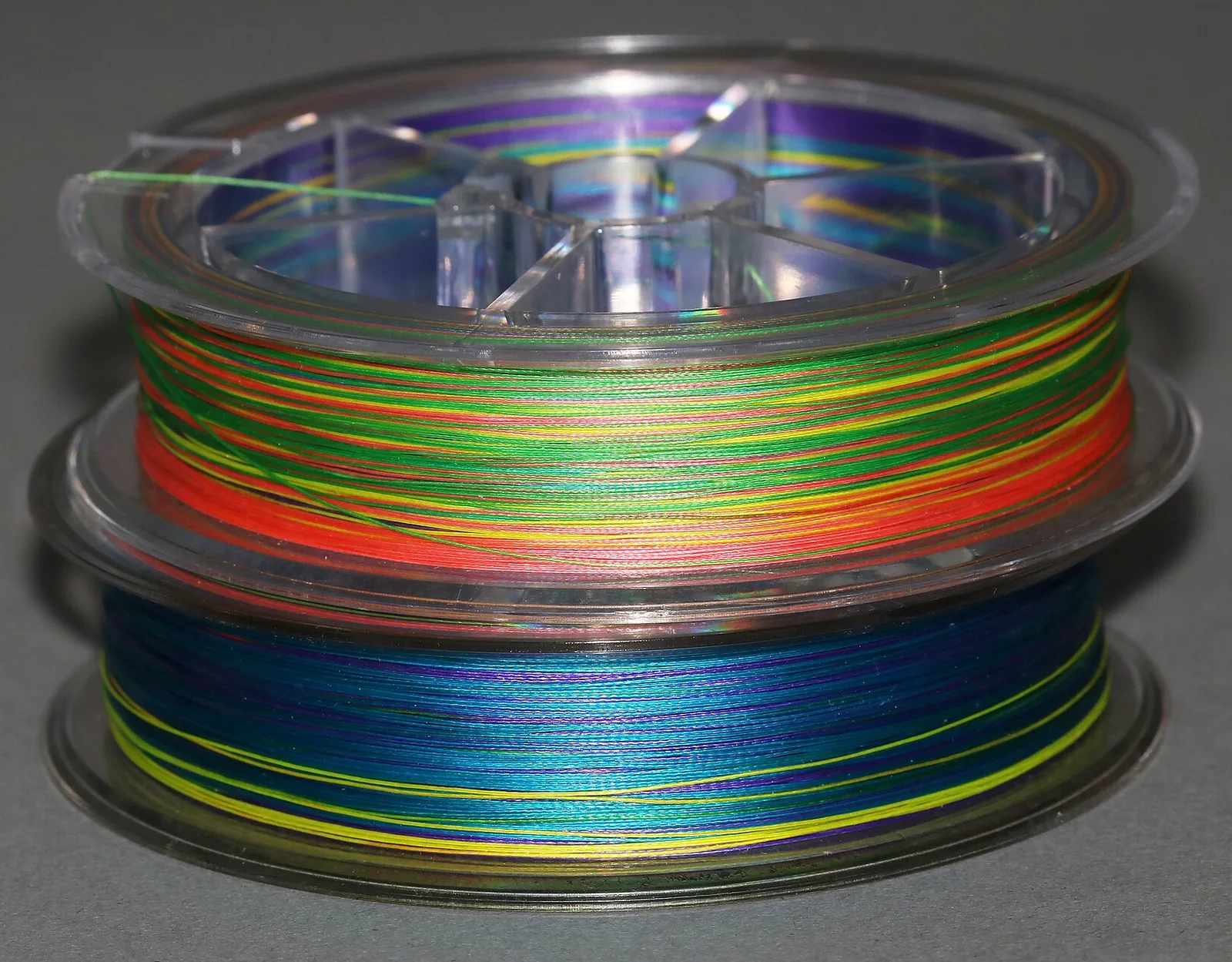
The best braid to mono knot you can tie by hand is the FG knot. Braid is the thin, woven line on your reel. Mono is the clear, single-strand line you tie to its end as a leader: a few feet of thicker line before your hook. The FG ranks second only to a knot that needs a bobbin tool. It held 73.4 percent of the braid’s real break on IGFA’s tester, and it beat the Alberto in all five of Salt Strong’s head-to-head pulls. Can’t tie the FG out on the water? Tie a double uni with five wraps a side or a six-turn surgeon’s knot. Either one gets your leader on fast and still tests in the middle of the field. All these knots do the same job: they make thin, slick braid bite into a thick, grippy leader.
Four anglers tied an FG for the same test machine, on the same 15 lb braid and 30 lb leader. Their knots held anywhere from 49.1 to 73.4 percent of the braid’s real strength. How well you tie it matters almost as much as which knot you tie.
Which knot should you tie?
- The leader lives on the reel and passes through the guides (bass on a spinning rod, inshore, surf plugs): tie the FG. It runs freely through the guides, the rings along your rod. Counting its improved version, it’s the strongest knot tied by hand in both pull tests below.
- You need the leader on now, in the dark or in a rocking boat: tie a six-turn surgeon’s. Or tie a double uni with at least five wraps a side. Both beat the Alberto in Sport Fishing’s machine test below. Capt. Tom Rowland of Saltwater Experience says of the double uni: “It is hard to beat this one!”
- You cannot keep braid under tension, or the surgeon’s bulk bothers you: tie the Alberto. You don’t need a tension trick for it, and Rowland says he’s using it more often now.
- The lure is already tied on: use the FG, Alberto or double uni. With the surgeon’s, the whole leader passes through the loop, so you tie it before the hook or lure goes on. Salt Strong makes that point about the surgeon’s knot, and it holds for the six-turn version too.
- The leader is single-strand wire: tie the Albright. The Fisherman calls it a popular way to join wire to mono, and “not a good connection when joining mono to gelspun because the super-braid will slip.” Gelspun and super-braid are just other names for braid.
- You want every last percent and can tie at home: tie a PR bobbin knot. You need a bobbin tool to make it, a small holder for a spool of braid that you swing around the leader to lay the wraps. It topped Salt Strong’s ranking and the 15 lb braid class in Sport Fishing’s test, both below.
How do you tie each one?
Each knot has its own page with every step drawn. The notes below are the parts that decide whether your knot holds.
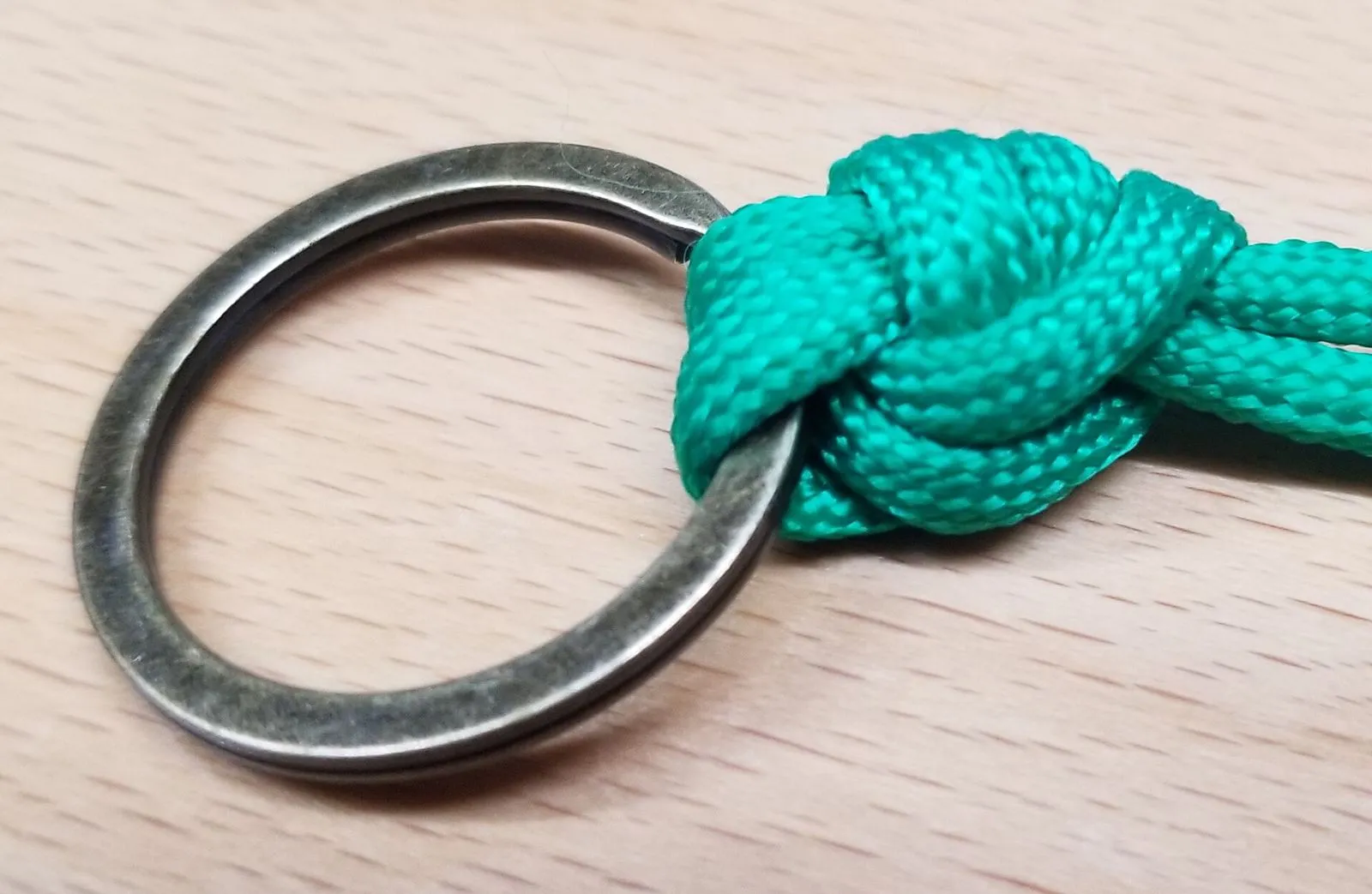
FG knot. Pull the braid tight and keep it tight the whole time. Hold it between your hand and your mouth, finger and thumb, or rod and foot. Wrap the leader alternately under and over it, about 12 to 15 double wraps. Then lock them with half hitches, simple loops of the braid’s tag around both lines. The step most people skip is the strong final pull on braid and leader. That pull tightens the finger grip, and how strong your knot ends up depends on it. Full steps are on the FG knot page.
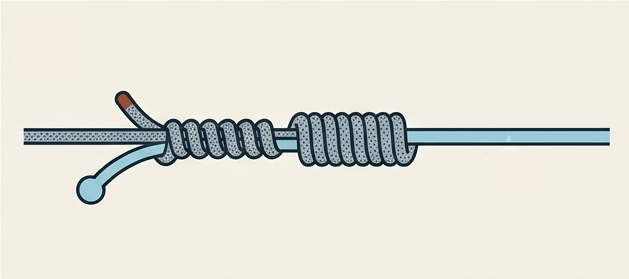
The FG’s outline: a sleeve of braid on the leader, locked by hitches. The drawing shows the shape, not the alternating under-and-over wraps that make it grip. The FG knot page draws each step. Drawing: fishing.info, generated with Gemini.
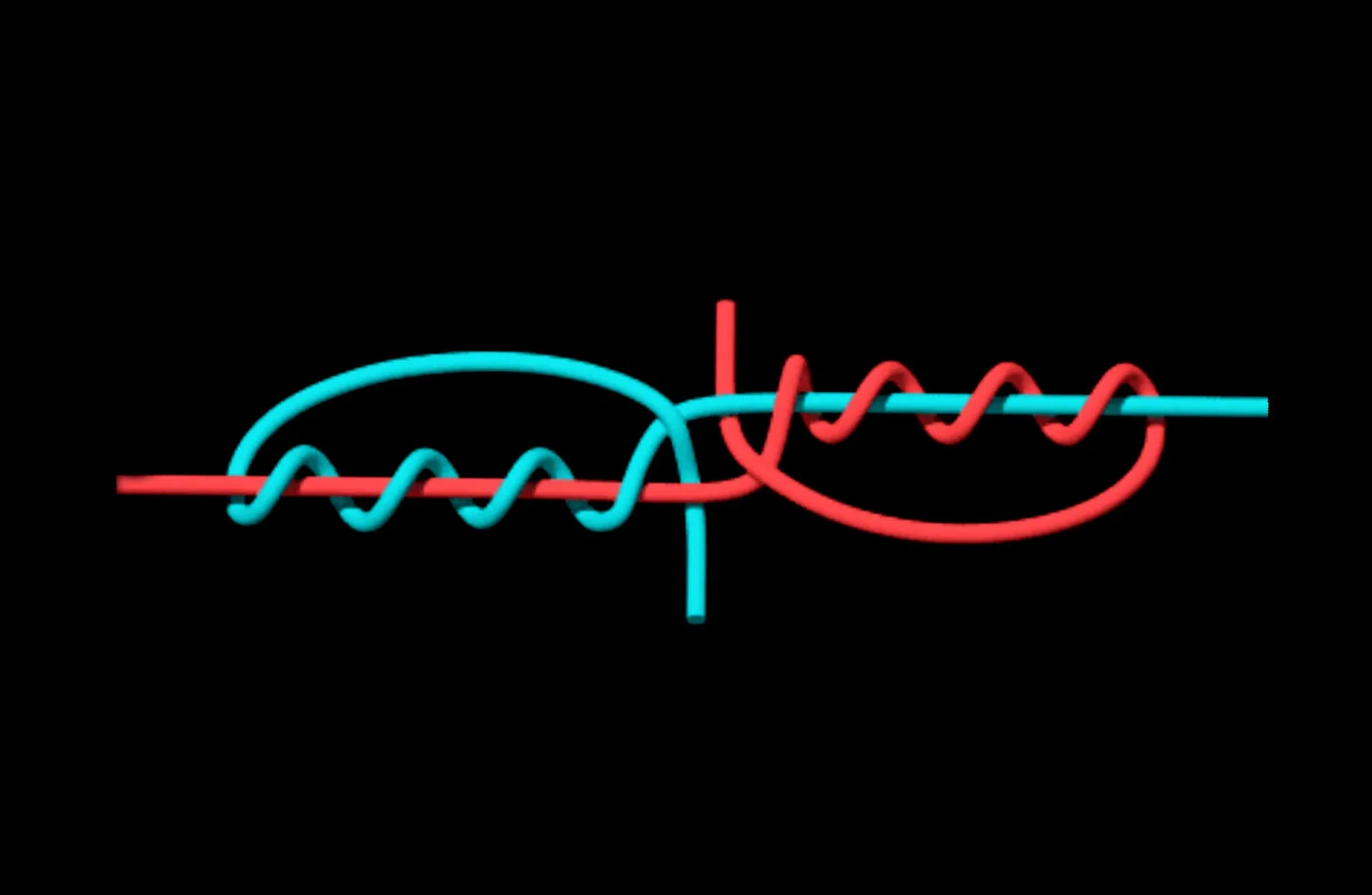
Double uni. Lay the two lines side by side, overlapping. Tie a uni knot with each tag end, the short end you’ll trim later, around the other line. Then pull the standing lines, the long ends, so the two barrels of wraps slide together. Count your wraps. The best double uni on IGFA’s machine had five wraps around each side. A four-wrap one, tied by another entrant, held 16 points less. Not all of that gap comes from the wraps. But it points the same way every tutorial does: on braid, go with more wraps, not fewer. The double uni knot page has the steps.
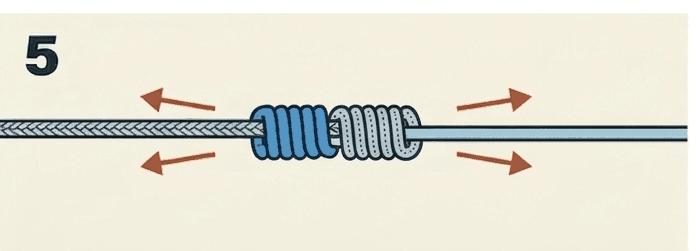
Two uni knots sliding together. The best double uni on IGFA’s machine had five wraps a side. Drawing: fishing.info, generated with Gemini.
Six-turn surgeon’s. Lay braid and leader side by side, overlapping. Tie them as one strand in an overhand knot, the plain knot you’d tie in the end of a thread. In Salt Strong’s version you pass the braid’s tag and the whole leader through the loop six times. Wet it and draw it down evenly. It’s the surgeon’s knot with extra turns, because braid is slick.
Alberto. Double the leader into a loop and pass the braid through it. Wrap the braid seven times away from the loop and seven times back over its own wraps, then back out through the loop. Salt Strong tied it with 14 wraps in all. Those return wraps lock the braid against itself, and that’s what the plain Albright lacks. Steps are on the Alberto knot page.
Free PDF · Hook size chart What size is that hook? Lay it on the chart.
Print the free chart, lay any hook on it and read its size: 14 hooks from 9/0 to #8 at actual size, a gap ladder from #32 to 12/0, and the size for 17 fish and 16 baits on the back.
No card, nothing to buy, and the PDF is yours to keep. Confirm with one click and it's on its way. Then a few short emails and one a week on what's biting. Unsubscribe anytime. Privacy.
How strong is each knot?
Luke Simonds of Salt Strong ranked the braid-to-leader knots he’d tested, from strongest to weakest. He used 10–20 lb PowerPro braid to 20–30 lb Ande mono and Seaguar fluorocarbon. Fluorocarbon is the other clear line you’ll see sold for leaders.
- PR bobbin knot. The strongest, but you need a bobbin tool and time at home.
- FG knot. The thinnest knot he’d seen, he says, with the highest breaking strength.
- Six-turn surgeon’s knot. “Very quick to tie,” a little bulkier than the FG and slightly weaker.
- Doubled-over double uni. Up to 30 percent weaker than the FG in his tests.
- Crazy Alberto. Also up to 30 percent weaker than the FG.
- Improved Albright. Weaker than both the FG and the Alberto.
- GT knot. Easy to tie in its viral version. But in his words it “isn’t nearly as strong as it’s touted for lighter lines.”
The surgeon’s in third place is the surprise. Most braid-to-leader advice never mentions it, and it’s the quickest knot on the list. The GT knot goes the other way. It’s last on light line here. Yet a GT knot was the top entry in Sport Fishing’s heavy class, 50 lb braid to 80 lb fluorocarbon. It held 100 percent of the braid’s real break. Sport Fishing found that knots near 100 percent seem harder to tie in light braid, and that fits both results.
Two tests give you numbers, and both say which lines they used. Salt Strong’s 2020 contest put two knots on one strand of 10 lb PowerPro and 30 lb Ande fluorocarbon and pulled until one gave. Each figure is where the losing knot broke. Sport Fishing pulled 53 entries in two classes on the International Game Fish Association’s Instron 5543 tester, three breaks per entry. The 15 lb class, 26 entries, used 15 lb Spiderwire Stealth braid to 30 lb Berkley ProSpec fluorocarbon. That braid broke at 34.4 lb on its own. The percentages are of that real break, not of the number on the label.
| Knot | Salt Strong rank | Salt Strong pulls (lb) | Sport Fishing, IGFA machine |
|---|---|---|---|
| PR bobbin | 1 | not pulled | 84.3% (about 29 lb, 13.2 kg) |
| FG | 2 | Won 5 of 5 against the Alberto | 49.1–73.4%, four entries; an improved FG 80.9% |
| Surgeon’s | 3 (six turns) | not pulled | 52.2%, four times through the loop |
| Double uni | 4 (doubled-over) | no braid figure | 55.8% with 5 wraps a side; 40.1% with 4 |
| Alberto | 5 | Lost to the FG at 8.7–14.6; broke at 15.6 and 9.2 against the Albright | 36.0–42.2%, two entries |
| Albright | 6 (improved) | Pulled out at 7.2; broke at 11.3 and 9.4 | 38.3–46.2%, two entries |
Here’s what the table tells you. First, the FG, counting its improved version, is the strongest knot you tie by hand in both tests. Only the PR bobbin, tied with a tool, beat it. In a reply to a reader, Salt Strong’s author put its typical break with those lines at “at least 17 lbs.” The article itself doesn’t log that figure.
Second, the double uni’s place moves with its wraps, though two different entrants tied the two versions. With five a side it beat the surgeon’s, both Albertos and both Albrights. With four it fell below the surgeon’s, into the range of the Albertos and Albrights.
Third, the Alberto and the Albright swap places between the two tests. That says more about how each one was tied than about the knots.
Neither test is a lab standard. Each is one tester’s method. Sport Fishing’s editors noted that small differences in how you tie the same knot can make its strength vary tremendously.
Why is braid so hard to knot?
Braid has three problems. It isn’t clear, so it shows in the water, and it frays on rock and shell. It also has no stretch to soften a hookset, the hard pull that sets the hook. A few feet of mono or fluorocarbon at the business end fixes all three, and the knot is the price you pay. How long your fishing leader should be, and how strong (its pound test), depends on the kind of fishing you do. Its material comes down to fluorocarbon versus monofilament.
The difference in thickness is what makes the knot hard. PowerPro lists its 10 lb braid at 0.15 mm, the diameter of 2 lb mono. So a 30 lb leader next to it is several times thicker. Braid’s slickness does the rest: a knot that relies on a few wraps just slides.
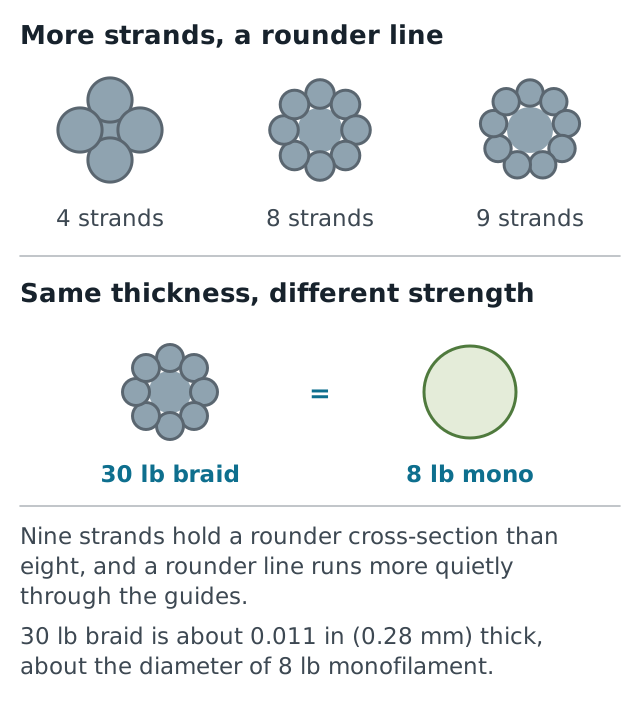
Braid gets its strength into a thin line, and that’s what makes it hard to knot. Drawing: fishing.info.
Every test above paired light braid with a heavier leader. The lines were 10 lb braid to 30 lb, 10–20 lb to 20–30 lb, and 15 lb braid to a 30 lb leader. Bass finesse setups, light line and small lures, often run the other way, with a leader lighter than the braid. No named test covers that pairing. Salt Strong lists a leader weaker than the braid as one of three times the FG doesn’t work well. The braided line page covers what braid is for in the first place.
What does every braid-to-leader knot need?
- Count your wraps. The gap between the best and worst FG, and between the five- and four-wrap double uni, is bigger than the gap between most of the knots.
- Seat slowly, then pull hard. Slide the wraps into place, then give one firm pull on both standing lines. On the FG, that pull is what sets the knot.
- Do not trust saliva blindly. Most tutorials tell you to wet a knot before you seat it. But one Salt Strong test, on 20 lb to 30 lb Ande mono, found saliva helped the blood knot and hurt the double uni.
- Retie after a big fish or a hard snag. A knot that’s taken a heavy load has already been tested once.
Does a blood knot work for braid to mono?
Not well, and none of the tests above includes it. Salt Strong lists the blood knot among mono-to-mono joins, and says it’s “not as effective with lines of different diameters.” And 10 lb braid against a 30 lb leader is about as different as two lines get. Save the blood knot for two lines of about the same size, such as the sections of a fly leader.
Mistakes that cost strength
- A double uni with four wraps a side. On IGFA’s machine that version held 40.1 percent. Five wraps held 55.8.
- An FG without the hard final pull. Then the half hitches end up doing the holding.
- An Albright on braid. In Salt Strong’s contest it pulled out at 7.2 lb. Tie the Alberto instead, the Albright with wraps that lock.
- An FG on a leader lighter than the braid. That’s one of the FG’s three weak spots.
- A surgeon’s tied after the lure. You’d have to pass the whole leader through the loop.
When does something else win?
A small swivel, a little metal link that turns, between braid and leader is an honest option when your leader is short and never reaches the guides. Tie it on with a Palomar knot on each side. You get two familiar knots instead of a new one, and you pay with a little hardware on your line. For every other job, from hook to spool, the best fishing knots page ranks the strongest by test. The knots hub matches each knot to its line and job.

Free PDF · 2 pages
Stop guessing hook sizes. Lay any hook on this page and read it
A jar of loose hooks and no packet in sight. Guess wrong and you find out with a fish on.
The True-Size Hook Chart. Print it at actual size, lay a hook on the outlines, and the one its bend fills is its size. One sheet, front and back, for the tackle box.
- 14 hooks from 9/0 to #8 at true size, plus a ladder from #32 to 12/0
- The size for 17 fish and 16 baits, from bluegill to tuna
- A 2/0 circle that gapes less than a #4: why a 2/0 is not always a 2/0
Every outline drawn from Mustad's published dimensions; every size from the 25 sources on the page, Maryland DNR and Idaho Fish and Game among them.
No card, nothing to buy. Confirm with one click and the PDF is on its way, one version for your phone and one to print, yours to keep. Then a few short emails and one a week on what's biting, with an unsubscribe link in every one. Privacy.
Related
Section guide
Fishing Knots: Which Knot for Which Line and JobFishing knots by job and line: the five to learn first (Palomar, uni, FG, surgeon's, loop), the knot for braid, and what three pull tests measured.
 Best Fishing Knots by Job: What the Pull Tests Show
The best fishing knots by job, from named pull tests: Palomar or Trilene to a lure, uni on braid, FG to a leader, blood knot for line to line.
 Blood Knot: How to Tie It, Turns by Line Size, and Strength
Blood knot: joins two mono or fluoro lines within .002 in of each other. How to tie it, turns by line size, why it slips, and how its strength tests.
 Alberto Knot: How to Tie It, and What the Pull Tests Show
The Alberto knot is an Albright with seven braid wraps up the leader loop and seven back. How to tie it, and how it did in two pull tests against the FG.
 Double Uni Knot: How to Tie It, How Many Wraps, How Strong
Double uni knot: how to tie it, how many wraps braid and mono need, and what four published pull tests measured against the FG, surgeon's and blood knot.
 Loop Knot: How to Tie the Non-Slip Loop and the Rapala Knot
A loop knot leaves a small fixed loop so the lure swings free. How to tie Kreh's non-slip loop (83% in a pull test) and the Rapala knot, and which wins.
 Arbor Knot: How to Tie Line to a Reel Spool (and Why Braid Slips)
How to tie the arbor knot on a spinning, baitcast, spincast or fly reel, why it slips on braid, and the backing or tape that stops it.
Sources (9)
- Luke Simonds, The best fishing knots of all time, ranked (braid-to-leader ranking, 10–20 lb PowerPro to 20–30 lb Ande mono and Seaguar fluoro), Salt Strong (2018)
- Luke Simonds, The Albright vs the Alberto vs the FG knot (strength contest, 10 lb PowerPro to 30 lb Ande fluorocarbon), Salt Strong (2020)
- Doug Olander, Strongest fishing knots connecting braid to leader (IGFA Instron 5543, 15 lb Spiderwire Stealth to 30 lb Berkley ProSpec), Sport Fishing
- Luke Simonds, FG knot: 3 critical times you should never use this fishing knot, Salt Strong (2018)
- Sean Person, Blood knot vs double uni knot (wet and dry, 20 lb to 30 lb Ande mono), Salt Strong (2021)
Show all 9 sourcesShow fewer sources
- Animated Knots, FG knot (12–15 double wraps, tension, the final pull)
- The Fisherman, Albright knot (not for mono to gelspun; wire and heavy leaders)
- Capt. Tom Rowland, The 6 best knots for braided line to heavy monofilament leader, Saltwater Experience
- Bass Pro Shops, PowerPro Spectra braid (10 lb: 0.15 mm, 2 lb mono equivalent diameter)