 By
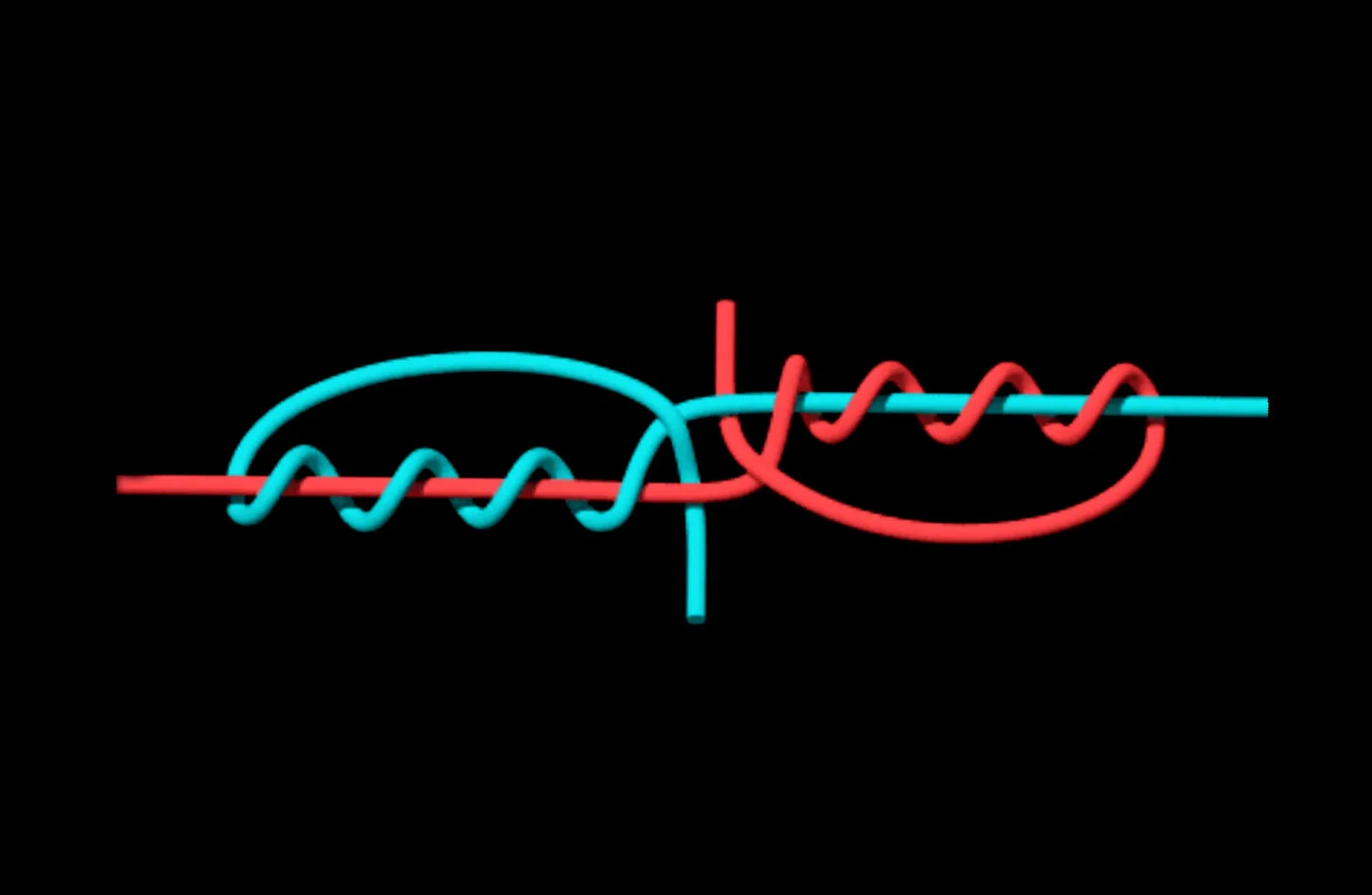
Use the blood knot to join two monofilament lines of nearly the same thickness: within .002 in (0.05 mm). You wrap each line around the other and tuck the two tags, the short free ends, through the center in opposite directions. Pull it tight and you get a neat, even barrel of coils. It’s the fly angler’s knot for joining the sections of a leader, the clear line between the thick fly line and the fly, and for adding tippet at the end. In any other fishing, it’s a strong join for mono of similar size. Two lines further apart than that get a surgeon’s knot, the fast knot for lines of different sizes.
Wet it with saliva before you pull it tight. It held better that way in Salt Strong’s six-trial pull test. It also tested 13 percent stronger there than the double uni, another knot for joining two lines, with 20 lb mono tied to 30 lb.
When is the blood knot the right join?
This knot has one condition: your two lines must be close in size. Orvis’s rule for joining mono is no more than .002 in apart in diameter, which just means how thick the line is. On fly tippet that’s one or two sizes. Tippet comes in X sizes, and the bigger the X number, the thinner the line. To get a tippet’s diameter, take its X size away from 11 and read the answer in thousandths of an inch. That makes 4X .007 in and 3X .008 in, so you can tie 4X to 3X with a blood knot, or 5X (.006 in) to 3X.
Salt Strong ranks it first of five knots for mono to mono, with the same catch: it’s “not as effective with lines of different diameters.”
Its home is the tapered leader, which steps down from a thick end at the fly line, called the butt, to a fine tippet. Orvis puts most fly leaders at 7.5 to 12 ft (2.3 to 3.7 m). Joining those sections is the blood knot’s classic job. On a trout stream, it’s the knot you tie to add a fresh length of tippet before you tie on one of the trout flies.
Off the fly rod, you can join monofilament to mono of similar size. Fluorocarbon (fluoro, a line that’s harder to see under water) ties to mono as well. Salt Strong says its mono-to-mono result applies to fluoro to mono too, though it tested only mono. The fluoro number on this page is John Merwin’s: 83 percent, below, on 10 lb fluoro tied to 10 lb mono.
Braid, line woven from thin fibers, is another matter. You can tie it braid to mono, but Salt Strong’s Luke Simonds doesn’t recommend it. It’s harder to tie and not as strong as the FG knot, a slim knot made for braid. For braid to a leader, a length of different line between your main line and the hook, tie the FG knot or the double uni. Start with the double uni, because it’s the easier one to learn.
If all you’re tying is one line to a hook, you don’t need this knot yet. The clinch knot does that job.
How do you tie the blood knot?
Cross the two ends, wrap each one around the other, tuck both tags through the center, then wet it and pull. You’ll need two words for the steps. The tag end is the short free end you tie with. The standing part is the long line behind it.
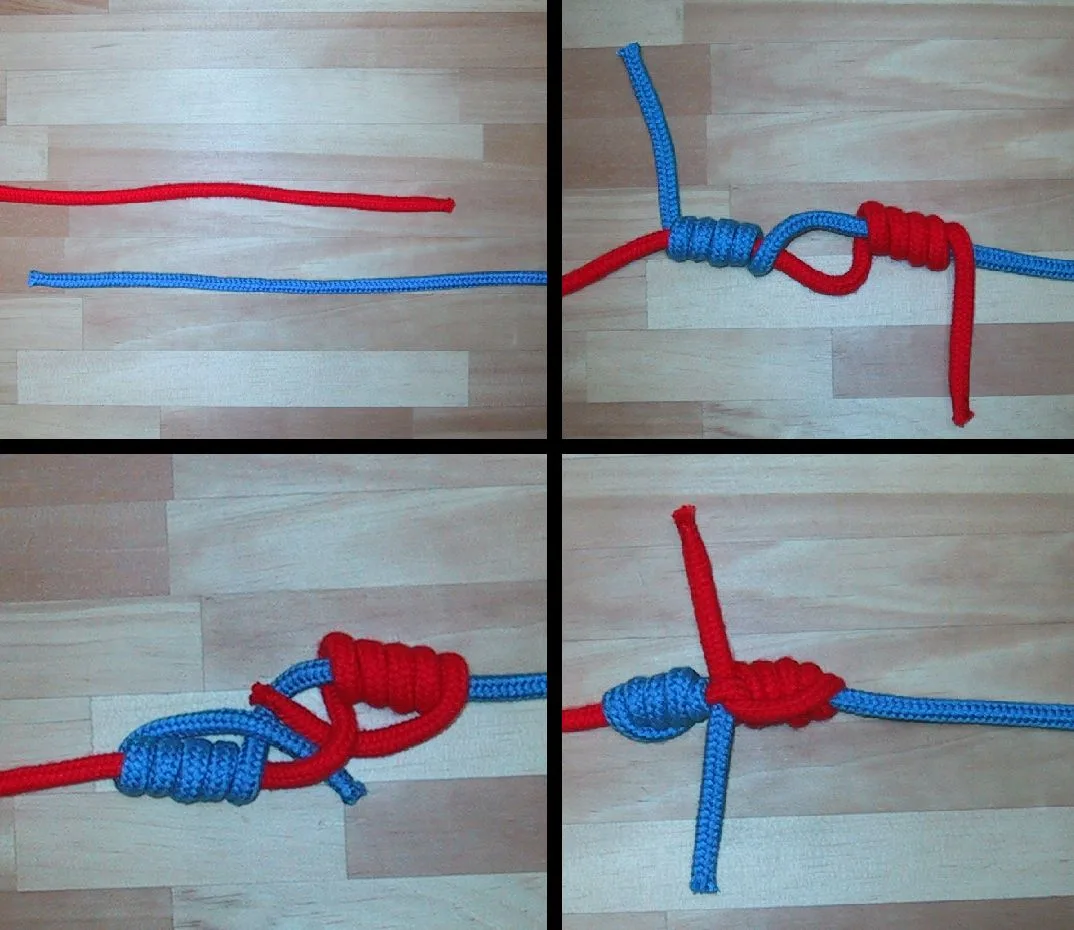
Photo: Chris 73, Wikimedia Commons (CC BY-SA 3.0)
The photos use thick cord so you can see the path. The first one shows the two ends side by side, before you cross them. The second shows both lines wrapped, with the tags not tucked yet. The third shows both tags through the center, and the fourth is the knot pulled tight. The photos do both wraps first, and in the steps below the first tag tucks before the second wrap. It’s the same knot. Don’t copy the number of wraps you see in the pictures. Take your count from the table below.
- Cross the lines. Lay the two ends across each other in an X, pointing in opposite directions. Leave 5 to 6 in (13 to 15 cm) of tag end on each side. Pinch the crossing between your finger and thumb.
- Wrap the first tag. Wrap one tag around the other line’s standing part, working away from the crossing, for the number of turns in the table below. One turn is one trip around the line. Bring the tag back and tuck it between the two lines at the crossing.
- Wrap the second tag. Hold that tuck in place. Wrap the other tag around the first line the same number of turns, working the other way.
- Tuck it through the same opening, the opposite way. The second tag goes through the same gap at the center as the first, but from the other side. The two tags now exit in opposite directions. Leave enough tag sticking out that it can’t slip back through as the knot closes.
- Wet it and pull the standing lines. Wet the knot and pull both standing parts quickly. Never tighten it by pulling the tag ends.
- Check, then trim. You should see neat, even coils on both sides. If you don’t, cut it and start over. If you do, trim the tags close.
Your tightened knot won’t look like the loose one, and that’s fine. As it closes, the turns shift and the inside strand ends up on the outside. A good one shows two even barrels of coils with the tags pointing opposite ways. Wet it before you pull it tight and trim close after: every fishing knot wants that, not just this one.
Free PDF · Hook size chart What size is that hook? Lay it on the chart.
Print the free chart, lay any hook on it and read its size: 14 hooks from 9/0 to #8 at actual size, a gap ladder from #32 to 12/0, and the size for 17 fish and 16 baits on the back.
No card, nothing to buy, and the PDF is yours to keep. Confirm with one click and it's on its way. Then a few short emails and one a week on what's biting. Unsubscribe anytime. Privacy.
How many turns per side?
The finer your line, the more turns you make. “Per side” just means on each line, so seven per side is seven turns with each tag. Go by Orvis’s three-step rule, by diameter. The last row, from Animated Knots, is for when you don’t know your line’s diameter. The X sizes come from the 11-minus-X sum above.
| Line diameter | Examples | Turns per side |
|---|---|---|
| .009 in (0.23 mm) and finer | 2X (.009 in) to 7X (.004 in) tippet | 7 |
| .010 to .015 in (0.25 to 0.38 mm) | 1X (.010 in), 0X (.011 in) and thicker leader sections | 5 |
| .016 to .017 in (0.41 to 0.43 mm) | Thicker leader sections | Orvis gives no figure |
| Above .017 in (0.43 mm) | Heavier mono | 3 |
| Any two similar lines (Animated Knots) | General rule | At least 5, up to 7; about 6 |
Use the table as your starting point, because the counts differ by a turn or two. Lefty Kreh’s book Fishing Knots uses four to six wraps, and Wikipedia follows him. Salt Strong’s strength test used five turns on the 20 lb line and four on the 30 lb.
Chris Fave, who ties leaders for a living, goes lower still. He uses four turns as “perfect for most weights,” five at 6X and smaller, and never seven. Fewer turns on fine tippet is a choice some experienced knot tiers make. If you’re not sure, tie seven on 5X and 6X. It’s the safe count.
How strong is the blood knot?
The blood knot came out on top in both tests here that put it against other joins on the same lines. Two more show how the surgeon’s compares. In a pull test, you tie a knot and pull until it breaks, so the higher the number, the stronger the knot.
| Test | Lines | Result |
|---|---|---|
| Salt Strong (Sean Person), six trials | 20 lb Ande mono leader tied to 30 lb | Blood knot 13% stronger than the double uni |
| John Merwin, Field & Stream | 10 lb Seaguar InvizX fluoro to 10 lb Trilene Big Game mono | Blood knot (5 turns) 83%; Seaguar knot (3 turns) 66%; surgeon’s (3 turns) 65% of line strength |
| John Merwin, Field & Stream | Braid to fluorocarbon | Surgeon’s (4 turns) 80%; blood knot not tied |
| Salt Strong contest, 2015 | 10 lb Trilene XL to 30 lb Trilene Big Game | Surgeon’s 13 to 15 lb; double uni 7 to 12 lb; blood knot not entered |
For the Salt Strong test, Sean Person joined a 20 lb line to a 30 lb line (lb is the pounds of pull a line is sold as holding). He tied both knots with five turns of the lighter line and four of the heavier. Lines that far apart usually differ by more than Orvis’s limit, so that result comes from a join the rule would keep you away from. He soaked the line in water for 10 seconds before every pull. So “dry” here means no saliva on the knot. He cinched, or pulled tight, half of the six knots without it, and wetted the other half with saliva before cinching. The blood knot did better with saliva, and the double uni did better dry. He doesn’t say how many pounds it took to break them, so the 13 percent is the whole result. Put a little spit on your blood knot before you pull it tight.
Merwin’s numbers show how much of the line’s strength each knot kept, compared with the same line with no knot in it. He named no machine and no pull count, so trust the order more than the exact figures. You may run into an 80 percent knot strength in Wikipedia’s infobox, the fact box on its page. It has no source behind it.
Blood knot or surgeon’s knot: which is stronger?
On lines of similar size, the blood knot. Merwin’s blood knot beat a three-turn surgeon’s knot by 18 points, 83 to 65 percent, on the same lines. That’s the only test here with a number for both. When your lines differ in diameter, tie the surgeon’s, because that’s the job it exists for. Orvis keeps the blood knot to lines close in size, and Salt Strong calls it “not as effective” there. No test on this page pulled the two against each other on unequal lines. Salt Strong’s 2018 ranking of mono-to-mono knots puts the blood knot first of five and the surgeon’s third.
Why does a blood knot slip?
When yours slips, check these six things.
| What went wrong | What to do |
|---|---|
| Your lines are too far apart | Orvis’s limit is .002 in. Step the leader down one or two X sizes at a time, or tie a surgeon’s knot. |
| You made too few turns on fine tippet | On .009 in and finer, use seven per side. |
| You pulled the tags | Pull the standing parts, never the tags. |
| Your tags were too short in the center | They have to stick out far enough that they can’t slip back out as the knot tightens. |
| You cinched it dry | Wet it, because the blood knot held better wetted with saliva in the Salt Strong test. Some lines need it more than others, fluorocarbon among them, while Sunset and Maxima mono do not, says Chris Fave. |
| Both tags went through the same way | The second tag tucks through in the opposite direction. |
Is there a faster way to tie it?
The awkward part of the standard method is holding the first tuck while you wrap the second tag. Three shortcuts get around it. Try the last one first, because it needs no tool and the tags still go opposite ways.
- The speed blood knot. This one is built so you don’t have to control the tag ends. In an Orvis News video from August 4, 2023, Ross Purnell, editor of Fly Fisherman, shows how. It’s not a true blood knot, because the tags pass through the central loop in the same direction. In the standard knot above, that’s a reason it slips. This is a different knot, and Orvis’s Phil Monahan says he believes Purnell that it doesn’t fail.
- The toothpick method. A toothpick lets Chris Fave tie one “perfectly in seconds.” He ties about half a million blood knots a year, by Gink & Gasoline’s count. Their video shows how.
- Twist, then split. Overlap the two ends and twist them together for about ten to fourteen turns. Open a hole at the center of the twists, and pass the two ends through it in opposite directions.
Which join for which situation?
On the water, it comes down to the gap between your two lines. The fishing knots page has the same kind of table for every line and job.
| Situation | Tie | Why |
|---|---|---|
| Leader sections .002 in (0.05 mm) or less apart | Blood knot | Orvis’s rule; neat, symmetrical barrel |
| Adding 5X tippet to a 4X end | Blood knot, 7 turns | Both .009 in or finer |
| Tippet more than .002 in thinner than the leader end | Surgeon’s knot | Blood knot “not as effective” on unequal lines |
| Mono to mono of similar size, any fishing | Blood knot | Ranked first of five; beat the double uni by 13% |
| Tags hard to control in wind or cold | Speed blood knot or surgeon’s | The speed version is built for tag control |
| Fluorocarbon to mono of similar size | Blood knot | Merwin: 83% on 10 lb fluoro to 10 lb mono |
| Braid to a leader | FG knot or double uni | Simonds: the blood knot is weaker than the FG on braid |
Where does the name come from?
Nobody knows for certain. You’ll also hear it called the barrel knot, and it carries three numbers in The Ashley Book of Knots: 295, 345 and 1413. Clifford Ashley credits only the name, to Keith Rollo. His verdict is short: “The barrel knot, called blood knot by Keith Rollo, is the best bend there is for small, stiff or slippery line.” A bend, in knot language, is any knot that joins two lines.
There’s a half blood knot too. That’s the clinch knot, which ties line to a hook, lure or swivel, a small fitting with two eyes that turn. When two half blood knots join two lines, they count as one knot: the blood knot. The clinch’s close relative is the improved clinch knot. And “blood knot” is also the name of a double overhand knot tied in the tails of a cat-o’-nine-tails, a whip with many tails. That’s a different knot entirely.
When should you tie something else?
Tie the surgeon’s knot when your two lines aren’t close in diameter, and the FG knot or the double uni for braid to a leader.

Free PDF · 2 pages
Stop guessing hook sizes. Lay any hook on this page and read it
A jar of loose hooks and no packet in sight. Guess wrong and you find out with a fish on.
The True-Size Hook Chart. Print it at actual size, lay a hook on the outlines, and the one its bend fills is its size. One sheet, front and back, for the tackle box.
- 14 hooks from 9/0 to #8 at true size, plus a ladder from #32 to 12/0
- The size for 17 fish and 16 baits, from bluegill to tuna
- A 2/0 circle that gapes less than a #4: why a 2/0 is not always a 2/0
Every outline drawn from Mustad's published dimensions; every size from the 25 sources on the page, Maryland DNR and Idaho Fish and Game among them.
No card, nothing to buy. Confirm with one click and the PDF is on its way, one version for your phone and one to print, yours to keep. Then a few short emails and one a week on what's biting, with an unsubscribe link in every one. Privacy.
Related
Section guide
Fishing Knots: Which Knot for Which Line and JobFishing knots by job and line: the five to learn first (Palomar, uni, FG, surgeon's, loop), the knot for braid, and what three pull tests measured.
 Alberto Knot: How to Tie It, and What the Pull Tests Show
The Alberto knot is an Albright with seven braid wraps up the leader loop and seven back. How to tie it, and how it did in two pull tests against the FG.
 Double Uni Knot: How to Tie It, How Many Wraps, How Strong
Double uni knot: how to tie it, how many wraps braid and mono need, and what four published pull tests measured against the FG, surgeon's and blood knot.
 Loop Knot: How to Tie the Non-Slip Loop and the Rapala Knot
A loop knot leaves a small fixed loop so the lure swings free. How to tie Kreh's non-slip loop (83% in a pull test) and the Rapala knot, and which wins.
 Arbor Knot: How to Tie Line to a Reel Spool (and Why Braid Slips)
How to tie the arbor knot on a spinning, baitcast, spincast or fly reel, why it slips on braid, and the backing or tape that stops it.
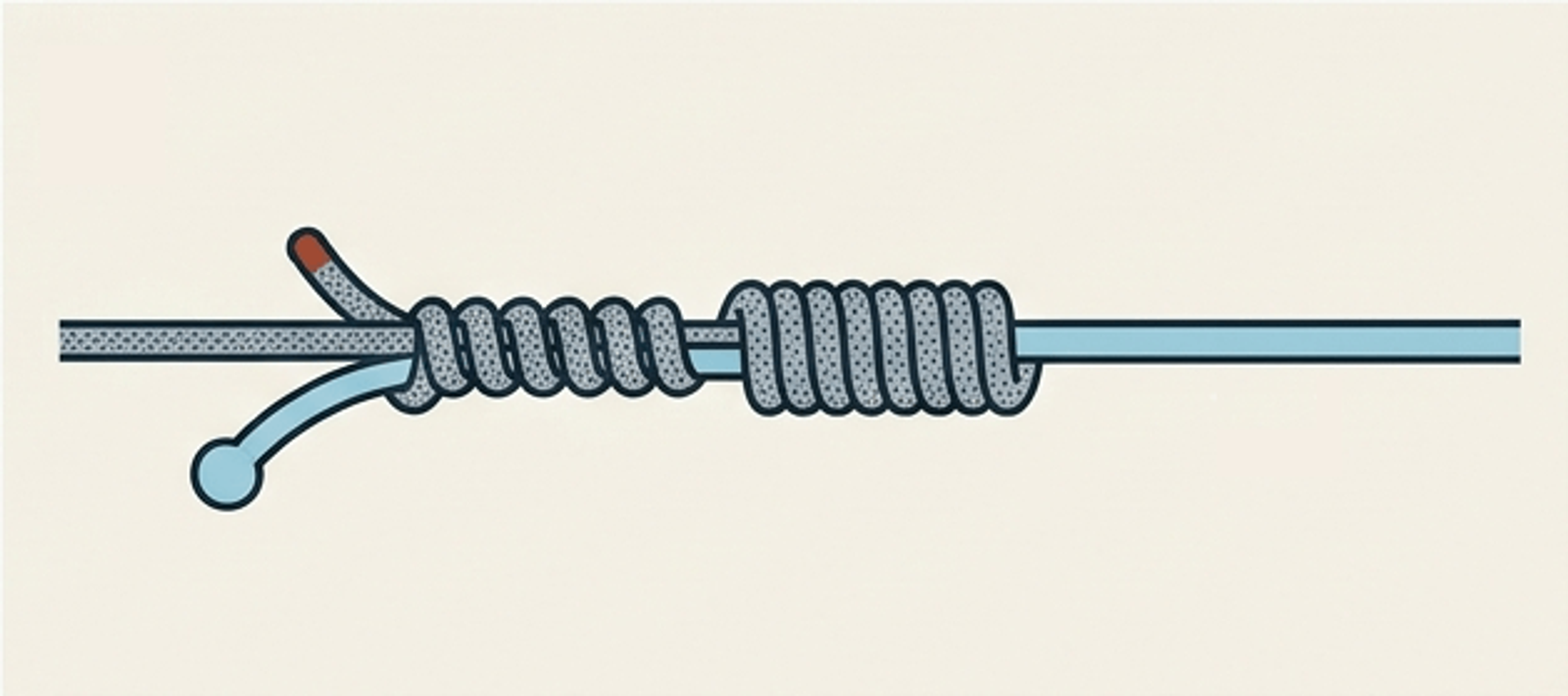 FG Knot: How to Tie It, and What the Pull Tests Show
The FG knot step by step: 12–15 pairs of wraps on a tight braid, the hitches, the setting pull, and what four named pull tests measured.
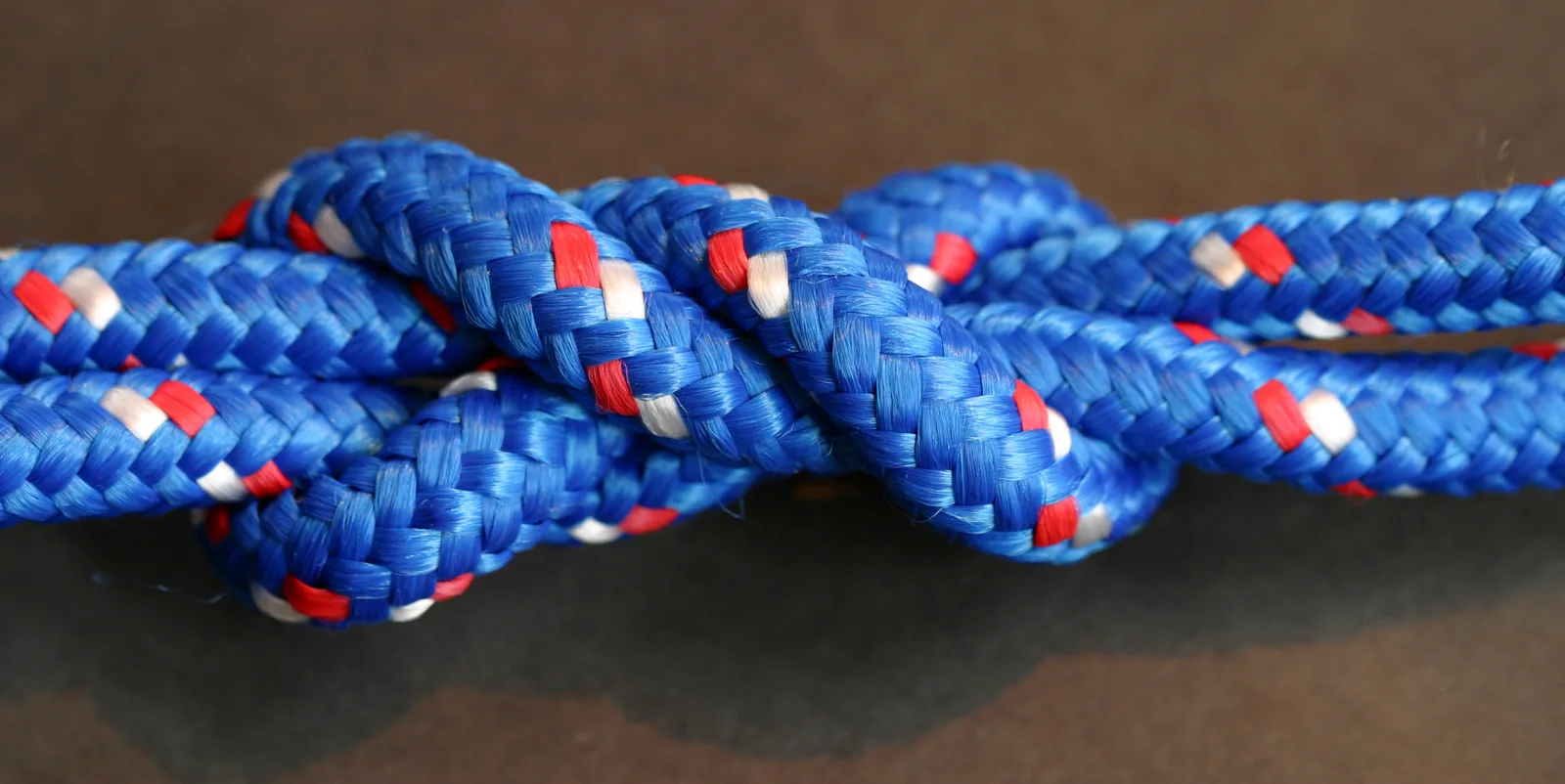 Surgeon's Knot for Fishing: How to Tie It, and How Strong It Is
The fishing surgeon's knot in five steps, from 4–6 in of overlap to all four ends pulled, and what three pull tests measured: up to 64.6% of 50 lb braid.
Sources (10)
- Orvis Learning Center, Blood knot
- Animated Knots, Blood knot
- Salt Strong, Blood knot vs. double uni knot strength contest (mono to mono), Nov 5, 2021
- Salt Strong, The best fishing knots of all time, ranked (2018)
- Salt Strong, The strongest line-to-line fishing knot (2015)