 By
To tie a fishing knot on a hook, learn the Palomar knot first: it’s easy, and it holds on every line. After that, the knot you tie depends on the line on your reel, not on the hook or the fish. Monofilament (mono) and fluorocarbon, the clear lines most beginners start with, hold all three: the Palomar, the improved clinch and the uni. Braid, the thin, limp line on many modern spinning reels, holds only the Palomar and the uni.
In Field & Stream’s test, a carefully tied improved clinch held 96 percent of the real breaking strength of 10 lb mono. On 14 lb braid a plain 8-turn clinch didn’t hold at all. It slipped undone at about 10 lb.
What do you need?
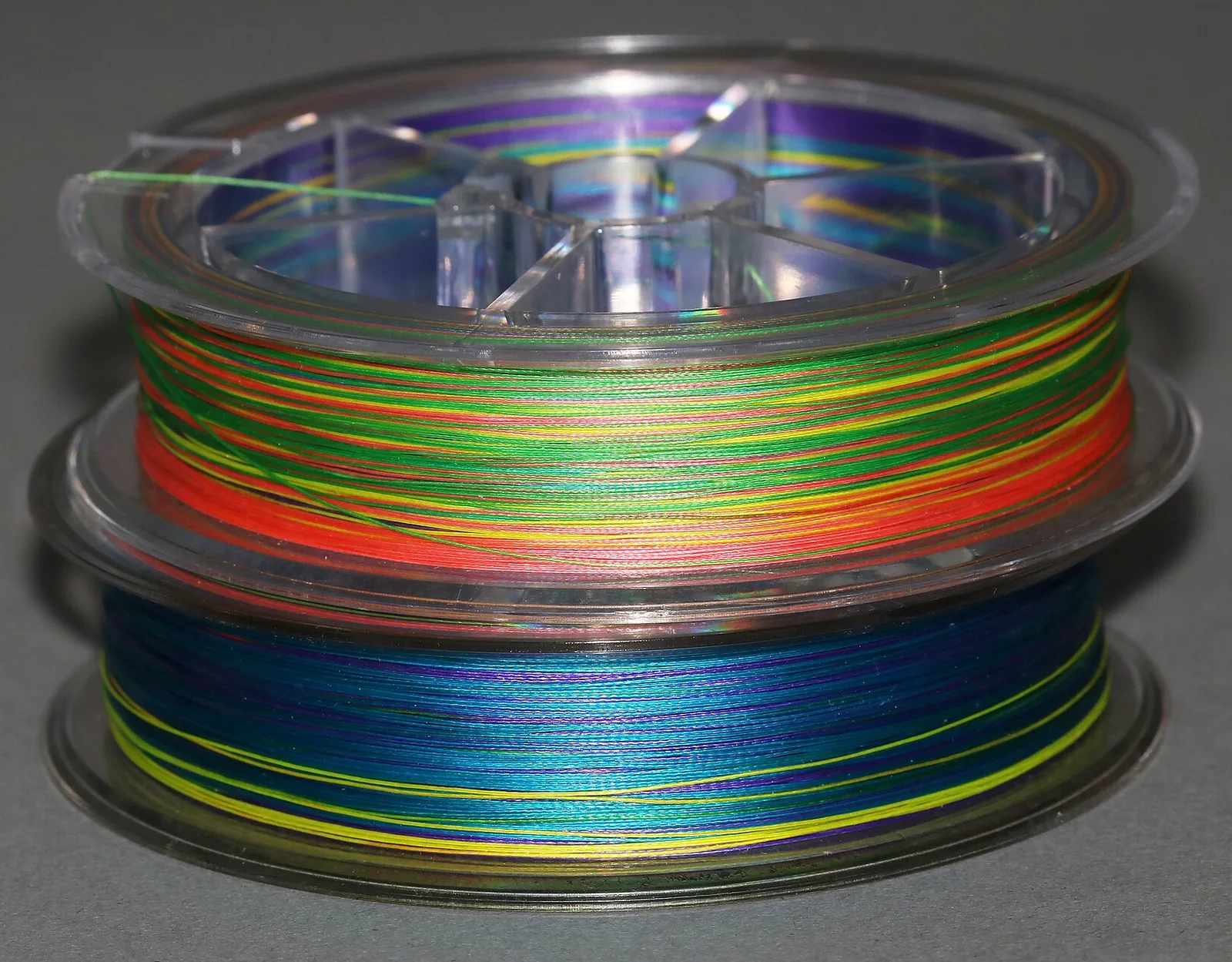
- Your line. Look at the spool. If it’s clear and a little stretchy, it’s mono or fluorocarbon. If it’s thin, limp, woven and usually colored, it’s braid.
- A hook, lure or swivel with an eye, the little ring you tie to.
- About 8 in (20 cm) of line past the eye. The short loose end is the tag end. The long part that runs back to the reel is the standing line. You tie every knot by wrapping the tag around the standing line. Beginners start with too little tag and run out halfway, so give yourself more than you think.
- Water or spit to wet the knot, and clippers or nail clippers to trim it.
If this is your first rod, fishing for beginners shows where the hook knot fits in your first day’s setup.
Which knot should you tie?
Pick by your line first, then by what you’re tying on. The knots hub has the same kind of table for every line and job.
- Easy and strong in one knot: the Palomar. Tie this one first. Take Me Fishing calls it the most popular of the easy knots, and Salt Strong ranks it first among mono-to-hook knots. The one catch: the hook or lure has to fit through its loop.
- Fluorocarbon, and you want the strongest: the Palomar. Field & Stream measured it at 82 percent of the line’s strength on 10 lb fluorocarbon, against 75 for a five-turn improved clinch.
- Mono, and you want the strongest: either one. On 10 lb mono the same test had the Palomar at 89 percent and a carefully tied improved clinch at 96.
- Short on line, or a lure too big for a loop, on mono or fluorocarbon: the improved clinch, also called the fisherman’s knot. It’s five turns and two tucks, and you only need 6 in (15 cm) of line.
- Braid, any hook: the uni with eight to ten wraps, or the Palomar. In Salt Strong’s braid test an improved uni, passed twice through the eye and given seven turns, averaged 20.21 lb over a few pulls. The Palomar broke at 18.36 in its one pull. A clinch slips on braid, so don’t tie one.
- A hook already tied to something else: the uni or the improved clinch. Think of a store-bought rig with the hooks already tied on, a dropper (a short side line), or a swivel with line on its other side. Nothing can pass through a Palomar’s loop there, because the other end is already tied.
- Line heavier than 30 lb: the Palomar or the uni. Berkley doesn’t recommend the improved clinch over 30 lb test, the strength printed on the spool, because heavy line makes it hard to tie.
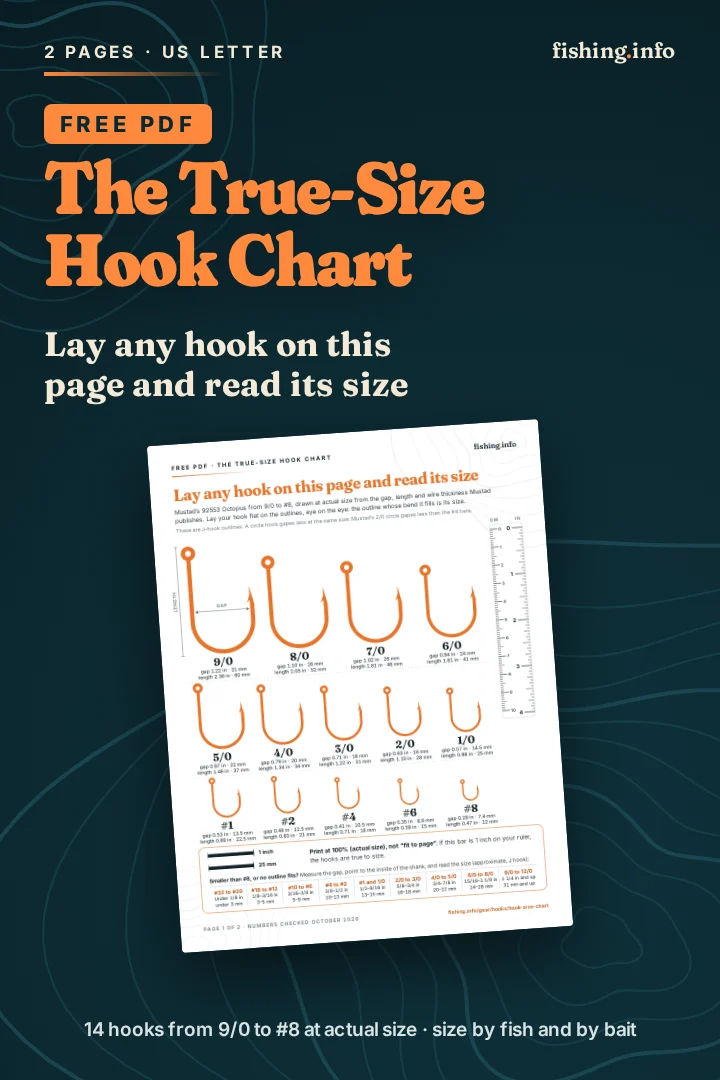
Free PDF · Hook size chart What size is that hook? Lay it on the chart.
Print the free chart, lay any hook on it and read its size: 14 hooks and 9 trebles at actual size, a gap ladder from #32 to 12/0, and the size for 17 fish and 16 baits.
No card, nothing to buy, and the PDF is yours to keep. Confirm with one click and it's on its way. Then a few short emails and one a week on what's biting. Unsubscribe anytime. Privacy.
How do you tie the Palomar knot?
-
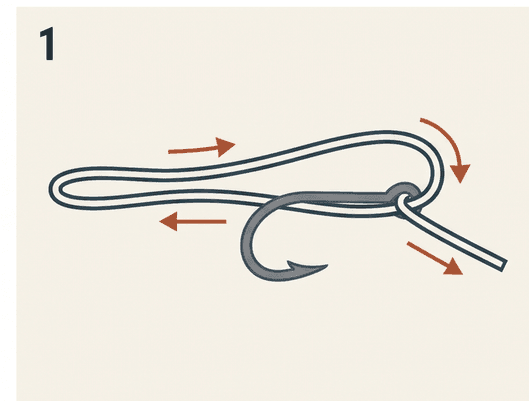
Fold 8 in (20 cm) of line back on itself into a loop, and push the loop through the eye of the hook.
-
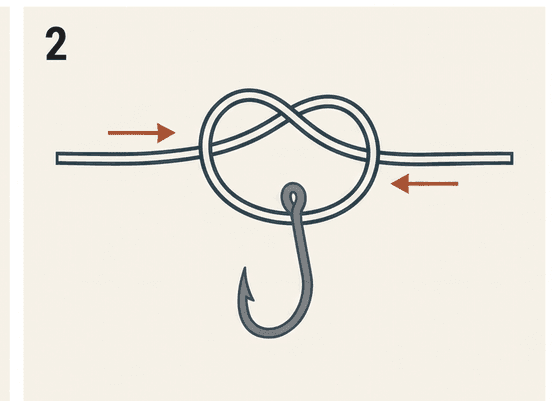
Tie a loose overhand knot with the loop and the doubled line, so the hook hangs in the middle of the knot.
-
Pass the hook through the loop.
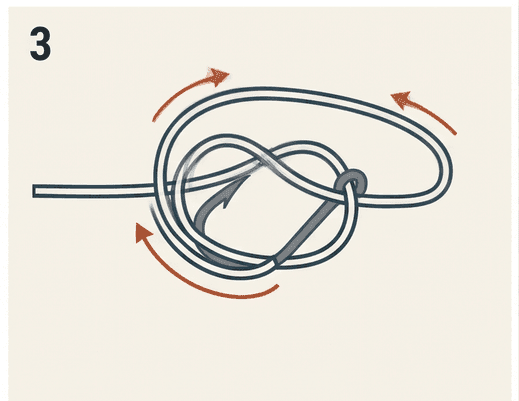
-
Wet the knot.
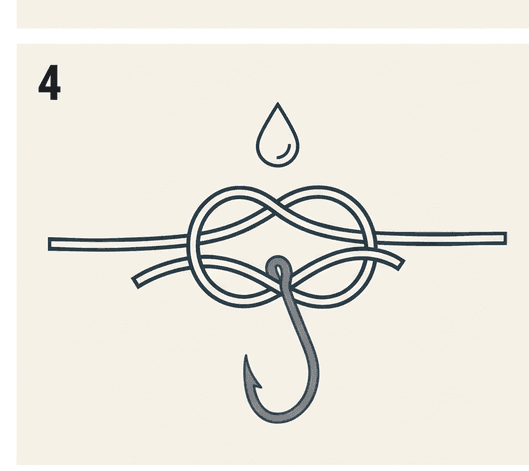
-
Hold the hook and pull the standing line and the tag together. The knot slides down, and the loop closes over it against the eye. Keep the two strands side by side, not crossed.
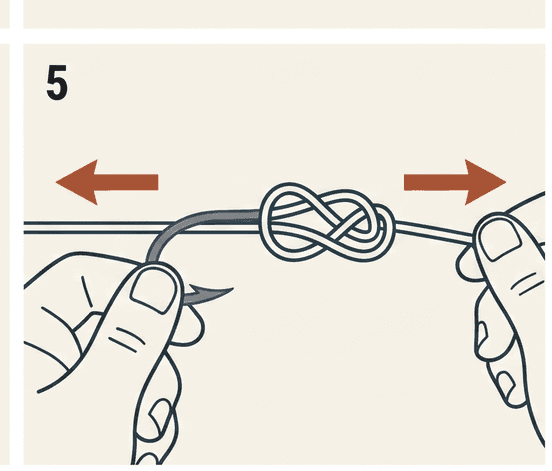
-
Trim the tag to 1/8 in (3 mm).
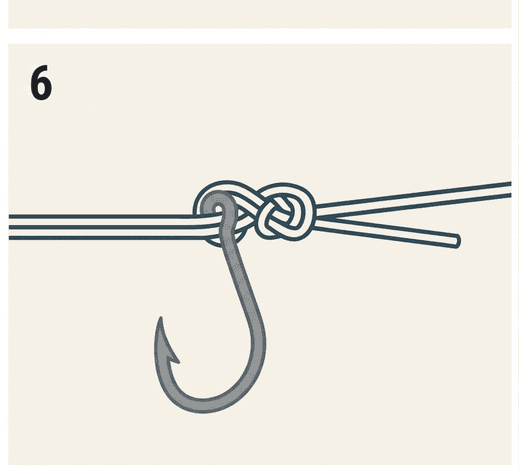
There are no turns to count, so there’s little you can get wrong. The Palomar knot page has the double Palomar for braid and the version for a drop shot, a rig with the weight below the hook.
How do you tie the improved clinch (fisherman’s knot)?
-
Pass the tag through the eye and pull 6 in (15 cm) through.
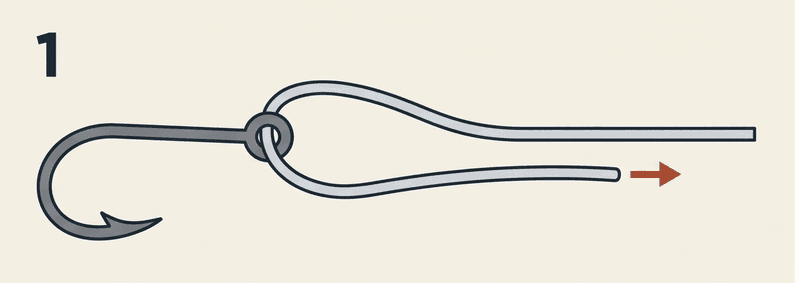
-
Wrap the tag around the standing line five times, working away from the hook.
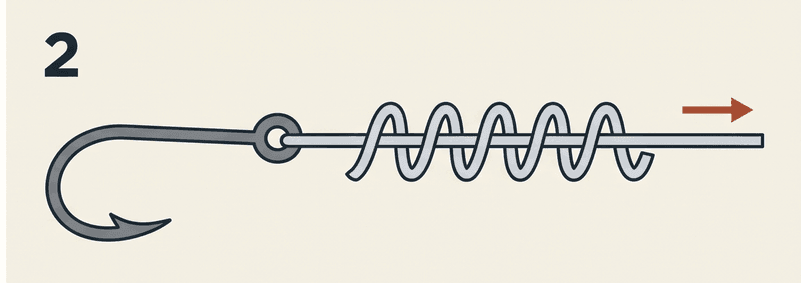
-
Pass the tag back through the small loop next to the eye.
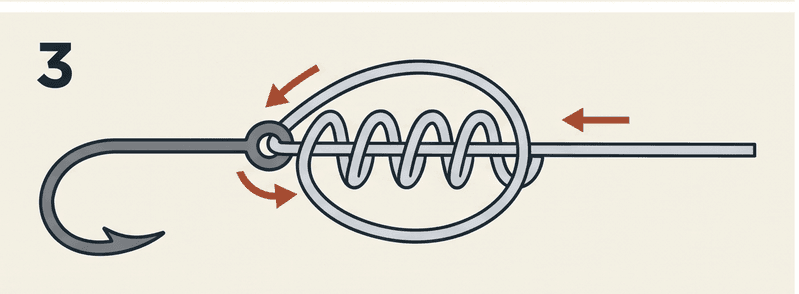
-
Pass it through the big loop you just made. This tuck is the “improved” part. Skip it and you’ve tied a plain clinch.
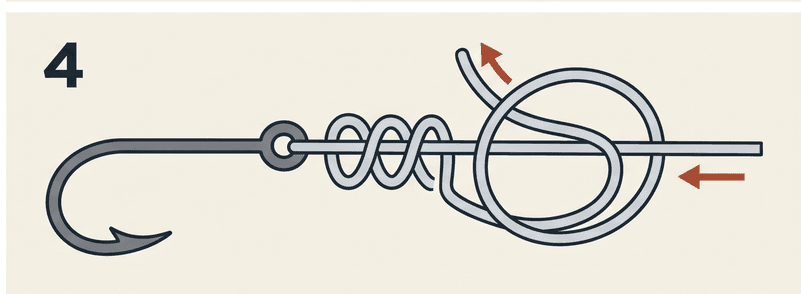
-
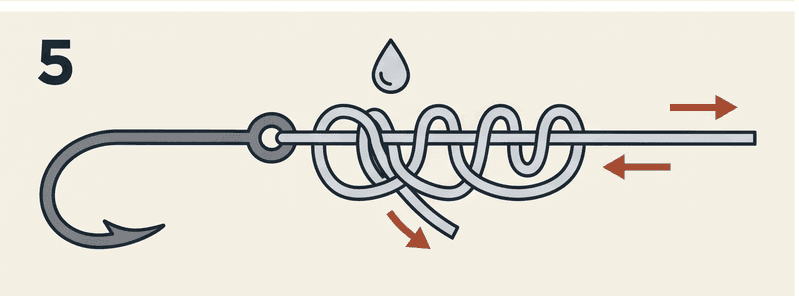
Wet the knot and pull the standing line slowly, so the coils tighten against the eye.
-
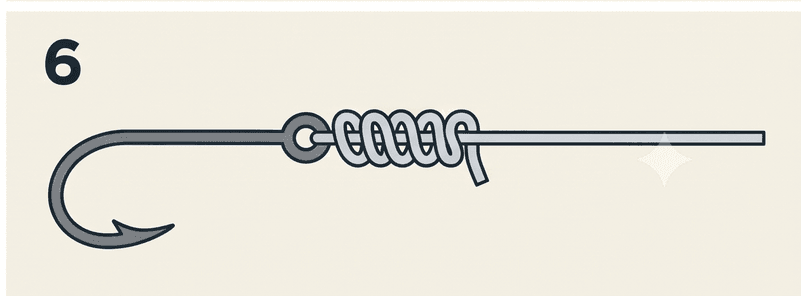
Trim the tag to 1/8 in (3 mm).
Use five turns, then “wet the line and tighten the knot slowly”, as the US Fish and Wildlife Service’s own instructions put it. Tie it on mono and fluorocarbon only. Heavier line changes the number of turns on the improved clinch knot, but you don’t need that yet.
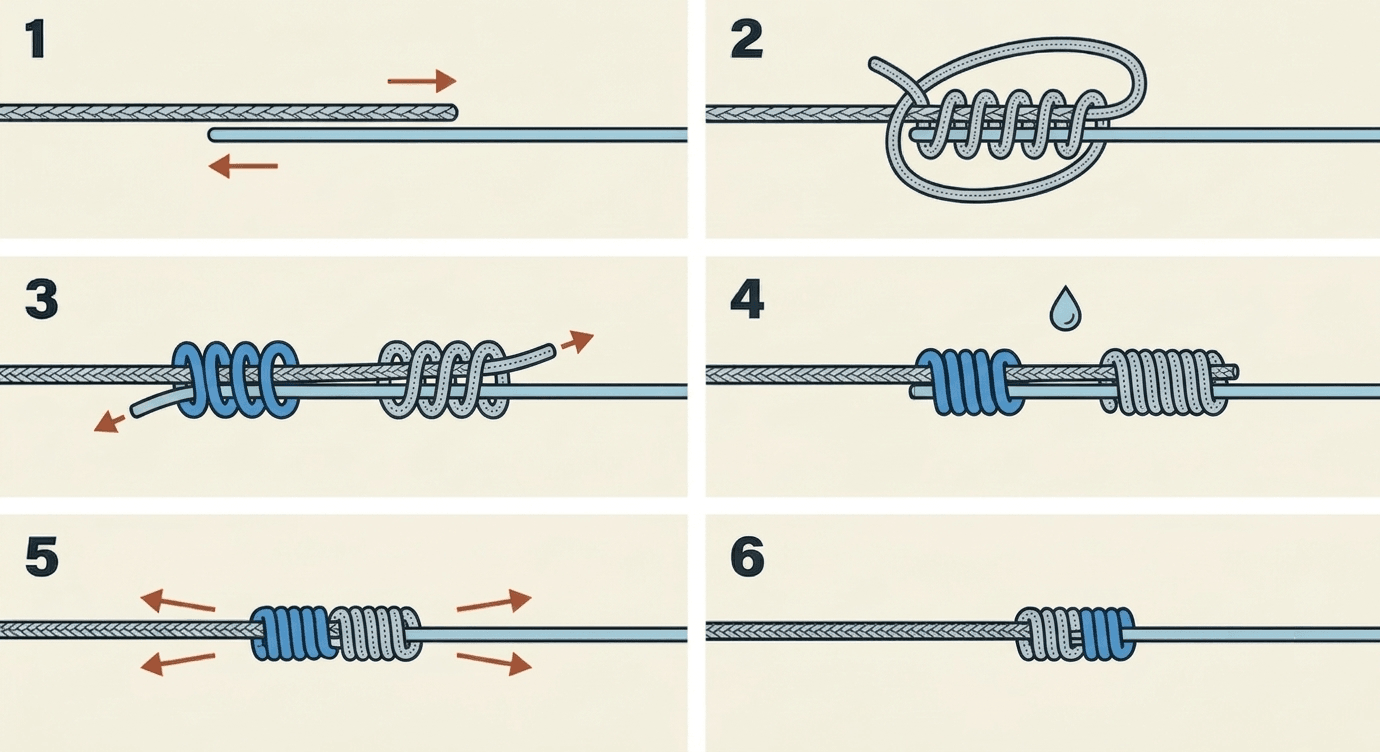
How do you tie the uni knot?
-
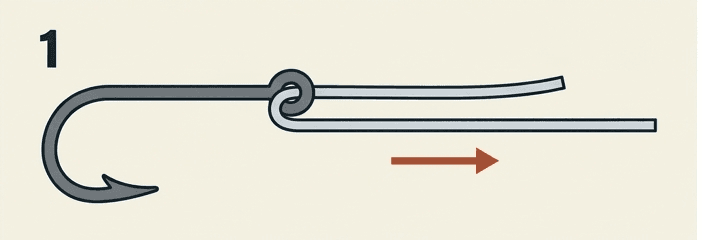
Pass the tag through the eye and pull 8 in (20 cm) through. Lay it back along the standing line.
-
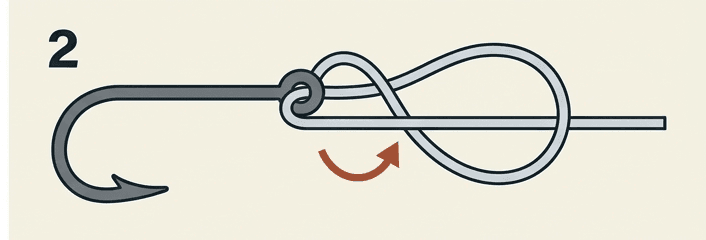
Fold the tag back toward the eye to make a loop lying on the two strands.
-
Wrap the tag through the loop and around both strands: five turns on mono or fluorocarbon, eight to ten on braid. Salt Strong tied ten on braid in its uni-versus-clinch test.
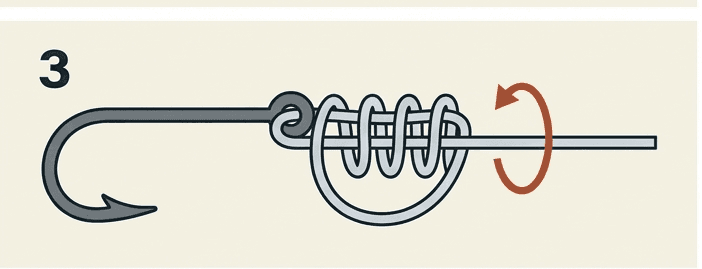
-
Wet the knot.
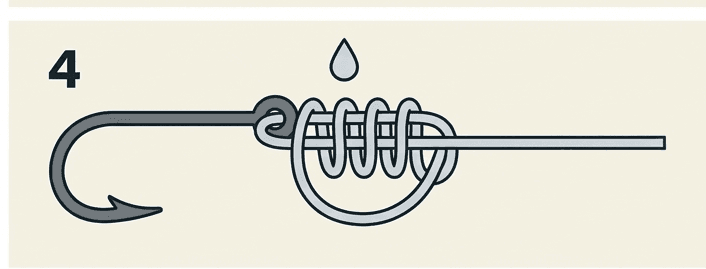
-
Pull the tag to snug the wraps into a neat barrel. Then pull the standing line to slide the barrel down against the eye.
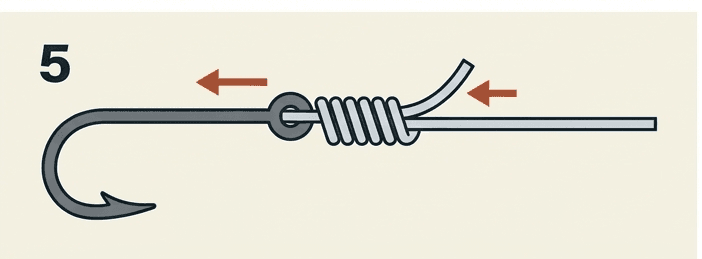
-
Trim the tag to 1/8 in (3 mm).
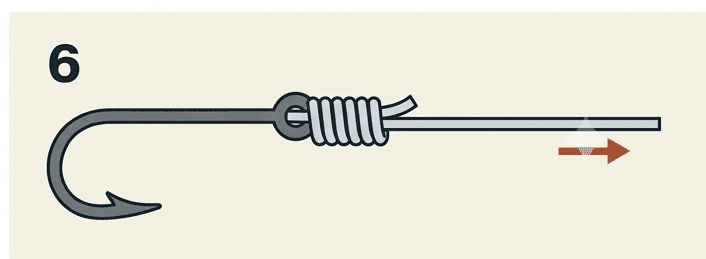
Drawings: fishing.info, generated with Gemini and checked step by step against the text.
The uni knot page covers its other jobs: joining two lines, snelling a hook, a sliding loop.
How strong is each knot?
Two tests put these knots on a machine and name their line. Each percentage is where the knotted line broke, set against where the bare line broke. Higher is stronger.
| Line, tied to | Palomar | Improved clinch | Uni |
|---|---|---|---|
| 10 lb mono, a Rapala (Field & Stream) | 89% | 96%, “only if they were tied with extreme care” | Not tested |
| 10 lb fluorocarbon, a small Rapala (Field & Stream) | 82% | 75% (5 turns) | Not tested |
| 14 lb braid, a Rapala (Field & Stream) | 63% | Plain 8-turn clinch slipped at about 10 lb (4.5 kg); improved clinch not tested | Not tested |
| 10 lb braid, a swivel (Salt Strong) | 18.36 lb (8.3 kg), one pull | Not tested | Improved uni: 20.21 lb (9.2 kg) average |
Field & Stream used Trilene Big Game mono, Seaguar InvizX fluorocarbon and Berkley FireLine braid. Salt Strong’s uni went twice through the eye before its seven turns. The article calls it 8% stronger than the Palomar, but its own figures make it about 10%. A second Salt Strong test put the uni against the plain clinch, without the improving tuck, on 20 lb mono, 20 lb fluorocarbon and 10 lb braid. The clinch won on the mono and the fluorocarbon and “completely tanked when tied with braid”.
On mono and fluorocarbon the three knots sit close, so how well you tie one matters as much as which one you pick. On braid, skip the clinch. Both tests used the plain one, and the improved clinch has the same slick wraps. Salt Strong’s improved uni edged the Palomar there, over a few pulls against one. The best fishing knots page ranks the line-to-line knots from the same kind of tests.
How do you tie a knot that won’t come loose?
Five habits help a knot hold, because how you tie it counts as much as which knot you tie. Sport Fishing put 53 braid-to-leader knots sent in by anglers and captains on the line-testing machine at the IGFA, the group that keeps fishing’s world records. The results ran “from 100 percent to as little as about 17 percent”. Very similar or even identical knots tied by different people “tested far differently”. The magazine put that down to slight variations in how they were tied. Here are the five.
- Wet it. Pulling a dry knot tight heats the line by friction. The Wildlife Service’s instructions say to wet it first. Spit or lake water is enough.
- Tighten slowly, with one steady pull on the standing line, so the wraps lie side by side and don’t cross.
- Leave 1/8 in (3 mm) of tag. Trim it flush and there’s nothing left if the knot settles under the first fish.
- Test it before you cast. Hold the hook with pliers or a rag and pull the line hard by hand. If the knot slips or breaks now, it would have failed on a fish, so tie it again.
- Retie after a fish, a snag or a long spell of casting. The few inches above the knot take the wear. Cut them off and tie fresh.
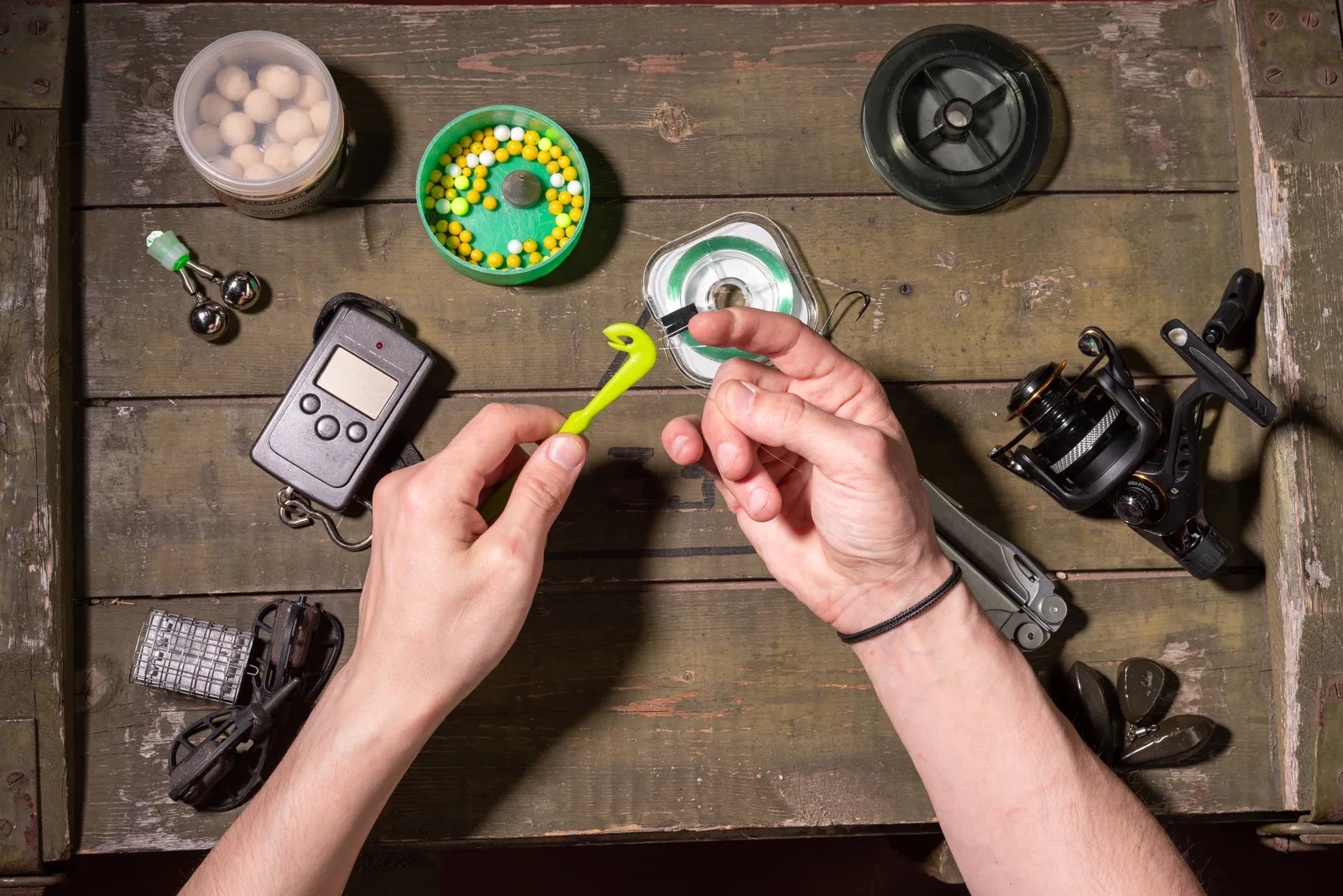
Tying a hook to the line with a hook-tying tool. Photo: vzwer / Depositphotos.
Does the hook’s eye matter?
Every knot here ties to the eye, the loop at the top of the shank, the straight part of the hook. Eagle Claw names nine eye shapes, and three matter to a beginner. A plain ringed eye takes any of the three knots. An up eye sits above the shank and, in Eagle Claw’s words, is “great for attaching with a snell knot”. A down eye is turned the other way, which changes how a dragged bait sits.
Bait hooks, and circle hooks most of all, are often snelled instead. The line wraps along the shank, so the pull runs straight down the hook and a circle hook turns into the corner of the jaw. That wrap is a knot of its own, the snell knot. A drop-shot hook goes the other way and uses the Palomar’s long tag, on the drop shot rig. To pick a hook to buy, see types of hooks and the hook size chart.
What do beginners get wrong?
- Too little tag. Start with 3 in and you run out of line before the knot is finished.
- Pulling only the tag to tighten. The standing line pulls the knot tight (on a Palomar, pull both strands together).
- Trimming it flush because the tag looks untidy.
- Crossing the two strands of a Palomar as they go through the eye. Lay them side by side.
- A clinch on braid because it’s the knot you learned. Tie the uni.
When does another knot win?
A lure that should swing freely, a jerkbait (a long, thin diving lure) or a topwater (a surface lure), fishes better on a loop knot. Joining braid to a leader, a length of mono or fluorocarbon at the end of your line, is a different job. The slim knot for it is the FG knot.

Free PDF · 3 pages
Stop guessing hook sizes. Lay any hook on this page and read it
A jar of loose hooks and no packet in sight. Guess wrong and you find out with a fish on.
The True-Size Hook Chart. Print it at actual size, lay a hook on the outlines, and the one its bend fills is its size. Three pages for the tackle box, trebles on the third.
- 14 hooks and 9 trebles at true size, plus a ladder from #32 to 12/0
- The size for 17 fish and 16 baits, from bluegill to tuna
- A 2/0 circle that gapes less than a #4: why a 2/0 is not always a 2/0
Every outline drawn from Mustad's published dimensions; every size from the 25 sources on the page, Maryland DNR and Idaho Fish and Game among them.
No card, nothing to buy. Confirm with one click and the PDF is on its way, one version for your phone and one to print, yours to keep. Then a few short emails and one a week on what's biting, with an unsubscribe link in every one. Privacy.
Related
Section guide
Fishing Knots: Which Knot for Which Line and JobFishing knots by job and line: the five to learn first (Palomar, uni, FG, surgeon's, loop), the knot for braid, and what three pull tests measured.
 Bimini Twist: How to Tie It and How Many Twists to Make
How to tie a Bimini twist in seven steps, how many twists to make on mono and braid, what pull tests found, and when an FG knot replaces it.
 Best Fishing Knots by Job: What the Pull Tests Show
The best fishing knots by job, from named pull tests: Palomar or Trilene to a lure, uni on braid, FG to a leader, blood knot for line to line.
 Braid to Mono Knot: Which One to Tie, and What the Pull Tests Show
The FG is the strongest braid to mono knot you tie by hand: 73.4%, and 80.9% improved, on IGFA's tester. Six knots ranked by two pull tests.
 Blood Knot: How to Tie It, Turns by Line Size, and Strength
Blood knot: joins two mono or fluoro lines within .002 in of each other. How to tie it, turns by line size, why it slips, and how its strength tests.
 Alberto Knot: How to Tie It, and What the Pull Tests Show
The Alberto knot is an Albright with seven braid wraps up the leader loop and seven back. How to tie it, and how it did in two pull tests against the FG.
 Double Uni Knot: How to Tie It, How Many Wraps, How Strong
Double uni knot: how to tie it, how many wraps braid and mono need, and what four published pull tests measured against the FG, surgeon's and blood knot.
Sources (10)
- Field & Stream, The strongest fishing knots for each type of line, tested (John Merwin; 10 lb mono, 10 lb fluorocarbon and 14 lb braid to a Rapala)
- Salt Strong, Palomar knot vs uni knot with braided line (10 lb braid between two swivels)
- Salt Strong, Uni knot vs clinch knot strength test (20 lb Ande mono, 20 lb Seaguar fluorocarbon, 10 lb PowerPro)
- Salt Strong, The best fishing knots of all time, ranked
- Sport Fishing, Strongest fishing knots, braid to leader (Doug Olander; 53 knots on the IGFA's Instron 5543)