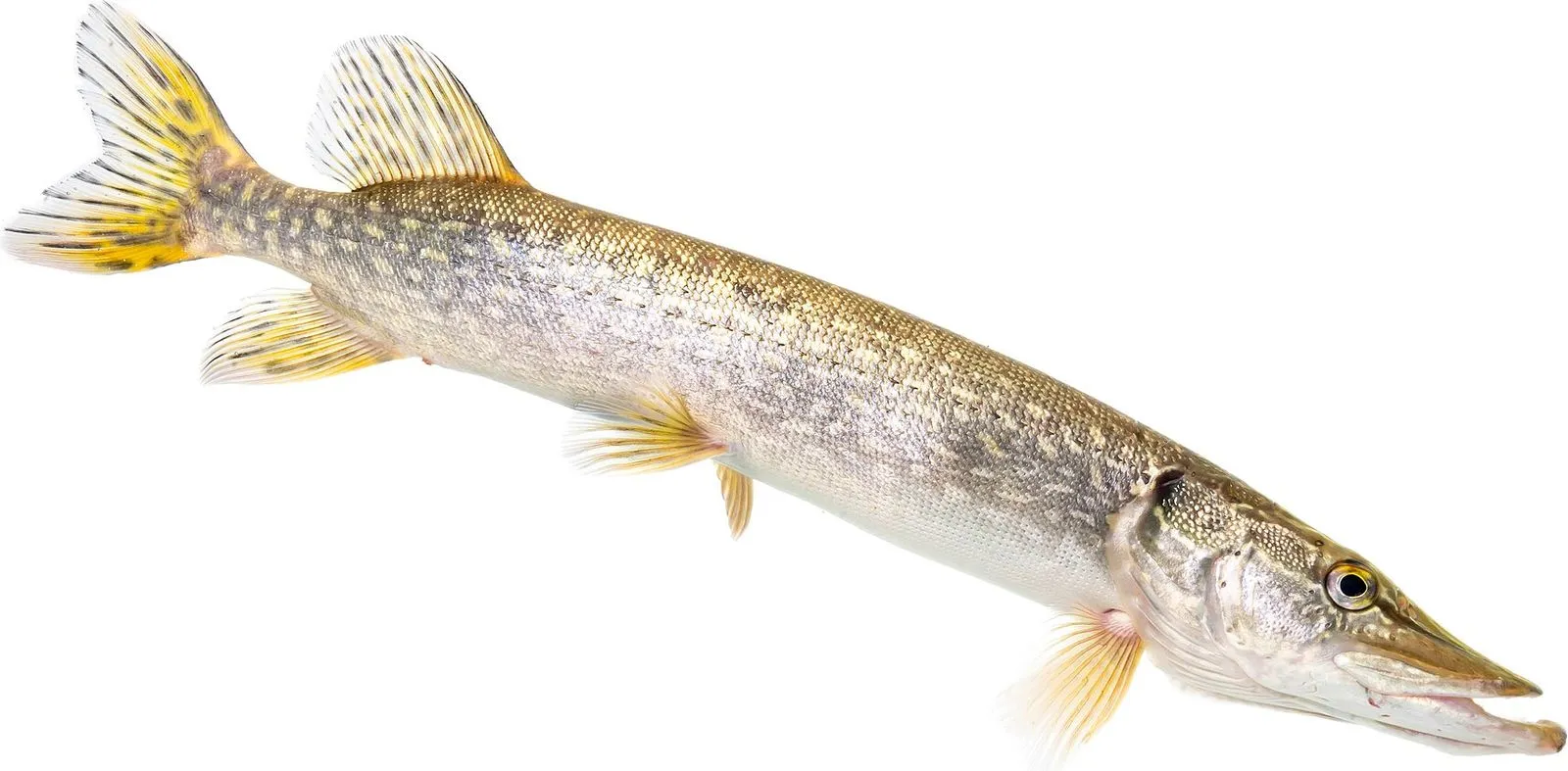
Yes, northern pike are good to eat: the meat is white, firm and flaky, and Minnesota’s DNR rates freshly cooked pike as delectable as walleye. What puts people off is a row of forked bones in each side. Two fish agencies publish cuts that leave those bones behind. And the best pike for the table are the small ones.
A pike has no more bones than any other fish, says Alaska’s fish and game department. Its bones are forked, which makes them look like more, and behind the dorsal fin there are none at all.
What does pike taste like?
State fish agencies across pike country describe the same fish: white, firm and flaky. Minnesota goes furthest and sets the “chunky, flaky white meat of freshly cooked pike” beside walleye. Wisconsin’s praise comes with a warning in the same breath: “lots of Y-shaped bones”.
Two details matter in the kitchen. Pike from cold water eat best, which makes winter and spring the season for the table in North Dakota’s rating. And pike “can get a slight grainy texture after being frozen”, Minnesota notes, so cook the fish fresh.
The pike was not always welcome at the table. In Alaska, “their only use for many years was as dog food”. Settlers from the Midwest, who knew the fish from home, changed that.
Where are the Y-bones, and where do they stop?
Y-bones are a row of small forked bones in the meat of each side, above the ribs. Fillet a pike like a walleye and they stay in the fillet, visible in the meat once the ribs are cut away.
Alaska’s handout is blunt about the reputation: “the truth is they do not have any more bones than other fish. However, pike bones are forked (these are known as ‘Y’ bones), giving them a multi-boned appearance.”
The useful fact is where the row ends. The bones run the length of the fish, with one exception: the meat from the dorsal fin back to the tail. “There are no ‘Y’ bones here.” A pike’s dorsal fin sits far back on the body, so that boneless piece is the short end of the fish.
How do you fillet a pike into five boneless pieces?
This is the method the Alaska Department of Fish and Game hands out, with text and drawings by Jerry Perkins. It takes the fish apart around the bones, five pieces in all. The steps are the department’s words; the labels in bold are added. Mind the teeth while you get the fish onto the board.
- Lift the back fillet. “Make a cut around the head, cutting down to (but NOT through) backbone. Now turn the knife horizontal and cut toward the tail along the top.”
- Clean the back fillet. “There is a row of small bones down the center of this fillet. Remove them with a V-shaped lengthwise cut along the middle.”
- Take the two flank fillets. “With the backbone exposed, a series of bones will be seen running parallel to it on either side. Make a cut down and slightly inward along the outer edge of these bones. Work down and over the ribs and remove the flank fillet. Repeat for other side.”
- Take the two tail fillets. “Cut fillet free from each side of dorsal fin back to tail. There are no ‘Y’ bones here.”
- Skin them. “Skin each fillet. You now have five bone-free fillets!”
The five are one back fillet, two flanks and two tail pieces. Step 3 is the one that matters. The bones are in plain sight before the knife goes in, and the cut runs along their outer edge.
Can you keep the fillet whole and cut the bones out?
Yes. North Dakota Game and Fish teaches a different cut: start with a standard fillet and remove the bones as one thin strip. The department’s steps:
- “Remove the fillet from the body of the fish”, skin on.
- “Remove the rib bones. The cut should start along the top edge of the rib cage.”
- “To make the first cut, slice downward at 90 degrees to the cutting board along the top side of the visible Y bones.”
- “The second cut will remove the Y bones. Begin the second cut about a quarter-inch below the first cut, along the length of the fillet.”
- “Remove the strip of meat containing the Y bones, resulting in a boneless fillet.”
- “In the last step, remove the skin from the fillet.”
A quarter-inch is 6 mm, so the strip that gets thrown away is thin.
Anglers want this badly. North Dakota’s first Y-bone video drew about 175,000 views and was the department’s most watched. The 2021 remake passed 50,000 in a little more than two weeks. Its promise: a limit of five pike, ten fillets, no Y-bones.
Which cut should you use?
The Alaska cut shows you the bones before you cut around them, and it yields five smaller pieces. The North Dakota cut keeps each side as one long fillet. In-Fisherman describes a third route: cut the fillet into 3 in (8 cm) sections first, then “unzip” each one along the crease of the lateral line.
One way needs no knife work at all. “When pickling northern pike you only have to remove the backbone, so keep those small northern pike!” That line is from Alaska’s handout, and it leads to the next question.
Which pike should you keep?
The small ones. Minnesota DNR puts it in one sentence: “The real secret is to eat smaller pike and cook the fish while it is fresh.” Small pike are better eating than large ones.
There is one honest objection: small pike are harder to clean. Alaska’s older notebook calls them “somewhat bony” and says the larger fish “filet easily”. Wisconsin DNR also finds the Y-bones hardest to remove from a small fish. The small pike is more knife work and the better meal.
Three more reasons point the same way.
Mercury. Pike sit at the top of the food chain and collect what their prey carried. Smaller pike carry less mercury, and Minnesota’s advice below is looser for short fish than for long ones.
The lake. On a 100-acre Minnesota lake, pike aged six and older put on about 0.1 lb per acre a year. A harvest of 10 lb, “the equivalent of one 35-inch fish”, takes that lake’s entire annual production of large pike. Anglers pick big fish anyway. Pike over 24 in (61 cm) make up much of Minnesota’s harvest, though 12 to 14 in fish are easy to catch.
History. In one northwestern Minnesota fishing contest, the average pike entered weighed 10.1 lb (4.6 kg) in the 1930s. By the 1980s it was 6.8 lb (3.1 kg).
A big pike is also an old one. Michigan’s average pike needs about ten years to reach 36 in (91 cm); the northern pike guide has the full age table.
How much pike is safe to eat?
Three states with a lot of pike water put a number on it.
| State | Children and women who may become pregnant | Everyone else |
|---|---|---|
| Minnesota (statewide) | Pike under 28 in (71 cm): 1 serving a week. 28 in or longer: 1 a month | 1 serving a week |
| Wisconsin (inland waters, 2024) | 1 serving a month | 1 serving a week |
| Michigan (2016 pike plan) | 1 meal a month | 1 meal a week |
The groups differ slightly. Minnesota’s stricter column covers children under 15 and anyone pregnant, breastfeeding or who may become pregnant. Wisconsin’s covers children under 15 and women under 50. Michigan’s line is the mercury advisory quoted in its 2016 management plan; the state’s Eat Safe Fish guide is the current word.
Minnesota bases its numbers on average mercury, PFOS and PCB levels in fillets. Wisconsin counts a serving as half a pound (227 g) before cooking, for a 150 lb (68 kg) person. Both states tighten the advice on named waters. Wisconsin’s booklet lists lakes where the stricter rule starts at pike over 19, 22 or 26 in, so look up the lake before a big fish fry.
Sooner or later you will meet a pike with lumps on its skin. Pike get a malignant lymphoma. A Canadian federal review puts its overall frequency at 20.9%, “the highest known frequency of a malignant neoplasm in any vertebrate”. The same review says the disease is not transmitted to people.
Where does the law decide for you?
The same fish is a protected trophy on one map and a pest on the next.
Minnesota runs three pike zones. The north-central zone is crowded with small fish. There you may keep ten, must release every pike from 22 to 26 in, and may keep no more than two over 26 in. The northeast zone allows two fish, with all pike from 30 to 40 in released and one over 40 in allowed. The south zone allows two fish of at least 24 in. Read as a menu, the north-central rule says: eat the small ones, please.
North Dakota allows five pike a day with no statewide size limit. In transport there, “two fillets count as one fish”.
Southcentral Alaska has no limit at all, because pike do not belong there. They were first released into a lake in the Yentna River drainage in the 1950s. They now live in more than 150 waters, some of which lost their salmon and trout. In West Cook Inlet and the Susitna drainage, anglers may not release a live pike. The department’s request: “If you can’t eat all the pike you catch, clean them and donate them.”
Washington classes pike as a prohibited invasive species. Anglers who catch one in a new area are asked to kill it at once. Maine, where pike were stocked illegally, set no size or bag limit in its pike assessment and encouraged anglers to keep what they caught.
Rules change every season. Check the current booklet for the water before the fish goes in the cooler.
Is muskie good to eat?
Legally, a muskie over the size limit can be kept. Almost nobody does, and the health advice is stricter than for pike. Wisconsin DNR notes that muskies “are rarely targeted for human consumption”. They build up mercury and PCBs, so the department says women of childbearing age and children under 15 should not eat them. Everyone else should eat no more than one meal a month. Wisconsin muskies of 40 in (102 cm) and longer averaged just over 1 part per million of mercury.
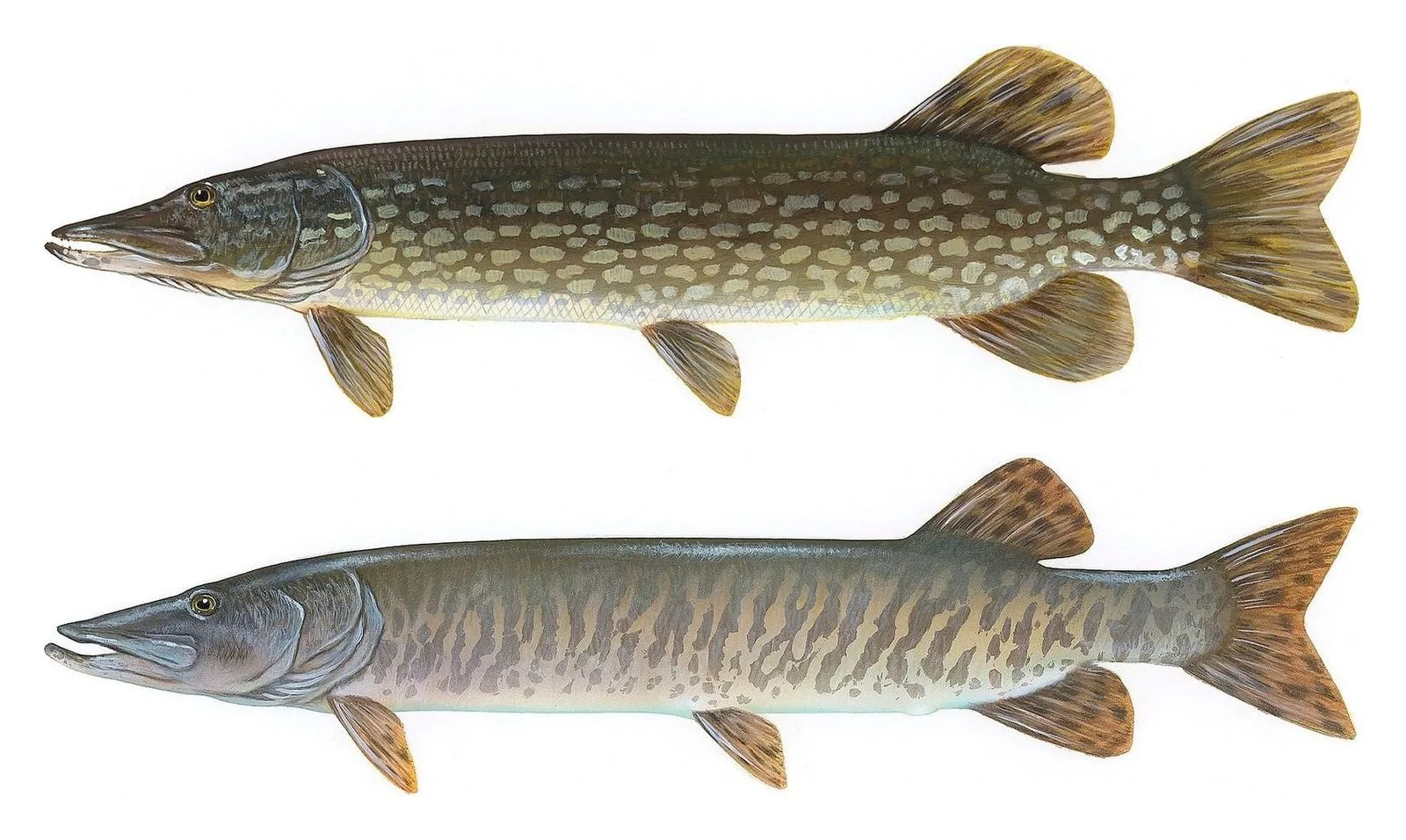
A muskie of 40 in is also a fish eight or nine years old. The pike is the one to eat. The muskie against pike comparison shows how to be sure which you have, and the pike family page adds the pickerel.
Related
Section guide
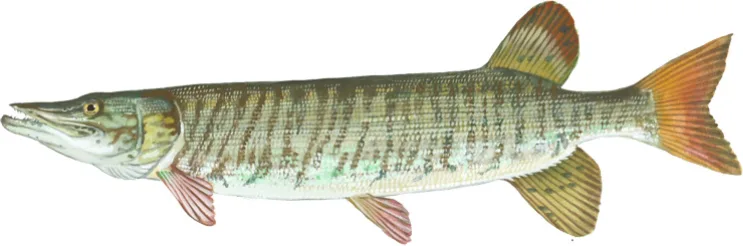
Pike Fish: Northern Pike, Muskie, Tiger Muskie and Pickerel Told ApartThe pike family in North America: northern pike, muskie, tiger muskie and chain pickerel, how to tell each one apart, and the record for each.
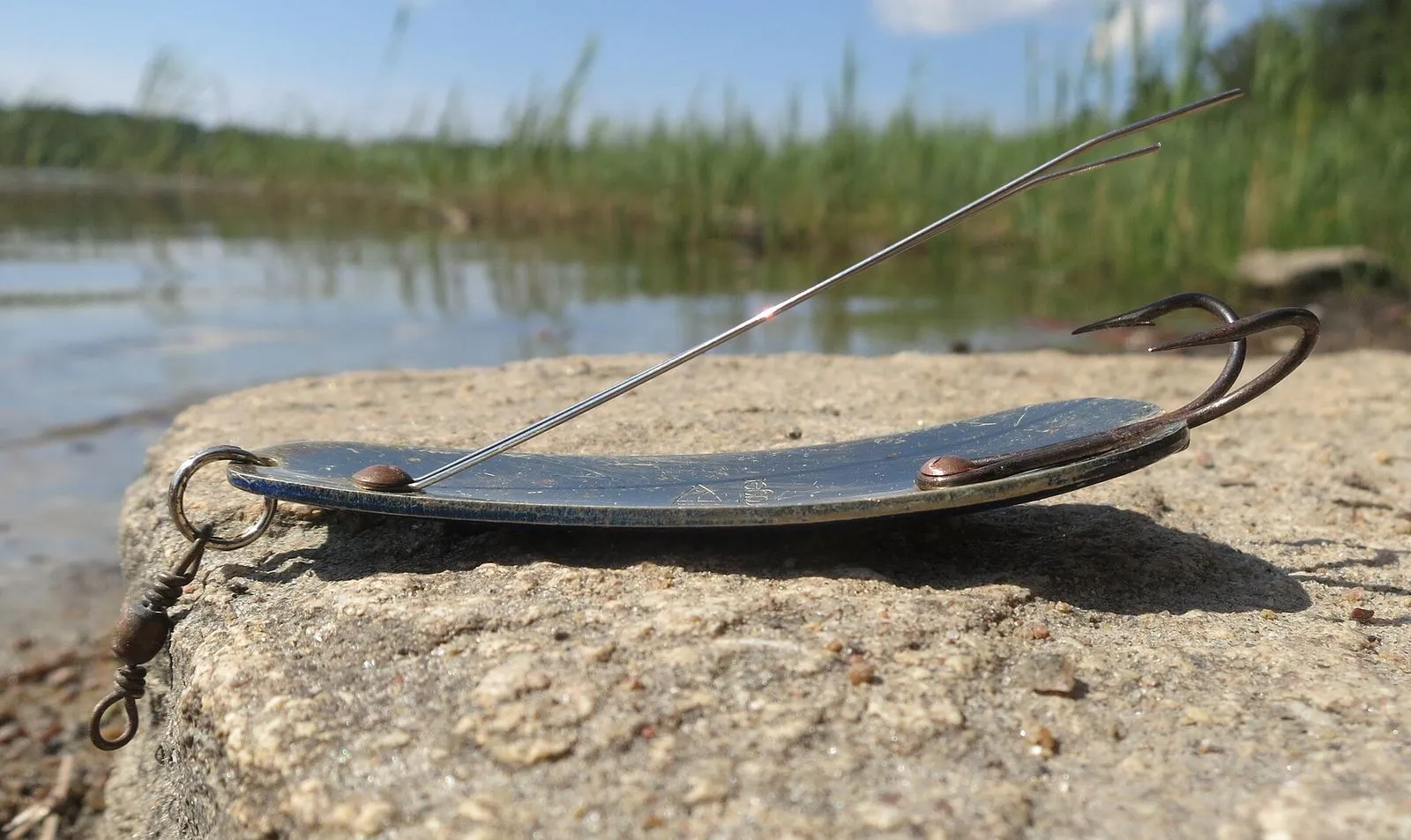 How to Catch Northern Pike: Where They Are in Every Season, What to Throw and the Quick-Strike Rig
Where northern pike are from ice-out to first ice, the lures and baits agencies name, the summer depth of big fish, and a quick-strike rig.
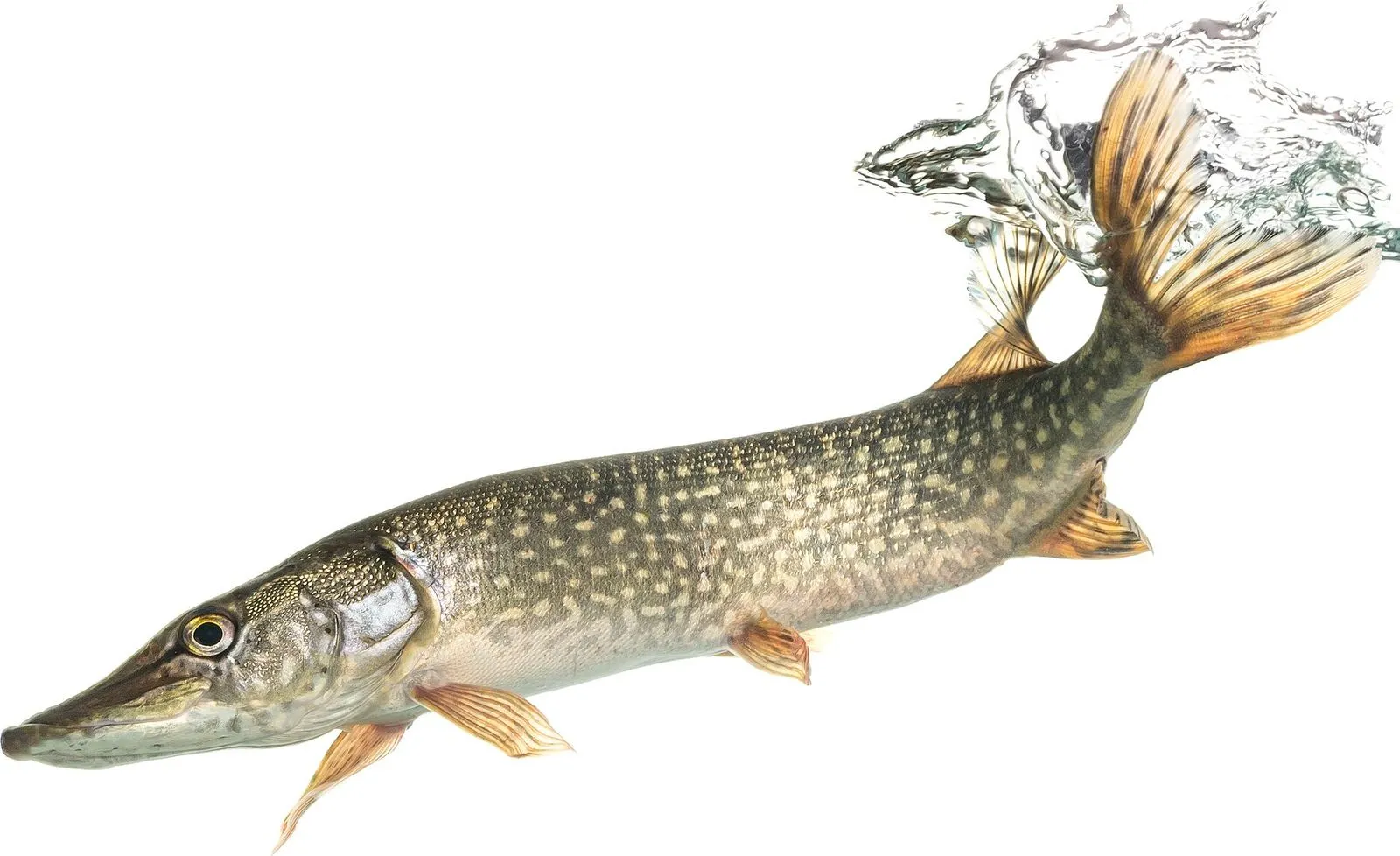 World Record Pike: The 55 lb German Fish, the 46 lb American One and the State Records
The world record pike is 55 lb 1 oz, caught in Germany in 1986. North America's best is 46 lb 2 oz from New York in 1940, a fish its captor never mounted.
 World Record Muskie: Three Claims, Two Record Books and the Biggest Fish Nobody Disputes
The world record muskie is 67 lb 8 oz to the IGFA and 69 lb 11 oz to the Hall of Fame. Both date from 1949, both are disputed, and a 65 lb fish is not.
 Northern Pike Teeth: How Many, How Sharp, the Summer Myth, and How to Unhook One
Northern pike teeth: about 16 knife-edged canines on each side of the lower jaw, hundreds more on the roof and tongue, and how to unhook one safely.
 Muskie vs Pike: How to Tell Them Apart, and How the Two Fish Really Differ
Muskie vs pike: markings, tail tips, jaw pores and cheek scales side by side, plus size, age, numbers per acre, and pike against pickerel and walleye.
 Best Northern Pike Lures: Six Classics the Agencies and Guides Agree On, and When to Throw Each
The northern pike lures that state agencies, In-Fisherman guides and the magazines agree on, with sizes checked at the maker and the water each one is for.
Sources
- Alaska Department of Fish and Game, Northern pike handout (2013): small pike eat better, the Y-bones, the five-fillet method by Jerry Perkins, pickling
- Alaska Department of Fish and Game, Wildlife Notebook Series: northern pike (Kenneth Alt, revised 1994)
- Alaska Department of Fish and Game, Northern Pike in Southcentral (brochure)
- Kristine Dunker, Native vs. invasive pike: a tale of two ranges, Alaska Fish and Wildlife News
- Alaska Department of Fish and Game, Invasive northern pike
- North Dakota Game and Fish, Removing Y bones from northern pike
- North Dakota Game and Fish, Y bone remake, North Dakota Outdoors (February 2021)
- North Dakota Game and Fish, Fishing regulations
- Minnesota DNR, MinnAqua species profile: northern pike
- Minnesota DNR, Northern pike zones
- Pierce, Long-term evaluations of northern pike experimental regulations in Minnesota lakes, Minnesota DNR Investigational Report 556
- Minnesota Department of Health, Statewide fish consumption guidelines
- Wisconsin DNR, Choose Wisely: a health guide for eating fish in Wisconsin (2024)
- Wisconsin DNR, Northern Pike (Esox lucius), PUBL-FM-707 (2008)
- Wisconsin DNR, Muskellunge (Esox masquinongy) fact sheet, PUBL FM-705 (2012): consumption advice
- Smith, Kovacs and others (2016), Management Plan for Northern Pike in Michigan, Michigan DNR Fisheries Report 15
- Harvey (2009), A biological synopsis of northern pike, Fisheries and Oceans Canada: mercury, lymphoma
- Washington Department of Fish and Wildlife, Northern pike (invasive species)
- Maine Department of Inland Fisheries and Wildlife, Northern pike assessment
- In-Fisherman, Northern pike Y-bone removal techniques (2017)