 By
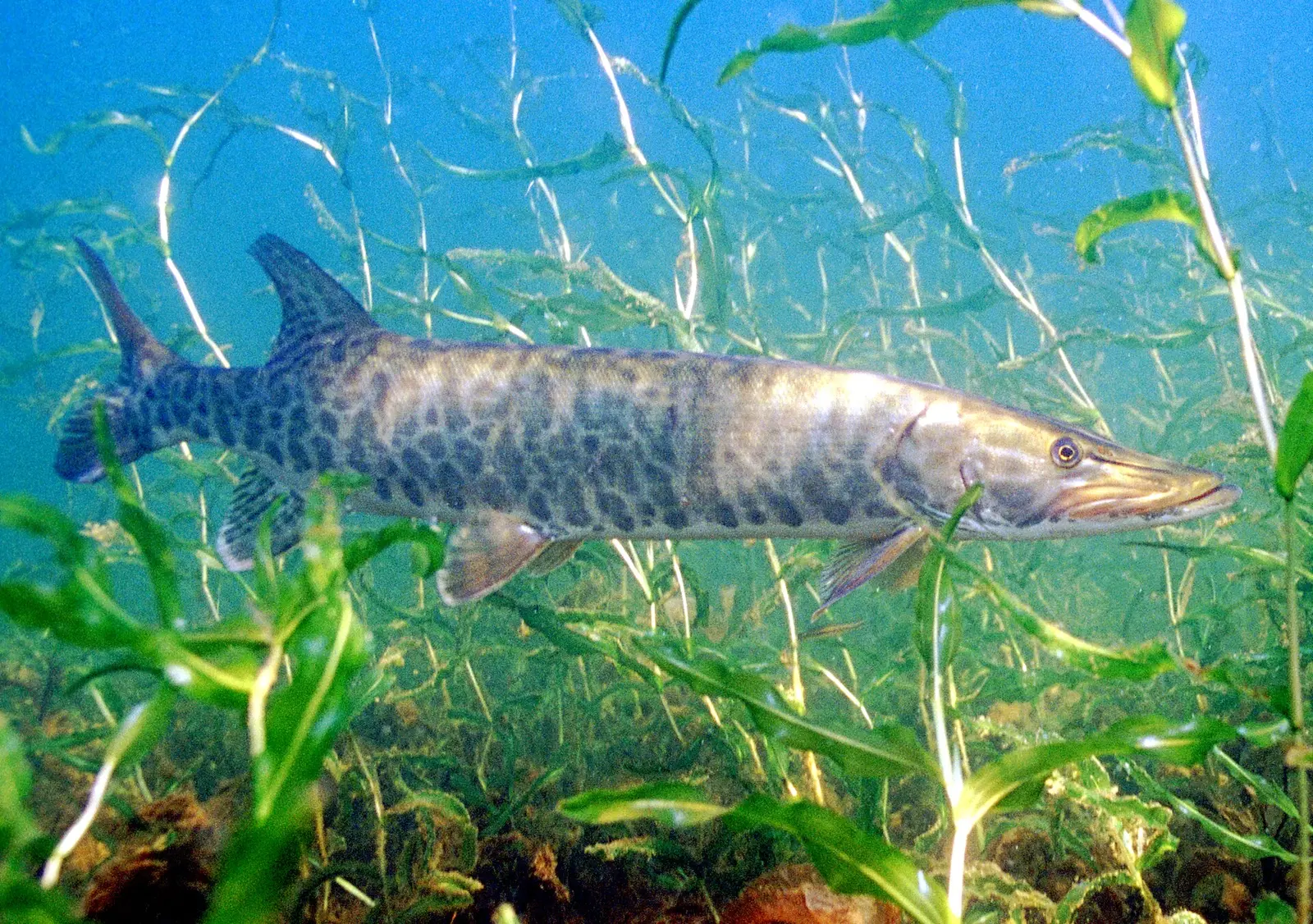
Musky fishing means casting big lures on heavy braid and a bite-proof leader along weed edges, rock bars and drop-offs, and ending every cast with a figure eight beside the boat. Expect long days: Wisconsin’s creel surveys from 1990 to 2011 averaged one muskie per 27 hours of fishing. What shortens them is the right water, the right month and a fish that follows to the boat.
In the 1980s and 1990s, writes Gord Pyzer of Outdoor Canada, at least 75% of muskies came on a straight retrieve. Today “the stats are reversed”: three of every four come on the figure eight.
Is musky fishing hard?
Yes, and the surveys put a number on it. Across Wisconsin’s better muskie waters, anglers caught one fish per 27 hours. On 18 Minnesota waters the figure ran from 11 to 200 hours, with an average of 40. On Green Bay in 2021 it was 19.6 hours.
The water you pick sets the odds more than any lure. Wisconsin DNR splits its lakes in two:
- Action waters: smaller, shallower lakes with plenty of weeds, and some rivers. More fish, fewer giants.
- Trophy waters: large, deep, clear lakes and big flowages with little vegetation and good sucker or cisco populations. Slow fishing, bigger fish.
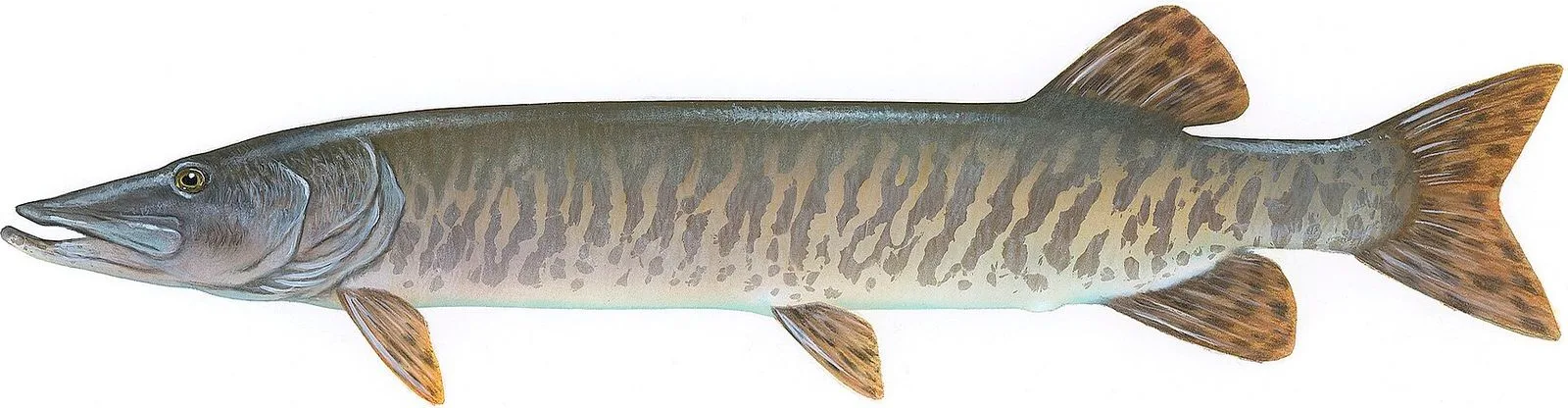
Most lakes fall in between. A first muskie is likelier on an action lake; a 50-incher is likelier on a big clear one. The muskie is also a different fish from the pike it is often confused with, so check muskie vs pike before you measure.
What do you need for musky fishing?
A long heavy rod, a baitcasting reel, strong braid, a leader the teeth cannot cut, big lures and a release kit. The two sources below agree on the build and differ mainly on line strength.
| Item | Wisconsin DNR | Muskies Canada, casting | Muskies Canada, trolling |
|---|---|---|---|
| Rod | Medium-heavy casting rod, 7 ft (2.1 m) or longer | 7 to 9 ft (2.1–2.7 m) or more | 8 ft (2.4 m) or more |
| Reel | Substantial level-wind baitcaster | Baitcaster | Line-counter reel |
| Line | 50 to 80 lb (23–36 kg) braid | 80 lb (36 kg) braid | 100 lb (45 kg) braid or more |
| Leader | — | Wire or fluorocarbon, 100 lb (45 kg) and up | Fluorocarbon, 100 lb (45 kg) minimum |
| Lures | Bucktails, spinnerbaits, jerkbaits, diving crankbaits, large spoons | — | — |
Rod. Wisconsin DNR notes that many anglers have moved from short, stout rods to lighter ones of about 6½ to 7 ft or longer. For the figure eight, Pyzer writes, nine-foot rods shine, especially from the side of the boat. Pair it with a baitcaster that holds plenty of braid.
Reel. Minnesota DNR notes that many muskie anglers prefer a reel with a fast gear ratio, so the lure comes back quickly between casts. For trolling, Muskies Canada uses line-counter reels.
Leader. Teeth cut ordinary line, so a fishing leader of wire or heavy fluorocarbon goes between braid and lure. Braided fishing line explains why the main line is braid: it is thin for its strength and barely stretches.
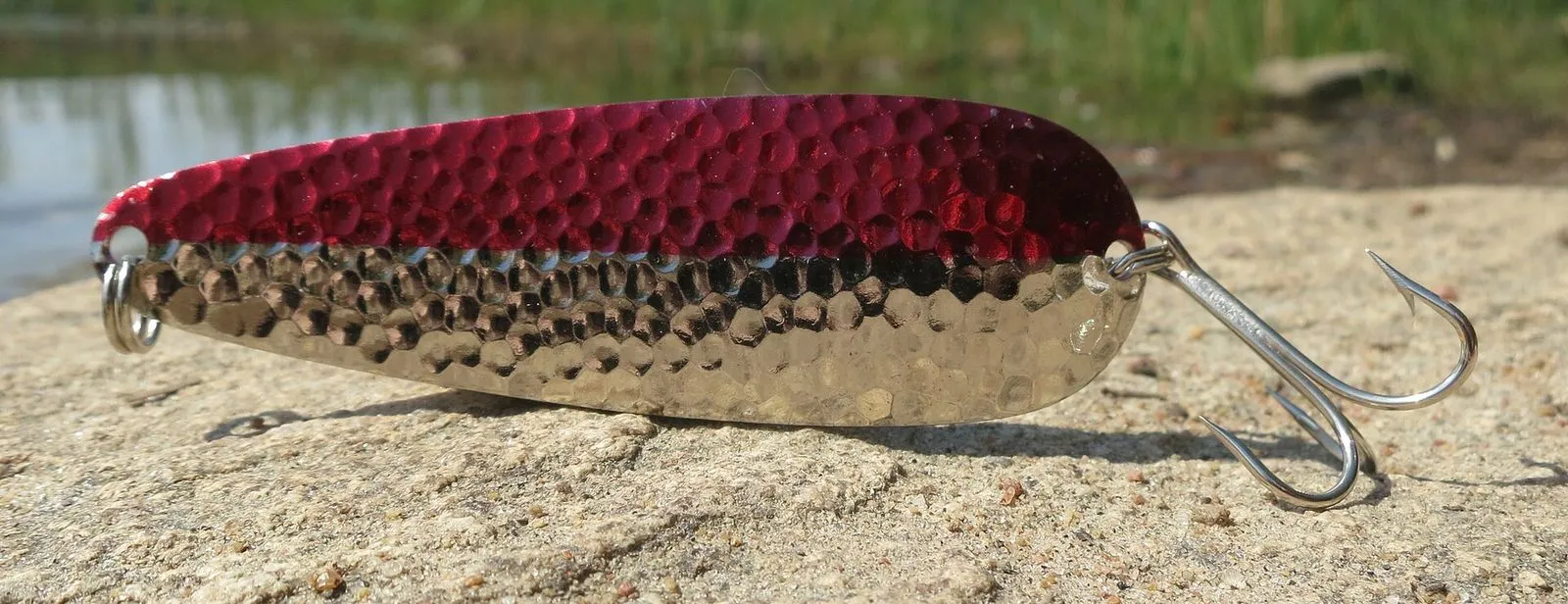
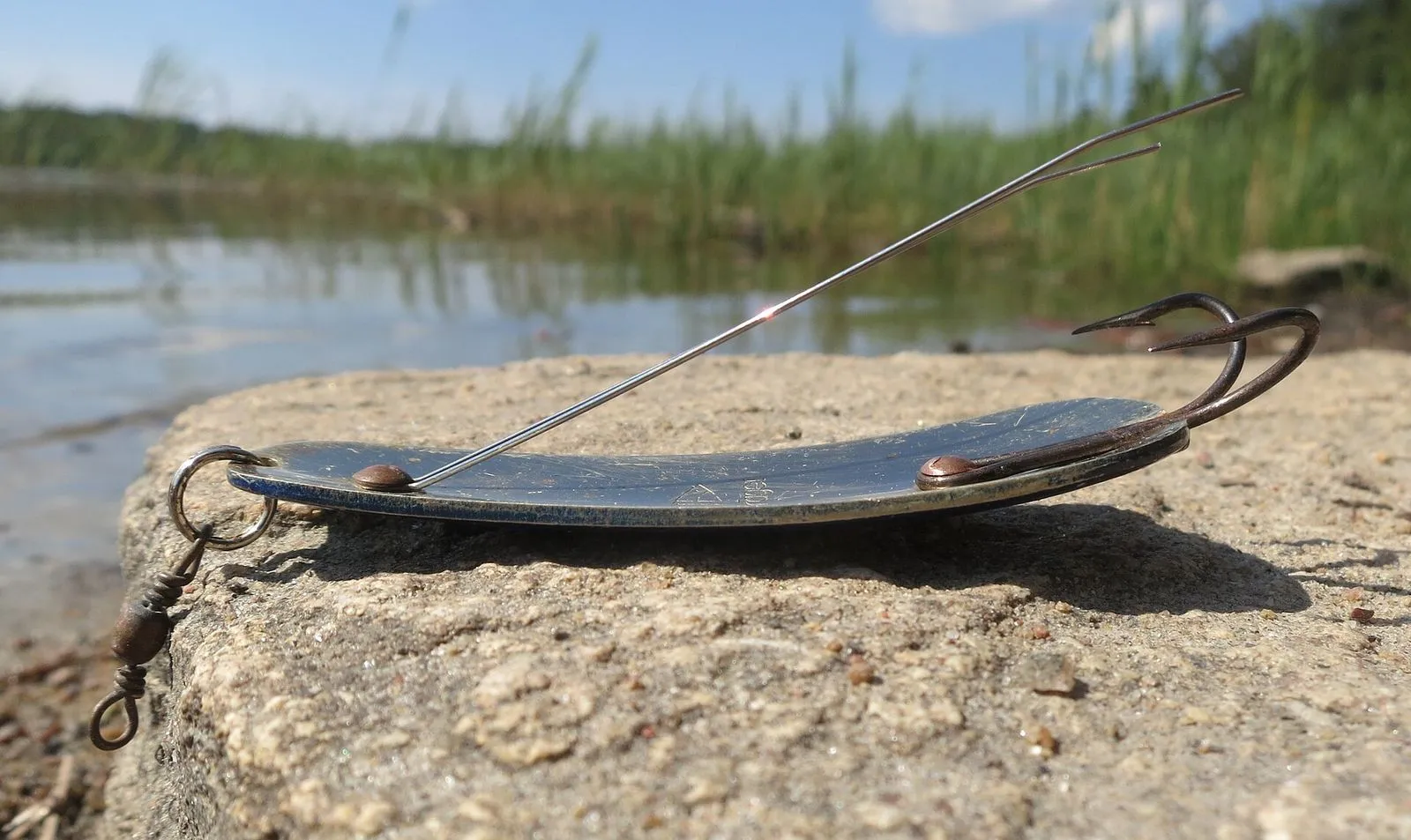
Lures. Minnesota DNR says musky lures commonly run 5 to 10 in (13–25 cm) or longer: bucktails, spinners, large crankbaits, floating lures and soft plastic tube jigs. It suggests beginners pick lures with fewer hooks. The best muskie lures page picks one model per class.
Release kit. Muskies Canada lists a large coated net, bolt cutters for hooks, long needle-nose pliers, a hook-out tool, jaw spreaders, gloves and a bump board or tape. Pack it before the first cast, not after the fish is in the net.
Free PDF · Pike & muskie cheat sheet Where are the pike this week, and what will they hit?
One reading, and the 16-page cheat sheet tells you where pike and muskie sit and what to throw; with the four fish told apart at the net, 13 lures by temperature and the quick-strike rig drawn.
Enter your email, confirm it with one click, and the PDF is in your inbox. Plus one email a week on what's biting. Unsubscribe anytime. Privacy.
How do you do the figure eight?
Muskies often follow a lure to the boat without striking. A follower is your chance, and the figure eight is how anglers try to turn it into a bite. Do it on every cast, whether or not you see a fish.
- Slow down near the boat, but keep the lure moving. Wisconsin DNR: muskies hit lures with plenty of action, so “keep the lure moving and don’t let it rest”.
- Stop with the lure about a foot from the rod tip. Minnesota DNR’s instruction: reel it close, and keep it in the water.
- Push the rod tip down and sweep a figure eight beside the boat. With a fish on the lure, Pyzer has knelt and plunged the rod so deep his hand was in the water.
- Make the turns wide. A small, tight eight cramps a big fish. Pyzer keeps his turns as wide as possible and stands at the side of the boat, not in the middle of the casting deck, so the full rod length comes into play.
- Expect the strike on the outside turn. In Pyzer’s words, the outside turn is “the pivotal moment for most strikes”.
- Set hard, and keep the line tight. Wisconsin DNR says to set the hook “immediately and firmly” when a muskie hits.
- Keep going. A fish that is still circling has not left. Pyzer’s advice is to keep making figure eights and hang on.
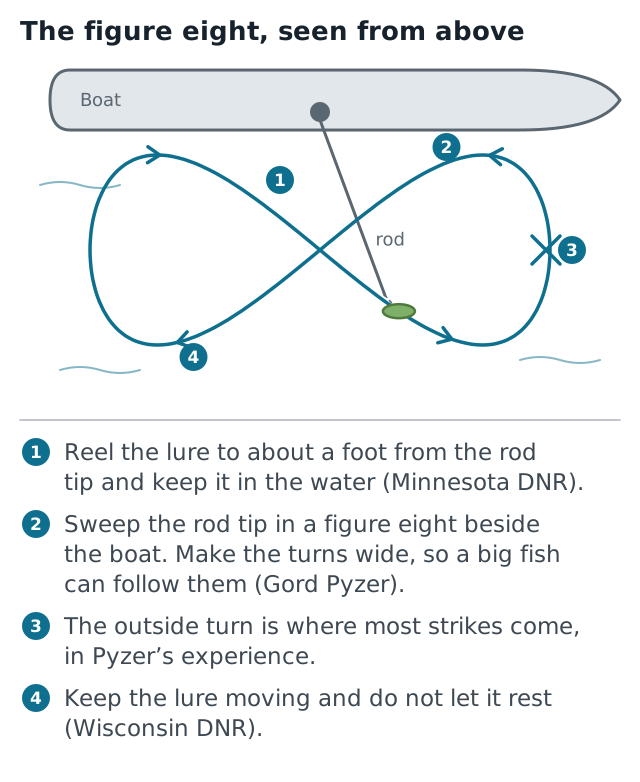
Drawing: fishing.info, after Minnesota DNR, Wisconsin DNR and Gord Pyzer.
Some anglers swim an oval instead of an eight; Pyzer counts both. What matters is that the lure never stops and the turns stay big.
Where do you find muskie?
Muskie are ambush hunters that sit on edges, near their food. Wisconsin DNR names suckers, perch and cisco as particular favorites, and notes a muskie can swallow prey up to two-thirds of its own length.
For spots, the same agency lists drop-offs, rock or sand bars, weed edges, weed-covered bays and shady areas along shore. Minnesota DNR adds rocky shoals, points that drop into deeper water, islands, sunken reefs, humps and sand flats.
In rivers, West Virginia DNR says muskies prefer slack water with dense cover: woody debris, downed trees and other submerged structure.
The fish also move with the calendar. Telemetry on West Okoboji Lake, Iowa, summarized by Pyzer for In-Fisherman, put over 75% of muskie locations in spots without vegetation until early July. In August, 78% were tied to weeds, mostly the weedline and weed pockets, in a lake where only 37% of the basin held vegetation. Weeds are the summer answer, not the whole-year one.
In a big lake, start where these meet: a weed edge on a point, a rock bar next to deep water, a hump with cabbage on top. The pike family hub covers where muskie live in the first place.
Where is the best musky fishing?
No agency ranks the waters, but the agency numbers point to a few. In 2012 Wisconsin counted muskellunge in 667 lakes and 100 river segments, with nearly 90% of its muskie waters in the north of the state. Minnesota manages 101 muskie waters, 91 of them for the pure-strain fish. Michigan’s main Great Lakes population lives in Lake St. Clair and the Detroit River.
For a trophy, two big waters stand out in recent records. Wisconsin’s catch-and-release record fell three times in 2025, and all three fish were caught and released in Green Bay. The bay is also one of the faster fisheries, at 19.6 hours per fish in 2021. Minnesota’s record, 55 lb 14.8 oz, came from Mille Lacs Lake and was certified in 2021.
Musky fishing by season: spring, summer, fall turnover
The pattern turns on water temperature. Pyzer’s summary of the tracking studies puts the hinge at 59 °F (15 °C): above it in late spring, most muskies head for their summer homes; below it in fall, those home ranges break up.
| Season | Where the muskie are | What anglers throw | Who says so |
|---|---|---|---|
| Spring, before and after the spawn | Shallow flats before the spawn, then fast-warming sandy or soft-bottomed bays | 4 to 6 in (10–15 cm) neutrally buoyant minnowbaits, fan-cast over the flats at 32 to 46 °F (0–8 °C) | Guides Vince Weirick and Jeff Andersen, In-Fisherman |
| Summer | Weed beds, rock bars, drop-offs, points with wood; in August mostly weedlines | Bucktails and big lures cast along the weeds; trolled divers along weedlines and reefs | Wisconsin DNR, Minnesota DNR, In-Fisherman telemetry summary |
| Fall to turnover | Points, reefs and breaklines at many depths as the lake mixes | Big lures, then a 10 to 14 in (25–36 cm) white sucker cast or drifted | Wisconsin DNR, Outdoor Canada |
Spring. Many waters stay closed through the spawn, so check the opener first; Minnesota’s statewide season runs from early June to early December. After the spawn, Andersen notes that “most of the fish you run into are bucks 45 inches or less”. Pete Maina favors deep, clear lakes with limited spawning habitat, because the fish crowd into the few good areas.
Summer. Wisconsin DNR records some of the highest catch rates in the warm summer months, and Minnesota DNR says fishing picks up in middle or late summer. Fish weed edges with bucktails, spinnerbaits and jerkbaits. Minnesota DNR also describes trolling large diving crankbaits along weedlines and reefs. Hot weather brings the one hard stop of the year, covered under release below.
Fall and turnover. Fall is big-fish time: Minnesota DNR says many of the largest muskellunge are caught in October and November. Turnover is the mixing of a lake when its surface cools to the temperature of the deep water. Pyzer and Liam Whetter call it “a process—not an event”. Their advice: do not wait for the whole lake to reach 40 °F, or you miss two months of great fall fishing; summer patterns start to break down once the water drops for good below 60 °F. Fish points, reefs and breaklines, where fish hold at many depths.
Live bait in the cold. In fall, Wisconsin DNR notes, some anglers cast or drift a white sucker 10 to 14 in long. Steven Paul of Field & Stream says water “in the 50-degree range and below” gives the best conditions, and calls a quick-strike rig “non-negotiable”. He cites Wisconsin DNR biologist Terry Margenau’s study of fish allowed to swallow single-hook live bait: 22% died within 50 days and 83% within one year. His rig is a compact two-treble system, one hook at the top of the sucker’s mouth and one behind the dorsal fin, so the hook is set at once instead of after a swallow.
When do muskie bite?
Minnesota DNR names dawn and dusk as the most active hours, and says cool, overcast days can beat hot, sunny ones. In early summer and late fall, the warmest part of the day may be best instead.
Weather matters too. Wisconsin DNR’s better conditions are windy days, rainy days, calm and muggy overcast days, and the changing weather ahead of a front. On clear lakes with heavy daytime boat traffic, it adds, night fishing can be productive.
Put together, a hot, bright, calm afternoon is the weakest bet. Go early, go late, or go when the wind comes up.
How do you land and release a muskie?
In cool water, a released muskie nearly always lives. In a study on Ontario’s Ottawa River, Landsman and colleagues radio-tagged 30 muskies caught by specialist anglers, and none died as a result of the angling event.
How to do it, from Wisconsin DNR, Minnesota DNR and Muskies Canada:
- Net it head first in a large coated net, and leave the fish in the net, in the water, until the hooks are out.
- Unhook in the water. Minnesota DNR notes muskies are usually calmer there. Use long pliers, or cut the hooks with bolt cutters and remove the pieces.
- Lift it level for one quick photo, a hand under the belly. Never lift a muskie vertically by the jaw, and never hold any fish by the eye sockets.
- Release it and let it swim off on its own.
Warm water is the exception. Maryland DNR tagged Potomac River muskies and followed 21 released while the river was over 80 °F (27 °C): ten died, a mortality rate of 48%. The agency recommends that anglers consider not targeting muskie once the water reaches 80 °F. The site’s catch and release guide covers the general rules: wet hands, a short fight, little time in the air.
Size limits are high, 54 in statewide in Minnesota and 40 in on most Wisconsin waters, and almost nobody keeps one: since 2016 only three kept muskies turned up in 161 Wisconsin creel surveys. Check the regulations for the water you fish. Whether a legal fish is worth eating, and what the safe-eating guides say about mercury, is on the muskie page.
Muskie fishing mistakes to avoid
- Ending the cast at the boat. Lift the lure out before the figure eight and you skip the part of the cast where, by Pyzer’s count, three of every four muskies now hit.
- A small eight. Tight turns make a big fish turn too sharply; go wide.
- No leader. Braid alone is cut by teeth; run wire or heavy fluorocarbon.
- Live bait on a single hook. Margenau’s swallowed-hook fish died at 22% within 50 days; use a quick-strike rig.
- Fishing the heat. Above 80 °F, 10 of 21 tagged Potomac muskies died after release.
- Waiting for the tools. Pliers and cutters in a bag in the bow mean a fish out of the water too long.
When something else wins
If the goal is a bent rod rather than one fish of a lifetime, fish for pike: Wisconsin’s pike leaflet puts a pike at about eight hours of fishing, and pike fishing covers the same weed edges with lighter tackle. Some states stock the sterile hybrid instead; tiger muskie tells you where. And when a big one does reach the net, the world record muskie page shows how far it is from the biggest ever weighed.
Gear for pike and muskie
Gear guide
Best Northern Pike Lures: Six Classics the Agencies and Guides Agree On, and When to Throw EachNorthern pike lures by the evidence: a 1 oz spoon first, then spinners, spinnerbaits, plugs and topwaters, with the water and season each one is for.
Gear guide
Best Muskie Lures: The Classic in Each Class, and the Water Temperature to Throw ItThe muskie lures guides and magazines keep naming, one per class, with maker-checked sizes and the water temperature each is for, from 40 °F to 75 °F.
Free PDF · 16 pages
Where the pike are this week, and what they'll hit
The Pike & Muskie Cheat Sheet. A 16-page PDF. Read the water temperature, find your season on the sheet, and it tells you where pike and muskie sit and what to throw. Behind the sheet: pike, muskie, tiger and pickerel told apart at the net, 13 lures by water temperature, the quick-strike rig drawn and tied, the teeth and how to unhook one without a cut, which fish to keep, and every record.
- Three temperatures for each fish, when they spawn, feed best and slow down, and the 80 °F line where Maryland says leave the muskies alone
- Where the big pike go in August, the 61–70 °F water the big ones leave the weeds for, measured on tagged fish, with rising and falling water for both fish on one page
- 13 lures by water temperature, from a 1 oz spoon at ice-out to a 10 in double bucktail at 65 °F, with the leader rule and the quick-strike rig drawn
- Pike, muskie, tiger or pickerel at the net, the marks that work when color fails, how to unhook one without a cut, and which fish to keep for the pan
Every line from the pike pages on fishing.info and the 169 sources behind them, Minnesota, Wisconsin and Michigan DNR among them.
Enter your email, confirm it with one click, and the PDF is in your inbox. Plus one email a week on what's biting. Unsubscribe anytime. Privacy.
Related
Section guide
Pike Fish: Northern Pike, Muskie and Pickerel, and How to Catch ThemPike fish of North America: northern pike, muskie, tiger muskie and pickerel told apart, where they live, when they spawn and how to catch one.
- Are Northern Pike Good to Eat? Yes: the Y-Bones, the Five-Fillet Cut and Which Fish to Keep
Northern pike are firm, white and flaky. How to cut five boneless fillets around the Y-bones, which size to keep, and how much is safe to eat.
 Pike Fishing: How to Catch Northern Pike in Every Season
Pike fishing season by season: where northern pike are from ice-out to first ice, what to throw, where big pike go in summer, and the quick-strike rig.
 World Record Pike: The 55 lb German Fish, the 46 lb American One and the State Records
The world record pike is 55 lb 1 oz, caught in Germany in 1986. North America's best is 46 lb 2 oz from New York in 1940, a fish its captor never mounted.
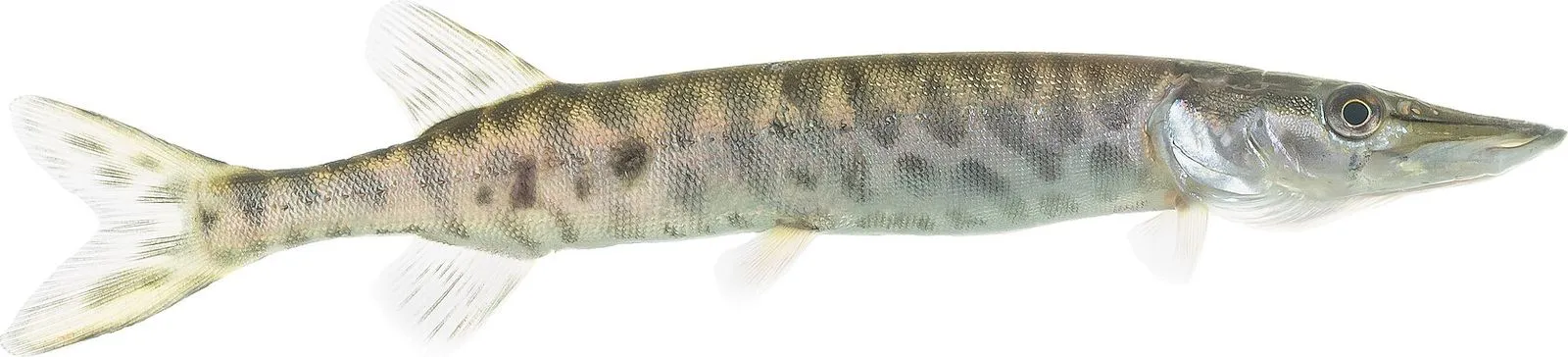 World Record Muskie: Three Claims, Two Record Books and the Biggest Fish Nobody Disputes
The world record muskie is 67 lb 8 oz to the IGFA and 69 lb 11 oz to the Hall of Fame. Both date from 1949, both are disputed, and a 65 lb fish is not.
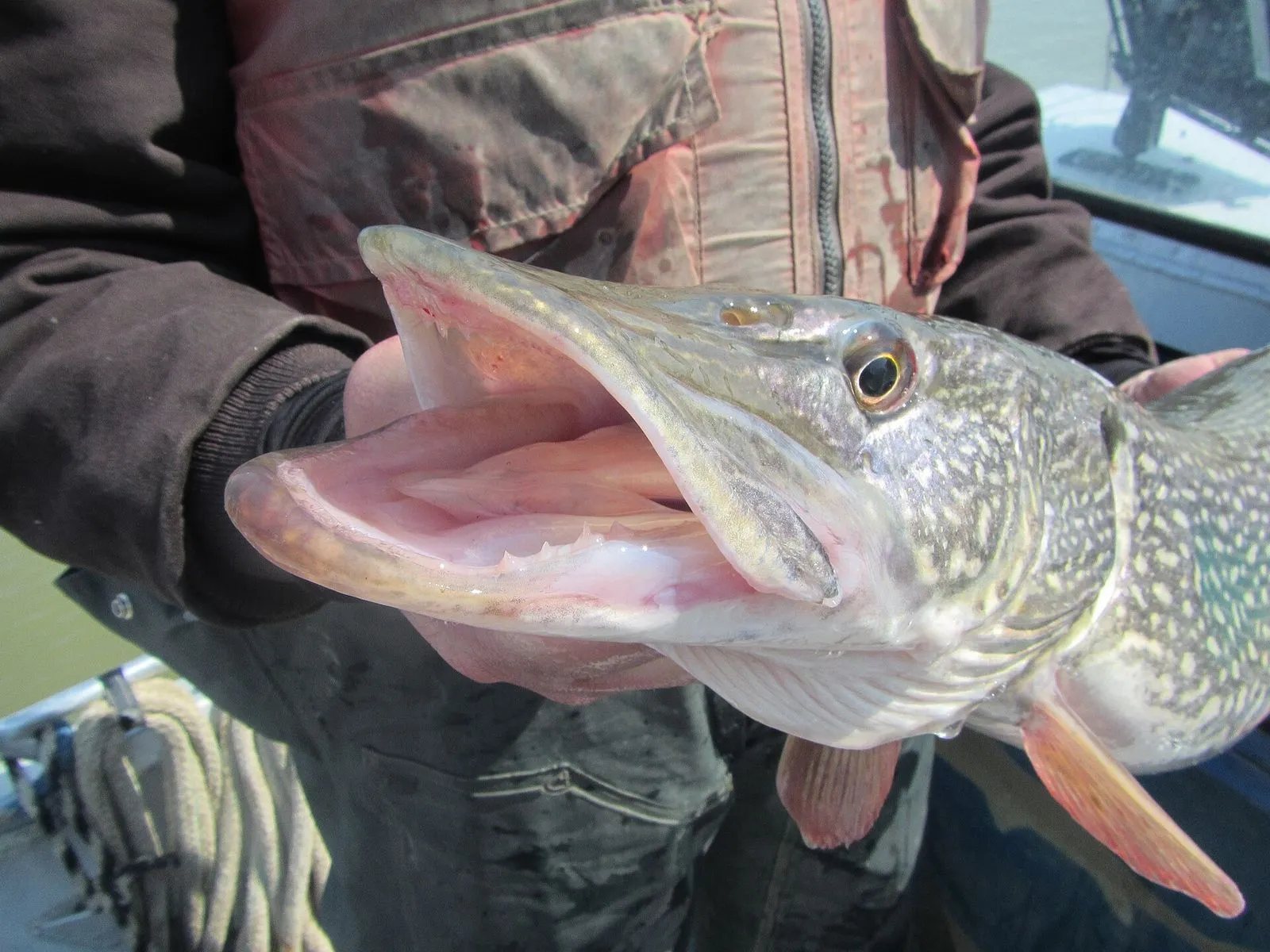 Northern Pike Teeth: How Many, How Sharp, the Summer Myth, and How to Unhook One
Northern pike teeth: about 16 knife-edged canines on each side of the lower jaw, hundreds more on the roof and tongue, and how to unhook one safely.
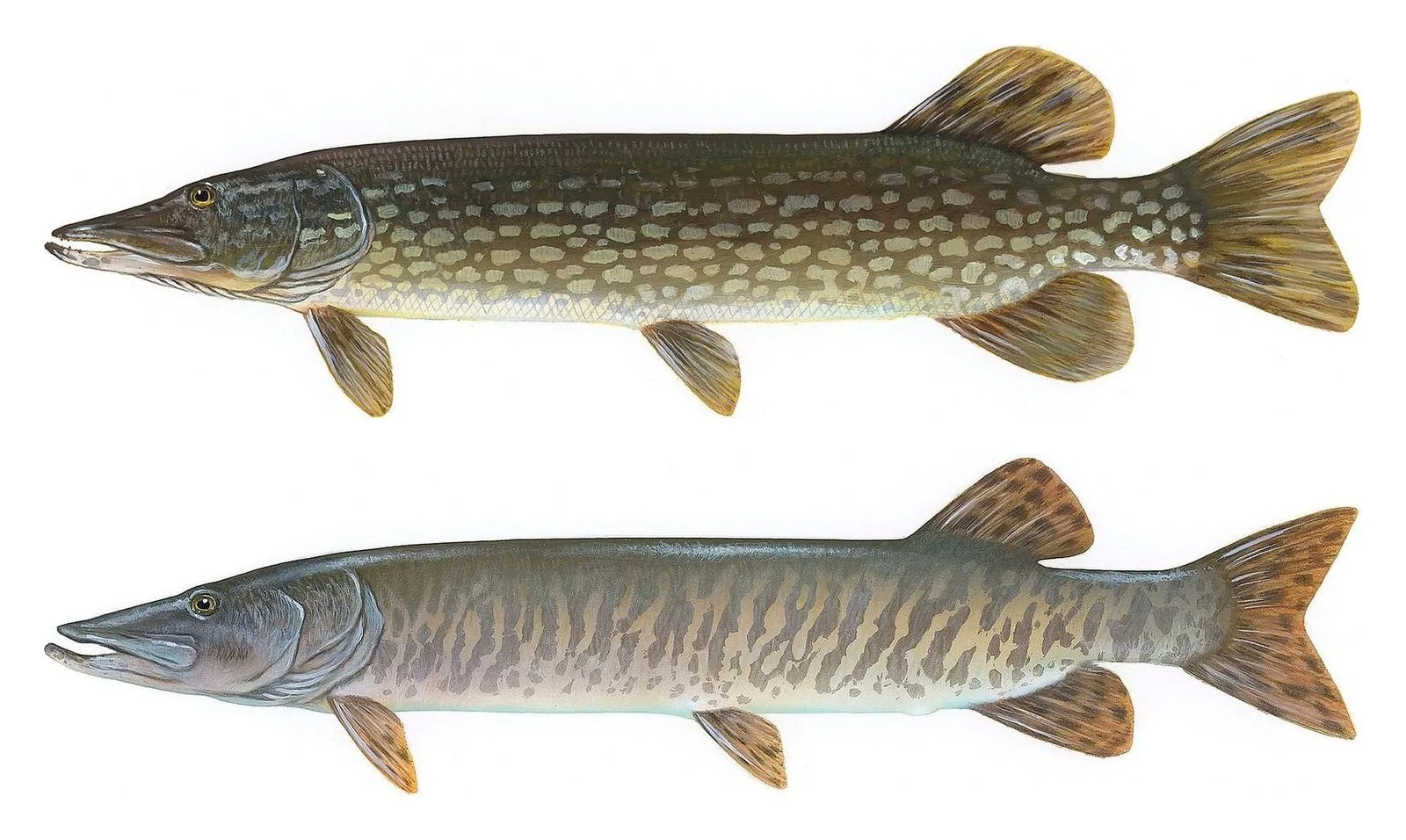 Muskie vs Pike: How to Tell Them Apart, and How the Two Fish Really Differ
Muskie vs pike: markings, tail tips, jaw pores and cheek scales side by side, plus size, age, numbers per acre, and pike against pickerel and walleye.
Sources
- Wisconsin DNR, Muskellunge (Esox masquinongy), PUBL FM-705 (2012): tackle, figure-8, live sucker, release
- Wisconsin DNR, Fishing for musky: weather, areas, lake types, night fishing
- Wisconsin DNR, Wisconsin's state fish: the muskellunge (harvest since 2016, size limits)
- Wisconsin DNR, Muskellunge Management Update, FH-508 (2012): 27 hours per muskie, creel surveys 1990–2011
- Wisconsin DNR, Status of Great Lakes muskellunge in Wisconsin waters of Green Bay (2021)
- Minnesota DNR, How to catch a muskellunge
- Minnesota DNR, Long Range Plan for Muskellunge Through 2040: hours per fish on 18 waters
- Michigan DNR, Muskellunge species page
- Dac Collins, Wisconsin's Muskie Record Was Broken 3 Times in 2025, Outdoor Life (January 20, 2026)
- Fox 9, Minnesota DNR certifies 55-pound muskie caught on Mille Lacs Lake as new record (December 2021)
- KSTP, Minnesota fisherman may have broken state's longstanding largest muskie record (November 2021): 55 lb 14.8 oz, 57.75 by 29 in
- West Virginia DNR, Muskellunge: river habitat and cover
- Maryland DNR, Muskie biology: warm-water release mortality and the 80 °F recommendation
- Landsman, Wachelka, Suski and Cooke (2011), Evaluation of the physiology, behaviour, and survival of adult muskellunge (Esox masquinongy) captured and released by specialized anglers, Fisheries Research 110: 377–386
- Wisconsin DNR, Northern Pike (Esox lucius), PUBL-FM-707: hours per pike
- Muskies Canada, Muskies 101: tackle, netting and release tools
- Gord Pyzer, How to master one of muskie fishing's most essential tactics (Go figure), Outdoor Canada (April 6, 2021)
- Gord Pyzer and Liam Whetter, Fall turnover is a process—not an event, Outdoor Canada (October 14, 2023)
- Gord Pyzer, Homing in on muskie behavior, In-Fisherman
- Dan Johnson, How to catch early season muskies in cold water, In-Fisherman
- Steven Paul, How to Fish Live Bait for Muskies—Responsibly, Field & Stream (September 10, 2026)