
No: a fish has no lungs for water to fill, so it cannot drown the way a person does; water is where it breathes. But a fish can suffocate, and it happens more often than you might think. The water runs short of oxygen, the gills are torn, or a fish that has to swim to breathe is held still or pulled backward. Summer is the dangerous season, and the way you revive a tired fish decides whether it swims off or sinks.
A liter of water holds about 8 cm³ of oxygen; a liter of air holds 210. A fish lives on one twenty-sixth of what we breathe, and warm water takes part of that away: water at 90 °F (32 °C) holds half the oxygen of water at 32 °F (0 °C).
How does a fish suffocate?
A fish breathes by moving water over its gills. Water goes in the mouth, passes over thousands of thin red flaps called lamellae, and leaves under the gill covers. Blood inside the lamellae flows the opposite way to the water. That countercurrent lets a gill pull more than 80% of the oxygen out of each mouthful. How fish breathe has the full picture.
Most fish pump that water themselves. A bass under a dock opens and closes its mouth and gill covers like a bellows. Others cannot: tunas, and sharks such as the great white, must swim forward with the mouth open to push water through. Stop them, and they stop breathing.
So a fish suffocates in three ways. The water has too little oxygen, the gills are damaged, or a fish that needs to swim cannot. None is drowning by the dictionary; all three end the same way.
Can a fish drown if you pull it backward?
Gills work in one direction. Water comes in at the mouth and out at the sides. Drag a fish backward and the flow reverses: water pushes in under the gill covers and lifts the lamellae the wrong way. Little oxygen gets across.
You will read that a shark dragged backward behind a boat drowns in minutes. That may well be true for a shark that must swim to breathe. But every version of the claim traces back to fan sites and forums, not to a study. Nobody has published the measurement, so treat it as likely, not proven.
For the angler the lesson is plain: never pull a fish backward to “wake it up.”
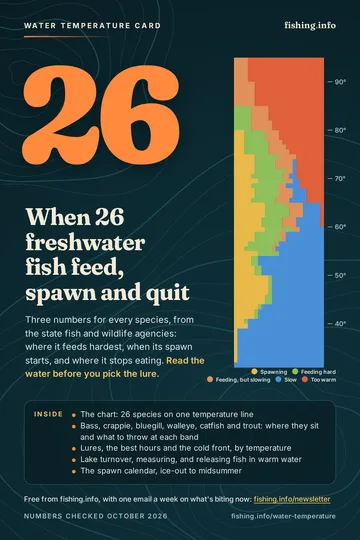
Free card: what 26 species do at your water temperature
Plus one email a week on what's biting now. No sales pitches. Privacy.
Can a fish drown out of water?
A fish in air does not drown. It suffocates, and fast. In water the lamellae float apart. In air they collapse and stick together like wet tissue paper; the breathing surface shrinks to almost nothing, and oxygen uptake stops.
How long before that matters? In a 1992 study, rainbow trout chased to exhaustion survived 88% of the time with no air exposure. After 30 seconds in air, 62% survived; after 60 seconds, 28%. A 2015 review of the research, “Fish out of water,” gives the rule of thumb every angler should carry: about 10 seconds of air, then back in.
Some fish cheat. A mudskipper can stay out for about three and a half days on wet skin and a mouthful of water. The mangrove rivulus survives around two months in damp logs. The African lungfish seals itself into a mud cocoon and waits out a dry season of up to two years. The “walking catfish lasts 18 hours” figure appears only on blogs; no study backs it.
Why do fish die in warm water?
Cold water holds more oxygen than warm. Fresh water at saturation carries 14.6 mg of oxygen per liter at 32 °F (0 °C), 8.9 at 70 °F (21 °C) and 7.3 at 90 °F (32 °C). At the same time a warm fish needs more, because its body runs faster. Supply falls as demand rises, which is why fish kills come in August, not February.
The University of Miami wrote in 2023 that “a fish can drown,” after the Gulf of Mexico reached 88 °F (31 °C) that August. The thresholds explain it. Warmwater fish such as bass and catfish want more than 5 mg/L, avoid water below 3, and die below 2. Trout want 6.5 and cannot take less than 4 for long. Carp get by below 1, and pike have been reported surviving 0.1 mg/L for days.
Oxygen is lowest just before dawn, after a night in which the plants used oxygen instead of making it. The water temperature guides carry the comfort bands for each species.
What can you do about each one?
| Cause | What happens to the fish | What the angler does |
|---|---|---|
| Warm, still water | Less oxygen in the water, more needed by the fish; below 2 mg/L most game fish die | Fish dawn, inflows, wind-blown banks and deeper water in a heat wave; release fast |
| Held out of water | Lamellae collapse and stick; uptake stops within seconds | Ten seconds of air at most; unhook in the water when you can |
| Pulled backward | Water enters under the gill covers; the lamellae fold the wrong way | Never drag a fish backward; hold it facing into the current |
| Torn or scraped gills | Bleeding gills lose their breathing surface; a fish bleeding from the gills rarely survives | Fingers out of the gill covers; a rubber or knotless net, not knotted nylon |
| Crowded livewell | The fish use up the oxygen and warm the water; stress rises | Aerator on, water at or below 84 °F (29 °C), no sudden change over 7 °F (4 °C), oxygen at or above 5.5 ppm (B.A.S.S. figures) |
| Must swim, cannot | A tuna or great white held still gets no flow over the gills | Boatside, keep it moving slowly forward until it is released |
How do you revive a tired fish?
- Land it fast. In B.A.S.S. research, a bass fought for one minute survived better than one fought for three.
- Unhook it in the water. Wet hands, pliers ready. Count the seconds it spends in air and stop at ten.
- Hold it upright, facing into the current. In a river, point the nose upstream and let the flow do the breathing. In a lake, face it into the wind-driven ripple.
- Move it forward slowly, never back and forth. Glide it in a slow figure eight so water flows in at the mouth and out at the gills. Sawing it backward reverses the flow and undoes the work.
- Watch the gill covers. When they beat steadily on their own, and the fish rights itself when you tilt it, it is ready.
- Let it choose the moment. Loosen your grip and let it swim off. A fish that rolls belly-up gets picked up and held again.
- In hot water, take longer. Above 80 °F (27 °C) the water holds less oxygen and the fish needs more, so a two-minute revival is normal. If a legal fish still cannot stay upright after several minutes, keep it.
The catch-and-release guide covers hooks, nets and photos in full.
What does a fish kill look like?
A fish kill is suffocation on a lake-wide scale. It shows itself at dawn after a hot, windless night. Fish of every size and kind hang at the surface, mouths at the film, gulping the thin oxygen-rich top layer. Because every species dies at once, it is oxygen, not disease. Carp, which tolerate less than 1 mg/L, are often the last left alive.
A fish gulping at the surface is not resting. A sleeping fish settles low against cover with its gill covers beating slowly; a suffocating one hangs at the top and beats them hard. If you see a kill, call your state fish and wildlife agency; most run a hotline for it.
One line to carry to the water: gills work one way, so revive a fish forward, never backward. More answers to the questions kids ask, and what each means for the angler, are in fish facts.
Free download
The water temperature card
Read your water temperature and the card tells you who is spawning, who is feeding and what to throw. 26 species, 16 pages, for your phone and the tackle box.
Plus one email a week on what's biting now. No sales pitches. Privacy.
Related
Section guide
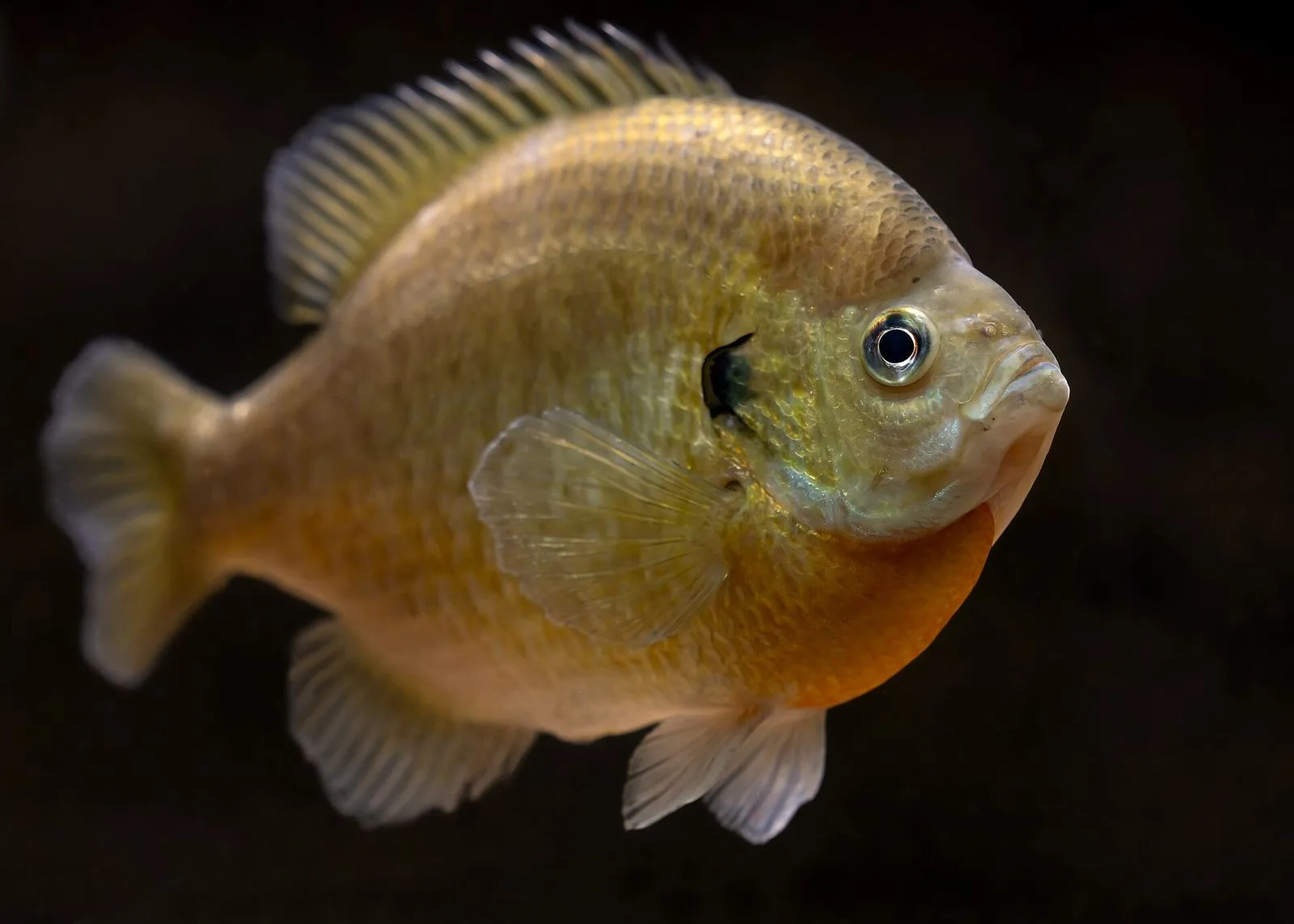
Fish Facts: The Questions Kids Ask About Fish, Answered With the ScienceFish facts with a number and a source for each: how fish sleep, breathe, hear and feel, and what every answer means when you hook and release one.
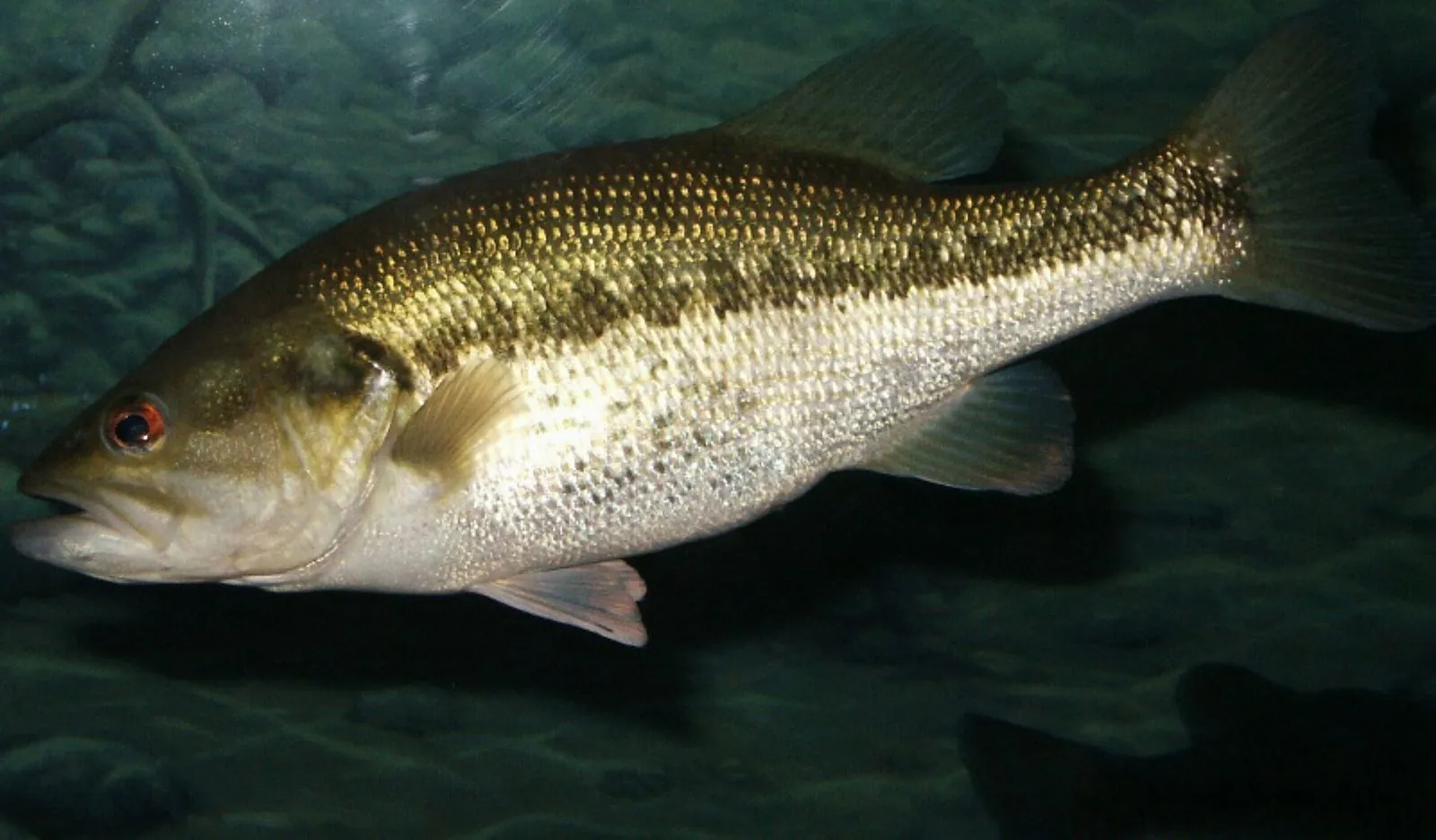 Do Fish Drink Water? Freshwater Fish, Saltwater Fish and Sharks
Do fish drink water? Freshwater fish barely do, saltwater fish drink all day, sharks cheat with urea. The numbers, and what it means for bait and livewells.
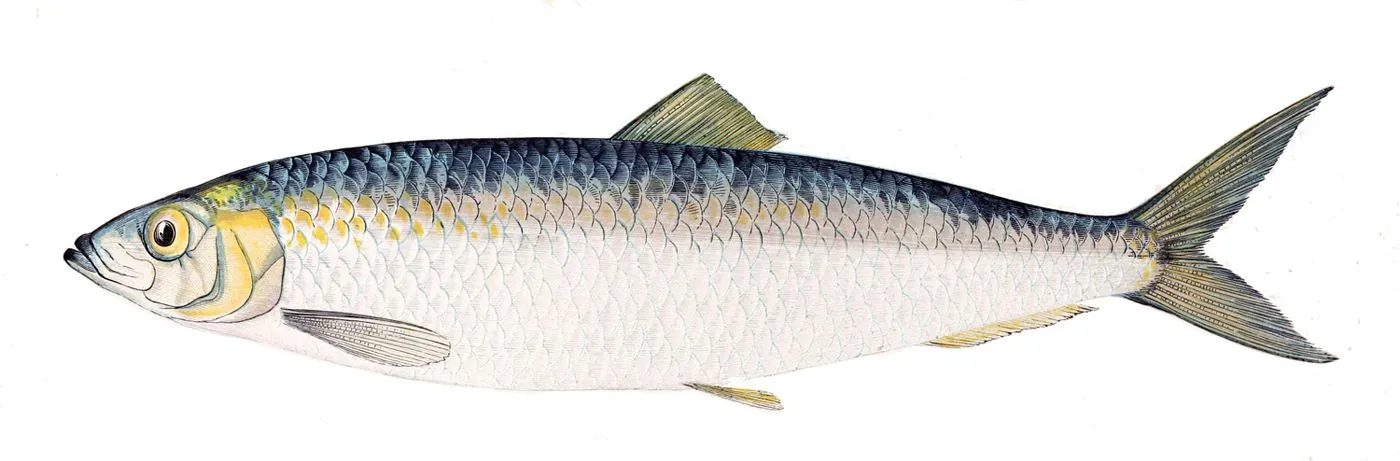 Do Fish Fart? Yes, Herring Do It on Purpose, and a Bloated Bass Needs Help
Do fish fart? Herring do, on purpose, and scientists won a prize for proving it. Which fish pass gas, where it goes, and what to do with a bloated bass.
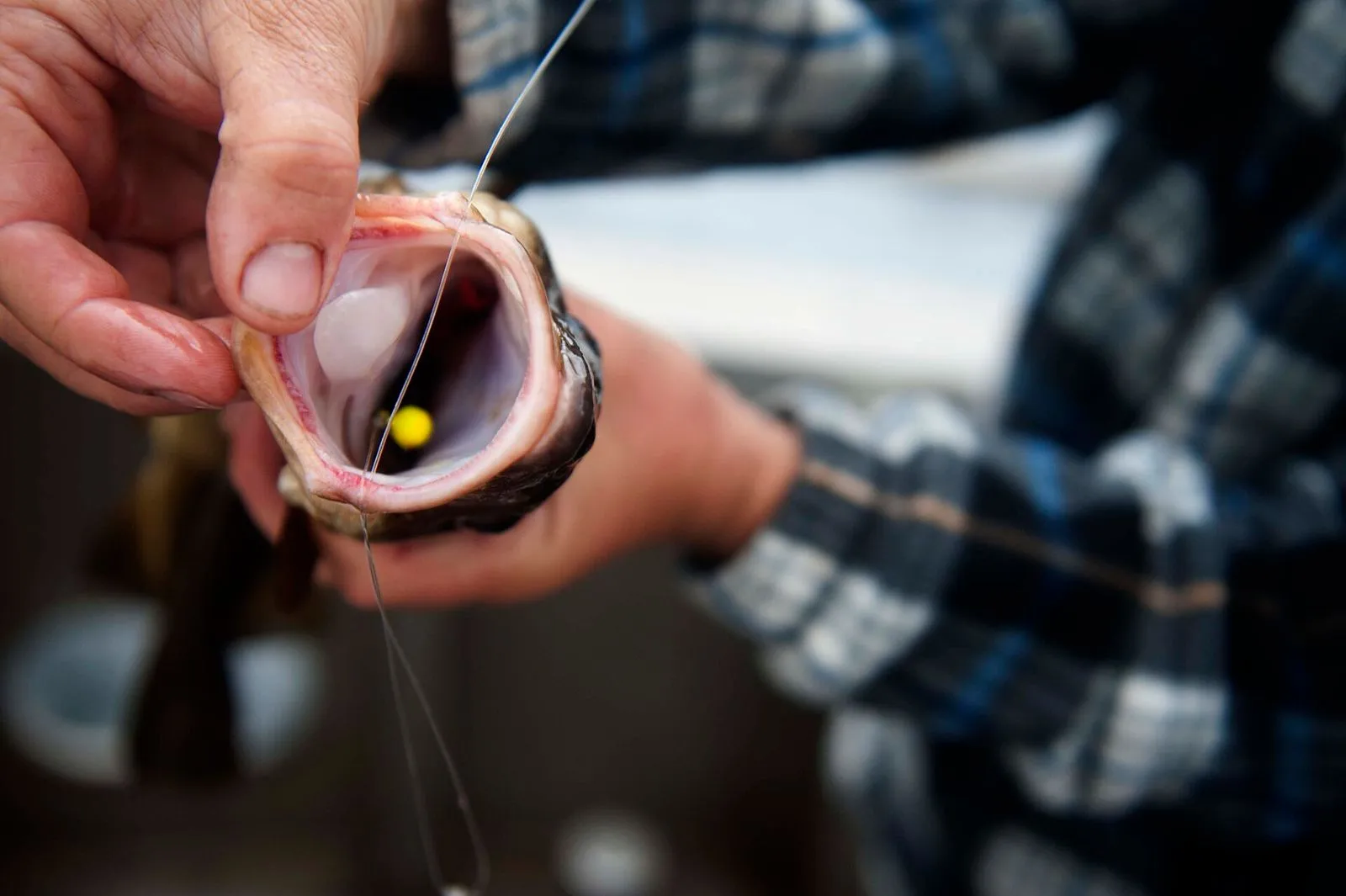 Do Fish Feel Pain? What the Studies Found, and What Decides Whether a Released Fish Lives
Do fish feel pain? They sense damage and react; whether they suffer is contested. The trout study, both camps, and what decides if a released fish lives.
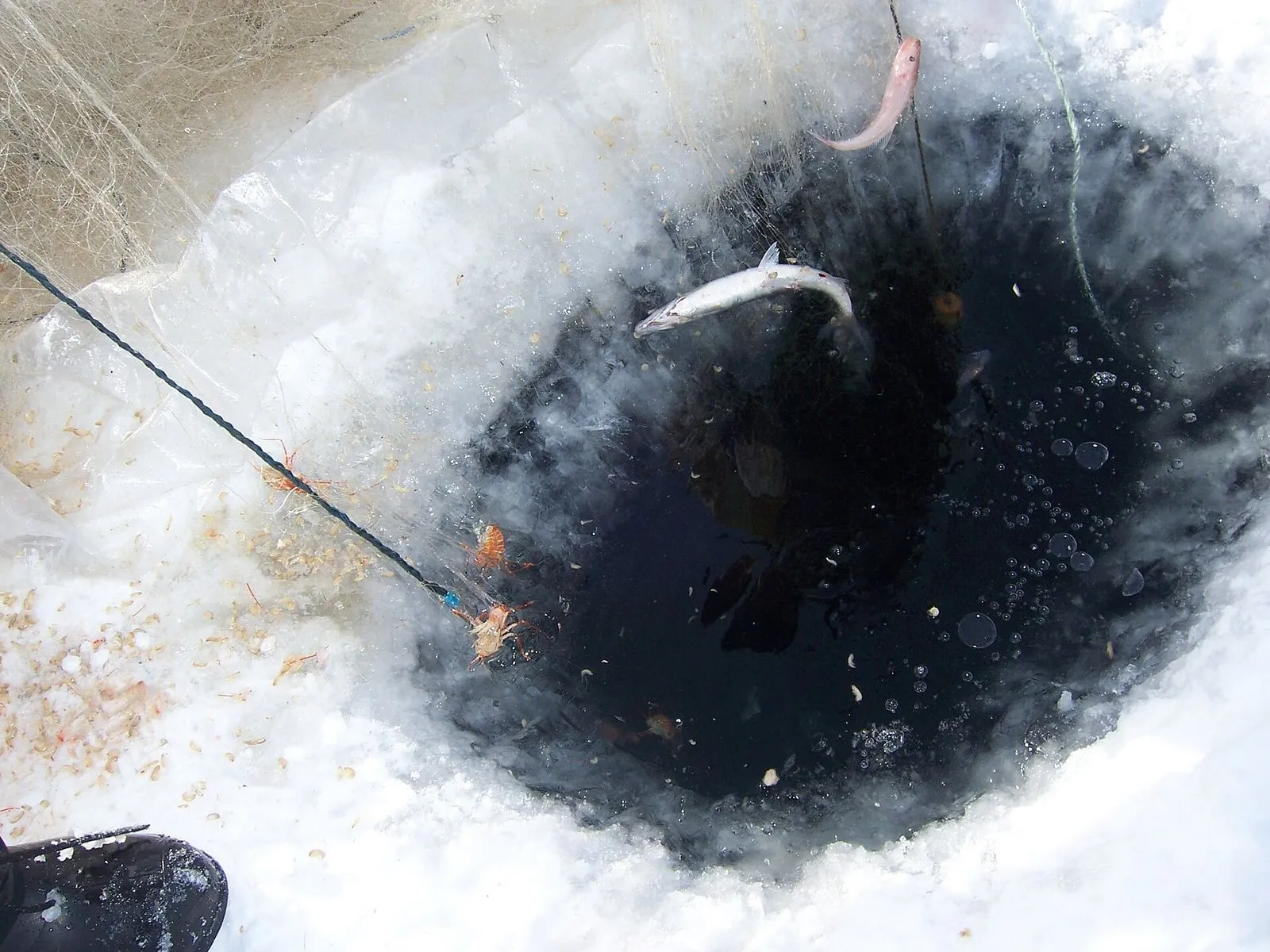 Do Fish Get Cold? What Winter Does to a Fish, and the Ones With Antifreeze in Their Blood
Do fish get cold? Yes: a fish is as cold as its water and feels it as slowness. What fish do in winter, who carries antifreeze, and how to fish cold water.
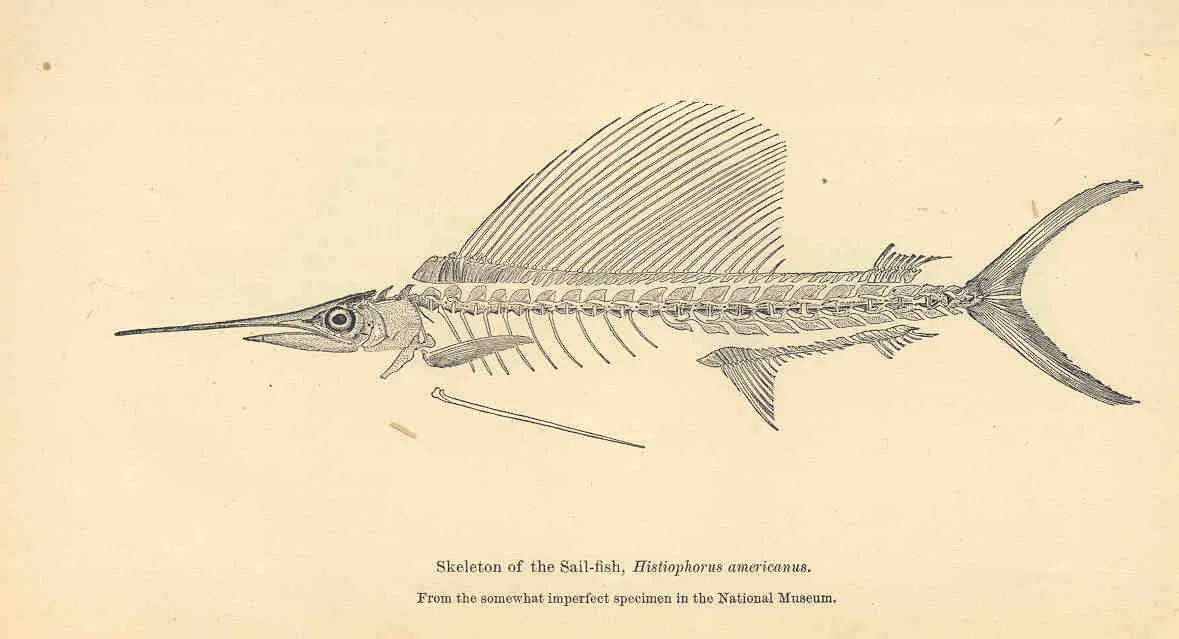 Do Fish Have Bones, Hearts and Blood? What Is Inside a Fish
Do fish have bones? Most do; sharks run on cartilage and 16 icefish have clear blood. How skeleton, heart and blood work, and what it means for your fillets.
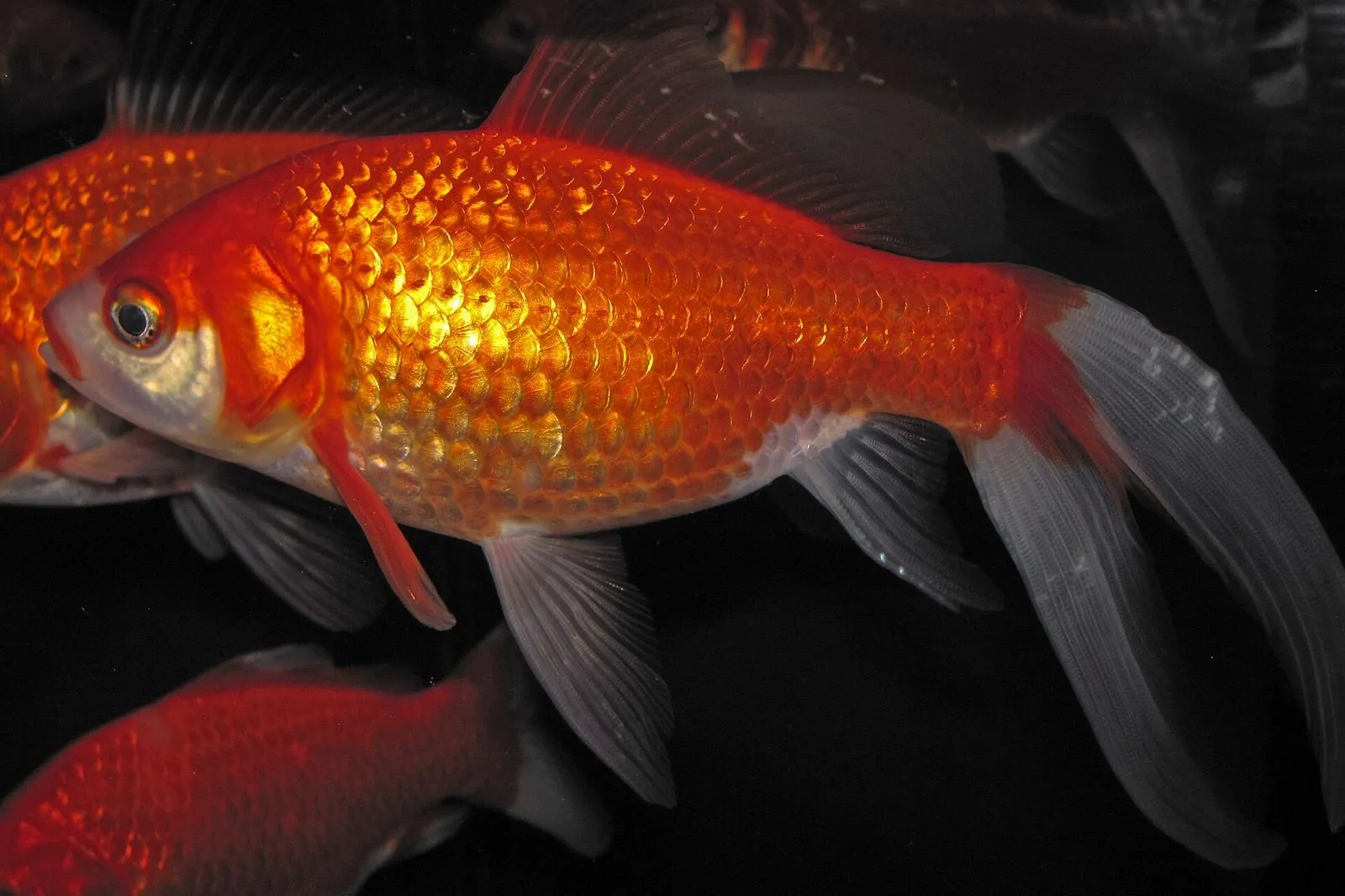 Do Fish Have Brains? Memory, Learning, and Why the 3-Second Myth Is Wrong
Do fish have brains? Yes: a full brain, no neocortex, a memory that lasts months. What goldfish, carp and pike learned, and what it means at the water.
Sources
- Discover Wildlife (2024), Can fish drown?
- University of Miami News (2023), It's hard to imagine, but a fish can drown
- Cook, Lennox, Hinch and Cooke (2015), Fish out of water: how much air is too much?, Fisheries
- Ferguson and Tufts (1992), Physiological effects of brief air exposure in exhaustively exercised rainbow trout, Canadian Journal of Fisheries and Aquatic Sciences
- USGS Water Science School, Dissolved oxygen and water
- Fondriest Environmental, Dissolved oxygen (thresholds by fish group, citing EPA and state criteria)
- FISHBIO (2016), An efficient exchange: countercurrent flow in fish gills
- Fish gill (overview: lamellae, ram ventilation, collapse in air)
- Amphibious fish (overview: mudskipper, mangrove rivulus, lungfish survival times out of water)
- AFTCO, Bass Care 101 (livewell temperature, oxygen and fight-time figures from B.A.S.S. research)