 By
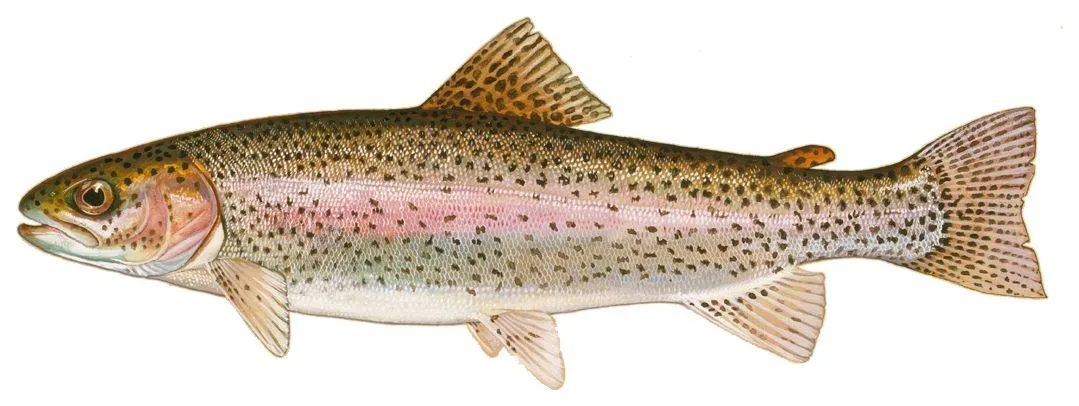
Do fish pee? Yes, and a freshwater fish goes all day long. Kidneys make the urine and a tiny opening near the rear end lets it out, so you’ll never notice. The part that matters at the water is the ammonia going out the gills, because that’s what builds up in your livewell or bait bucket.
A trout in fresh water pees about twice an hour. A plaice in the ocean goes once every 3 to 5 days.
How do fish pee?
Pretty much the way you do. Fish have kidneys, the kidneys filter the blood, and the waste leaves as urine. A lot of fish let it go through a tiny pore near the vent, the opening on the belly just ahead of the anal fin. In some fish the other waste uses that same opening. The squirts are small and very watery, and the water around the fish swallows them, which is why you’ve never spotted one.
You’ve already seen a fish’s kidney. Gut a fish and look along the backbone: that dark red line is it. Scrape it out with a spoon or your thumbnail before you cook the fish. Oregon and Idaho’s fish departments both tell you to do exactly that.
Do fish have a bladder?
Some do, and plenty of pages get this wrong. You’ll read that fish have no bladder and simply leak. Fish vet Jessie Sanders writes that most fish don’t have one that stores urine, and for a lot of fish that may be right.
A rainbow trout has one, and it uses it. A resting trout holds its urine, then lets go in a burst of about 0.85 ml per kg of fish, about every 25 minutes. While the urine waits, the bladder pulls salt back out of it, so the fish loses less. A plaice in the ocean holds on for days, and its bladder takes water back the same way.
Free PDF · 7-day beginner fishing pack Starting fishing? What do you buy, what does it cost, and what do you do at the water?
The 16-page beginner pack: the $85–100 kit with the spec to ask for in the store, the license rules, the first knot, the rig drawn, the cast, the bite and the release. A free seven-day email course comes with it, one step a day.
No card, nothing to buy, and the PDF is yours to keep. Confirm with one click and it's on its way. Then a few short emails and one a week on what's biting. Unsubscribe anytime. Privacy.
How much does a fish pee?
More than you’d guess for its size. A resting rainbow trout makes about 2.3 ml of urine per kg of body weight every hour, about 5 percent of its weight in a day. FISHBIO puts the top end for freshwater fish at a third of their body weight a day. Getting that number takes a small tube fitted to the fish, so every squirt can be caught and counted.
Run the trout’s rate on the fish you catch and you get the table below. Nobody has measured a bass or a flathead this way, so treat these as a rough idea.
| Freshwater fish at the trout rate | Each squirt, about every 25 min | In a day |
|---|---|---|
| 1 lb (0.45 kg) bluegill | About 0.4 ml, a few drops | About 1 oz (25 ml) |
| 5 lb (2.3 kg) largemouth bass | About 2 ml | About 4 oz (125 ml) |
| 10 lb (4.5 kg) channel catfish | About 4 ml | About 8 oz (250 ml) |
| 40 lb (18 kg) flathead catfish | About 15 ml, a tablespoon | About a quart (1 L) |
Why do freshwater fish pee so much and saltwater fish hardly at all?
Because water moves toward the salty side. A freshwater fish is saltier than the lake, so water soaks in through its gills and skin all day, and the kidneys have to bail it back out. That flood is also why a freshwater fish barely drinks, which do fish drink water explains in full.
A saltwater fish has the opposite problem. The sea pulls water out of it, so it drinks seawater and hangs on to every drop it can. Very little urine gets made, and what does is strong and salty.
| Freshwater fish | Saltwater fish | |
|---|---|---|
| How often | Resting trout: about twice an hour | Plaice: once every 3 to 5 days |
| How much | A lot, up to a third of body weight a day | Very little |
| What it’s like | Very watery | Strong and salty |
| Why | Water soaks in and has to go | Water is scarce and has to stay |
Do fish pee through their gills?
No, but most of their ammonia goes out that way. That’s what people are half remembering when they tell you fish don’t really pee. Ammonia is a fish’s main nitrogen waste, and it leaves through the thin gills straight into the water. The gills handle about 90 percent of it or more. At rest, the urine carries only a few percent.
So waste leaves a fish by different doors, and you run into each one in a different place.
| Waste | Way out | Where you notice it |
|---|---|---|
| Extra water | Kidneys, out the small pore | A freshwater fish going all day |
| Ammonia | Gills, a little in the urine | A bait bucket or livewell going bad |
| Solid waste | The vent | The dark string trailing behind a fish |
| Extra salt in the sea | Gill cells and strong urine | Why saltwater fish keep drinking |
What does fish waste do in a livewell or bait bucket?
Less than you’d fear, as long as your water behaves. Texas Parks and Wildlife ran five bass totaling 28 pounds in a livewell for 9 hours, and ammonia never got to stressful levels at a pH of 7.5. At the trout rate those bass would pee about 9 oz (260 ml) in that time, and most of their ammonia goes out the gills anyway. The catch is pH. Natural water can run 8 to 9, and there ammonia can get to stressful levels.
Here’s how to run the well, from the Texas plan for bass:
- Cool it down. Drop the water 5 to 10 °F (3 to 6 °C) with ice. Cooler water holds more oxygen, the bass burn less of it, and ammonia does less harm.
- Add plain salt. Use 1 cup of uniodized salt per 15 gallons (57 L). It helps a fish hold its water and salt balance, the same job its kidneys do all day.
- Treat the ammonia. Use 1 tablespoon of ClorAM-X per 10 gallons (38 L) to cut the risk of ammonia poisoning.
- Know your pH. On water that runs 8 to 9, step 3 matters most.
- Over 75 °F (24 °C), add oxygen. Texas calls for an oxygen injection system run together with the recirculating pumps. Below that, go by the B.A.S.S. Keeping Bass Alive guide.
- Leave the water alone. With these steps you don’t need water exchanges, and swapping water would only dump your cooling and your salt.
Those numbers were worked out for bass, so use them as a guide for anything else. On the bank with a bucket of minnows, skip the chemistry. Keep the bucket cool, don’t crowd it, and change water from the same source, as the bait fish steps lay out. The best answer for a bass you don’t plan to eat is a clean release.
Do fish use pee to talk to each other?
Some do. A female goldfish ready to spawn pees more often when she’s around males, and she tends to go as she rises into the place she’ll lay her eggs. Her urine carries a chemical that advertises she’s ready and where she is. A goldfish is a small member of the carp family.
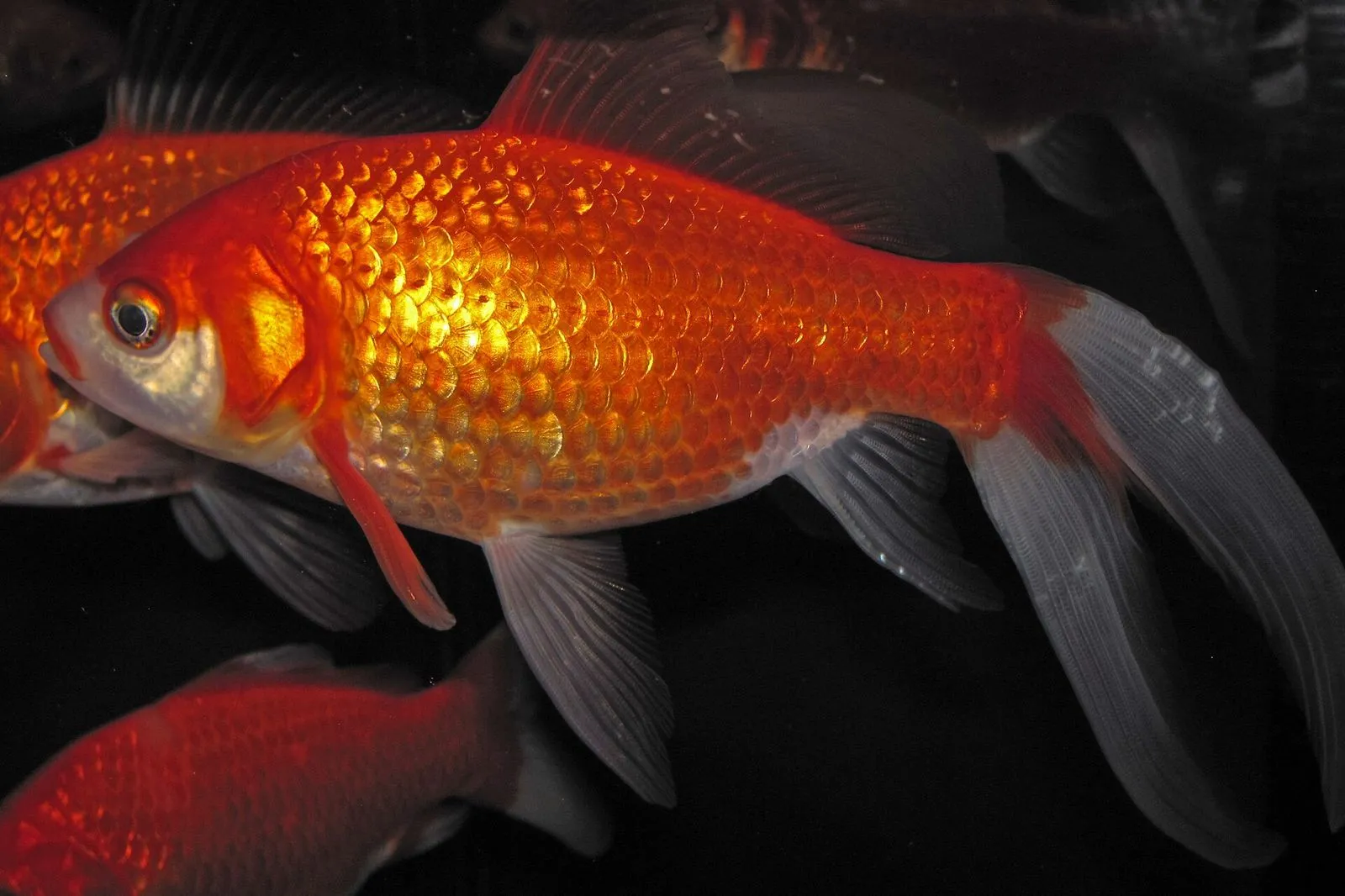
Female goldfish use their urine to tell males they’re ready to spawn. Photo: James St. John (CC BY 2.0)
Male Mozambique tilapia use it as a threat. Top-ranked males hold more than low-ranked ones, about 0.83 ml against 0.39 ml. A 3.5 oz (100 g) territorial male can store up to 2 ml, about 2 percent of his weight. Then they let it go when a rival shows up, or when a female close to spawning does. We found nobody who has shown a bass doing the same.
Do sharks pee?
Yes. A shark’s kidneys filter waste into urine like any other fish, and it leaves through the cloaca, one opening for urine and solid waste. You may hear that sharks pee through their skin. Some urea can slip out through the gills or skin when a shark is stressed, but sharks still pee.
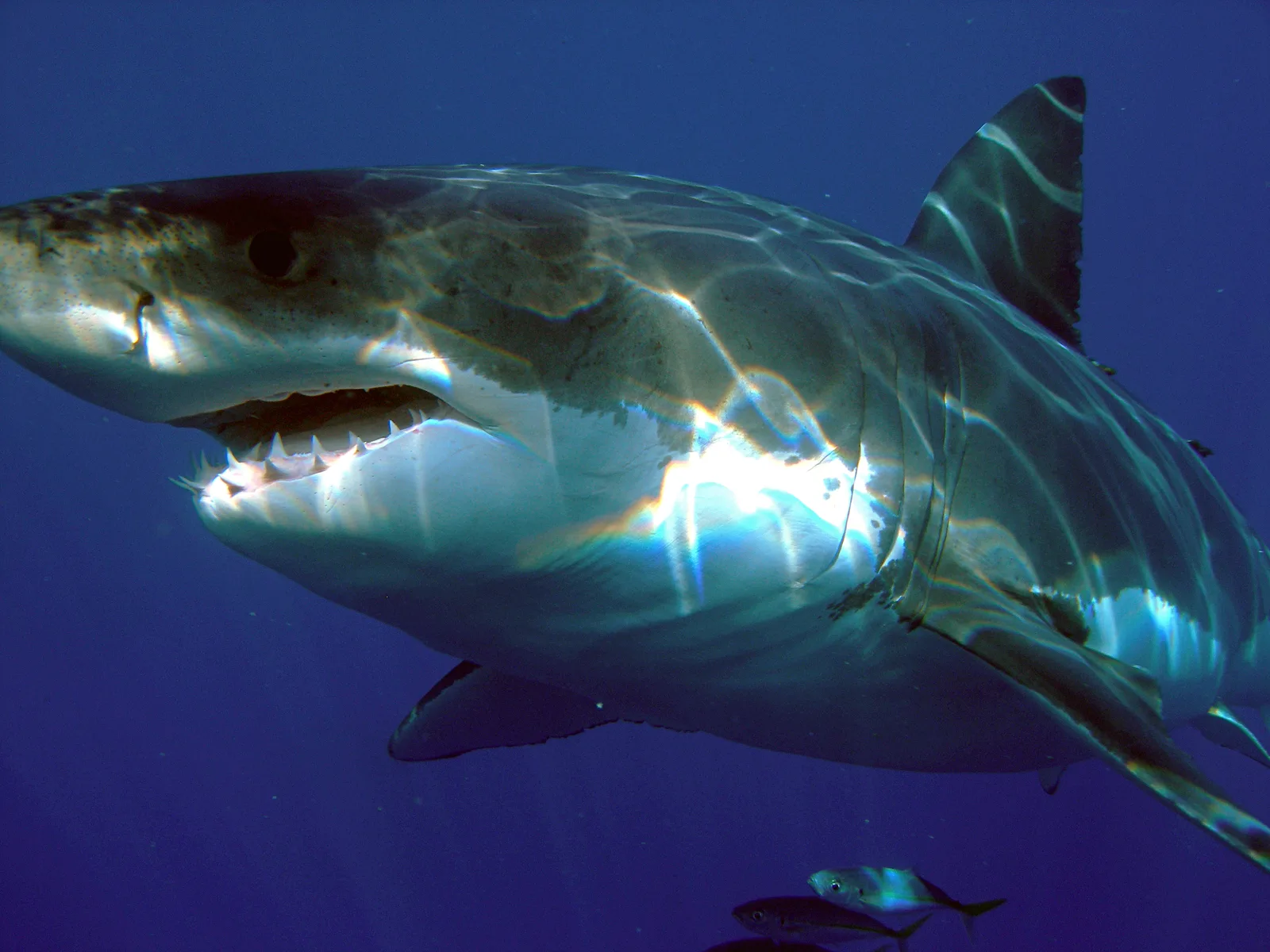
Sharks keep urea in their blood and tissue instead of flushing it all out. Photo: Sharkdiver.com (public domain)
That urea matters if you keep a shark for the table, and only one you can legally keep. Sharks hold it in their blood and tissue, and after the shark dies it breaks down into ammonia, which gives the meat a strong smell. Bleed the shark fast and wash the carcass with seawater. Soaking the meat in citrus juice or vinegar may remove up to 90 percent of the urea.
Is the ocean full of fish pee?
Pretty much, and the reefs need it. “I tell my students that when they swim on a coral reef, they are actually swimming through fish pee,” says marine ecology professor Isabelle Côté. Corals get nitrogen and phosphorus from it, in water that doesn’t hold much of either.
Across 143 species at 43 Caribbean reefs, the fished reefs had lost nearly half of the nutrients their fish recycle. Fish pee, and the ammonia off their gills, is a big part of what keeps a reef fed. And it isn’t only fish: pretty much every animal in the ocean has to go.
How do you count fish pee in the wild? In the Bahamas, divers caught fish off small reefs and held each one in a bag of water for about half an hour. Then they tested that water for nitrogen and phosphorus. They were trying to find out whether the waste from invasive lionfish makes up for the nutrients lost when lionfish eat the smaller native fish. The answer wasn’t in yet when Hakai Magazine ran the story.
Do fish poop?
Yes, every one of them. Whatever a fish can’t digest comes out the vent, often as a thin dark string. Fish scientist Prosanta Chakrabarty told Discover Magazine that fish poop and fart too, and do fish fart has the herring that does it on purpose.
The next questions usually come in the same breath: do fish sleep and do fish feel pain. The rest are in the fish facts collection.

Free PDF · 16 pages
Your first fishing trip, from the store aisle to the first fish
Lost in the tackle aisle, the wrong gear in the cart, and home with nothing. Skip all of that.
The 7-Day Beginner Fishing Pack. A 16-page PDF plus a free seven-day email course, one step a day: the whole first trip in order, from the store to the release.
- Walk out of the store with the right rod and nothing extra: the $85–100 kit, item by item
- Know if you need a license, in 13 states, and the places where nobody needs one
- What to do when the bobber goes under, and the ten-second rule for letting the fish go
Every line from the beginner pages on fishing.info and the 247 sources behind them, the U.S. Fish and Wildlife Service and the Missouri Department of Conservation among them.
No card, nothing to buy. Confirm with one click and the PDF is on its way, one version for your phone and one to print, yours to keep. Then a few short emails and one a week on what's biting, with an unsubscribe link in every one. Privacy.
Related
Section guide
Fish Facts: The Questions Kids Ask About Fish, Answered With the ScienceFish facts with a number and a source for each: how fish sleep, breathe, hear and feel, and what every answer means when you hook and release one.
 Fish Anatomy: The Parts of a Fish and What Each One Does
Fish anatomy with labeled diagrams: the parts of a fish inside and out, what each one does, and which ones change how you hold, name or clean it.
 Ugliest Fish in the World: The Blobfish, and the Ugly Ones You Can Catch
The ugliest fish in the world is the blobfish, by a 2013 vote. Why it only looks like that out of water, and ten ugly fish with their size and home.
 Is a Shark a Fish? Yes, and Why It Isn't a Mammal
Is a shark a fish? Yes: it breathes with gills and is built of cartilage, not bone. How sharks differ, why they aren't mammals, and seahorses and eels.
 Scariest Fish: Which Ones Really Hurt People, and Which Only Look It
The scariest fish in the world, sorted by what each can really do to you: sharks that bite, the most venomous fish, fish that poison and harmless monsters.
 Smallest Fish in the World: Three Fish Under a Third of an Inch
The smallest fish in the world is a swamp fish grown at 7.9 mm, shorter than a #8 hook. Its two rivals, how each was measured, and tiny fish in US water.
 What Do Fish Eat? Wild, Pond and Pet Fish, and the Bait That Matches
What do fish eat? Insects, small fish, crayfish, worms, plankton and plants, by species. Read the mouth, match the bait, and feed a pond or tank right.
Sources (16)
- Curtis and Wood (1992), Kidney and urinary bladder responses of freshwater rainbow trout to isosmotic NaCl and NaHCO3 infusion, Journal of Experimental Biology
- Takvam, Wood, Kryvi and Nilsen (2023), Role of the kidneys in acid-base regulation and ammonia excretion in freshwater and seawater fish: implications for nephrocalcinosis, Frontiers in Physiology
- FISHBIO (2025), Don't Sweat the Small Stuff: Fish Osmoregulation Explained
- Sanders (2021), Do Fish Pee?, Fish Vet
- Dapcevich (2025), Fish Pee Like Us to Regulate Their Bodily Fluids – They Also Poop and Fart, Discover Magazine
Show all 16 sourcesShow fewer sources
- Beer (2023), Do fish pee?, Discover Wildlife
- Ask Dr. Universe, Washington State University (2019), Do fish pee?
- Oregon Department of Fish and Wildlife, How to clean and keep your catch (flyer)
- Idaho Fish and Game (2022), Let's Go Fishing brochure
- Texas Parks and Wildlife Department, Livewell Management and Oxygen Injection
- Appelt and Sorensen (2007), Female goldfish signal spawning readiness by altering when and where they release a urinary pheromone, Animal Behaviour
- Barata, Hubbard, Almeida, Miranda and Canário (2007), Male urine signals social rank in the Mozambique tilapia (Oreochromis mossambicus), BMC Biology
- Shark Stewards, Do Shark's Pee?
- Musick, Chapter 14: Shark utilization, in Management techniques for elasmobranch fisheries, FAO
- Evans Ogden (2015), The Value of Fish Pee, Hakai Magazine
- Greshko (2016), Fish Pee, Coral's Number One Nutrient Supply, Cut by Fishing, National Geographic