 By
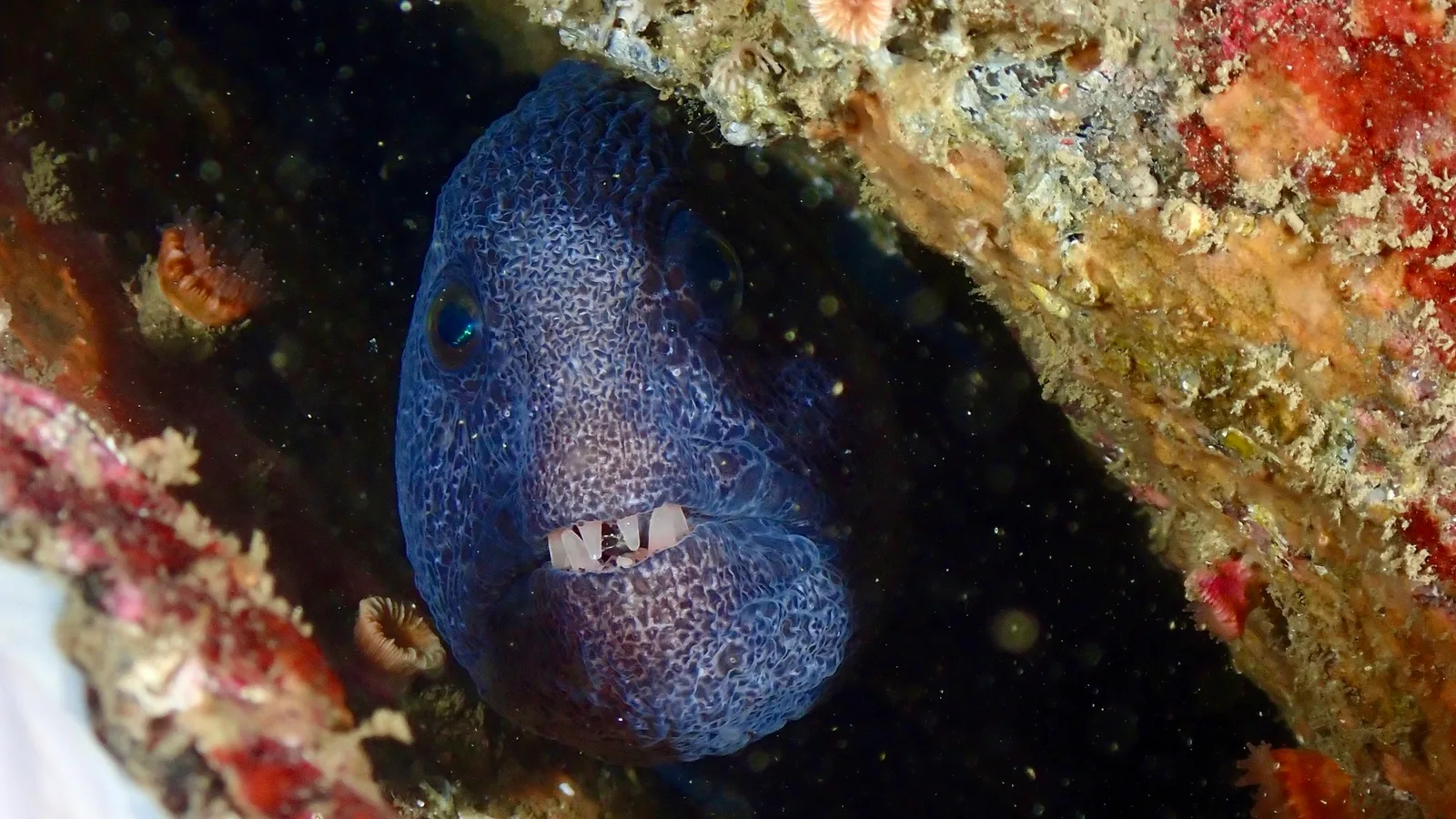
The ugliest fish in the world is the blobfish. It won the Ugly Animal Preservation Society’s online vote in 2013 and was named the “world’s ugliest animal.” Ugly is an opinion, so that vote is the only ugly crown there is. The rest of this list is built from what each fish looks like, how big it gets and where it lives. Five of them take a bait in American water, and a sixth comes up stuck to your fish.
In its own water, 600 to 1,200 meters down off Australia, the blobfish looks much like a normal fish. The droopy face only shows up after it’s hauled to the surface.
What is the ugliest fish in the world?
The blobfish, by vote. The Ugly Animal Preservation Society is a British group that mixes comedy and science to raise awareness of weird and wonderful animals. In 2013 it held an online vote for a mascot. The blobfish beat nearly a dozen others, the proboscis monkey and the axolotl among them. The society and the British Science Association gave it the title.
Then it won a nicer one. In 2025 the blobfish won New Zealand’s Fish of the Year, run by the Mountains to Sea Conservation Trust. It took 1,286 of 5,583 votes and beat the orange roughy by nearly 300.
Nobody has voted on the other ten. So here they are with what makes people call them ugly. Think a head that’s mostly mouth, teeth like a dog’s or a person’s, eyes on top, a sucker for a mouth. The last column tells you if you’ll ever have one on your line.
| Fish | Why people call it ugly | Size | Where it lives | Can you catch it? |
|---|---|---|---|---|
| Blobfish | Pale jelly flesh, loose skin, a big nose | About 12 in (30 cm) | 600–1,200 m deep off SE Australia, Tasmania and New Zealand | No. Some come up in trawl nets |
| Monkfish (goosefish) | A body that’s mostly head and mouth, rows of back-pointing teeth | Up to 3.9 ft (1.2 m), about 50 lb (22.6 kg) | Grand Banks to Cape Hatteras, inshore to nearly 3,000 ft | Yes, 17 in minimum |
| Atlantic wolffish | Canine-like front teeth that stick out of the mouth | Up to 4.9 ft (1.5 m) | Labrador to Georges Bank | No recreational fishing allowed |
| Wolf eel | A big square head and dog teeth | Up to 7.9 ft (2.4 m), 40.5 lb (18.4 kg) | Aleutian Islands to southern California | Rarely. Puget Sound is closed to keeping one |
| Sarcastic fringehead | A jaw that runs back past the eye, opened wide to fight | Up to 12 in (30.5 cm) | San Francisco Bay to Baja California | By accident, now and then. It bites and hangs on |
| Oyster toadfish | Whiskers, bulging eyes, a flat head | About 12 in (30 cm) | Oyster reefs and wrecks, all over Chesapeake Bay | Yes, it takes bait fast |
| Northern sea robin | A flat, bony head, spines on its cheeks, three finger-like fins underneath | 12–16 in | Sandy flats and channels; the Chesapeake’s most common sea robin | Yes. Anglers call it a bait thief |
| Northern stargazer | Eyes and mouth on top of the head | 8–18 in, up to 22 in (56 cm) | Buried in sand, New York to North Carolina | Rarely. It can shock, so mind your hands |
| Sheepshead | Human-like incisors and molars | Up to 30 in (76 cm) | Nova Scotia to Brazil, around oyster reefs and seawalls | Yes. Florida lets you chum it with barnacles |
| Sea lamprey | A round sucker mouth ringed with teeth | 1–2.5 ft (30–76 cm) in the Great Lakes | Atlantic, and the Great Lakes since the 1830s | It comes up stuck to your fish |
| Alligator gar | Two rows of teeth in the upper jaw, armored scales | Up to 8 ft (2.4 m), 300+ lb | Gulf coast rivers from Florida to Mexico, and up the Mississippi; strong in Texas | Yes. Rod-and-reel anglers have landed fish over 200 lb |
The sizes are the biggest each source gives, or its usual size where it says “about”. Most fish you’d see are smaller. For what those sheepshead teeth look like next to a bass’s or a pike’s, see which fish have teeth.
Why does the blobfish look like that?
Because it’s out of its water. Blobfish live mainly off southeastern Australia and Tasmania, and off New Zealand too, usually 600 to 1,200 meters (about 2,000 to 3,900 ft) down. Down there the water presses in with more than 100 times the pressure you feel on land. A fish at that depth isn’t built like a bass. It’s soft, with parts full of water, and it doesn’t swim hard.
Pull that fish up fast and the pressure that held it in shape is gone. The body sags into the face you know. Out of the water a blobfish feels a lot like jello, Museums Victoria fish scientist Martin Gomon told Live Science. Down in its own water, “blobfish look rather handsome, and much more like normal fish.”
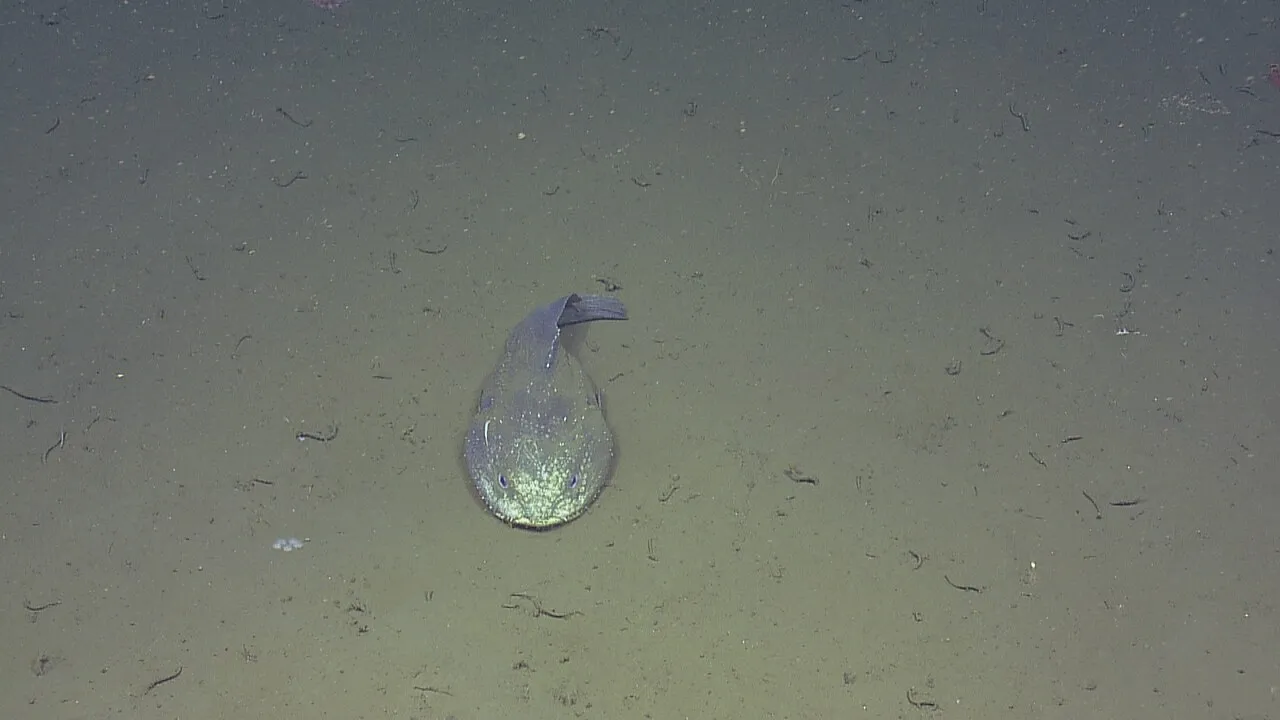
A blob sculpin, the blobfish’s cousin in the same genus, on the seafloor in Cordell Bank National Marine Sanctuary off California. Photo: OET/NOAA, National Marine Sanctuaries, via Wikimedia Commons (CC BY 2.0)
The famous one even has a name, Mr. Blobby. The people aboard a research ship gave it to him in June 2003. They had trawled him up from between 3,323 and 4,396 feet down, north-west of New Zealand. He’s now kept in alcohol in the Australian Museum’s fish collection. The preserving tightened his skin, the museum says, so the famous nose has shrunk.
Blobfish seem to top out at about 12 inches, the length of a comic book. It isn’t built to chase its food. Nobody has watched one eat, NOAA says. The best guess is that it hangs just off the bottom and takes what comes close. The New Zealand trust names crabs, shellfish and urchins. Blobfish often come up as bycatch in bottom trawls for orange roughy, the New Zealand trust says. Can you eat one? The BBC calls them inedible, NPR reports.
The deep-sea anglerfish and the fangtooth make most ugly lists too. They’re on our scariest fish page, with their real sizes.
Free PDF · 7-day beginner fishing pack Starting fishing? What do you buy, what does it cost, and what do you do at the water?
The 16-page beginner pack: the $85–100 kit with the spec to ask for in the store, the license rules, the first knot, the rig drawn, the cast, the bite and the release. A free seven-day email course comes with it, one step a day.
No card, nothing to buy, and the PDF is yours to keep. Confirm with one click and it's on its way. Then a few short emails and one a week on what's biting. Unsubscribe anytime. Privacy.
Which ugly fish live in the ocean?
These four don’t need a decompression excuse. They look like this at home.
Monkfish. NOAA’s list of other names for it tells you plenty: goosefish, allmouth, sea-devil, fishing frog. Its body is mostly a broad head with a big mouth, and a narrow body trails behind. It fishes for its food. A spine on its head works like a rod and bait to pull small fish close. Then it gulps them in behind rows of back-pointing teeth. It lives from the Grand Banks down to Cape Hatteras, from inshore water to nearly 3,000 feet deep. FishBase puts the biggest at 120 cm (3.9 ft) and about 50 lb.
Atlantic wolffish. It’s named for its dog-like front teeth, and some of them stick out of its mouth. It uses that mouth on scallops, crabs and sea urchins. It lives from Labrador down to Georges Bank. You can’t keep one in federal water. NOAA lists it as “Wolffish (Ocean Catfish),” and the rule is short: “No recreational fishing allowed.” Maine bans landing them too. The stock is overfished.
Wolf eel. It isn’t an eel at all. It’s a long fish with a big square head and stout canine teeth up front. Washington says it can reach 7.87 feet and 40.5 lb. It ranges from the Aleutians to southern California. The young are often orange, and the colors fade to gray and brown as it ages. Wolf eels may mate for life and spend it in one den. They crack crabs, urchins, snails and clams with jaws like nutcrackers, the Seattle Aquarium says.
Sarcastic fringehead. A small fish, usually under 10 inches, with a jaw that runs back past its eye. Nobody fishes for one. Hook one by accident and it may bite and not let go, the Aquarium of the Pacific says. It lives in old shells, burrows and even cans and bottles, from San Francisco Bay to Baja. When something comes near the door it spreads its gill covers and snaps its jaws. If that doesn’t work, it attacks with its mouth gaping wide. That open mouth is the face people remember.
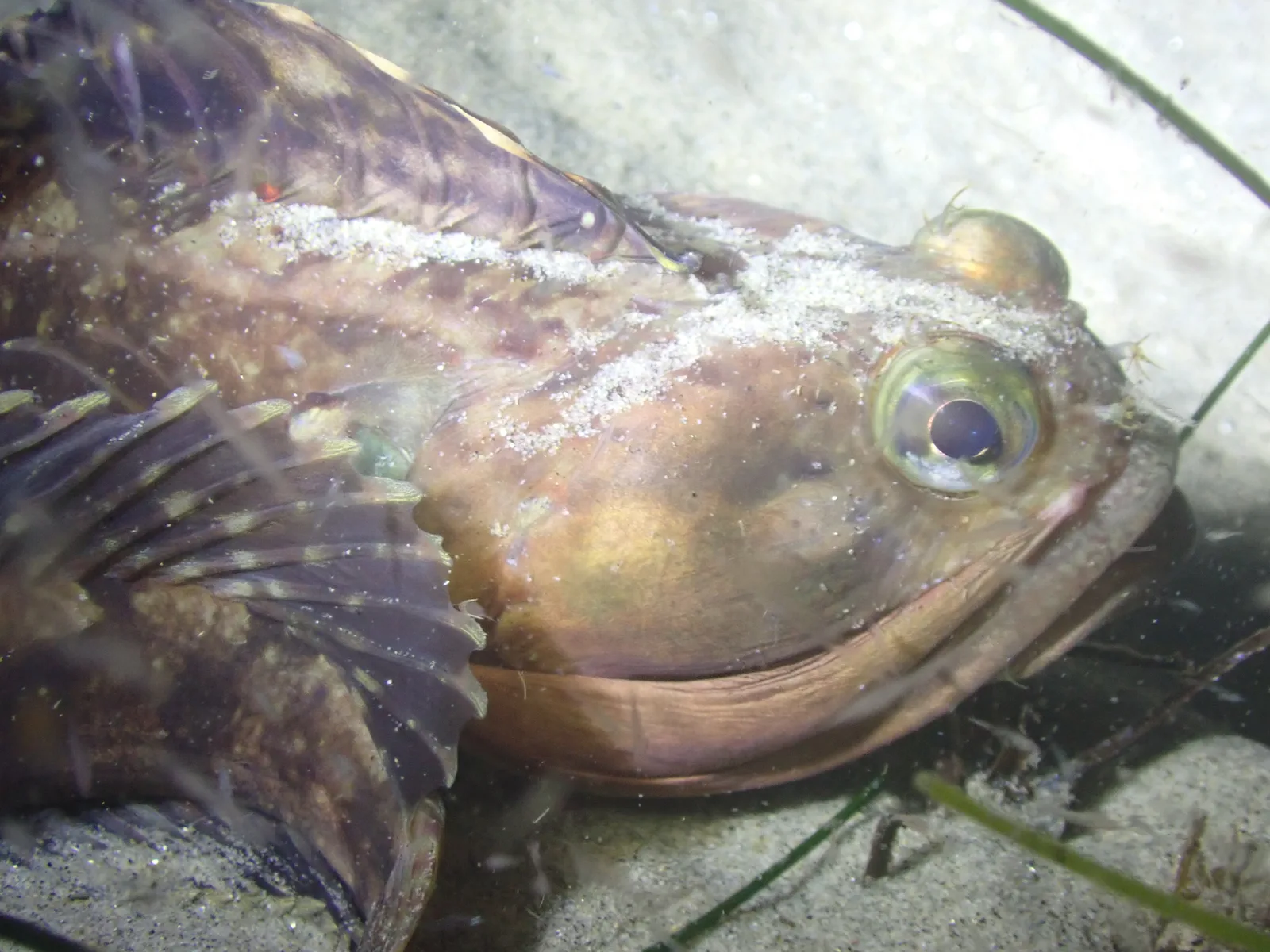
A sarcastic fringehead off San Diego, California, with its mouth shut. Photo: laiet17, iNaturalist observation 390785917 (CC0)
Ugly fish you might catch off a pier
Here’s where it gets real. Most of these take a bait, and you could have one flopping on the dock next summer.
Start with the oyster toadfish. It’s about 12 inches long, scaleless and flat. It has fleshy whiskers on its cheeks and jaws, and big bulging eyes on top of a wide head. In Chesapeake Bay, from April to October, the males make a “foghorn” call from their nests to bring in a mate. The Chesapeake Bay Program’s warning is the part to remember: it “will quickly take an angler’s bait,” but it has “powerful, snapping jaws and sharp spines on its dorsal fin.” It can survive out of water for a long time, so a quiet one on the dock isn’t necessarily dead.
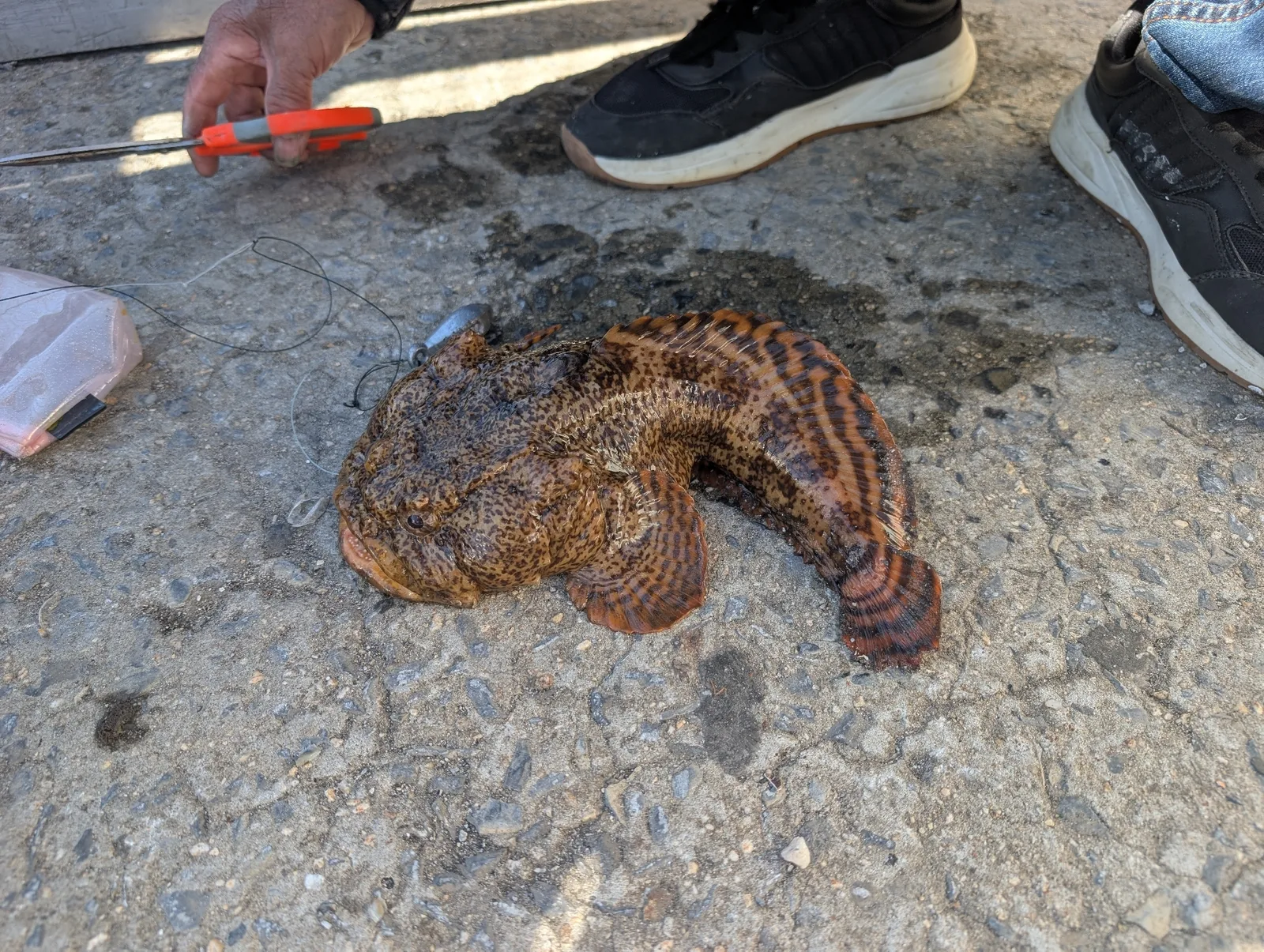
An oyster toadfish on a New York City pier. Photo: Corey Farwell, iNaturalist observation 321250394 (CC BY)
You’re less likely to meet the northern stargazer, but you won’t forget it. It buries itself in sand with only its eyes and mouth showing. Both sit on top of its head, looking straight up. It runs 8 to 18 inches and can reach 22, from New York to North Carolina. Here’s the surprise: it has an organ behind its eyes that makes a weak electric current, and it uses it to defend itself. The Florida Museum says to handle a live one with care.
The northern sea robin lives on sandy flats and steals bait. It has a flat, bony head with bright blue eyes, sharp spines on its cheeks and above each eye, and wing-like fins. Three fins under it work like fingers to feel for crabs and shrimp on the bottom. It croaks, too, a sound like a frog’s. Anglers call it a nuisance because it steals bait and is unpleasant to handle, the Chesapeake Bay Program says. Plenty of people eat them anyway.
The sheepshead is the handsome one of the bunch, until it opens its mouth. It’s a silver fish with 5 or 6 dark stripes and a set of human-like teeth, incisors in front and molars behind. Those teeth crush shells and scrape barnacles off seawalls and other hard surfaces. Florida lets you use barnacles to chum them, up to 100 pounds per person a day with a saltwater license. Just don’t scrape a private dock without the owner’s okay, FWC says.
The monkfish from the ocean list can be yours too, from the Northeast coast down to Cape Hatteras. In federal water there’s no possession limit for anglers. There is a size rule: 17 inches for a whole fish, 11 inches for a tail.
What is the ugliest freshwater fish?
Two freshwater fish make the list on looks alone, and both have a full page of their own.
The sea lamprey isn’t a fish you catch. It’s the one stuck to the fish you caught. Its mouth is a round suction cup ringed with sharp, horny teeth. It clamps onto a lake trout or another fish and rasps through the skin to feed on its blood. It came into the Great Lakes in the 1830s through the Welland Canal.
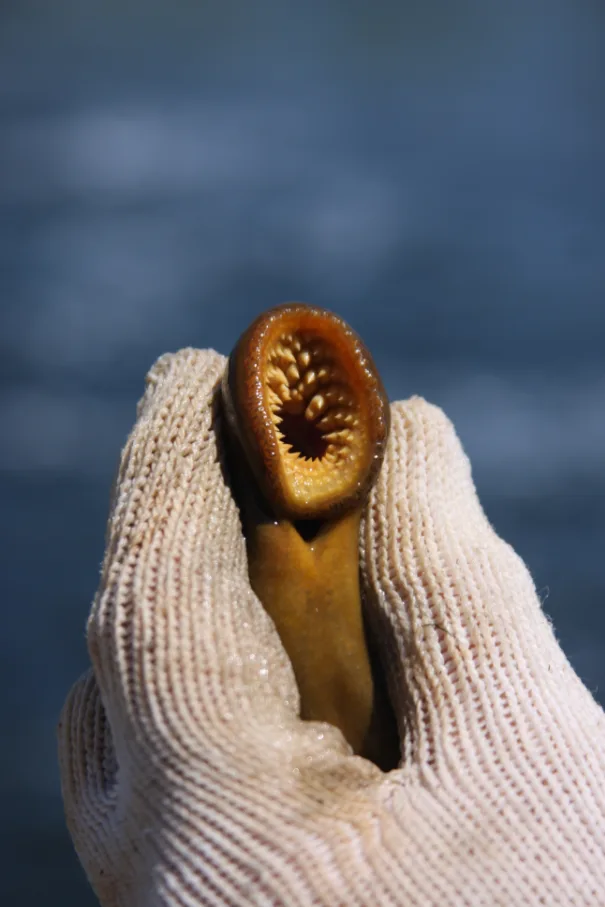
The mouth of a sea lamprey. Photo: Karla Bartelt, U.S. Fish and Wildlife Service (public domain)
The alligator gar is the big one. Adults have two rows of large teeth in the upper jaw, and a body armored in sharp, bony scales. It can grow to 8 feet and over 300 pounds. The biggest on record came out of Mississippi in 2011: 8 feet 5 inches, 327 pounds, and about 95 years old, Texas says. It looks like it could take your arm, yet “there are no confirmed attacks on people.” For how to land one, see our gar fishing guide.
What to do when an ugly fish bites
Ugly doesn’t hurt you. Teeth, spines and a shock can. Here’s what to do with the ones on this list that you might actually land:
- Oyster toadfish. Keep your fingers clear of the jaws and the spines on its back. Use pliers to get the hook out.
- Northern stargazer. The shock organ sits just behind its eyes. Handle a live one with care, the Florida Museum says, or let it go without touching it.
- Alligator gar. Texas: “Never stick your hands in the fish’s mouth and stay clear of the powerful tail.” Use tools and cut-resistant gloves to get the hook out.
- Sea lamprey on your fish in the Great Lakes. Ontario’s rule: “do not return the sea lamprey to the water. Kill it and put it in the garbage.” Check our lamprey page first, to be sure it’s a sea lamprey and not a native.
- Atlantic wolffish. It goes back in the water. No recreational fishing is allowed in federal water, and Maine bans landing it.
- Monkfish. Measure before you keep it: 17 inches whole, 11 inches for a tail. NOAA says the meat isn’t flaky and has a texture like lobster. Ugly fish, good dinner.
Want more of the strange side of fish? The fish facts page has every question we’ve answered, from the smallest fish to the biggest fish ever caught.

Free PDF · 16 pages
Your first fishing trip, from the store aisle to the first fish
Lost in the tackle aisle, the wrong gear in the cart, and home with nothing. Skip all of that.
The 7-Day Beginner Fishing Pack. A 16-page PDF plus a free seven-day email course, one step a day: the whole first trip in order, from the store to the release.
- Walk out of the store with the right rod and nothing extra: the $85–100 kit, item by item
- Know if you need a license, in 13 states, and the places where nobody needs one
- What to do when the bobber goes under, and the ten-second rule for letting the fish go
Every line from the beginner pages on fishing.info and the 247 sources behind them, the U.S. Fish and Wildlife Service and the Missouri Department of Conservation among them.
No card, nothing to buy. Confirm with one click and the PDF is on its way, one version for your phone and one to print, yours to keep. Then a few short emails and one a week on what's biting, with an unsubscribe link in every one. Privacy.
Related
Section guide
Fish Facts: The Questions Kids Ask About Fish, Answered With the ScienceFish facts with a number and a source for each: how fish sleep, breathe, hear and feel, and what every answer means when you hook and release one.
 Is a Shark a Fish? Yes, and Why It Isn't a Mammal
Is a shark a fish? Yes: it breathes with gills and is built of cartilage, not bone. How sharks differ, why they aren't mammals, and seahorses and eels.
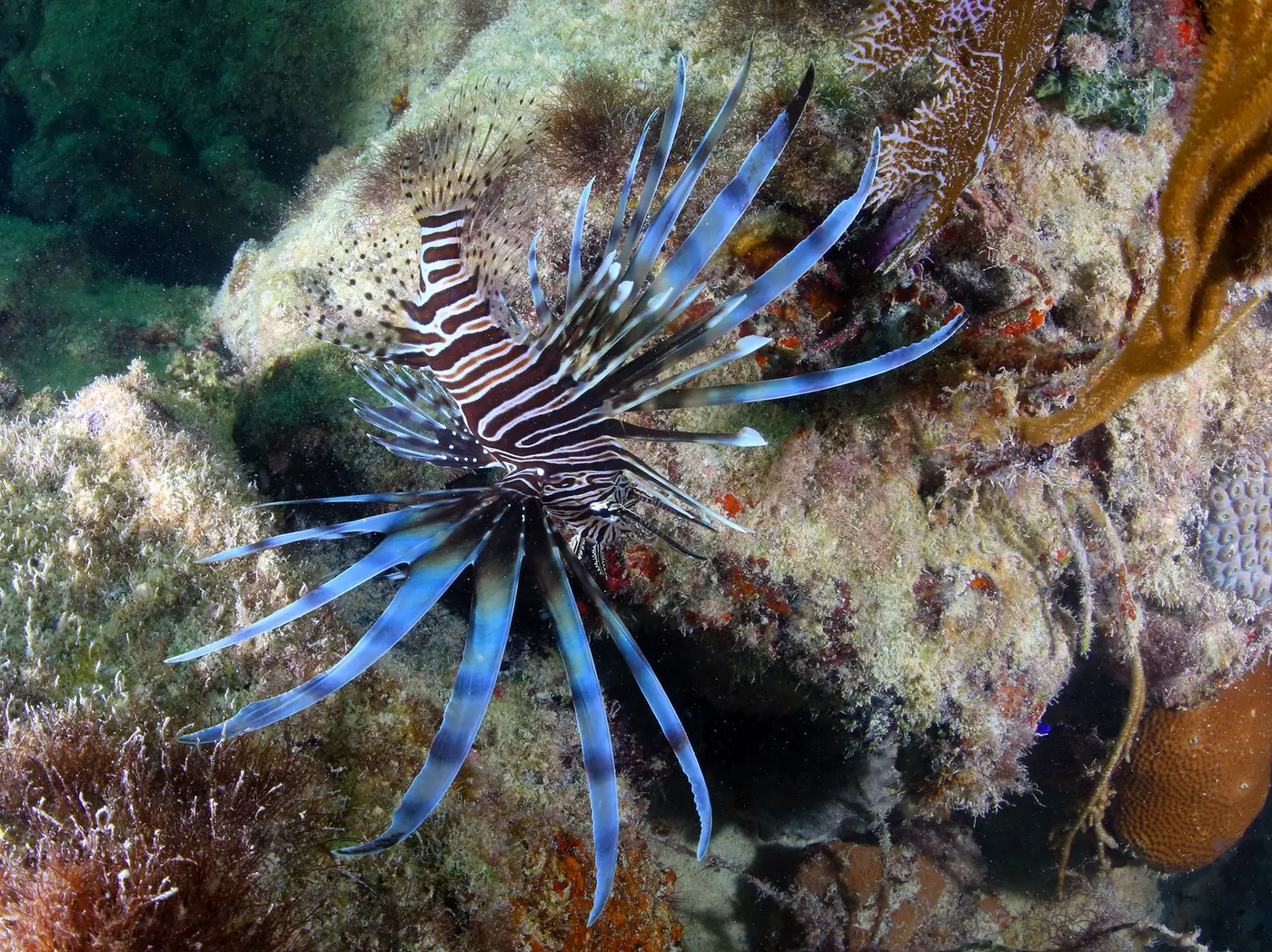 Scariest Fish: Which Ones Really Hurt People, and Which Only Look It
The scariest fish in the world, sorted by what each can really do to you: sharks that bite, the most venomous fish, fish that poison and harmless monsters.
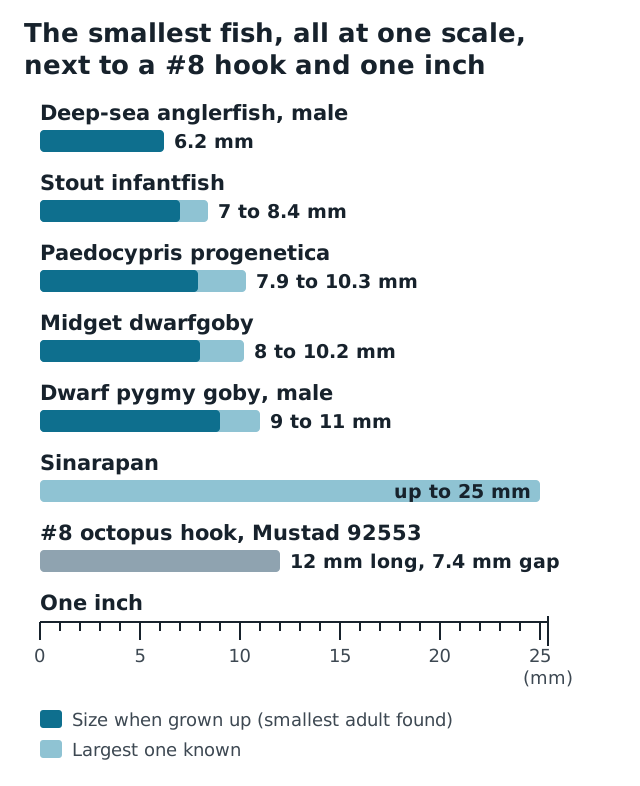 Smallest Fish in the World: Three Fish Under a Third of an Inch
The smallest fish in the world is a swamp fish grown at 7.9 mm, shorter than a #8 hook. Its two rivals, how each was measured, and tiny fish in US water.
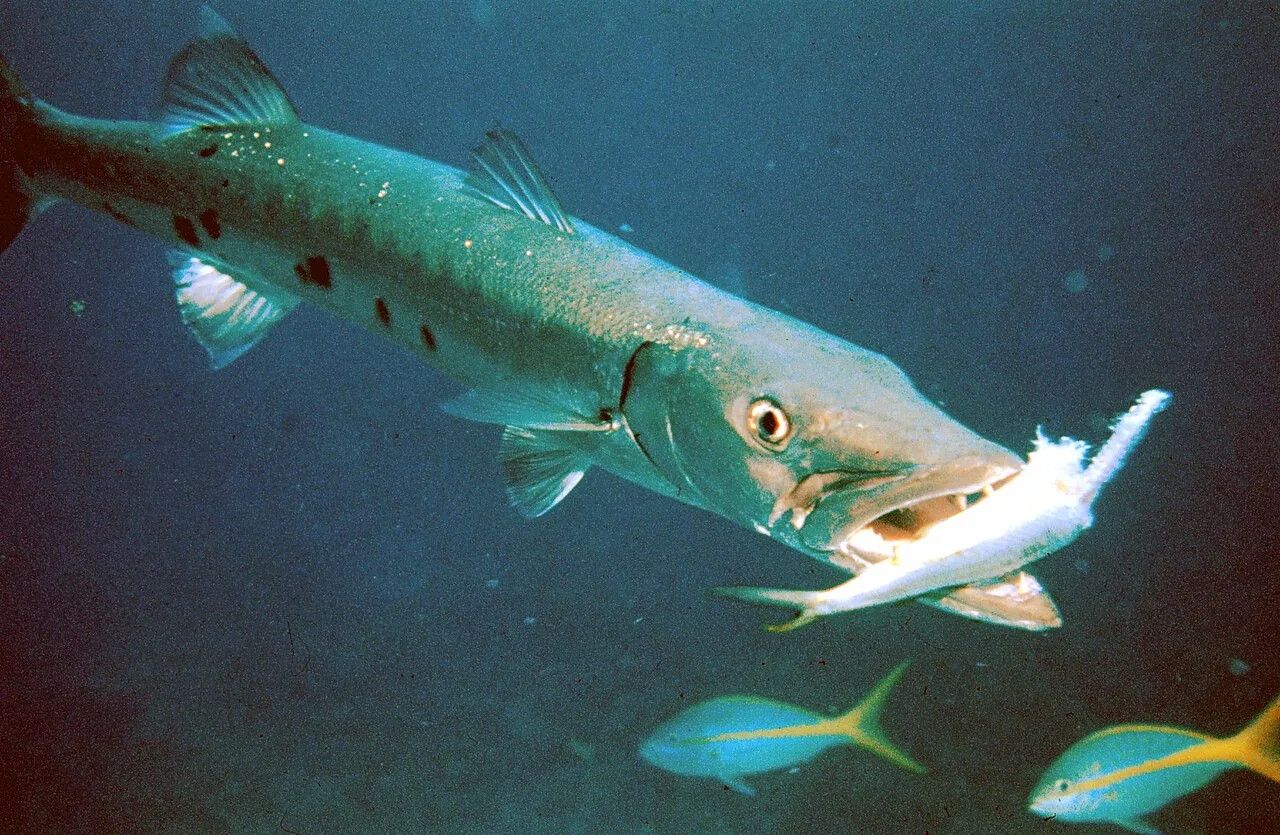 What Do Fish Eat? Wild, Pond and Pet Fish, and the Bait That Matches
What do fish eat? Insects, small fish, crayfish, worms, plankton and plants, by species. Read the mouth, match the bait, and feed a pond or tank right.
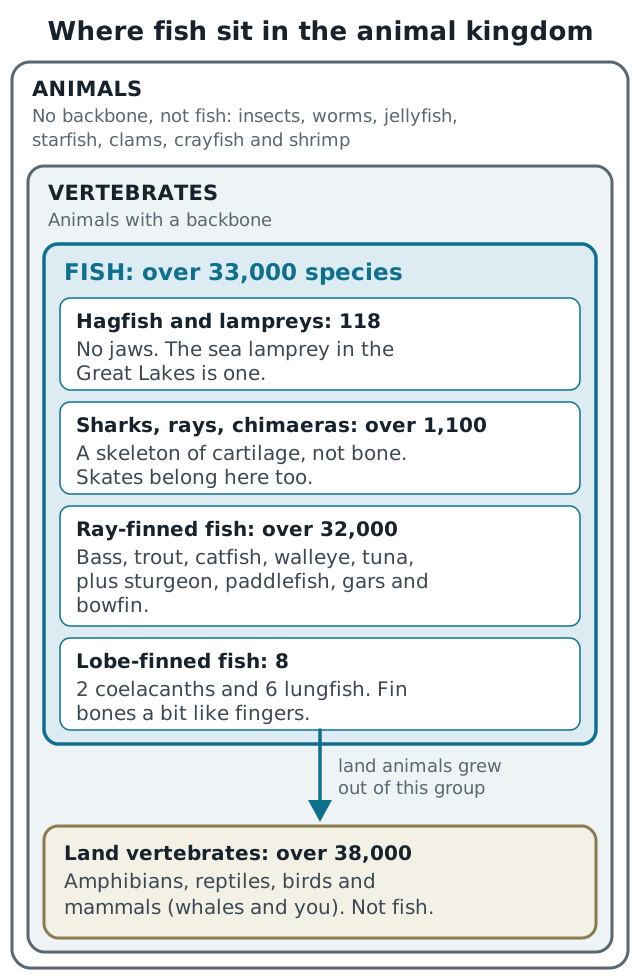 Are Fish Animals? Yes: Vertebrates, Not Mammals, Mostly Cold-Blooded
Are fish animals? Yes: animals with a backbone and gills. Why fish aren't mammals, which fish run warm, and why California law calls a bee a fish.
 Biggest Fish Ever Caught: A 2,664 lb Great White on Rod and Reel
The biggest fish ever caught on rod and reel is a 2,664 lb great white from 1959. The IGFA top 10, the bigger fish that don't count, and the US giants.
Sources (25)
- NPR (Mark Memmott), You May Not Want To Look: Blobfish Named 'Ugliest Animal' (September 12, 2013)
- Live Science (Charlie Wood), What the Heck Is a Blobfish? (February 20, 2019)
- Mountains to Sea Conservation Trust, Fish Of The Year Winner Announced (Scoop, March 18, 2025)
- RNZ, Blobfish overcomes notoriety as 'world's ugliest animal' to win New Zealand's 'fish of the year'
- NOAA Fisheries, Monkfish
Show all 25 sourcesShow fewer sources
- FishBase, Lophius americanus, American angler
- NOAA Fisheries, Atlantic Wolffish
- NOAA Fisheries, Recreational Fishing Regulations by Species (Greater Atlantic Region)
- Maine Sea Grant, Maine Seafood Guide: Wolffish
- FishBase, Anarhichas lupus, Atlantic wolffish
- Washington Department of Fish and Wildlife, Wolf eel (Anarrhichthys ocellatus)
- Seattle Aquarium, Wolf eel
- Aquarium of the Pacific, Sarcastic Fringehead
- Chesapeake Bay Program, Oyster Toadfish
- Chesapeake Bay Program, Northern Stargazer
- Florida Museum of Natural History, Discover Fishes: Northern Stargazer
- Barnegat Bay Partnership, Sheepshead
- Florida Fish and Wildlife Conservation Commission, Sheepshead
- NOAA National Ocean Service, What is a sea lamprey?
- Government of Ontario, Sea lamprey
- Texas Parks and Wildlife Department, Alligator Gar (Atractosteus spatula)
- Texas Parks and Wildlife Department, Alligator Gar - A Unique Fish
- Texas Parks and Wildlife Department, Alligator Gar - Not A Threat to Humans
- Australian Museum, Blobfish (aka Mr Blobby) (updated 21/10/25)
- Chesapeake Bay Program, Northern Sea Robin