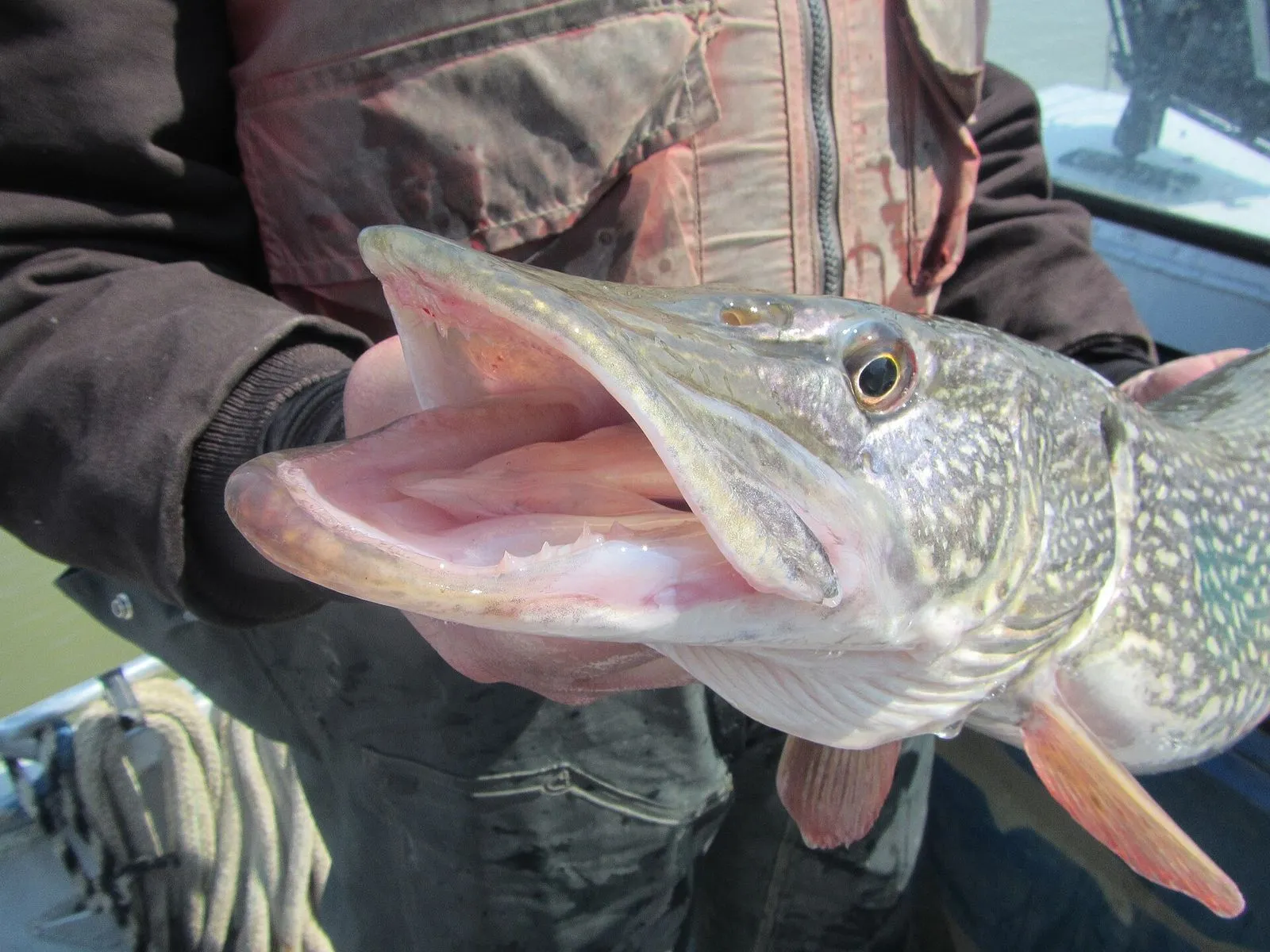
Almost every fish has teeth, and most keep growing new ones for their whole life. A bass has rough patches like sandpaper. A pike has hundreds of needles, along the lower jaw and across the roof of its mouth. A carp has no teeth in its mouth at all, but chews with a set hidden in its throat.
A sheepshead has incisors like a person’s at the front, three rows of molars in the top of its mouth and two in the bottom. It uses them to crunch crabs, clams and oysters.
What are fish teeth made of?
Fish teeth are built like yours: hard enamel outside, dentine under it, soft pulp in the middle. Scientists believe they began as scales near the mouth. Over millions of years those scales hardened, sharpened and moved inside. A shark’s sandpaper skin is still made of tiny tooth-like points.
The big difference is that a fish is never done growing teeth. You get two sets, and a fish grows replacements for life. When a tooth breaks or drops out, a new one is already forming behind it. Look into a big pike’s mouth and you will see long and short teeth side by side. The short ones are new.
Do all fish have teeth?
Nearly all, but not always where you would look. Carp, goldfish and minnows have no teeth in their jaws. Instead they carry one to three rows of pharyngeal teeth, which means throat teeth, far back behind the gills. Those grind food against a hard bony plate at the base of the skull. A common carp has ten of them. The freshwater drum has rounded, molar-like throat teeth that crush clams and mussels. So does the redear sunfish, the shellcracker, on snails.
Paddlefish, the long-nosed giant of the Mississippi, have no teeth at all as adults. They swim with the mouth open and strain plankton.
Catfish do have teeth, but you will never feel a point. Their mouth is lined with pads of tiny bristles, more like a scrub brush than a bite. That is why a catfish can be held by the lower jaw once you know the grip (how to hold a catfish).
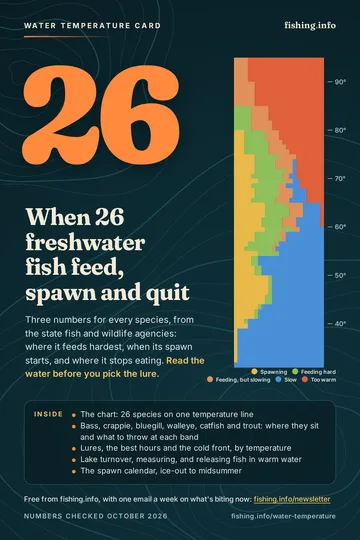
Free card: what 26 species do at your water temperature
Plus one email a week on what's biting now. No sales pitches. Privacy.
Which fish have the scariest teeth?
- Northern pike and muskie carry a row of large teeth along the lower jaw, plus three bands of smaller teeth on the roof of the mouth that point backward.
- Walleye have long, strong canines. No walleye angler puts a thumb in that mouth.
- Gar have long, narrow jaws packed with rows of needle-fine teeth.
- Piranha have triangular, razor-edged teeth that interlock like scissors.
- Sheepshead, of the Atlantic and Gulf coasts, have the human-looking incisors and molars from the quote above.
- Parrotfish have teeth fused into a beak that scrapes algae off coral. What comes out the other end is sand.
Fish teeth sort by job: canines for holding, incisors for nipping, molars for crushing, and villiform patches, the fine bristles, for gripping.
Do pike lose their teeth in summer?
No. The story goes that pike shed their teeth in August, get sore gums and stop biting. Biologists have checked. In 1935 the Michigan Institute for Fisheries Research examined pike through the summer for Research Report 310 and found normal, healthy gums and no seasonal shedding. In 2023 Don Pereira of the Minnesota DNR told Outdoor News the same: pike lose and replace teeth one at a time, all year, never as a set.
The August lull is real, but it comes from warm water and easy food. Fish rest more in the heat (do fish sleep explains how), and a pike with a full stomach ignores a lure.
Which fish can you hold by the lip?
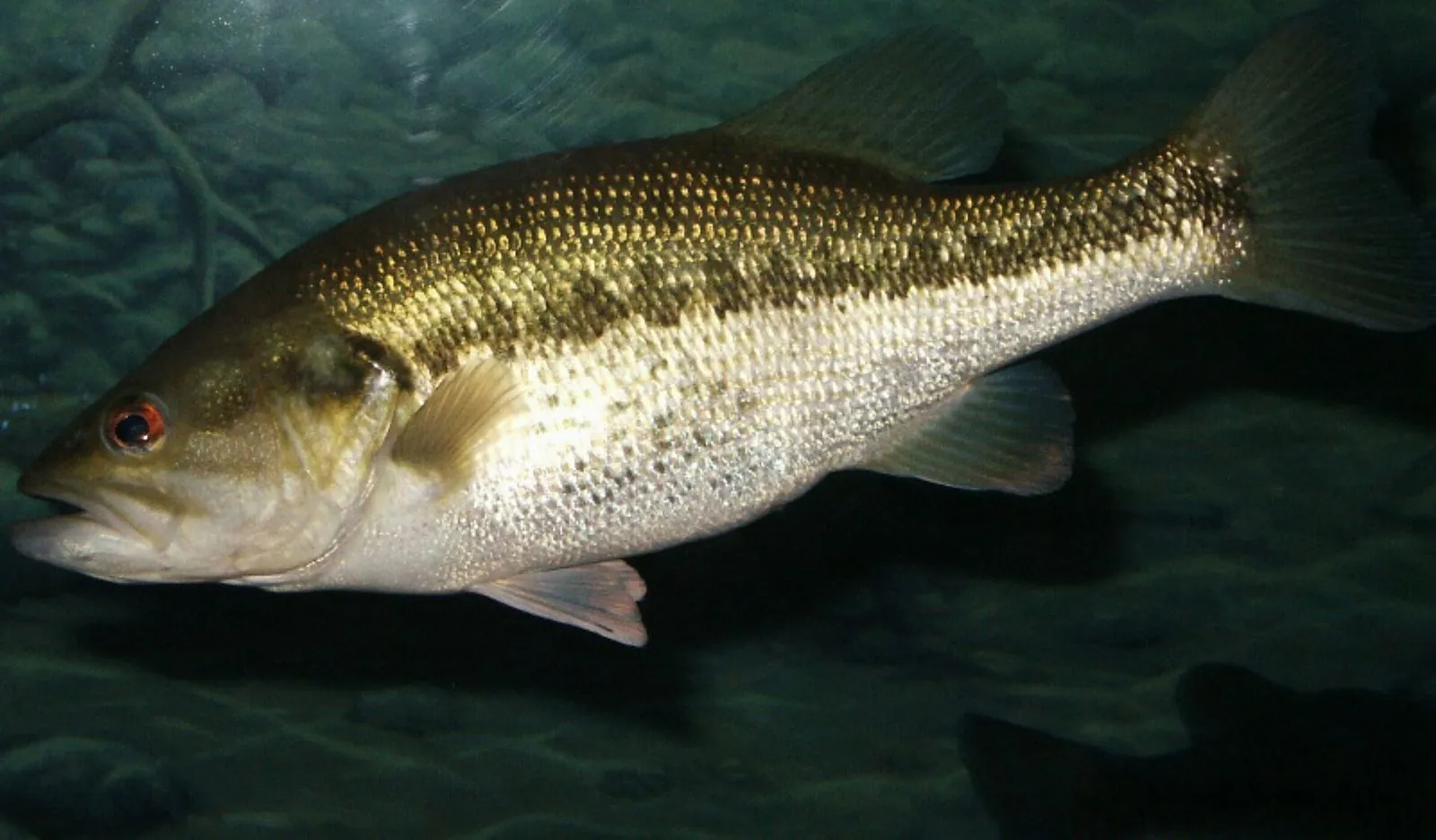
Bass. Largemouth, smallmouth and spotted bass have no pointed teeth, only rough patches on the jaw. That makes them the fish for lipping, a grip on the lower jaw between thumb and forefinger. Hold enough of them in a day and your thumb turns red and raw: “bass thumb”, worn as a badge.
In the Bardin radiograph study, bass were X-rayed after being held in the usual ways. No hold produced a fracture. The one injury came in the biggest fish, held in an exaggerated vertical position with the body angled out and the jaw bent back like a hinge: its jaw popped. Hold a bass horizontal with your second hand under the belly, or straight down by the lip with the body hanging in line with the jaw. Never bend the body out from the lip.
Never lip a walleye, a pike or a muskie. The walleye’s canines and sharp gill plates open a thumb. The pike’s roof bands cut deeper the more the fish shakes.
Can you lip it, and does it need a leader?
Teeth decide two things at the water: whether your thumb is safe in a fish’s mouth, and whether your line needs a leader in front of the lure.
| Fish | Teeth | Lip it? | Leader for teeth |
|---|---|---|---|
| Largemouth bass | Sandpaper patches, no points | Yes, horizontal or straight down | None needed |
| Smallmouth bass | Same rough patches | Yes, same two holds | None needed |
| Walleye | Long canines, sharp gill plates | Never | Not needed for teeth |
| Northern pike | Lower-jaw row plus three roof bands | Never | 18 in (46 cm) of 50–80 lb fluorocarbon, or wire |
| Muskie | Same as pike, larger | Never | Wire or titanium where bite-offs happen; 80 lb fluorocarbon otherwise |
| Channel catfish | Bristle pads, no points | Lower jaw only, wide grip | None needed |
| Common carp | None in the jaw; ten throat teeth | No points, but cradle it horizontal | None needed |
| Gar | Rows of fine needles in a long snout | Never | Wire or heavy fluorocarbon |
| Sheepshead | Incisors plus molar rows | Never; those jaws crush shell | Not needed for teeth |
| Paddlefish | None as an adult | Not by the mouth; support the body | None needed |
What leader do toothy fish need?
A pike’s roof bands close on the line during the fight, and light monofilament parts on the first head shake. Northern Ontario Travel’s guide to pike and musky leaders puts about 18 in (46 cm) of 50–80 lb fluorocarbon between the main line and the lure. On waters where bite-offs are common, it recommends single-strand wire or titanium. The fishing leader guide covers knots and lengths, and fluorocarbon line explains why the heavy stuff resists abrasion. For bass, catfish and carp, use a leader for stealth or rocks, never for teeth.
How do you unhook a pike, muskie or walleye?
A pike’s roof bands point backward and cut deeper the more the fish shakes, so the hook comes out with tools, not fingers.
- Keep the fish in the net and in the water. A big rubber net is your third hand while you get the tools out.
- Take the grip away from the mouth. For pike and muskie, hold the fish firmly behind the head and work with long-nosed pliers; Minnesota DNR’s rule is never to put your fingers in the gills. For walleye, hold across the back behind the head, other hand under the belly.
- Open the mouth with jaw spreaders. Set them lightly; too wide strains the jaw joint.
- Reach in with long-nose pliers or a hook-out, never fingers. Grip the hook by the bend and push it back the way it went in.
- Cut the hook if it is deep. A bolt cutter through the shank does less harm than a two-minute struggle.
- Release the fish horizontal, in the water, and hold it until it kicks. The catch and release guide has the full drill.
More answers to the questions kids ask at the water, from sleeping to breathing, are in fish facts.
Free download
The water temperature card
Read your water temperature and the card tells you who is spawning, who is feeding and what to throw. 26 species, 16 pages, for your phone and the tackle box.
Plus one email a week on what's biting now. No sales pitches. Privacy.
Related
Section guide
Fish Facts: The Questions Kids Ask About Fish, Answered With the ScienceFish facts with a number and a source for each: how fish sleep, breathe, hear and feel, and what every answer means when you hook and release one.
 Do Fish Drink Water? Freshwater Fish, Saltwater Fish and Sharks
Do fish drink water? Freshwater fish barely do, saltwater fish drink all day, sharks cheat with urea. The numbers, and what it means for bait and livewells.
 Do Fish Drown? How Fish Suffocate, and How to Revive a Tired One
Do fish drown? Not by the dictionary, but they suffocate three ways: low oxygen, damaged gills, no water flow. How long a fish lasts in air, how to revive one.
 Do Fish Fart? Yes, Herring Do It on Purpose, and a Bloated Bass Needs Help
Do fish fart? Herring do, on purpose, and scientists won a prize for proving it. Which fish pass gas, where it goes, and what to do with a bloated bass.
 Do Fish Feel Pain? What the Studies Found, and What Decides Whether a Released Fish Lives
Do fish feel pain? They sense damage and react; whether they suffer is contested. The trout study, both camps, and what decides if a released fish lives.
 Do Fish Get Cold? What Winter Does to a Fish, and the Ones With Antifreeze in Their Blood
Do fish get cold? Yes: a fish is as cold as its water and feels it as slowness. What fish do in winter, who carries antifreeze, and how to fish cold water.
 Do Fish Have Bones, Hearts and Blood? What Is Inside a Fish
Do fish have bones? Most do; sharks run on cartilage and 16 icefish have clear blood. How skeleton, heart and blood work, and what it means for your fillets.
Sources
- Minnesota DNR, Catch and release: handling a fish you will let go
- Missouri Department of Conservation (1998), Tale of the Teeth, Missouri Conservationist
- Burke Museum, Key to the fishes of Washington: Cyprinidae (pharyngeal teeth)
- Ohio State University Museum of Biological Diversity (2016), Amazing diversity in fish dentition
- Florida Museum, Fish anatomy: tooth types and patches
- Iowa DNR, Walleye species profile
- Discover (2023), Meet the sheepshead, the fish with human teeth
- Australian Museum, Why are they called parrotfishes?
- Michigan Department of Conservation, Institute for Fisheries Research, Research Report 310 (1935), on pike teeth in summer
- Outdoor News (2023), Ask a fisheries biologist: no, pike don't lose their teeth (Don Pereira, Minnesota DNR)
- Wired2Fish, What happens when you hold a bass (the Bardin radiograph study)
- Westernbass, Lipping bass may not be harmful, say scientists
- Northern Ontario Travel, Understanding pike and musky leaders