 By
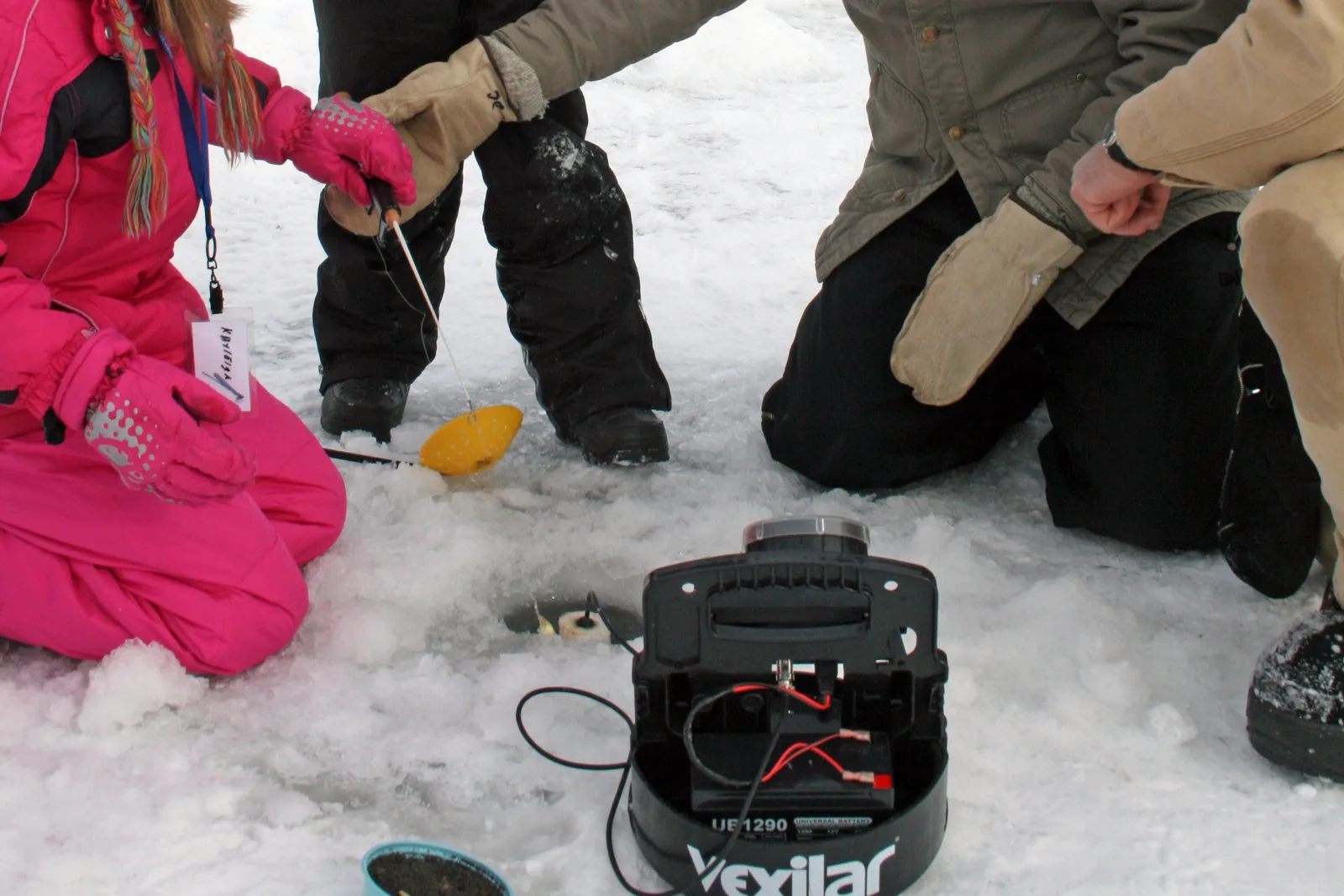
An ice fishing flasher is a sonar that shows what’s under your hole right now, as colored lights on a dial. You see the bottom, your jig and any fish. Its sonar works the same way as a fish finder with a screen, Vexilar says. Only the display differs: a screen draws a history, a flasher shows only this moment. Vexilar calls it “real time.” That’s why ice anglers use one. You watch a fish come up to your jig and see whether it bites or turns away.
In 20 ft of water, a 12-degree flasher sees a circle of bottom only 4.3 ft (1.3 m) across. It shows what’s under your hole, not what’s under the lake.
For a first flasher, get Vexilar’s FL-8SE Genz Pack. It was $259.99 on Vexilar’s store on November 15, 2026, marked down from $369.99. The battery, charger and transducer (the puck that hangs in the hole and sends the sound) come in one case. The FLX-12 Genz Pack at $429.99 is the step up, with a narrower cone (the beam of sound) and more settings to cut out a buddy’s sonar. The picks rest on the makers’ own pages and prices, read on November 15, 2026, Vexilar’s manual and Outdoor Life’s ice electronics guide. None of the units was run on the ice for this page.
What does an ice fishing flasher show?
A flasher is a wheel of lights that spins very fast inside a round dial. The lights switch on and off as it spins to show what the sound hit. Outdoor Life’s Cory Schmidt puts it simply: “depths arranged like a clock.”
You read it clockwise. Zero is the starting mark, and the further round you go, the deeper the water. The color tells you how strong the echo was:
- Red is strong: the bottom, heavy weeds, a big fish.
- The middle color is medium: smaller things and soft bottom. The FLX-12 manual calls it yellow, the FL-8SE page orange.
- Green is weak: small bait, light weeds, even air bubbles. Bigger things off to the side of the cone show green too.
Remember: Red is strong, green is weak. A small baitfish right under the transducer can still show red.
Why a dial and not a screen on the ice? You sit still over one hole, so the only things moving under you are fish. Vexilar makes that point in its manual. A boat screen draws a fish as an arch as you drive over it, and how to read a fish finder covers that view. A flasher just shows the fish where it is, with your jig dropped into the middle of the cone.
Search for “flasher” and you’ll also get trolling flashers for salmon, like the Pro-Troll HotChip. Those are a different thing, trolling gear for open water. The ice flasher is a sonar, one of the fish finders.
How do you read a flasher on the ice?
Reading one comes down to four marks. Vexilar’s manual walks through them, and this is the order to look for them at the hole:
- Find the bottom. It’s usually the biggest mark, a band of red with orange and green trailing behind it. The depth is its leading edge, the shallow side. Pick the shallowest depth range that still shows bottom. The water then fills more of the dial and things look bigger.
- Find your jig. Drop it and watch a thin line go round the dial as it sinks. Set the gain, the dial’s sensitivity, so that line shows green.
- Watch for fish. A fish shows as a wider mark than your jig, in a stronger color. Raise the jig so it sits right above the fish.
- Read the reaction. As you lower the jig, curious fish rise to see it. When the two lines meet, get ready for the bite. A fish that isn’t hungry still reacts, Vexilar says, with “disinterest or fear.” You see that on the dial and change what you’re doing.
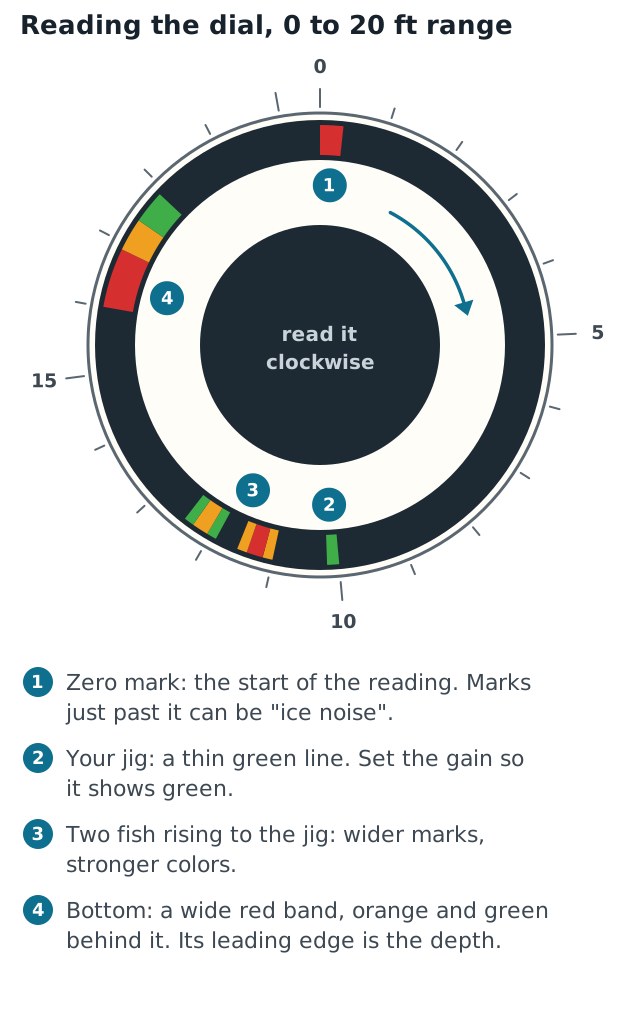
The four marks on a flasher, after Vexilar’s manual. Drawing: fishing.info.
Two marks trip people up. A thin green line sitting right on the bottom can be a fish just off the bottom, but off to the side of the cone. And the bottom itself tells you what you’re over. Hard bottom draws a narrow band of mostly red and orange. Soft bottom draws a wide band with more orange and green than red.
Two fish rising together is good news. Vexilar says the competition can make fish more aggressive. Keep the jig just above them and be ready. Whether you’re after crappie, perch or walleye, the dial reads the same way. Only the ice fishing lure changes from one fish to the next.
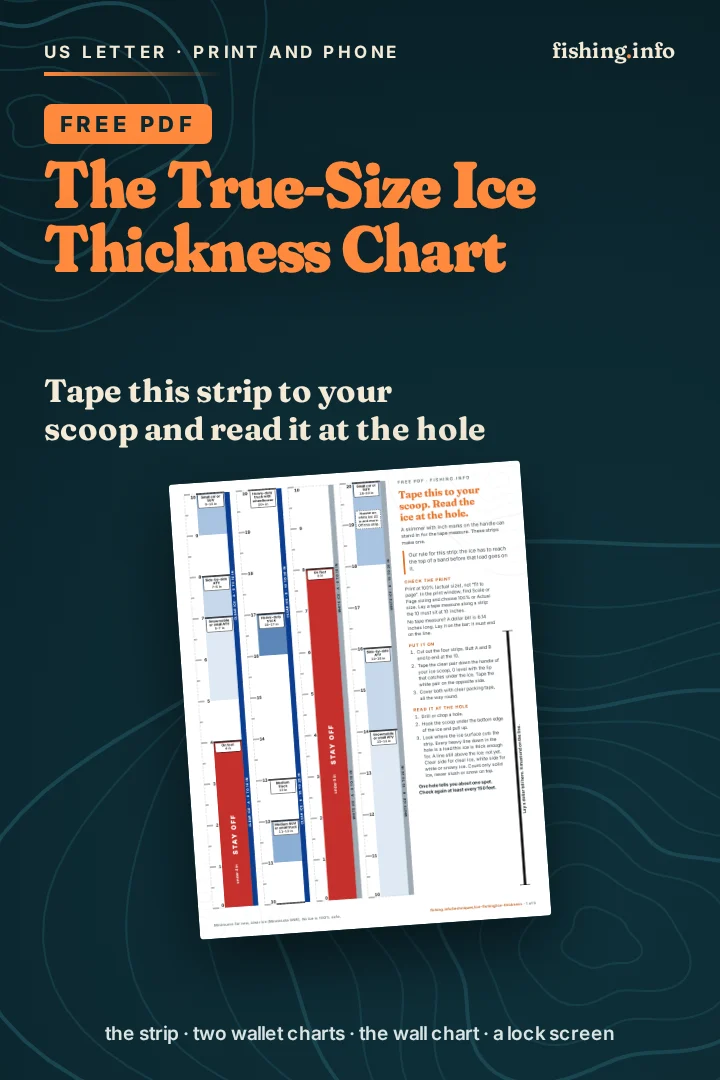
Free PDF · Ice thickness chart How thick is the ice? Read it at the hole.
Print the free chart, tape the strip to your scoop and hook it under the ice. It shows what that ice is thick enough for, clear or white. Two wallet charts and a wall chart come with it.
No card, nothing to buy, and the PDF is yours to keep. Confirm with one click and it's on its way. Then a few short emails and one a week on what's biting. Unsubscribe anytime. Privacy.
How much of the bottom does a flasher see?
Not much. The transducer sends its sound down in a cone, and the cone angle on the box tells you how wide it spreads. Vexilar prints a chart of the circle each cone covers. Here it is at 10, 20 and 30 ft, with Garmin’s ice transducers added.
| Cone | Comes on | 10 ft (3 m) | 20 ft (6 m) | 30 ft (9 m) |
|---|---|---|---|---|
| 8° | MarCum M5LR, narrow beam | 1.4 ft (0.4 m) | 2.8 ft (0.9 m) | 4.2 ft (1.3 m) |
| 9° | Vexilar FLX-28 (ProView) | 1.6 ft (0.5 m) | 3.2 ft (1.0 m) | 4.7 ft (1.4 m) |
| 12° | Vexilar FLX-8, FLX-12 | 2.2 ft (0.7 m) | 4.3 ft (1.3 m) | 6.3 ft (1.9 m) |
| 19° | Vexilar FL-8SE Genz Pack | 3.4 ft (1.0 m) | 6.7 ft (2.0 m) | 10.0 ft (3.0 m) |
| 20° | MarCum M1; M5LR, wide beam | 3.5 ft (1.1 m) | 6.9 ft (2.1 m) | 10.6 ft (3.2 m) |
| 24° | Garmin HW CHIRP, widest | 4.3 ft (1.3 m) | 8.5 ft (2.6 m) | 12.8 ft (3.9 m) |
| 45° | Garmin dual beam, wide | 8.3 ft (2.5 m) | 16.6 ft (5.1 m) | 24.9 ft (7.6 m) |
Width of bottom covered. The Vexilar rows are Vexilar’s figures as printed. The two Garmin rows are worked out here from Garmin’s beam angles: twice the depth times the tangent of half the cone. Vexilar’s cells sit within about 0.1 ft of that sum.
The edge of that circle is soft. The angle on the box marks where the sound has dropped to a set strength. A big fish or a sharp drop-off just outside it can still show on the dial.
So is wider better? Not always. Vexilar’s advice is short: for suspended fish, those hanging up off the bottom, the 19-degree cone does well. For fish holding on the bottom along a steep drop-off, use the 9.
The reason is the dead zone, a blind band in the cone. On a slope, a wide cone hears the high side of the bottom first and draws that as the bottom. Fish lying on the low side end up inside the bottom mark, where you can’t see them. A narrow cone shrinks that blind band. The FL-8SE pack ships with the 19, the FLX-28 with the 9, and MarCum’s M5LR carries a dual beam of 8 and 20.
Flasher, graph or live sonar: what does each cost?
Shopping for a fish finder for ice fishing? There are three kinds, and each step mostly costs more than the last. The prices are the makers’ own, read on November 15, 2026. The middle step is a graph: a screen that draws a scrolling picture, like a boat’s fish finder. Many graph kits for the ice show a flasher view too, like Garmin’s Striker 4 and MarCum’s LX-7 G2.
| Type | What you see | Price at the maker | For you if |
|---|---|---|---|
| Flasher | The water under the hole, live, on a dial | $259.99 (FL-8SE, on sale) to $699.99 (FLX-38) | You fish through the ice and want it simple |
| Graph kit for the ice | A flasher view and a scrolling picture; some add GPS and maps | $249.99 (Garmin Striker 4 Portable Bundle) to $1,069 (Lowrance Elite FS 7 All-Season Pack) | You want one screen for the ice and open water |
| Live sonar | A live picture of fish swimming, down or out to the side | $999 (Lowrance Eagle Eye 9) to $3,299.99 (Garmin LiveScope Plus bundle) | You want to find fish before you drill |
Outdoor Life’s Schmidt gives the trade between the first two. A flasher can’t split the screen with a map, and digital units separate fish a little more precisely. Flashers are “perceived to be slightly more reliable, especially in sub-zero temperatures,” he writes. Digital units now use heated screens, though, and have become “increasingly dependable.”
Garmin’s ECHOMAP UHD2 5” Ice Fishing Bundle, $599.99, sits in the middle: a 5 in chartplotter (a GPS map screen), a dual-beam ice transducer and Navionics+ maps. The 7 in version is $999.99, MarCum’s LX-7 G2 $729.99. The Striker 4 Portable Bundle lists at $249.99 and was $229.99 on sale that day. Screen units for open water are in the best fish finder guide, and the small carry kits with the portable fish finder.
What about live sonar on the ice?
Live sonar changes how you hunt. Garmin says its forward mode helps you find fish so you know where to drill the next hole. Down mode lets you watch them react to the jig. It reads under the ice “without requiring additional holes or running the risk of spooking fish,” Outdoor Life notes.
Searching for a “LiveScope ice bundle”? Know what’s in the box. Garmin’s LiveScope Plus Ice Fishing System, $1,799.99, is the transducer, the sonar module, a pole mount and a power cable. It’s built to pair with a Garmin chartplotter you already own. The LiveScope Plus Lithium-ion Ice Fishing Bundle adds an ECHOMAP UHD2 93sv screen and the battery for $3,299.99 ($3,199.99 on sale). Garmin’s newer LiveScope 2 HD Ice Fishing Transducer, $2,199.99, sends its picture straight to the chartplotter with no black box in between, and shows more detail, Garmin says. On a boat, forward-facing sonar is the same technology, with tournament rules of its own.
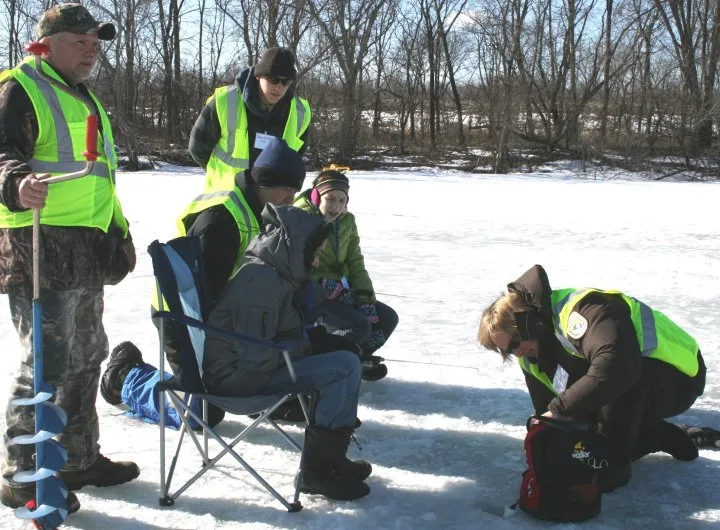
A fishery biologist looks for fish under the ice with her sonar while volunteers gather around two young anglers. Photo: Stefanski, U.S. Fish and Wildlife Service (public domain).
Do you need a flasher for your first trip?
No. New York’s DEC says sonar units “aren’t necessary for success.” They “can help determine water depth, find fish-holding structure, and determine fish movement under the ice,” it adds. Most ice anglers now use some kind of fish-finding electronics, Minnesota DNR says, rather than “fishing blind.”
Without one, do what Minnesota DNR says ice anglers without electronics do. Start near the bottom, then try higher until you find fish or decide to move. The same agency names a sonar unit as one of the big-ticket items of ice fishing gear, with the auger and the shelter. If you fish with someone who has them, the DNR says, you can hold off on all three until you know ice fishing is for you.
Whatever you bring, check the ice thickness before you walk out on it.
How do you set up a flasher on the ice?
Hang the transducer first. Vexilar’s Ice-Ducer works like a plumb bob: let it hang from its cable and it points straight down. Slide the stopper on the cable so the bottom of the transducer sits even with the bottom of the ice. The cable is made to stay soft in the cold, which also makes it easier to cut with your own line. Keep your line clear of it.
Then three settings:
- Gain. Think of it as the volume. Keep it as low as you can and still see the bottom and your jig. Turn it up only for a moment to look for fish further out, because high gain smears every mark into a blob of color.
- Interference rejection (IR). When a buddy’s sonar runs on the same frequency and the two cones cross, his signal shows on your dial. A mark that stays put can look like a fish that isn’t there, or the wrong depth. IR comes on by itself. On the FLX-12 you press through its 20 settings until the noise goes. With two Vexilars side by side, leave one unit’s IR alone and adjust the other.
- Low power. A narrow cone puts the same power into a smaller spot, so in very shallow water it can swamp the dial. The low-power mode on the FLX-12 and FLX-28 fixes that. Vexilar says don’t use it in water deeper than 20 ft.
Tip: Set the gain by your jig, not by the fish. When the jig shows as a thin green line, the gain is right.
How long does a flasher battery last?
A full day and then some. Vexilar puts a 9 Ah (amp-hour) battery, drained flat, at about 24 to 30 hours of use, and about nine hours to charge it back. The FL-8SE and FLX-12 draw 200 mA (a fifth of an amp) at 12 V, the FLX-28 draws 260 mA.
Lithium behaves differently at the end. The FLX-12 warns at 10.6 volts by flashing its green depth lines, a warning built for lead-acid batteries. A Vexilar lithium battery drops much faster at the end of its charge, so expect it to die soon after the first warning. Lithium comes in the box with MarCum’s M5LR, 12 V 10 Ah, and with the FLX-28 Pro Pack Elite, 9 Ah. Vexilar ships its lithium by ground only, to the lower 48 and Canada.
The cold matters when you charge. Let a lead-acid battery warm up first, and give a cold one extra time on the charger. Never charge a lithium battery cold. Either way, recharge after every trip.
Which ice fishing flasher should you buy?
One flasher covers most anglers: the FL-8SE for a first season, the FLX-12 if you can stretch. Here are the six picks side by side, then who each one suits.
| Pick | Cone and battery in the box | Price |
|---|---|---|
| Vexilar FL-8SE Genz Pack | 19°, 12 V 9 Ah | $259.99 on sale (list $369.99) |
| Vexilar FLX-12 Genz Pack | 12°, 12 V 9 Ah lead-acid | $429.99 |
| MarCum M5LR | 8° and 20°, 12 V 10 Ah lithium | $559.99 |
| Vexilar FLX-28 Pro Pack Elite | 9°, 12 V 9 Ah lithium | $639.99 |
| Lowrance Eagle Eye 9 | Live sonar, forward and down; no ice pack | $999 |
| Garmin LiveScope Plus Ice Fishing System | Live sonar; needs a Garmin screen and battery | $1,799.99 |
Vexilar FL-8SE Genz Pack: the first flasher
The cheapest new flasher pack on Vexilar’s and MarCum’s stores, with battery and charger, in a case that sits on a five-gallon bucket. Outdoor Life calls it the best for beginners “to learn the ropes” and “the most popular ice fishing fish finder.” Its limits: 10 interference settings, and a wide cone that’s weaker on fish tight to a slope.
Are Vexilars worth it? For a first flasher, yes. The FL-8SE is Outdoor Life’s best budget pick, and Vexilar gives two years on the unit and one on the battery.
Vexilar FLX-12 Genz Pack: the step up
A flat screen, a 12-degree cone, 20 IR settings and a low-power mode for shallow water. Pick it if you often fish beside other anglers’ sonar. The FLX-8 Genz Pack, $369.99, is the model the FLX-12 steps up from.
MarCum M5LR: two cones in one
Its dual-beam ice transducer is rated at 8 and 20 degrees, a narrow and a wide cone in one. It adds a split-screen zoom and target separation down to 3/4 inch: two marks that close still show as two. The M1, MarCum’s cheaper dial, was out of stock on its page.
Vexilar FLX-28 Pro Pack Elite: drop-offs and deep water
It has the 9-degree cone Vexilar points to for fish on a drop-off, two zoom zones of 6 and 12 ft and depth ranges down to 300 feet. The same unit in the Pro Pack II costs $619.99.
Lowrance Eagle Eye 9 and Garmin LiveScope Plus: live sonar
The Eagle Eye 9 is the cheapest live sonar, with charts on a 9 in screen. Lowrance lists no ice pack for it in the US, so the battery and pole mount are on you. Garmin’s ice system needs a Garmin chartplotter, or the $3,299.99 bundle that includes one. Outdoor Life’s best overall pick is Garmin’s LiveScope Plus ice bundle.
How we chose
Specs and prices are the makers’ own, read on November 15, 2026. How a flasher reads, the coverage chart and the battery figures come from Vexilar’s FLX-12 manual. Opinions are Outdoor Life’s, credited where they’re used. No unit was tested on the ice for this page, and none of the links pays us. Humminbird’s ICE HELIX is left out because its own pages would not show the specs and prices to check.

Free PDF · 5 pages
Stop guessing the ice. Tape this strip to your scoop and read it at the hole
Ice that is 6 or 7 inches thick in one spot can be 2 inches close by. You can't tell by looking.
The True-Size Ice Thickness Chart. Print it, tape the strip to your ice scoop, hook it under the ice and read the band at the surface: on foot, sled or truck. One side for clear ice, one for white.
- A true-size strip for your scoop handle, marked from "stay off" to a truck with a wheelhouse
- Two wallet charts, one for your buddy, with five moves that get you out if you go through
- Why 8 inches of white ice counts as 4, and the ice to stay off at any thickness
Every clear-ice number is the Minnesota DNR's, set beside the 29 sources on the page, the Army Corps of Engineers among them.
No card, nothing to buy. Confirm with one click and the PDF is on its way, one version for your phone and one to print, yours to keep. Then a few short emails and one a week on what's biting, with an unsubscribe link in every one. Privacy.
Related
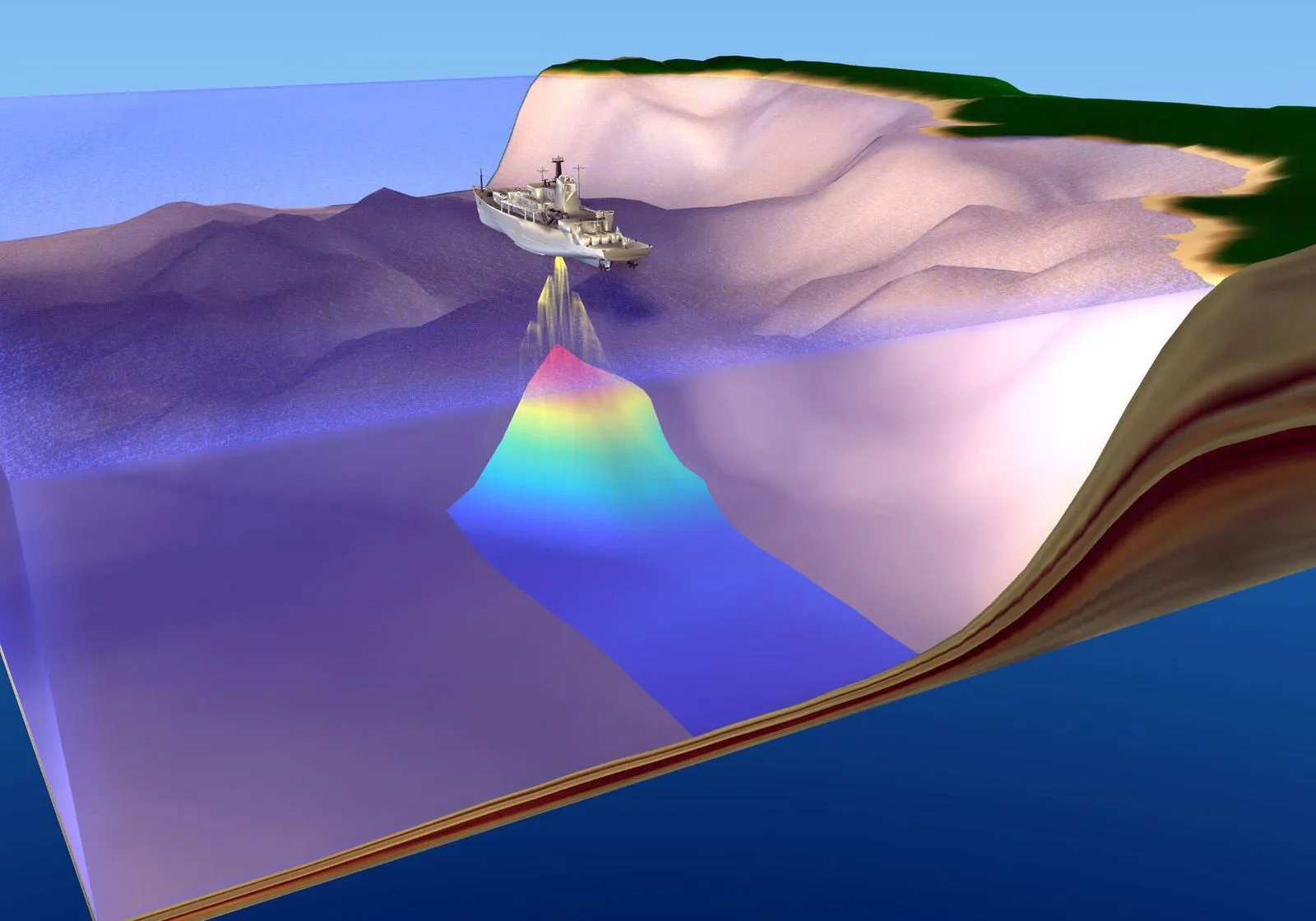
Section guide
Fish Finders: How Sonar Works, the Types, and Which Unit to BuyA fish finder is a sonar: how it works, what 2D, CHIRP, side imaging and live sonar show, what each costs, and the three brand ladders from $120 up.
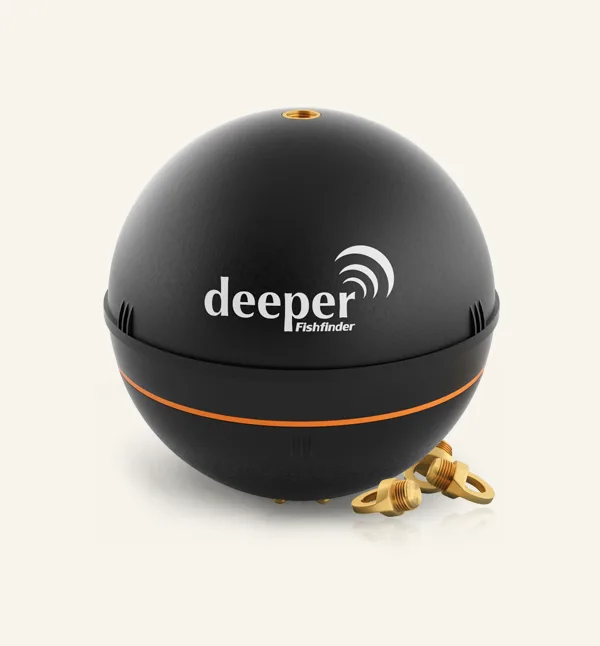 Portable Fish Finder: Castable Sonar vs Carry Kits, and Which to Buy
Portable fish finder: castable sonar ($160–280) for the bank or a carry kit ($150–550) for kayaks and ice. Six units compared on depth, runtime, price.
 Lowrance Fish Finder: Eagle, Eagle Eye, HOOK Reveal, Elite FS and HDS PRO
Lowrance fish finders from the $123 Eagle 4x to HDS PRO, with the $999 Eagle Eye 9 Live as the cheapest live sonar and the pick for each boat.
 Garmin Striker 4: What It Does, What It Lacks, Which Striker to Buy
Garmin fish finder Striker 4: CHIRP sonar and GPS for $159.99, no maps or imaging. The specs, the 4 vs Plus 4 vs Vivid 4cv, and how to read the screen.
 Depth Finder for a Boat: Which Unit, and Where the Transducer Goes
The best boat depth fish finder is a $120–200 sonar, not a dash gauge. The picks by boat, and the makers' rules for where the transducer goes.
 Forward Facing Sonar: How It Works, What It Costs, and the 2026 Rules
Forward facing sonar shows fish and your lure ahead of the boat, live. LiveScope 2, MEGA Live 2, ActiveTarget 2 compared, from $999, plus the rules.
 Garmin Fish Finder: Striker vs ECHOMAP vs GPSMAP, and Which to Buy
Garmin fish finders as a ladder: Striker (sonar only), ECHOMAP (charts, LiveScope 2), GPSMAP. Current prices, the model-number decoder, the pick by boat.
Sources (23)
- Vexilar, FLX-12 flasher instruction manual (how a flasher works, the display, gain, interference, Ice-Ducer, cone angle and coverage, dead zone, low power, batteries)
- Vexilar, FL-8SE Genz Pack with 19° Ice-Ducer
- Vexilar, FLX-12 Genz Pack with 12° Ice-Ducer
- Vexilar, FLX-28 Pro Pack Elite with ProView Ice-Ducer and Vexilar Lithium Battery
- Vexilar, FLX-8 Genz Pack w/ 12° Ice-Ducer
Show all 23 sourcesShow fewer sources
- Vexilar, FLX-28 ProPack II w/ ProView Ice-Ducer and Vexilar Lithium Battery
- Vexilar, FLX-38 Pro Pack Elite w/ Broad Band Ice-Ducer and Vexilar Lithium Battery
- MarCum, M5LR Flasher System
- MarCum, M-1 flasher
- MarCum, LX-7 G2
- Garmin, LiveScope Plus Lithium-ion Ice Fishing Bundle (ice transducer beam angles)
- Garmin, LiveScope Plus Ice Fishing System
- Garmin, What ice fishing gear is right for you?
- Garmin, ECHOMAP UHD2 5" Ice Fishing Bundle
- Garmin, STRIKER 4 Portable Bundle
- Garmin, ECHOMAP UHD2 7" Ice Fishing Bundle
- Garmin, LiveScope 2 HD Ice Fishing Transducer
- Lowrance, fish finders (US list and prices)
- Outdoor Life (Cory Schmidt), The Best Ice Fishing Fish Finders of 2026, Tested and Reviewed (updated Feb 14, 2025)
- Minnesota DNR, Ice fishing for walleye
- Minnesota DNR, Ice fishing for perch
- Minnesota DNR, Learn to ice fish
- New York State DEC, I FISH NY Guide to Ice Fishing