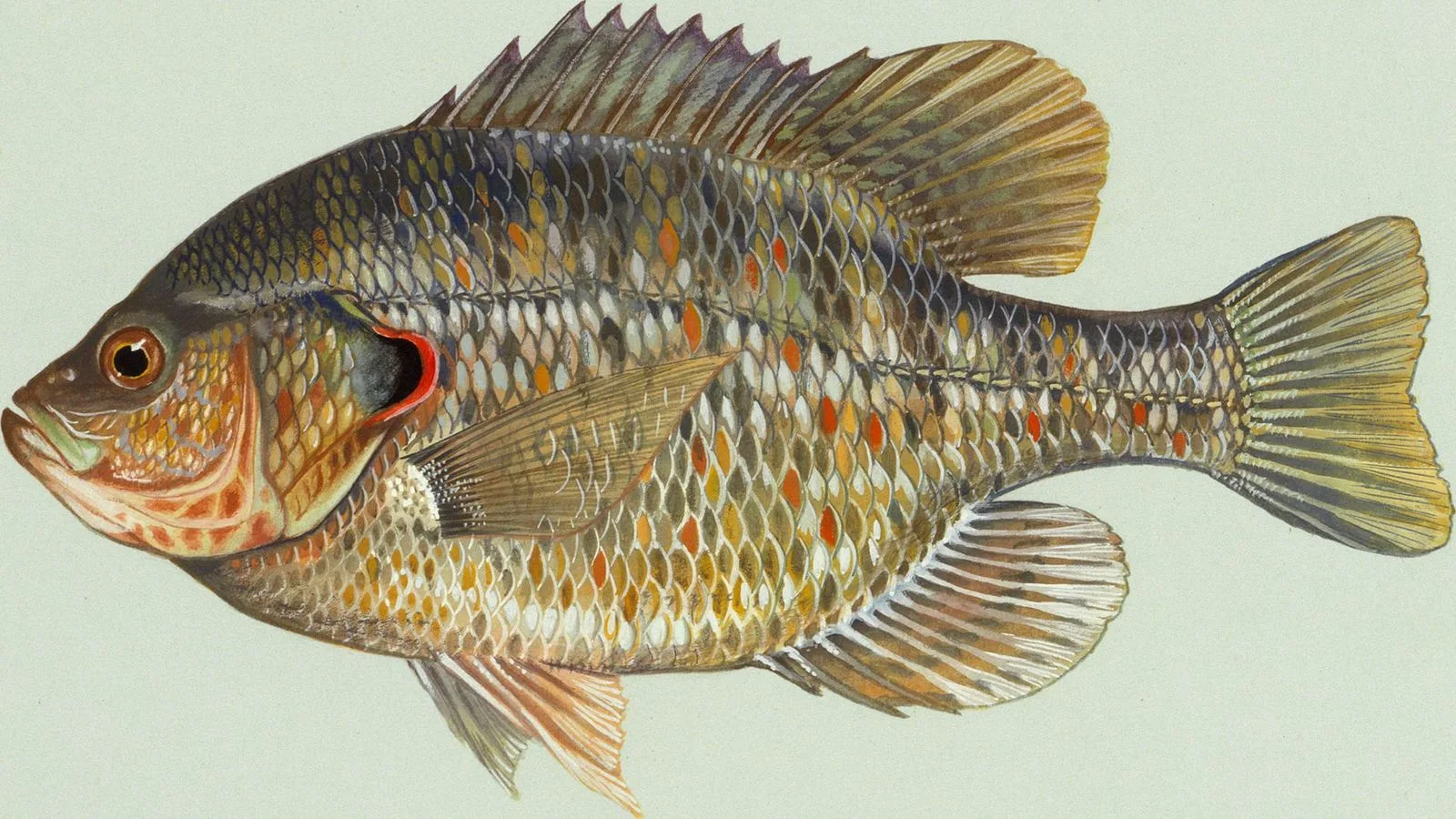
In the American South, a bream is any sunfish, with the bluegill first among them. Often spelled the way it is said, “brim”, the word also covers the redear, the warmouth, the pumpkinseed and their kin. Everywhere else in the English-speaking world, bream means a different fish. In Europe it is the common bream, a deep-bodied relative of the carp. On a restaurant menu it is a sea bream, a saltwater porgy.
Under U.S. labeling rules, “bream” and “brim” may not go on a bluegill’s label. The FDA’s Seafood List makes “sunfish” the market name and keeps “bream” for the European fish and the sea breams.
Are bream and bluegill the same fish?
Every bluegill is a bream; not every bream is a bluegill. The same logic runs one level up: every bluegill is a sunfish, and not every sunfish is a bluegill. Texas Parks and Wildlife lists the bluegill’s other names as bream, brim, perch, sunfish and sunperch, and the same agency lists “Georgia bream” among the redear’s names. Alabama’s freshwater creel table simply has a line for “Bream”, with no species named: 50 a day.
So when a Southern angler says the bream are bedding, the fish in question are the sunfish of the genus Lepomis. The bluegill has the full profile of the fish itself, from size by age to the 4 lb 12 oz world record.
Which sunfish count as bream?
Five carry the word in their own local names on the Texas and FDA lists, and the ear flap on the gill cover tells most of them apart. The names come from Texas Parks and Wildlife and the FDA’s list of local names.
| Fish | The bream names | Tell it by | Typical size |
|---|---|---|---|
| Bluegill | Bream, brim, sunperch | Solid black ear flap with no colored edge; black blotch at the rear of the soft dorsal fin | 6–10 in (15–25 cm) |
| Redear sunfish | Shellcracker, Georgia bream, yellow bream | Black ear flap edged in red (male) or orange (female) | 8–10.5 in (20–27 cm) |
| Warmouth | Red-eyed bream, goggle-eye, stump knocker | Red eye, big mouth, dark streaks fanning back from the eye | 4–10 in (10–25 cm) |
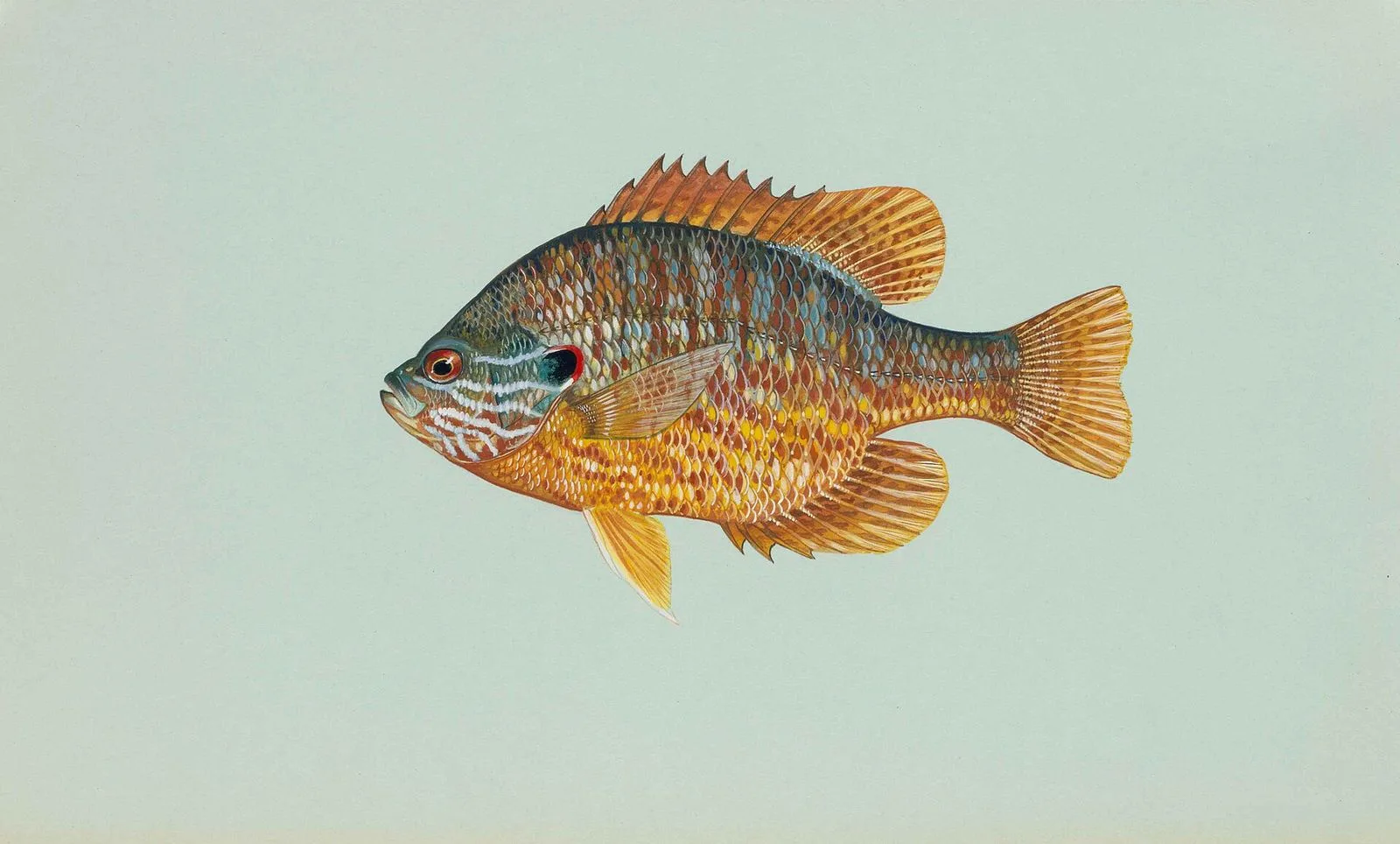
| Pumpkinseed | Bream, pond perch, sunny | Red-orange half-moon on the ear flap; wavy blue lines on the cheek | 6–10 in (15–25 cm) |
| Longear sunfish | Cherry bream | Long black ear flap trimmed in white | 5–6 in (13–15 cm) |
Other agencies draw the line wider. Florida’s wildlife agency notes that some anglers mean only the bluegill and others any sunfish, the redbreast sunfish and the spotted sunfish included. Alabama’s game-fish pages file fifteen species under “Bream (Sunfish)”, the green sunfish and the rock bass among them. Where these fish nest together they hybridize, and pond owners stock the hybrid bluegill on purpose, so the odd bream with marks from two rows is a hybrid, not a mistake in the table.
The counts beat the colors when a fish is in breeding dress. All true sunfish have three spines in the anal fin, which is how a warmouth is told from a rock bass with its six. The glossary’s entry on the sunfish family explains why the crappies and the black bass belong to it too, though they are not bream.
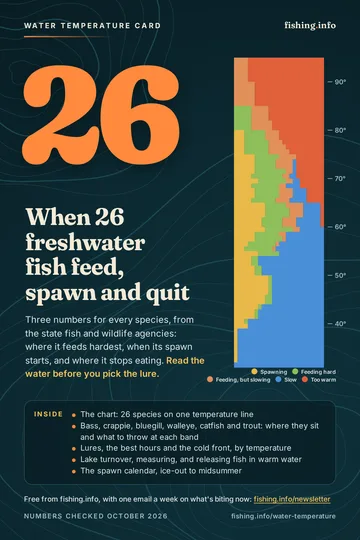
Free card: what 26 species do at your water temperature
Plus one email a week on what's biting now. No sales pitches. Privacy.
How big do bream get?
Most bream in a Southern pond run a hand’s length: 6–10 in (15–25 cm) for a bluegill, a little more for a shellcracker. A one-pound bluegill is a real trophy. Michigan’s Master Angler program sets its bluegill minimum at 10 in (25 cm) for that reason, and the bluegill page has the size-by-age table.
The biggest Southern bream on the record books is not a bluegill. The IGFA all-tackle redear sunfish weighed 6 lb 4 oz (2.83 kg) and came from Lake Havasu, Arizona, in 2021. The bluegill record, 4 lb 12 oz (2.15 kg), has stood since 1950, when T. S. Hudson caught it in Alabama’s Ketona Lake. Both are fat, short fish rather than long ones.
Across the Atlantic the scale changes. The IGFA’s record common bream weighed 13 lb 3 oz (6.01 kg), more than twice the bluegill record. The sea breams run heavier still: the record sheepshead is 21 lb 4 oz (9.63 kg).
Which bream is it? The word around the world
The word is older than the American South. It came into Middle English as breme, from Old French, and it has stuck to deep, flat-sided fish in at least four unrelated families. Each row below is a different fish:
| Where you hear “bream” | The fish | Family | IGFA all-tackle record | On the table |
|---|---|---|---|---|
| The American South | Bluegill and the other sunfish | Centrarchidae, the sunfish | 4 lb 12 oz (2.15 kg) bluegill, Alabama, 1950 | “Firm, flaky, and well flavored” (Missouri) |
| Britain and Europe | Common bream, Abramis brama | Leuciscidae, carp relatives | 13 lb 3 oz (6.01 kg), Sweden, 1984 | Rarely kept; a match-fishing fish |
| Mediterranean menus | Gilthead sea bream, Sparus aurata | Sparidae, the porgies | 16 lb 3 oz (7.36 kg), France, 2000 | “A highly esteemed food fish”, farmed widely |
| Australia | Black and yellowfin bream, Acanthopagrus | Sparidae | — | A major estuary sport and table fish |
| US Atlantic and Gulf coasts | Sheepshead, scup, pinfish: the “sea breams” | Sparidae | 21 lb 4 oz (9.63 kg) sheepshead, Louisiana, 1982 | Sheepshead may be sold as sea bream, scup as golden sea bream |
| Central and southern Africa | Several tilapia-type cichlids | Cichlidae | — | Important in African fisheries |
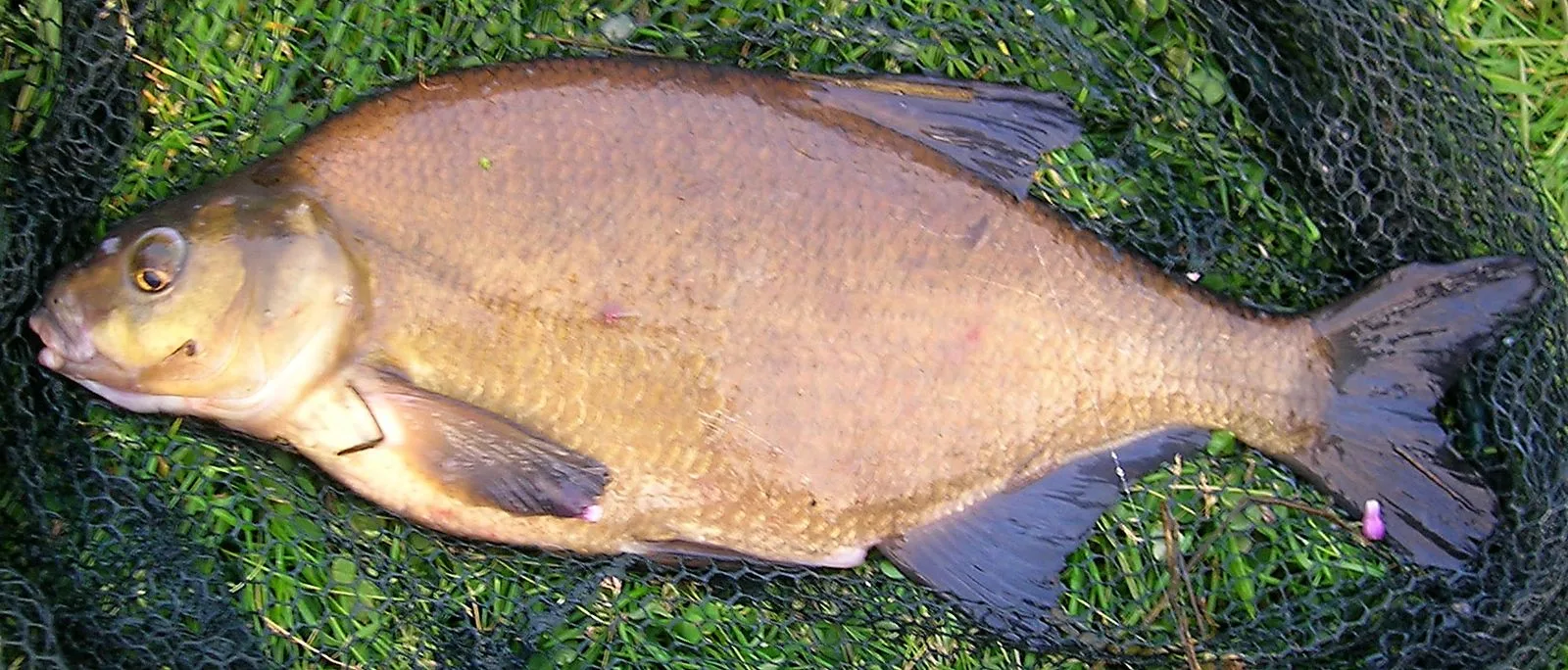
The European common bream, a carp-family fish with no relation to the bluegill. Photo: Piet Spaans (viridiflavus), Wikimedia Commons (CC BY-SA 2.5).
The European common bream is the fish a British angler means. It is silver when young and often bronze when old, with a high back, a mouth that extends downward to dig in the mud, and gray to black fins that are never red. Anglers there catch it in shoals over groundbait, mostly to release. FishBase gives its common length as about 10 in (25 cm), with fish up to 23 years old on record.
In a recipe or at a fish counter, bream usually means a sea bream. The gilthead, orata in Italy and dorada in Spain, is an important farmed fish around the Mediterranean. In Australia, the southern black bream is a major target of estuary anglers, and lure fishing for bream has added to its following.
Is tilapia the same as bream?
No. Tilapia are cichlids, nearly a hundred species from Africa and the Middle East. The sunfish, the European bream and the sea breams each belong to a different family. The confusion is real, though. In parts of Africa several cichlids carry bream names. The FDA’s list of local names records the longfin tilapia as “greenhead bream” and Tilapia rendalli as “redbreasted bream”, and whole cichlid genera there are called bream. A tilapia fillet is a cichlid, whatever the local name of its wild relatives.
Is bream good to eat, and what does it taste like?
The Southern bream eats well. The Missouri Department of Conservation calls bluegill flesh “firm, flaky, and well flavored”, and the small fillets fry in minutes. Minnesota’s health department, in its August 2026 statewide guidelines, puts sunfish in its least restricted group. Men, and women who will not become pregnant, may eat up to four servings a week outside Cook, Lake and St. Louis counties, where it is two. Children under 15 and anyone who is or may become pregnant may eat one serving a week.
The European common bream is a different story: where it is fished, it is rarely kept for the table. The sea breams are the opposite: the gilthead is “a highly esteemed food fish”, and Australia’s southern black bream is a table fish.
How many bream can you keep?
Southern limits are generous. Alabama allows 50 bream a day, and Texas sets no daily limit and no minimum length on sunfish at all. Northern states count bream as panfish and are stricter. Wisconsin allows 25 panfish in total, with 10 on some lakes. Check the current regulations for the water you fish.
There is a reason to keep fewer of the biggest ones. When Wisconsin cut seven lakes from 25 panfish a day to 10, the average bluegill grew 0.8 in (2 cm) longer, and on some lakes 2 in (5 cm). The big males guard the beds. Take too many and a colony loses its guards.
When do bream bed?
Bream bed once the water passes about 70 °F (21 °C), from late spring through summer, and they do it in colonies, which is why Southern anglers talk about bream beds. Bluegill males fan out saucer-shaped nests in the shallows, fifty or more side by side. Spawning activity in Wisconsin can start at 67 °F (19 °C), though one study there found no actual spawning below 70 °F and little above 80 °F (27 °C). Redear males nest deeper, in water over 3 ft (0.9 m). The bluegill spawn temperature page has the month-by-region table.
A lake’s colonies spawn in bouts, not all at once. In three small Wisconsin lakes a season held four bouts in 31 days at the short end and eleven in 112 days at the long end, a new bout about every ten days. Guides tie the beds to the moon. T. C. Lloyd of Hartsville, South Carolina, told Carolina Sportsman he prefers the full moon, catches them on the new moon too, and fishes “three days before and after”. The Wisconsin DNR’s 2015 review of the bluegill research never mentions the moon; it ties the bouts to water temperature. At that pace, some bouts will land on a full moon either way.
How do you catch bream?
A worm under a bobber is the classic bream rig. The Wisconsin DNR calls plain garden worms “the favorite bait”, and Wired2Fish lists crickets next, then maggots, mealworms and wax worms. Hooks run small: a No. 10 in North Carolina’s guidance, a small long-shank No. 8 in Iowa’s. Fish the bobber over the beds in spring and along the deep weed edges in summer. The redear is the exception: a snail eater that wants worms on the bottom and rarely rises to a fly.
In the South, “perch” often means bream too, which explains a lot of confused fish stories. What a true perch is, and which fish are borrowing that name, is on the perch page.
Free download
The water temperature card
Read your water temperature and the card tells you who is spawning, who is feeding and what to throw. 26 species, 16 pages, for your phone and the tackle box.
Plus one email a week on what's biting now. No sales pitches. Privacy.
Related
Section guide
Panfish: Which Fish Count and How to Tell Them ApartPanfish are bluegill, the sunfish, crappie and yellow perch. Tell 9 sunfish apart by the ear flap, plus records and limits from 50 a day to none in Texas.
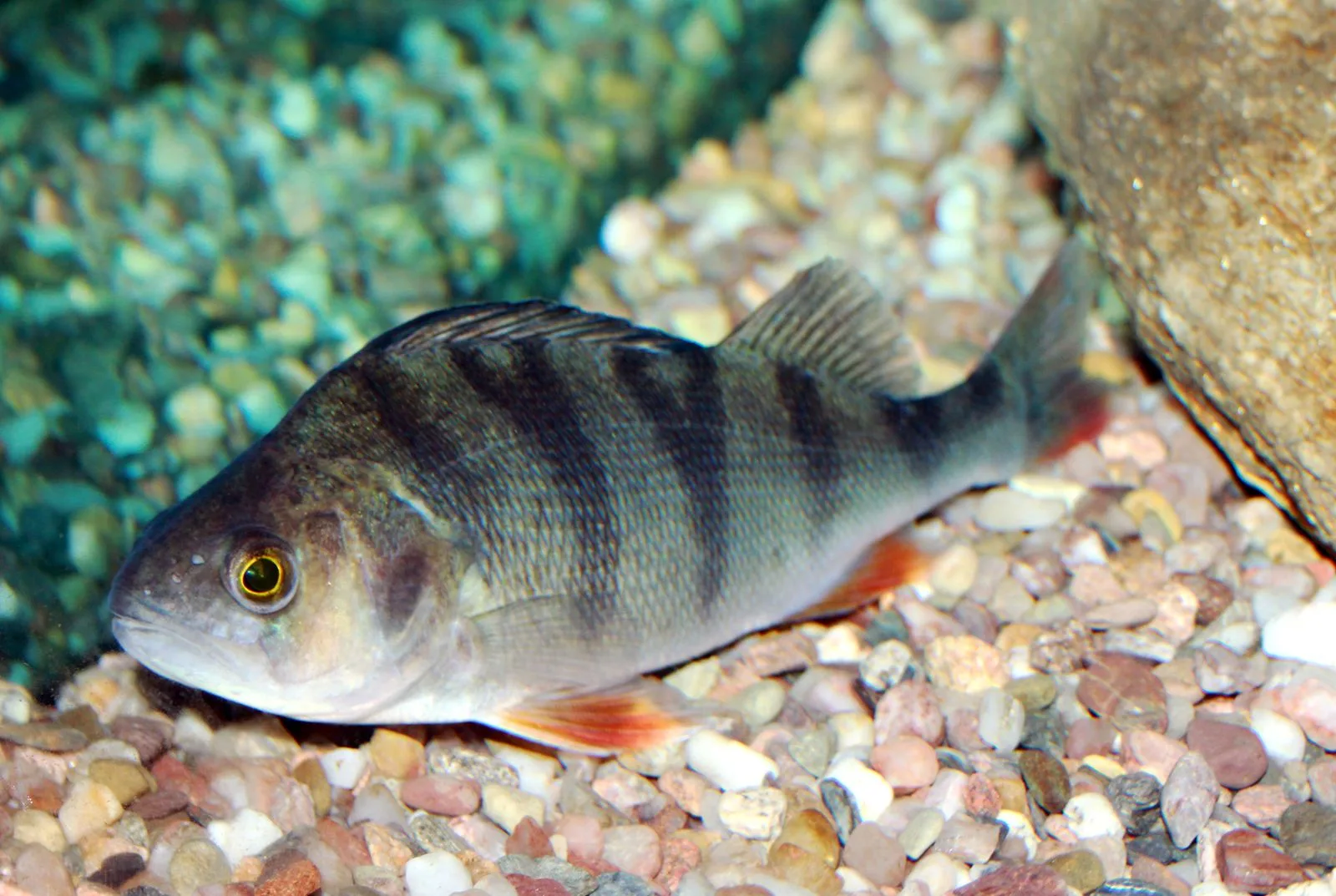 Perch Fish: What a True Perch Is, and Which Perch Are Not
A true perch is one of three Perca species. White perch, ocean perch, Nile perch and surfperch borrow the name: what each really is, and the records.
 Perch Fishing: Where to Find Them, the Rigs That Work, and When They Bite
How to catch yellow perch: where the schools sit each season, the spreader and jig rigs, how far off the bottom to fish, the bait, and the ice.
 Rock Bass: How to Identify, Find and Catch the Goggle-Eye
How to tell a rock bass from a warmouth or a smallmouth, where it lives, what it bites, how big it gets and the 3 lb world record that is a tie.
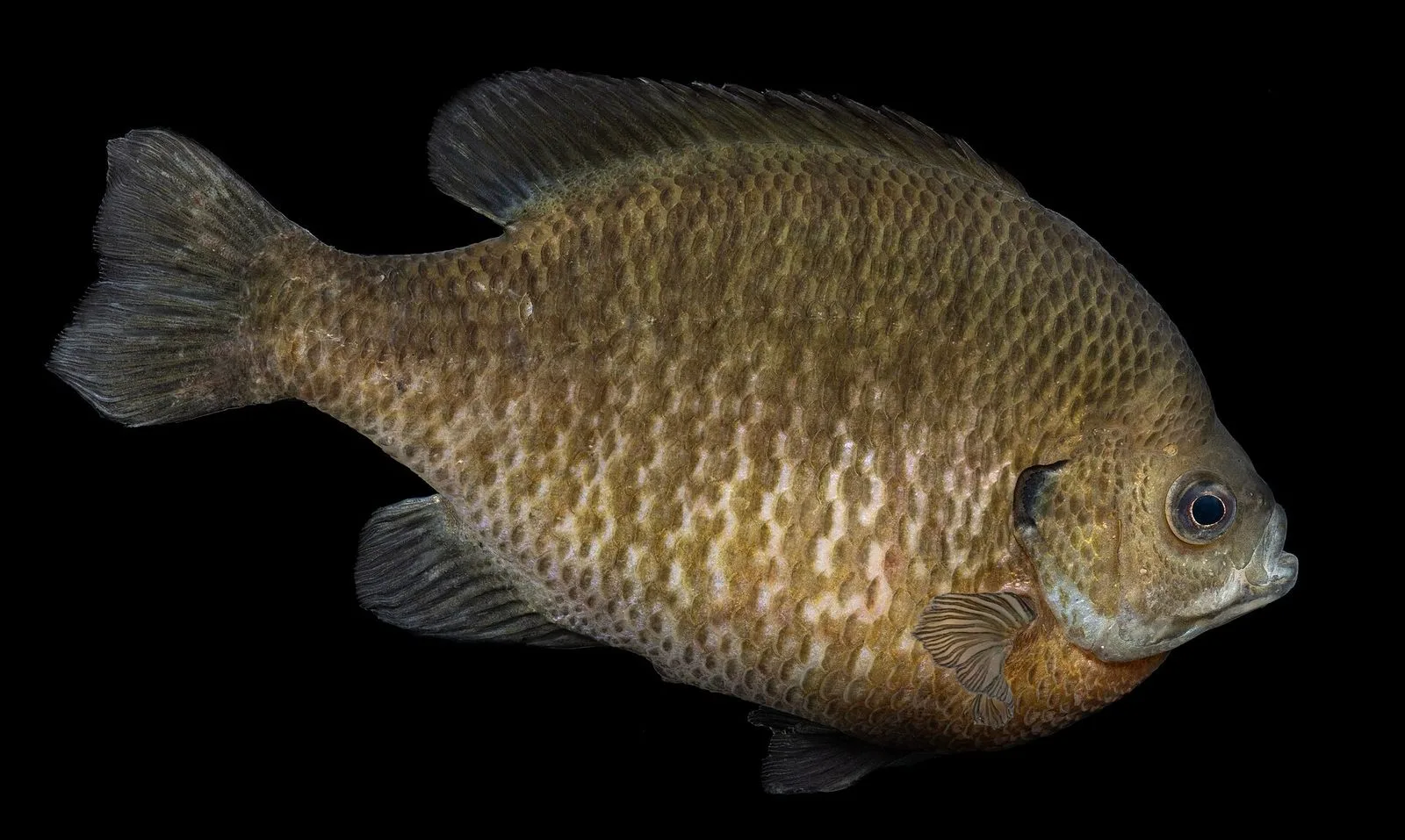 Bluegill: How to Identify It, How Big It Gets and How It Spawns
How to identify a bluegill, how old an 8- or 10-inch fish is, why a pound is a trophy, the 4 lb 12 oz record and the sneaker males on the beds.
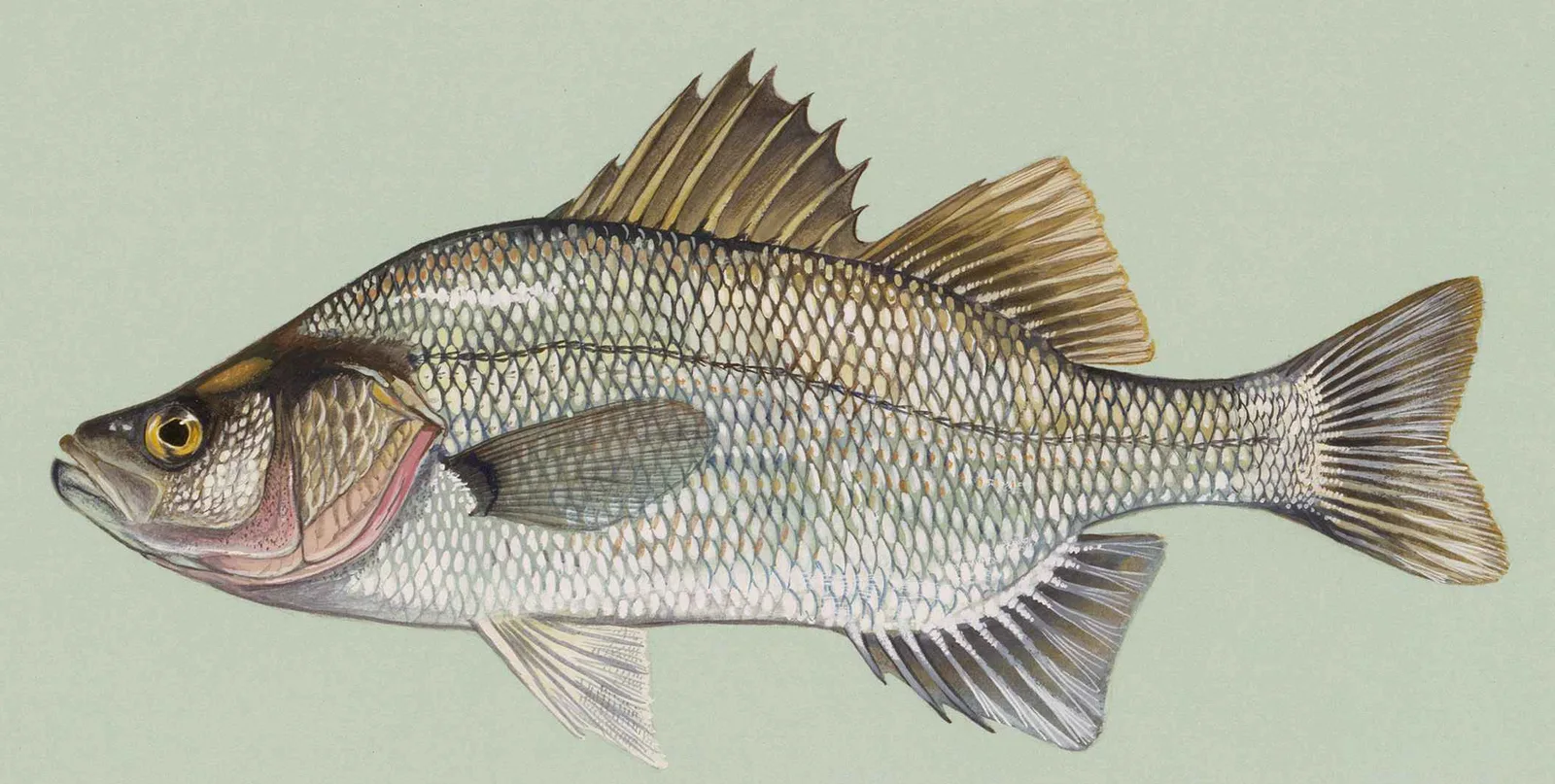 White Perch: The Striped Bass Cousin That Is Not a Perch
The white perch is a temperate bass, not a perch: how to tell it from yellow perch and white bass, its Great Lakes invasion, spawning and the record.
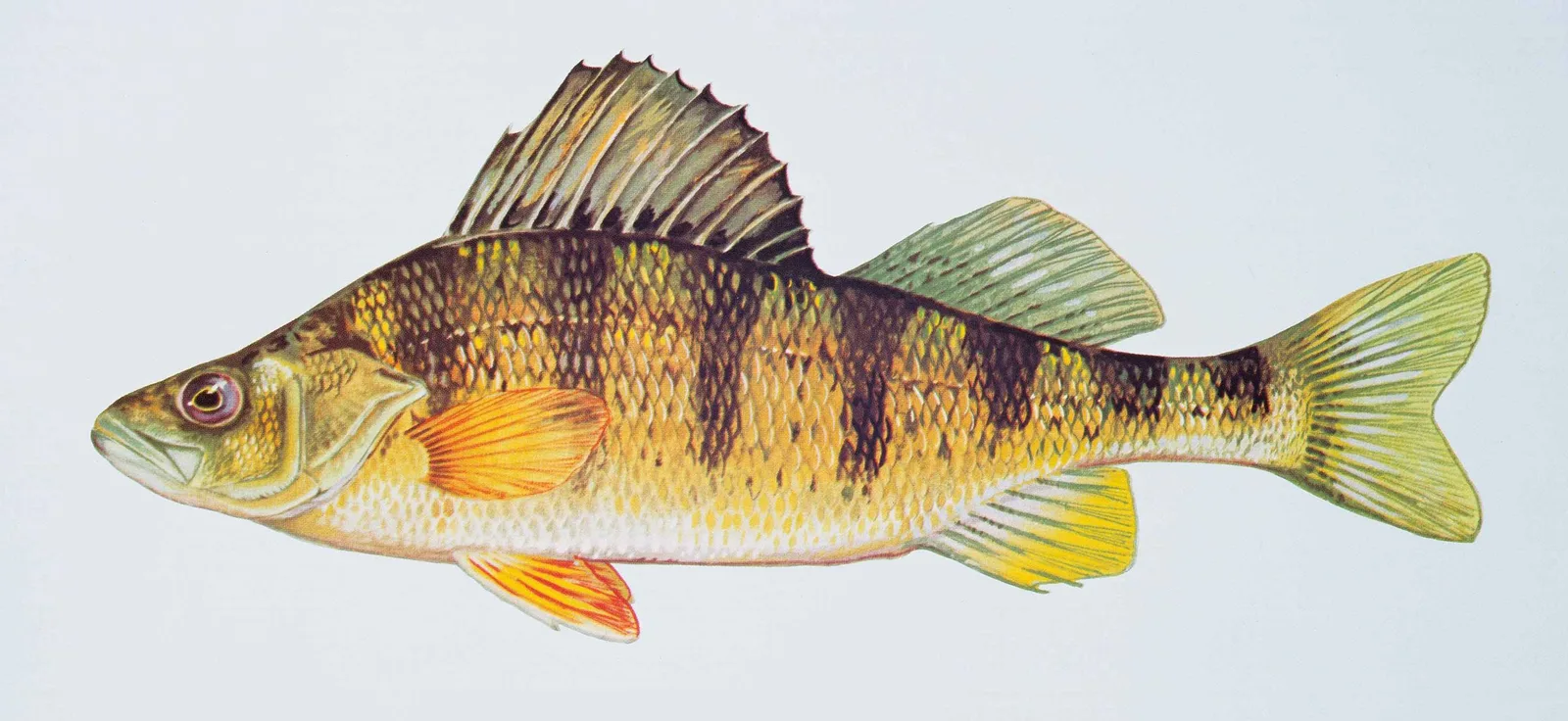 Yellow Perch: Identification, Size by Age, and the 1865 Record
Yellow perch (Perca flavescens): how to tell it from walleye, how old a 10-inch perch is, whether it is a bottom feeder, and the 1865 record.
Sources
- U.S. Food and Drug Administration, The Seafood List (market and vernacular names for 'bream')
- Texas Parks and Wildlife, bluegill (other names)
- Texas Parks and Wildlife, redear sunfish (other names)
- Texas Parks and Wildlife, warmouth (other names)
- Texas Parks and Wildlife, longear sunfish
- Missouri Department of Conservation, bluegill (flavor, size)
- IGFA world record search (bluegill, redear sunfish, bream, gilthead seabream, sheepshead)
- Michigan DNR, Master Angler minimum entry lengths
- Outdoor Alabama, freshwater creel and size limits (bream)
- Texas Parks and Wildlife, freshwater bag and length limits
- Minnesota Department of Health, fish consumption guidelines (updated August 2026)
- Neuswanger et al. 2015, A Synoptic Review of the Ecology and Management of Bluegill, Wisconsin DNR
- Wisconsin DNR, bluegill (baits)
- Iowa DNR, Fish Iowa: bluegill (hook size)
- Wired2Fish, Best baits for bluegill fishing (Jason Sealock, 2023)
- North Carolina Wildlife Resources Commission, bluegill (hook size)
- Carolina Sportsman, Check the moon before going fishing for bream
- FishBase, Abramis brama (common bream)
- Common bream (Abramis brama)
- Bream (the word and the genera that carry it)
- Gilt-head bream (Sparus aurata)
- Southern black bream (Acanthopagrus butcheri)
- Tilapia (cichlids)
- FishBase, common names of Sparus aurata (orata in Italy, dorada in Spain)
- Texas A&M AgriLife Extension, redear sunfish (nest depth)
- Wisconsin DNR, daily bag and total daily bag limits (panfish)
- Florida Fish and Wildlife Conservation Commission, bream
- Outdoor Alabama, bream (sunfish) in Alabama