 By
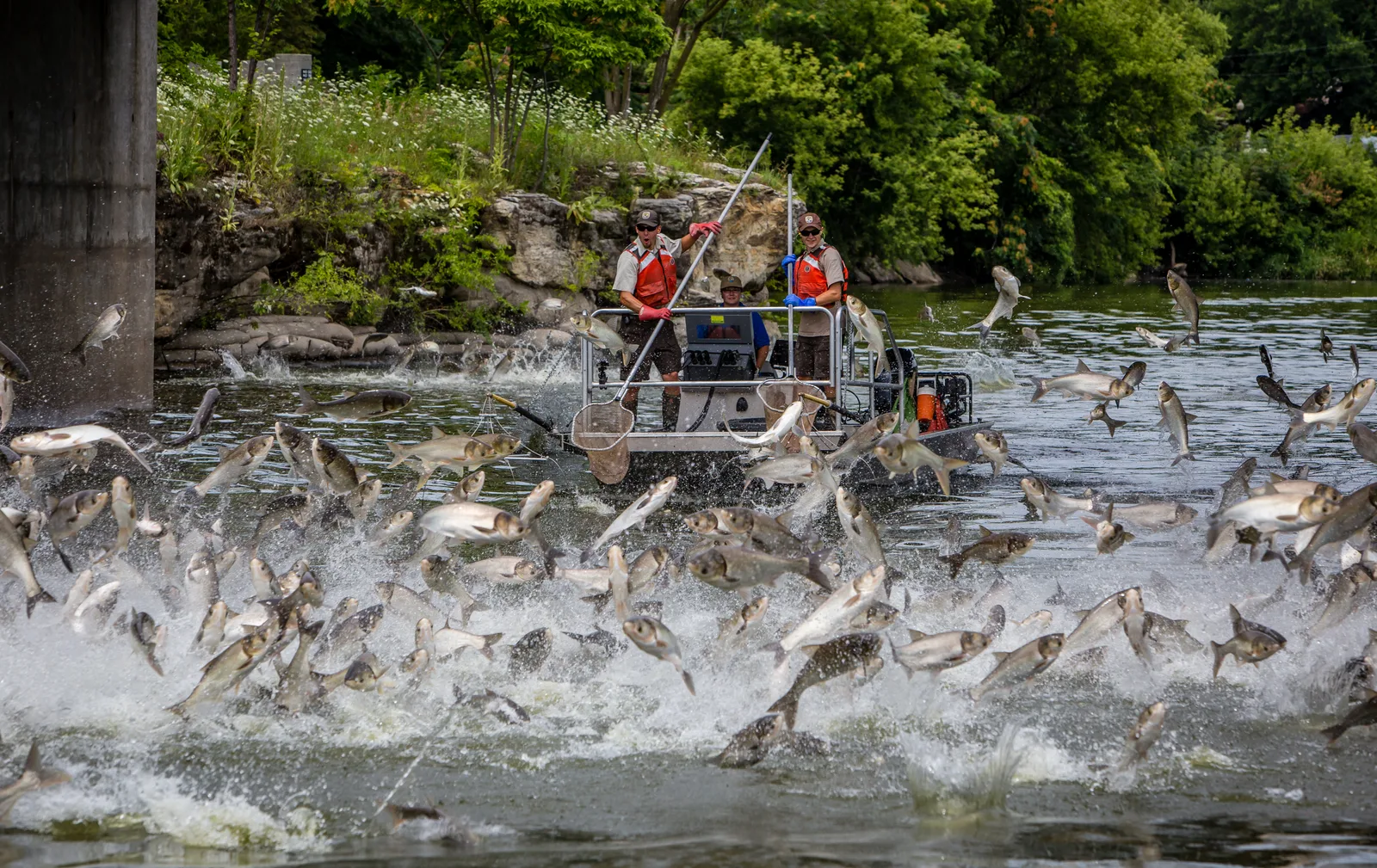
A silver carp is an invasive plankton-eater that can jump 9 feet or more out of the water when a boat motor startles it. You’ll find them across the Mississippi, Missouri and Ohio river systems. They can do real damage to a person in a moving boat. Bait rarely catches one, and the law often bars keeping one alive or moving it.
In Missouri’s stream bowfishing rules, silver carp “that jump from the water into a boat or onto land may also be taken and possessed in any number.”
How do you identify a silver carp?
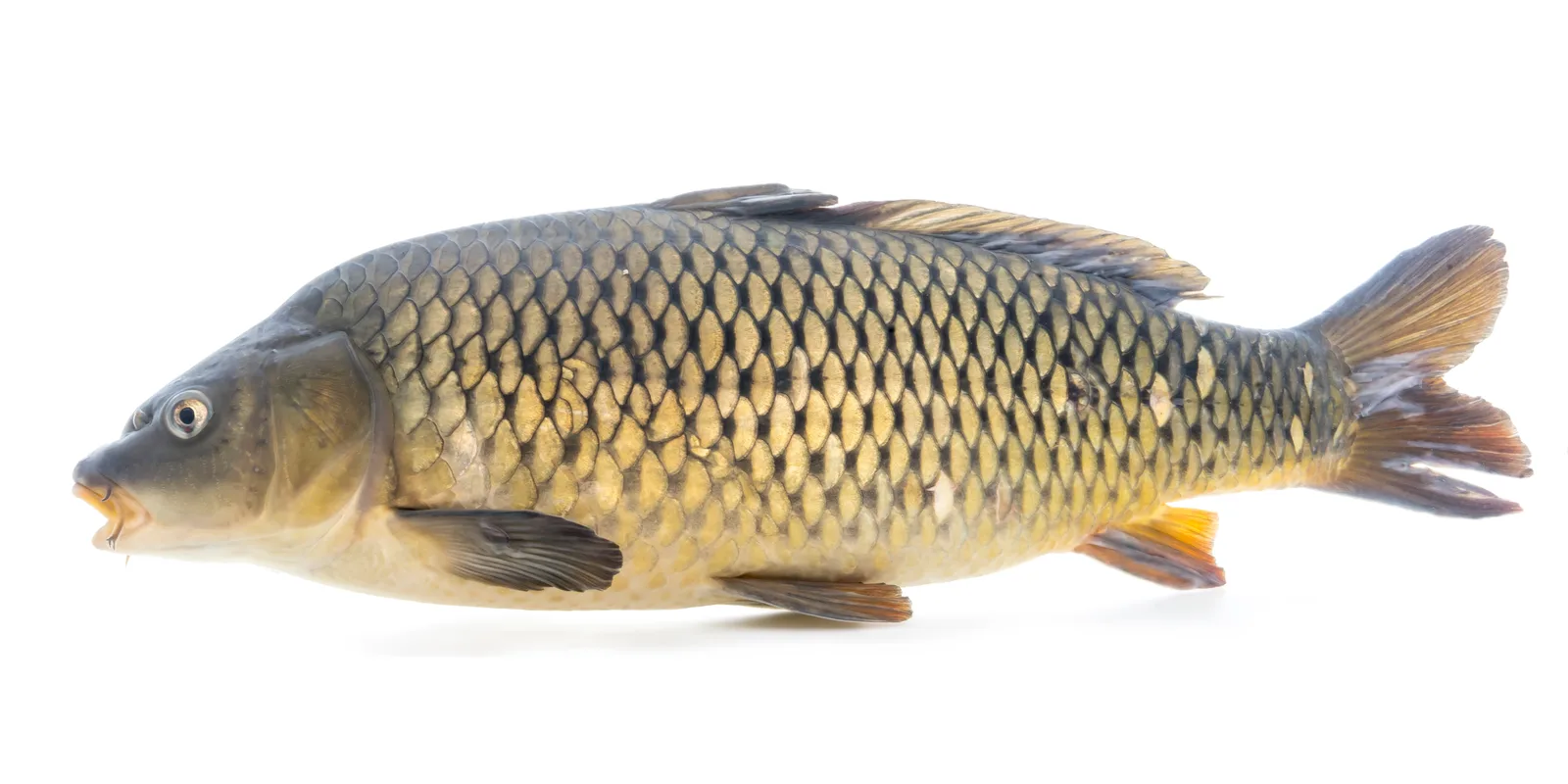
Look at the eye first. It sits far forward and low, below the mouth, and the mouth has no barbels, the whiskers a common carp wears at its corners. If the fish is silver all over with no dark blotches, you’re almost done.
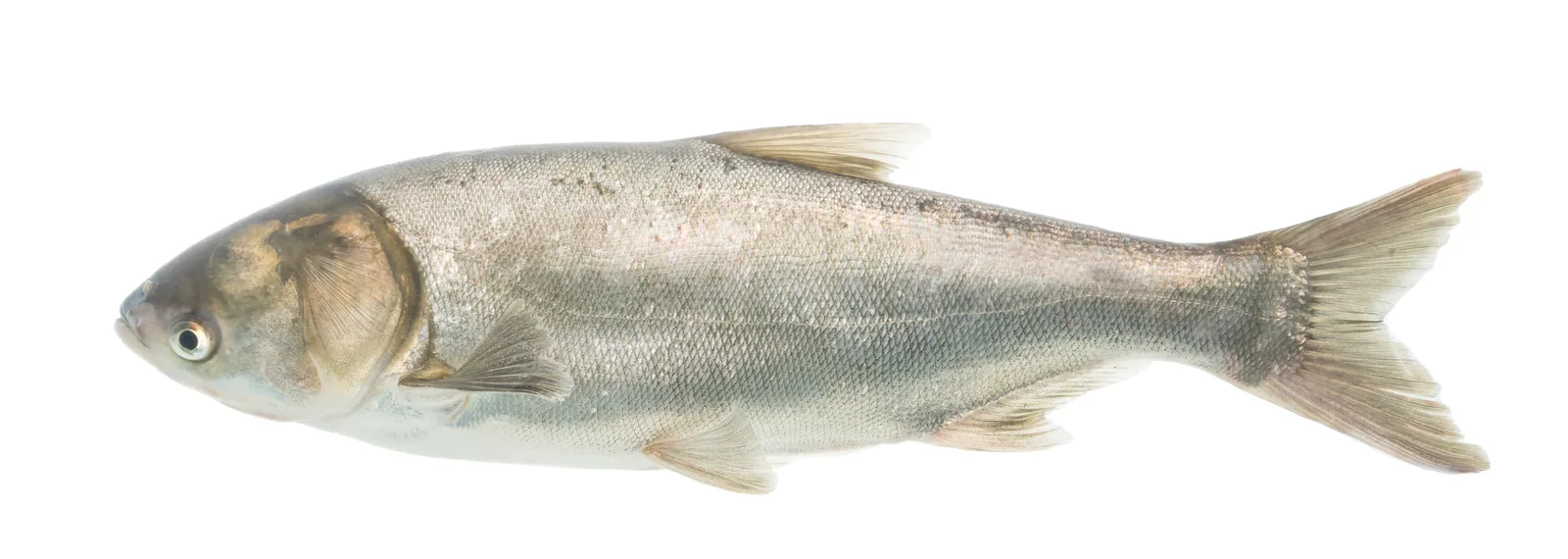
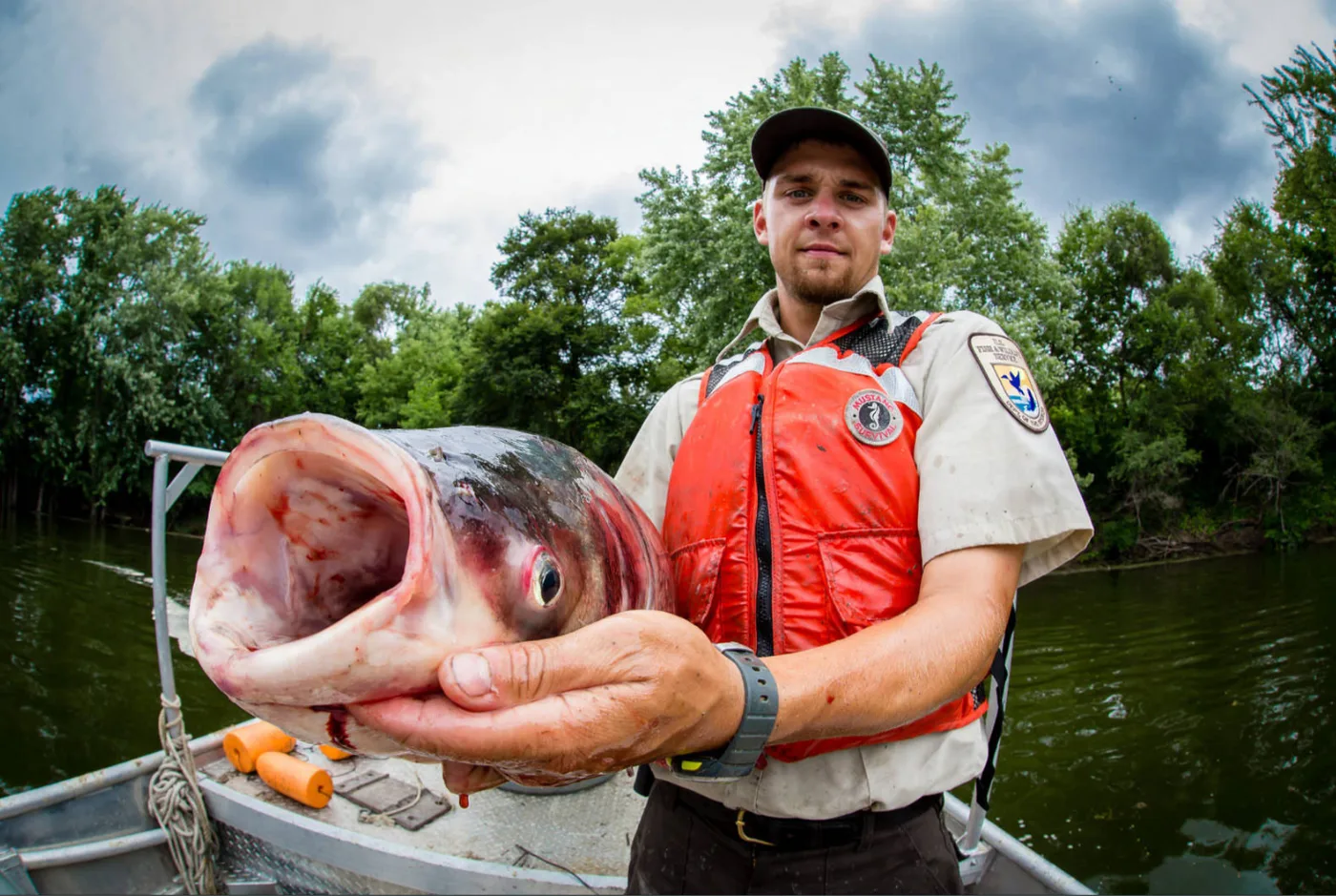
An adult silver carp at a federal hatchery: small scales, a darker head and the low eye. Photo: Sam Stukel, U.S. Fish and Wildlife Service (public domain).
Then run your thumb along the belly. A silver carp has a keel, a sharp ridge, from the vent forward nearly to the throat. Minnesota’s flyer calls it a “long keel from throat to tail.” A bighead carp has the same low eye, but its keel stops at about the pelvic fins, and it wears dark blotches on a gray body. Our bighead carp page has the two fish side by side, mark by mark.
Three other marks settle it if you’ve got the fish in your hands:
- Very small silver scales, and none on the head.
- A smaller head than a bighead’s, with the eyes a little higher.
- Gill rakers, the comb inside the gill, fused into a sponge. Missouri says it filters tiny food particles better than a bighead does.
Don’t get thrown by the name. Missouri’s field guide says “silver carp” is sometimes used by mistake for the river carpsucker, a native fish you can tell by its sucker mouth. A grass carp has its eye level with the mouth and big scales, so it’s easy to rule out. For every other fish called carp, start at the carp hub.
Young ones are the real trap. Missouri’s agency found them below dams at two to five inches long, “a size similar to the gizzard shad that catfish anglers often catch with throw nets to use as bait.” So look hard at what’s in your cast net before it goes in the bucket. Missouri warned that “moving bait around without being certain of the species” is a hazard for all waters, ponds included.
How high do silver carp jump, and what sets them off?
Nine feet or more, says the federal carp committee. The trigger is a boat engine. “Adults leap from the water at any disturbance,” Missouri’s field guide adds. They school, so when one goes, expect more.
Going faster doesn’t stop it, at least between 10 and 25 mph. On the Illinois River near Havana, boats at those speeds set off five or more fish on about 58 of every 100 passes. Neither the speed nor the motor changed that. The odd part is the timing. More than 9 of every 10 fish jumped after the boat had already gone past. About 8 of 10 jumped away from it.
So fish can still be jumping after a boat goes by, and the next boat through takes the hits. Don’t follow another boat at speed on carp water.
Free PDF · Freshwater fish identification chart Which fish is that? Tell the look-alikes apart.
Print the free 4-page chart: 28 freshwater fish in 8 families, each with its picture and the two to four marks that tell it from the fish beside it.
No card, nothing to buy, and the PDF is yours to keep. It's in your inbox a minute later. Then a few short emails and one a week on what's biting. Unsubscribe anytime. Privacy.
Can a jumping silver carp hurt you?
Yes, and badly. One Missouri fisheries biologist took a mild concussion from a leaping silver carp. On another trip a jumping carp dislocated his shoulder, and a third fish tore up some onboard electronics. The Illinois Times reported that “a single silver carp can knock a boat driver unconscious.” The Illinois Natural History Survey station in Havana put netting around the steering wheel and dashboard of its electrofishing boats.
At the Redneck Fishing Tournament in Bath, Illinois, most contestants wear helmets. A volunteer there runs a helmet lending program because “Every year someone comes back with a broken nose or worse.”
Illinois-Indiana Sea Grant wrote the best plan we’ve found for this. Here it is, by situation.
| When | What the guide says | Why |
|---|---|---|
| Before you start | Clip the “kill” switch to your clothing. | “if you get knocked out of or thrown from the boat” |
| At the helm | “Protect the throttle mechanism.” | “If the throttle is hit by a jumping carp, your boat may accelerate rapidly.” |
| With passengers | “Have passengers sit in the middle of the boat, hold small children” | A net or Plexiglas shield can “deflect jumping carp” |
| Behind other boats | “Avoid following other boats at high speeds.” | Fish jump “in response to the passing of other boats” |
| Leaving the ramp or idling | “Use caution when traveling at low speeds” | “your chances of being hit by a jumping carp are high” |
| Your gear | Store radios, depth finders and fishing poles “behind the console, in a storage locker, or below the gunwales” | So fish “jumping across or landing in the boat won’t damage them” |
| Skiing and tubing | “Avoid water skiing, tubing, and jet skiing in infested waters.” | There’s no hull between you and the fish |
| Surrounded by jumpers | “bring the boat to a complete stop” | “Once the carp stop jumping, bang on the bottom of the boat to scare the fish away, and then boat slowly out of the area.” |
Notice the difference between idling and stopping. Idling keeps your motor noise in the middle of the fish. A dead stop ends it.
What should you do if you catch a silver carp?
Don’t move it alive, and don’t put it in your bait bucket. Federal law lists live silver carp, along with their eggs and hybrids, as injurious. Then your state’s rule takes over, and it changes at the state line.
| Where | What the rule says | What it means for you |
|---|---|---|
| Federal | “The importation, transportation, or acquisition of any of the species listed in this paragraph is prohibited,” except under a federal permit (50 CFR 16.13) | Your state’s rule applies on top of this |
| Illinois | “No live possession of non-native fish species listed in subsection (b) is permitted, with the exception of common carp and goldfish.” Silver carp is on that list (effective December 30, 2024) | Kill any you keep |
| Missouri | “It is illegal to use this fish as live bait.” “Do not collect, transfer, or dump this fish!” | Dead ones are different: “It is legal to use dead Asian carp as bait,” Missouri’s agency said in 2010 |
Michigan and Minnesota treat silver carp like bighead: report it, take a photo, and in Michigan, don’t release it. The phone numbers are in our bighead carp rules table, so use those.
If you’re netting bait below a dam and you’re not sure what you’ve got, Missouri’s advice is simple. Put the fish straight on ice. It called that “the only legal and safe way to use the fish netted from area streams for bait.”
Can you catch a silver carp on a rod and reel?
Barely. Silver carp strain plankton, so they don’t chase a bait. A 2010 Louisiana report said of hook and line that it’s “virtually impossible to catch silverfin that way.” Silverfin is the name that state’s officials gave them. Nebraskaland Magazine looked at the same question and found no “effective way to catch Bighead and Silver Carp other than snagging them.” Snagging means jerking a hook through the water, and it’s legal only on some waters.
So don’t load up the rigs from how to catch carp for this one. Those are built for a fish that roots along the bottom.
Your first pick is a bow, where bowfishing is legal. Illinois lists silver carp among the fish you can take that way, with a sport fishing license. Fish taken by these methods “shall not be sold or bartered,” it adds. Missouri says “A fishing license is needed to bowfish” and that “Regulations permit unlimited harvest with few restrictions on these invasive species.” Once you shoot one, it’s yours: “Shot fish are considered harvested and must not be returned to the water.”
Your second pick is a net, where it’s allowed. Missouri’s stream rules say silver carp “can be taken by hand net.” And in Bath, Illinois, the Redneck Fishing Tournament keeps its rules plain. “You can try and catch them with a net, you can knock them into the boat with a bat,” the organizer says. What you can’t bring is a rod. “Just don’t use a fishing pole or long fishing nets.” Organizers said boats took more than 3,000 fish, “weighing more than 20,000 pounds,” in one weekend in 2022.
How big do silver carp get?
Most are 12 to 24 inches. Past that, the numbers depend on who you ask, so here they are next to each other.
| Size | Who says | What it is |
|---|---|---|
| 12–24 in (30–61 cm) | Missouri | Typical length |
| 33 in (84 cm) | Minnesota | Average there |
| 20 lb (9 kg) | U.S. Fish and Wildlife Service | “commonly reach” |
| 31 lb 4.8 oz (14.2 kg) | Oklahoma | State record, Stephen Banaszak, Red River, August 31, 2023, bow and arrow |
| 45 lb (20 kg) or more | Missouri | Weight given in the field guide |
| 70 lb 8 oz (32 kg) | IGFA | All-tackle record, Chongdae Lim, Andong, Korea, June 4, 2006 |
| 80 to 90 lb (36–41 kg) | U.S. Fish and Wildlife Service | Largest individuals |
| 110 lb (50 kg), nearly 4 ft | Federal carp committee | Maximum |
They grow fast. Missouri says a silver carp “can reach 4 or 5 pounds in one year.” Compare them with the rest on our list of the largest freshwater fish.
Where do silver carp live?
The U.S. Fish and Wildlife Service places them in the Mississippi, Missouri, Ohio, Tennessee and Cumberland rivers, and it names 20 states with reports. The federal carp committee says they’re established through much of the Mississippi basin and still spreading in the Ohio. Look for them in big rivers, the lower ends of tributaries, floodplain pools and the tailwaters below dams.
They came here on purpose, in the early 1970s, to control algae in sewage lagoons and for possible use in fish ponds. In 2007 they were listed as injurious under federal law. Missouri says they compete with native plankton-eaters such as paddlefish and gizzard shad.
The upper Illinois River is the stretch closest to Lake Michigan, and silver carp are most of what comes out of it. The federal carp committee says “the vast majority of invasive carp removed from the upper Illinois River in 2025 were silver carp.” For how far they’ve come, the young silver carp found in August 2026 and what’s holding them back, see will bighead carp reach the Great Lakes.

A narrow river at sunrise. Photo: Givaga / Depositphotos.
Are silver carp good to eat?
Yes, and the taste may surprise you. “Their meat is absolutely delicious,” Duane Chapman wrote in the Missouri Conservationist. He called it firm, white and flaky, a long way from common carp. Illinois markets silver carp under the name copi.
The catch is the bones. Chapman’s words: “The only drawback to eating bighead and silver carp is that they have lots of intramuscular bones.” They’re Y-shaped and run in two rows along the fillet. His fix is to cut the fillet into strips, then “roll these fillets in cornmeal or your favorite breading and fry them as you would any fish.”
Check for a consumption advisory on your water before you keep one. Fillets from the lower Illinois River, in a 2014 report, averaged below the federal action level for mercury, and silver carp carried less than bighead. Some fish ran higher.
What do silver carp eat, and how do they spawn?
Tiny plankton, almost nonstop. They have no true stomach, so they keep feeding, and the fused gill rakers strain out what they want. Missouri adds that adults also take bottom detritus and algae. Is a silver carp a surface feeder? It’s an open-water fish. Missouri says they school in open water, and in their native rivers they’ve been recorded swimming just beneath the surface. They tolerate water from 43 to 82 °F (6 to 28 °C), so water temperature rarely holds them back.
They spawn in the open channels of big rivers after rain raises the water. A single large female can produce 500,000 eggs. The eggs drift in the current and hatch in about 2 days, which is why Missouri says this fish is “not known to successfully spawn in ponds or lakes.” A live one dumped in a lake may never spawn there, but it still eats the plankton native fish need. They mature at 2 to 4 years, says the federal carp committee, or 4 years or more, says Missouri. They can live up to 20.

Free PDF · 4 pages
Bluegill or redear? Walleye or sauger? Tell them apart at the net
Color is a poor guide, and the limits differ by fish. Know which one is in your net before you keep it.
The Freshwater Fish Identification Chart. Print the four pages for the tackle box or the cabin wall. Each family starts with the one thing to check, and the look-alikes sit side by side.
- 28 freshwater fish in 8 families, each with a picture and the marks that tell it apart
- The one check to do first, family by family: the jaw, the ear flap, the spots, the tail
- A tick box beside every fish for the first time you catch one
Every mark from the species pages on fishing.info and the 168 sources behind them, state wildlife agencies among them. Pictures: U.S. Fish and Wildlife Service paintings by Duane Raver and Timothy Knepp, and USFWS photos.
No card, nothing to buy. The PDF is in your inbox a minute later, one version for your phone and one to print, yours to keep. Then a few short emails and one a week on what's biting, with an unsubscribe link in every one. Privacy.
Related
Section guide
Carp: Common, Grass and Asian Carp, How to Tell Them Apart and Catch ThemCarp fish in US waters: common, mirror, grass and the invasive Asian carp told apart, where and when they feed, baits and rigs, records, laws and eating.
 Bighead Carp: How to Identify One and What to Do With It
Bighead carp: eyes set below the mouth, dark blotches, no barbels. How to ID one, what to do if you catch it, records to 125 lb, and eating it.
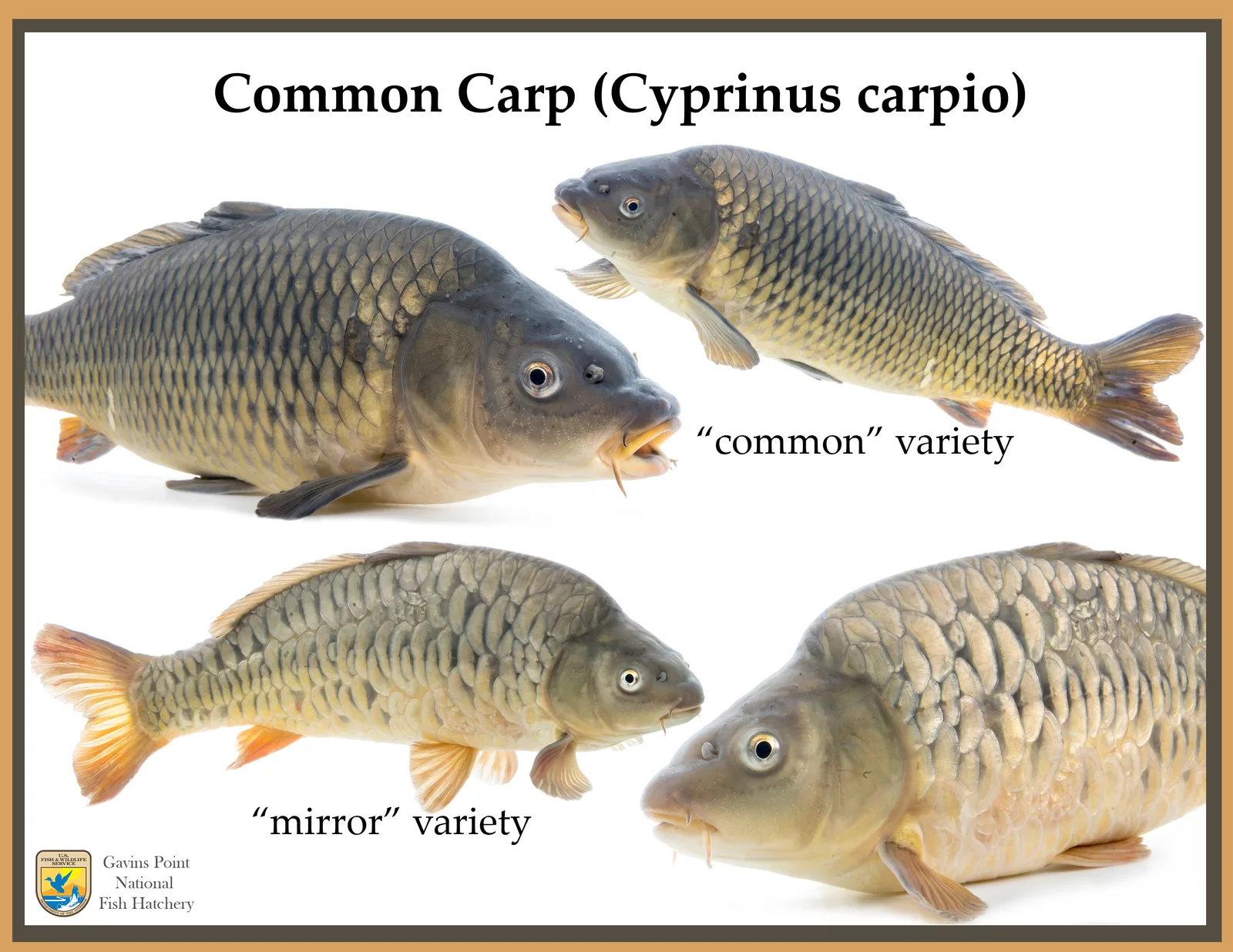 Common Carp: Identification, Mirror and Leather Carp, Size and Age
Common carp: two barbels each side and a saw-toothed back fin, 12–25 in and 1–8 lb. Mirror and leather forms, spawning, and how old a 20 in carp is.
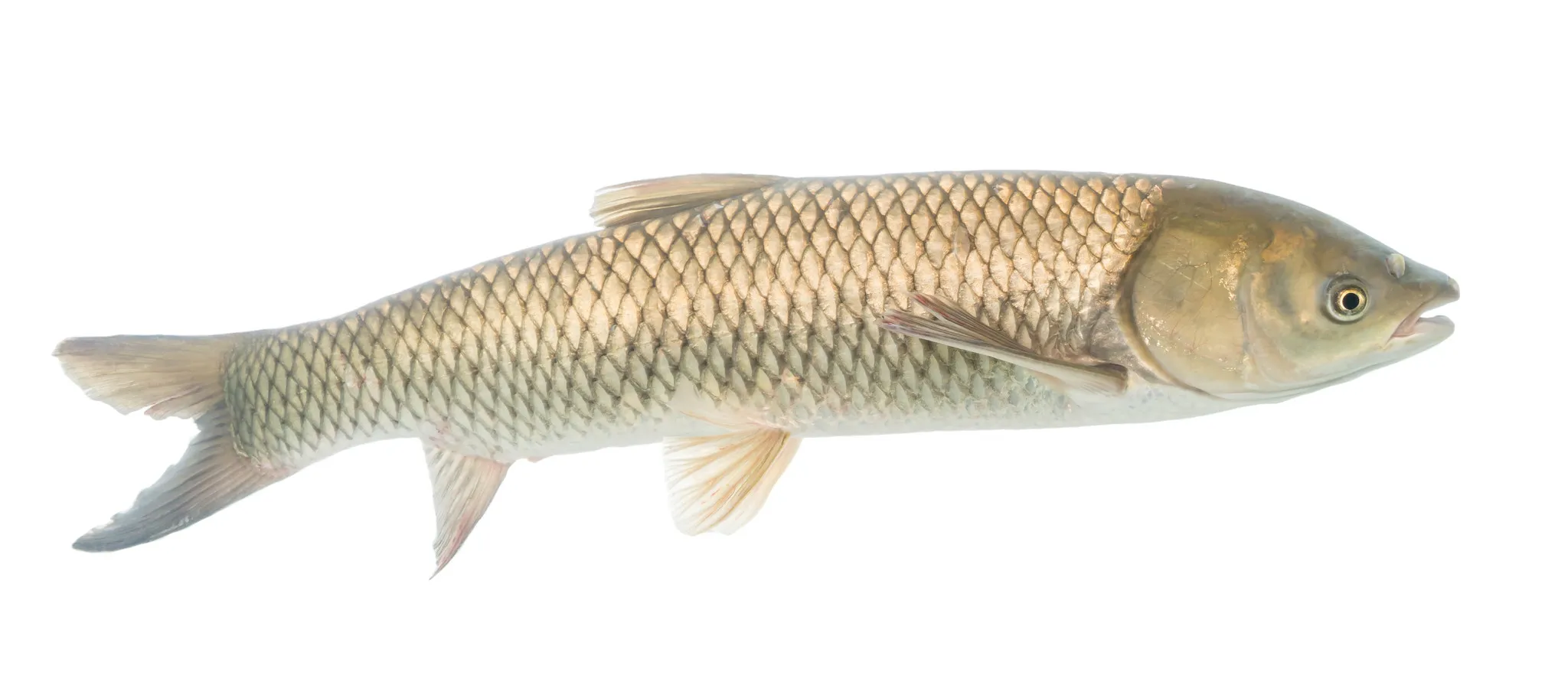 Grass Carp: How to Identify, Catch and Eat the White Amur
Grass carp (white amur): no barbels, a short back fin, up to 48 in and 50 lb or more. Triploid rules by state, the baits that catch them, and eating one.
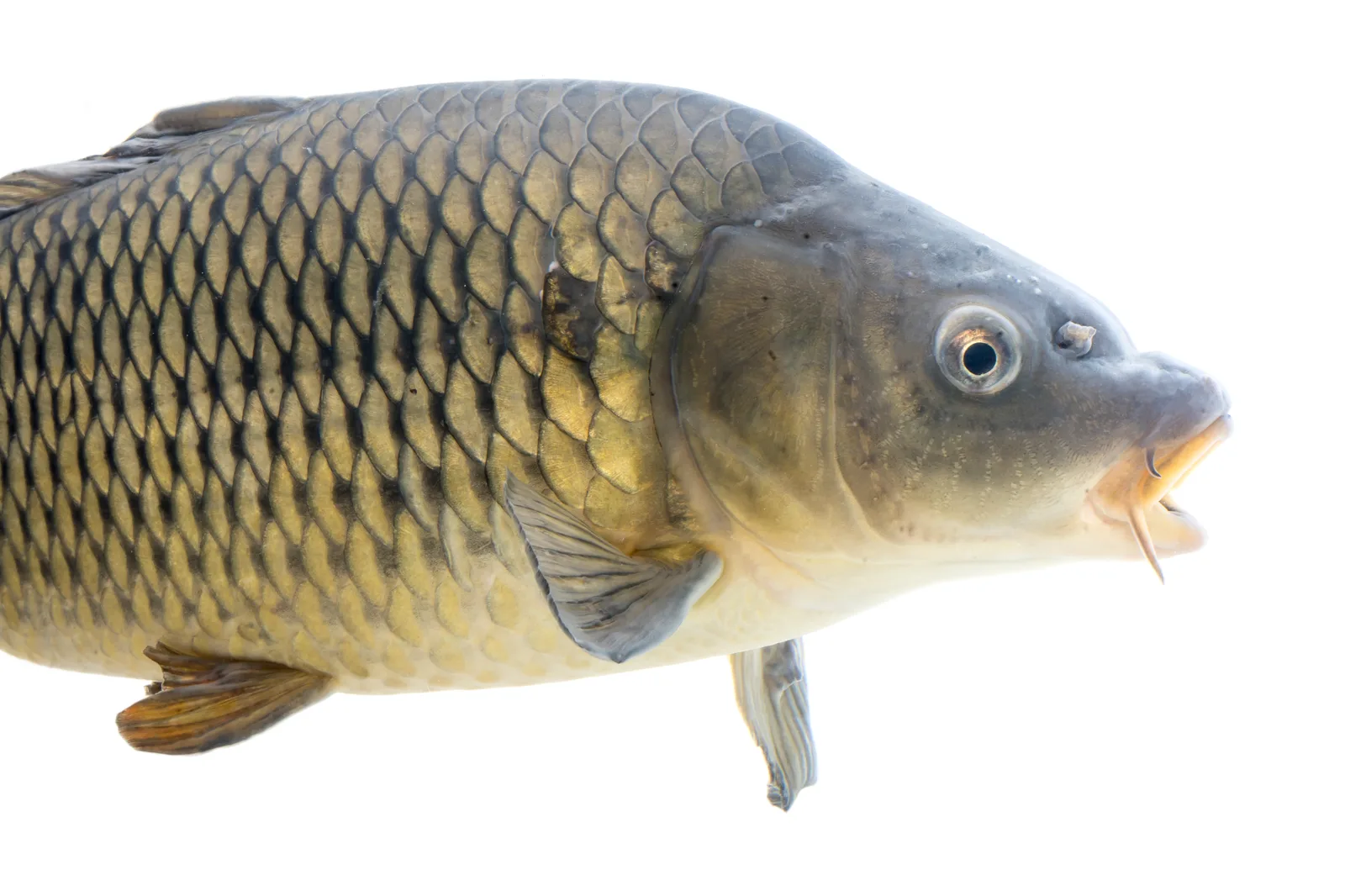 Carp Bait: What Works, Homemade Recipes and How to Rig It
Carp bait: start with canned sweet corn or bread. Eight baits with their recipes and ratios (the 1-2-3 doughball, pack bait, field corn) and the chum laws.
 Carp Fishing: How to Catch Carp With a Simple Rig or a Hair Rig
Carp fishing for beginners: the setup, where carp feed by season, bread free-lined close in, and the hair rig with a baitrunner for big carp.
Sources (24)
- Silver Carp | Missouri Department of Conservation field guide
- Silver Carp | Invasive Carp Regional Coordinating Committee
- Silver carp (Hypophthalmichthys molitrix) | U.S. Fish and Wildlife Service
- Silver Carp (Hypophthalmichthys molitrix) - Species Profile (USGS Nonindigenous Aquatic Species)
- Fend Off Flying Fish, by Patrice Charlebois and Kristin TePas (Illinois-Indiana Sea Grant and Illinois Natural History Survey, IISG-09-24)
Show all 24 sourcesShow fewer sources
- Characterization and management implications of silver carp (Hypophthalmichthys molitrix) jumping behavior in response to motorized watercraft (Management of Biological Invasions, 2017)
- Anglers asked to help halt hazardous fish (Missouri Department of Conservation, October 12, 2010)
- Attack of the flying fish, by Rachel Wells (Illinois Times, June 24, 2010)
- 50 CFR 16.13, Importation of live or dead fish, mollusks, and crustaceans, or their eggs
- Illinois Administrative Code, Title 17, Section 810.15, Statewide and Site Specific Bowfishing Regulations
- Nongame Fish: Bowfishing: Streams (Missouri Department of Conservation)
- Bowfishing | Missouri Department of Conservation
- Have you seen an invasive carp? (Minnesota DNR flyer, 2024)
- Hook & Line Asian Carp?????, by Daryl Bauer (Nebraskaland Magazine, 2016)
- Silverfin tough to catch and clean, by Jeremy Alford (The Independent, February 1, 2010)
- Redneck Fishing Tournament pulls invasive copi from Illinois River, by Collin Schopp (WCBU, August 9, 2022)
- IGFA world records, Carp, silver
- State Records | Oklahoma Department of Wildlife Conservation
- Carp Lemonade, by Duane Chapman (Missouri Conservationist, July 2004)
- A copi fillet? Illinois hopes new name for invasive carp will convince diners (AP via PBS NewsHour, June 22, 2022)
- Heavy metals in Asian carp not a health concern to most (The Fish Site, January 31, 2014)
- 2025 annual update: targeted mass removal of invasive carp in the Illinois River (Invasive Carp Regional Coordinating Committee)
- Hypophthalmichthys molitrix, Silver carp (FishBase summary)
- River Carpsucker | Missouri Department of Conservation field guide