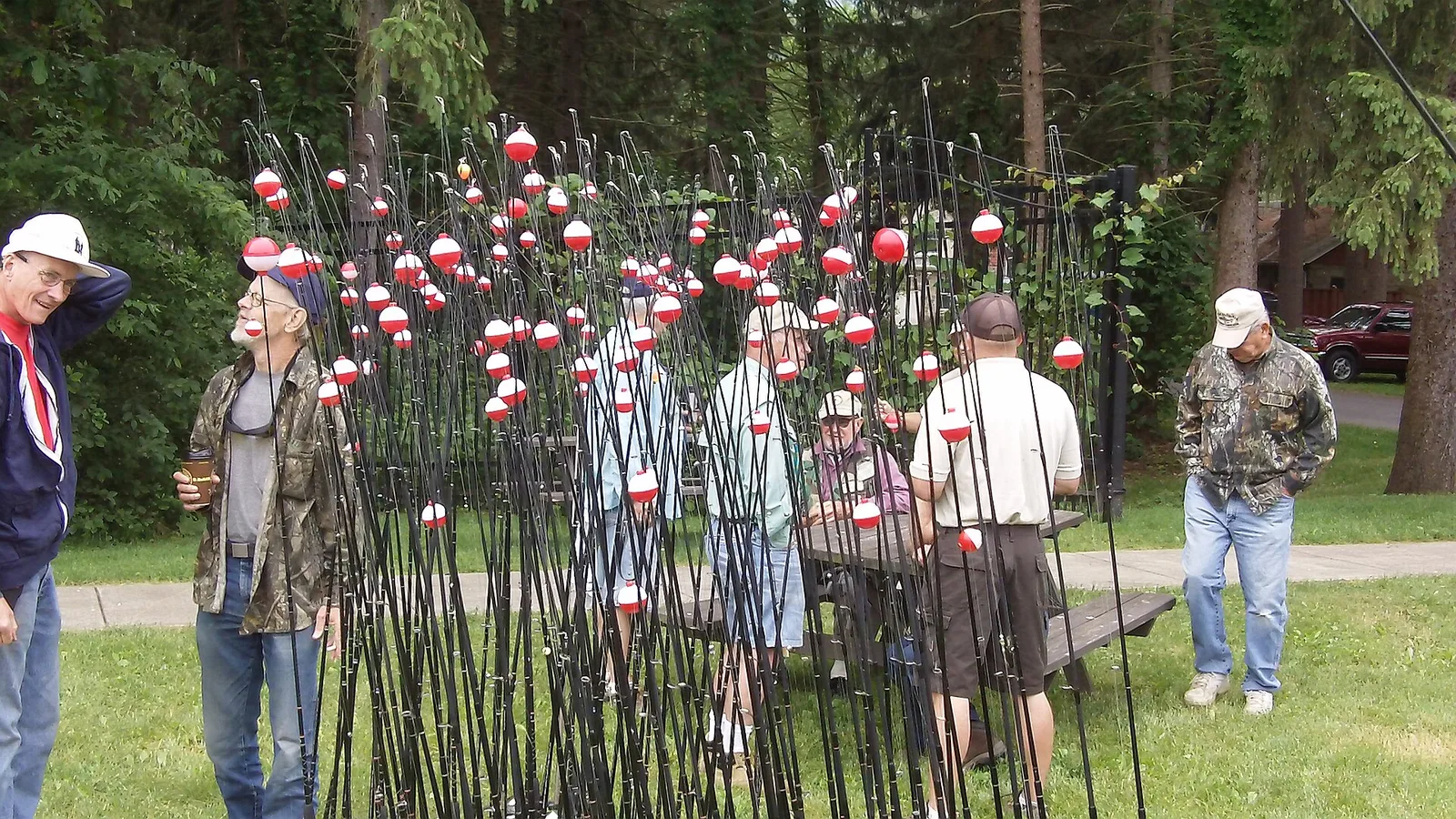
A fishing pole and a fishing rod are the same thing: a long, flexible stick that puts a line, a hook and a bait where a fish can find them. Okuma’s Dave Brown says you will hear both words used interchangeably, and that they mean the same. The one difference anglers keep is the reel. A pole with line tied to its tip and no reel is still called a pole, and so is a long telescopic crappie pole; anything with a reel and guides tends to be a rod.
Every rod, reel and pole sold in the United States carries a 10% federal excise tax. The U.S. Fish and Wildlife Service hands that money to the states for fisheries work and boat ramps.
Which kind of fishing pole is which?
There are six kinds a first-time buyer meets. Two have no reel at all, three are rods with a reel already fitted, and the sixth is the fly outfit, where the heavy line does the casting.
| Kind | What it is | Best for | From (Oct 2026) | Example |
|---|---|---|---|---|
| Cane pole | Bamboo pole, line tied to the tip, no reel | Bluegill and crappie close to the bank | sold through dealers | B’n’M rigged bamboo pole |
| Telescopic pole | Sections slide out to 10–20 ft (3–6 m), no reel | Dipping a jig or a cricket into brush for crappie and bream | $15.99 | B’n’M Black Widow Ready Rig, 10 ft (line, hook and float included) |
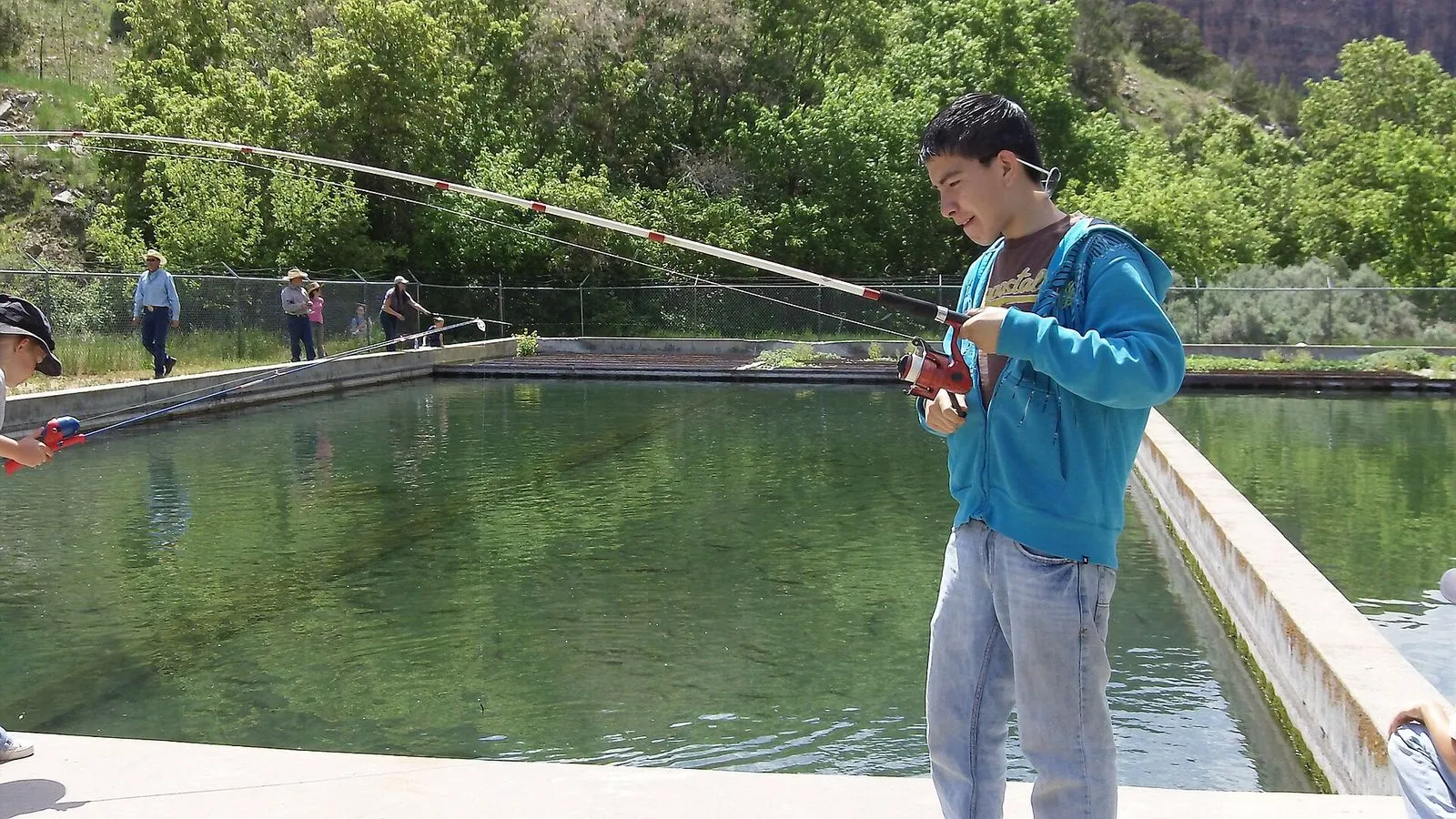
| Spincast combo | Closed reel on top of the rod, a thumb button casts | First-timers and children | $24.99 | Shakespeare Navigator |
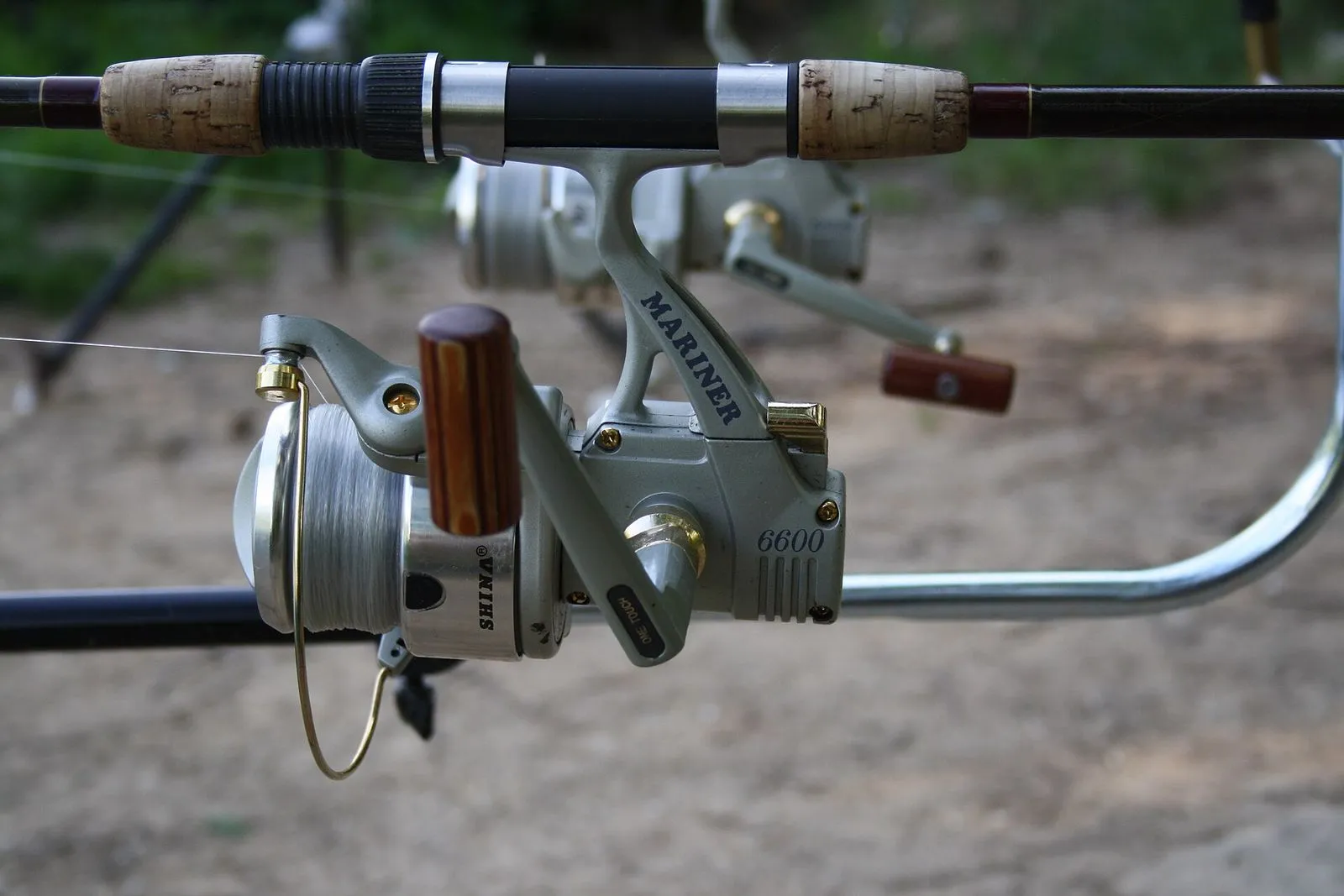
| Spinning combo | Open reel hanging under the rod | Almost all freshwater fishing, light saltwater | $24.99 | Ugly Stik Dock Runner |
| Baitcast combo | Revolving spool on top, the thumb controls the cast | Bass lures over about 1/4 oz (7 g), heavy line | $64.99 | Abu Garcia Max X EZ Cast |
| Fly outfit | Long rod, reel and a heavy line that carries a near-weightless fly | Trout and panfish on flies | $79.99 | Eagle Claw Ready To Fish kit |
The prices are the makers’ own list prices in October 2026 for full-size outfits; B’n’M sells its bamboo poles only through dealers, so that row has no list price. Each is the bottom of its kind, not a recommendation, and Shakespeare’s licensed children’s kits start lower, at $17.99 to $19.99. A spincast reel is the push-button kind; the spinning rod page explains why its reel hangs underneath, and the baitcaster page why the thumb matters on the third.
Beyond these six come the rods built for one job. In Wikipedia’s summary, surf rods run 10 to 14 ft (3–4.3 m) to cast past the breaking waves, ice rods are “typically very short spinning rods” of 24 to 36 in (61–91 cm), and trolling rods are built stronger. A first pole is almost always one of the six in the table.
Which fishing pole is good for beginners?
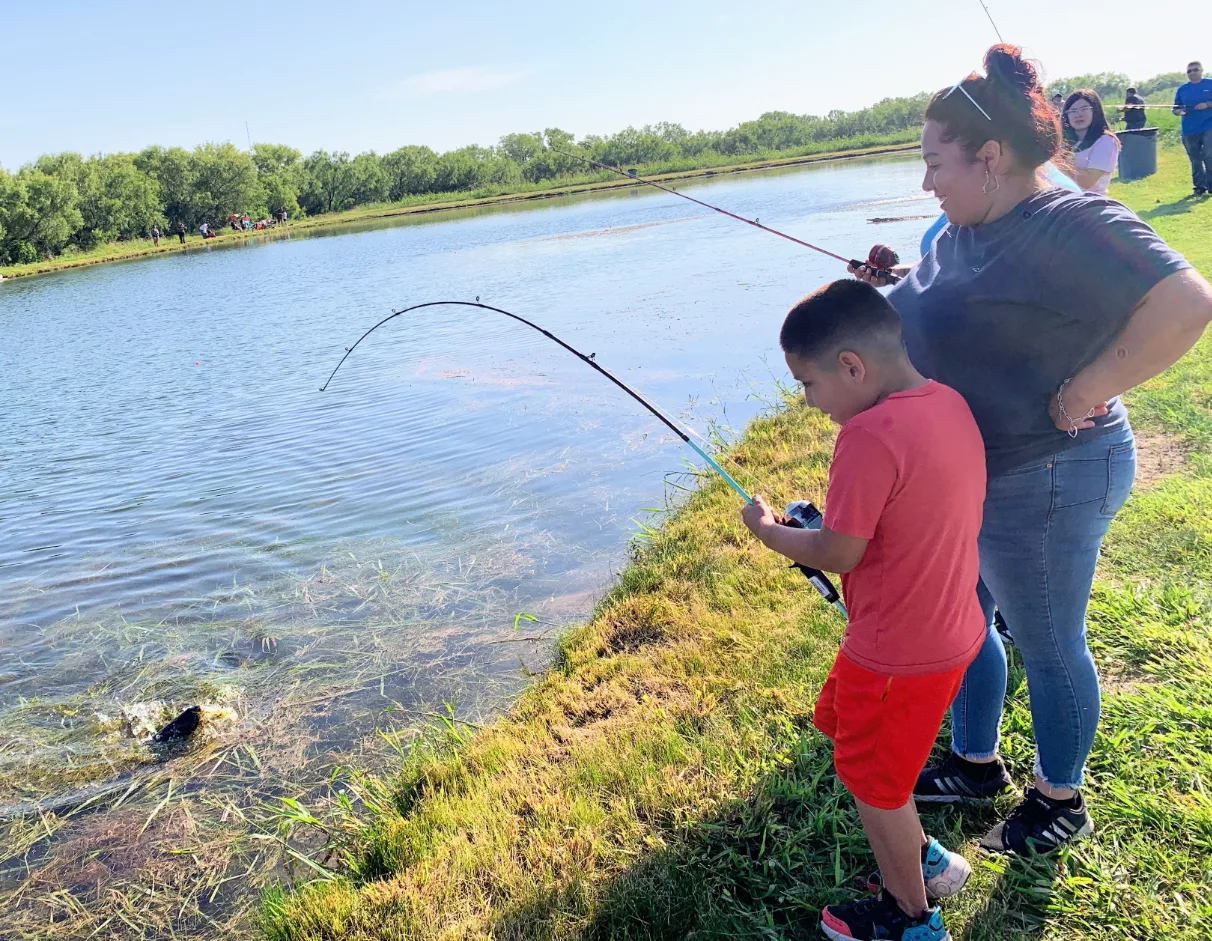
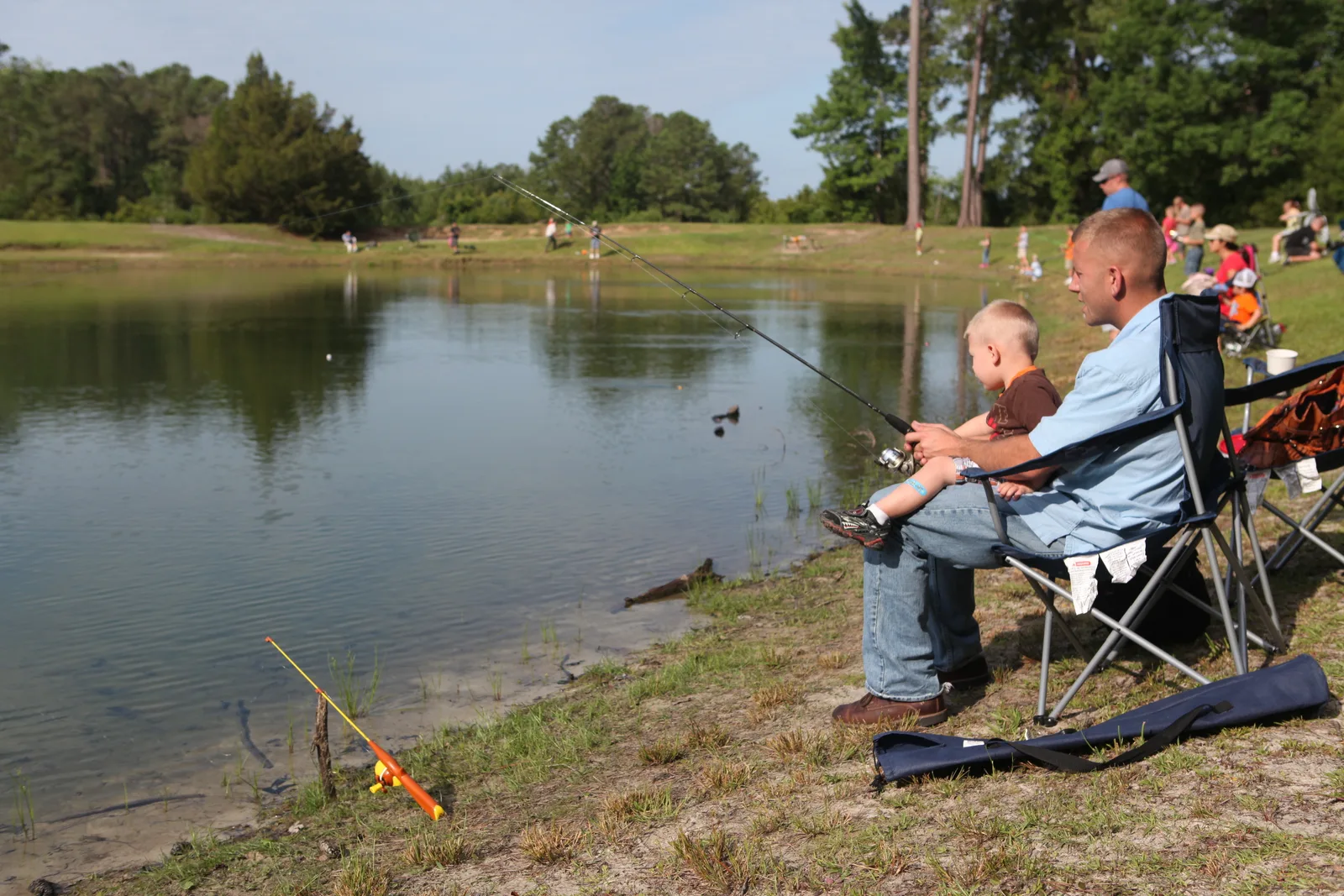
It depends on who is starting. For a child or a first day at a pond, two state agencies, Texas (2006) and Missouri (2014), say a spincast combo. For an adult’s first season, the magazine guides and our fishing rod for beginners page say a medium spinning combo, 6 ft 6 in to 7 ft (2–2.1 m).
Texas Parks and Wildlife calls spincast tackle “the most popular” and “ideal for beginners”, and says baitcast tackle “is better suited for an experienced angler”. The Missouri Department of Conservation says the closed-face reel with its thumb button “is generally considered easier to use and best for beginners”. On length, Missouri’s advice is that “an inexpensive pole at a length between 5 and 6½ feet is good for most people”, and that children often need slightly shorter rods.
Three numbers describe any rod. Length trades accuracy for distance. Power is how much force it takes to bend the rod, which sets the line and lure weights it handles. Action is where it bends: near the tip on a fast rod, into the middle on a moderate one. The rods hub explains all three. For an adult’s first spinning rod the guides on our beginner rod page agree: 6 ft 6 in to 7 ft, medium power, fast or moderate-fast action. A child’s spincast rod is shorter, Missouri’s 5 to 6½ ft.
The spinning combo casts lighter lures farther, and its reel hangs where the hand already holds the rod. The beginner rod page compares eight combos; the kids fishing pole guide picks one for each age from 3 to 14.
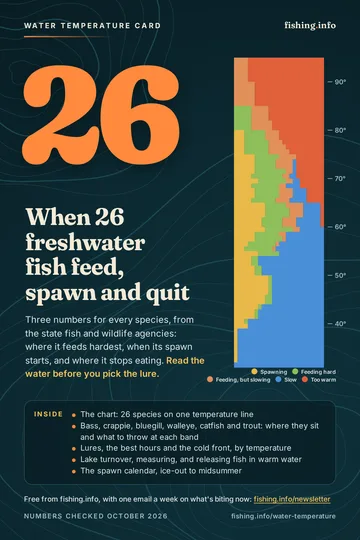
Free card: what 26 species do at your water temperature
Plus one email a week on what's biting now. No sales pitches. Privacy.
How much does a decent fishing pole cost?
Less than most people expect. On the makers’ own price lists a complete full-size spincast or spinning combo starts at $24.99. The best one to buy for a first season? Outdoor Life’s 2026 pick for beginners, the Ugly Stik GX2 spinning combo, lists at $79.95 in every size, with a ten-year warranty on the rod. Best fishing rods compares it with the alternatives.
The baitcaster is where the money goes up. For a first baitcast combo Wired2Fish’s Shaye Baker puts the budget at about $200, “$100 on the reel and $100 on a quality rod”. He adds that spending $500 “would be as ill-advised as getting one for $50”. A first fly outfit runs from $79.99 for Eagle Claw’s ready-to-fish kit to $99.99–109.99 for its Featherlight Pro combos.
On a cheap combo the reel is usually the weaker half, so the extra dollars are best spent there. The rod and reel combo guide goes through the outfits beyond the first season, and best fishing rods through the rods worth buying on their own.
What changes for a saltwater fishing pole?
Length and the reel. From a pier or a jetty, a 7 ft (2.1 m) medium spinning combo still works for small fish close in. From a beach the rod gets long. The California Department of Fish and Game and California Sea Grant beach-fishing guide puts light bait and small grubs on a 7–9 ft (2.1–2.7 m) rod. Heavy bait cast past the breakers takes a 10–12 ft (3–3.7 m) rod “rated for 2- to 8-oz casting”.
Salt corrodes an unsealed freshwater reel, so a saltwater pole carries a sealed reel and gets rinsed after every trip. The saltwater spinning reels page compares the reels built for it.
What can a cane pole do that a rod cannot?
It is the simplest fishing tackle there is. Missouri’s description: “literally a long bamboo pole with a length of fishing line attached, and a hook”. You hold it in either hand, “no casting or reeling is required”, and you flip the line into the water. Texas adds that a cane pole can be bamboo, fiberglass, graphite or “even a straight tree branch”.
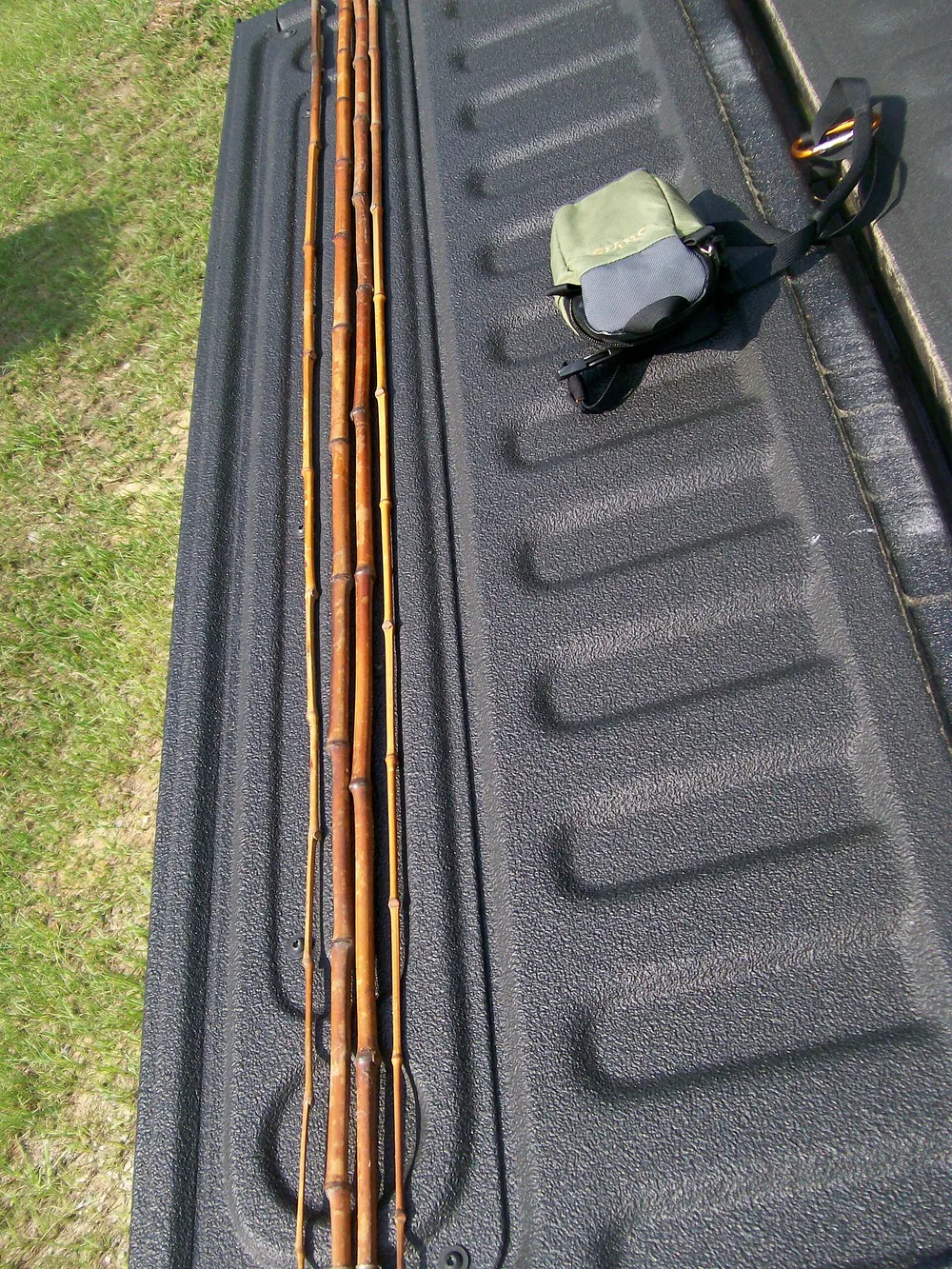
Bamboo cane poles, the simplest fishing pole. Photo: J. Hightower, Wikimedia Commons (CC BY-SA 3.0)
The limit is reach. A cane pole fishes only as far as the pole plus its line, so in Texas’s words you are “restricted to depth and distance you can reach”. That suits the fish that live near the bank: bluegill over a spawning bed, crappie in a brush pile under a dock. The bite comes straight up the pole to the hand, with no reel in between.
The long telescopic pole is the cane pole grown up. B’n’M, the pole maker, began in 1947 making brooms and mops. By early 1949 it was making bamboo fishing poles, and by its own account it became the largest supplier of bamboo poles in the country by the mid-1950s. The founder’s son Buck developed fiberglass telescopic poles in the late 1960s. In 1979 came the Buck’s Graphite Jig Pole, though, the company says, “he was told that crappie anglers would not pay $30 for a pole”.
Those long graphite “jig poles” are what crappie fishing still uses for dipping into cover today. They now carry guides and a reel seat, but they are still called poles.
Is a one-piece or a two-piece fishing pole better?
A one-piece rod has no joint, so it bends evenly and passes a light bite to the hand without a break. A two-piece rod fits in a car. The joint is called the ferrule, and the makers say theirs now cost nothing in feel. St. Croix claims its two-piece Triumph models give “multi-piece convenience with one-piece performance”; that is the maker’s claim, not a test.
For a first pole the car decides. If the rod rides in a trunk or on a bus, buy two pieces. If it lives in a truck bed or on a boat, one piece. Four pieces or a pole that slides into itself is a travel choice: lighter to carry, but each joint costs a little feel and casting distance.
Where did the fishing pole come from?
Bamboo became the favored rod material from the middle of the 19th century, in Wikipedia’s history of the fishing rod. Fiberglass rods arrived in the 1940s, and graphite and boron in the 1960s and 1970s. By 1977 graphite had pushed boron out because it was cheaper. Most rods sold today are graphite, fiberglass, or a composite of the two.
Do you need a license to fish with a cane pole?
In Texas, yes, from age 17. The guide tells anglers 17 or older to buy a license, and says that “regardless of the method you are using to fish”, you need one in public waters. Missouri’s 2014 rule was gentler: anyone younger than 16 “can fish with pole-and-line without a fishing permit”. Ages and exemptions change, so check your own state’s current regulations before the first trip.
The money you pay for the pole helps as well. Under the Sport Fish Restoration program there is a 10% excise tax on “fishing rods, reels, creels, and artificial lures, baits, and flies”. Those are the words of the Fish and Wildlife Service’s July 1984 release on the expansion now called Wallop-Breaux. The U.S. Fish and Wildlife Service passes it to state agencies for fisheries research, habitat work, aquatic education and boating access.
What not to do on your first trip
Texas’s beginner guide has a short safety list, and three of its rules decide whether a first day goes well:
- Leave a rod’s length between you and the next angler, so a cast never swings into a neighbor.
- Look behind you before you cast. Trees, power lines and people stand there.
- Wear a life jacket, fastened. Texas’s figure: 85% of drowning victims would be alive if they had worn one.
With the pole chosen, the fishing for beginners guide covers the first day itself, from the bait to the first fish, and the rods hub explains power and action once you want a second rod.
Free download
The water temperature card
Read your water temperature and the card tells you who is spawning, who is feeding and what to throw. 26 species, 16 pages, for your phone and the tackle box.
Plus one email a week on what's biting now. No sales pitches. Privacy.
Related
Section guide
Fishing Rods: Power, Action and Length, and Which Rod for Which LureHow a fishing rod is rated: power, action and length explained, the line and lure ranges for each power, and the rod each bass and catfish technique wants.
 Catfish Rods: Length, Power, the Soft Tip, and the Reviewers' Picks
Catfish rods explained: 7–10 ft, medium-heavy, a soft glass tip on a strong butt, sinker ratings by species, and the reviewers' picks with maker specs.
 Rod and Reel Combo: The Best Picks by Fishing, and When Not To
The best rod and reel combos by fishing, from maker specs and owner ratings: first spinning, bass baitcast, inshore, surf, catfish, kids; where separates win.
 Spinning Fishing Rod: How It Differs From a Casting Rod, Which to Buy
A spinning fishing rod hangs the reel below the blank and casts light lures on light line. Its parts, how to read the label, and which length and power to buy.
 Fishing Rod for Beginners: The One Setup, and Eight Combos That Deliver It
A fishing rod for beginners is a 6 ft 6 in to 7 ft medium spinning combo. Eight combos from the 2026 guides compared on rod, reel, price and verdict.
 Best Fishing Rods: The Reviewers' Picks by Technique and Budget
The best fishing rods by what you fish: bass casting and spinning, trout, panfish, walleye, catfish, inshore and surf, with the makers' specs and prices.
 Kids Fishing Pole: The Reviewers' Picks by Age, 3 to 14
The kids fishing pole the 2026 guides pick for each age, 3 to 14: push-button first, spinning from about 8, with prices, owner complaints and the first rig.
Sources
- Texas Parks and Wildlife Department, Fish Texas: A Basic Guide for the Beginning Angler (PWD BK K0700-639, 2006)
- Missouri Department of Conservation, Fishing for Beginners (Missouri Conservationist, June 2014)
- Okuma (Dave Brown), Anatomy of a Fishing Rod
- Wikipedia, Fishing rod (definition and materials history)
- B'n'M Pole Company, catalog (Skeeter, Black Widow and BreamBuster poles, October 2026)
- B'n'M Pole Company, A History of B'n'M
- Shakespeare, spincast combos (Navigator, October 2026)
- Ugly Stik, catalog (Dock Runner and GX2 combos, October 2026)
- Abu Garcia, Max X EZ Cast baitcast combo
- Eagle Claw, Ready To Fish fly combo kit and Featherlight Pro fly combos
- St. Croix Rod, Triumph (ART and Slim Ferrule two-piece design)
- Wired2Fish (Shaye Baker), What to look for in your first baitcast combo
- California Department of Fish and Game and California Sea Grant, A Guide to Central California Beach Fishing
- U.S. Fish and Wildlife Service, Wallop-Breaux news release (1984): the 10% excise tax on rods, reels, creels and lures
- Outdoor Life 2026, the best spinning combos (Ugly Stik GX2, best for beginners)
- Ugly Stik, GX2 spinning combo (sizes, price, warranty)
- Eagle Claw, Featherlight Pro fly combos
- Shakespeare, spincast combos (licensed children's kits, October 2026)
- B'n'M Pole Company, all products (Black Widow and Black Widow Ready Rig prices, October 2026)