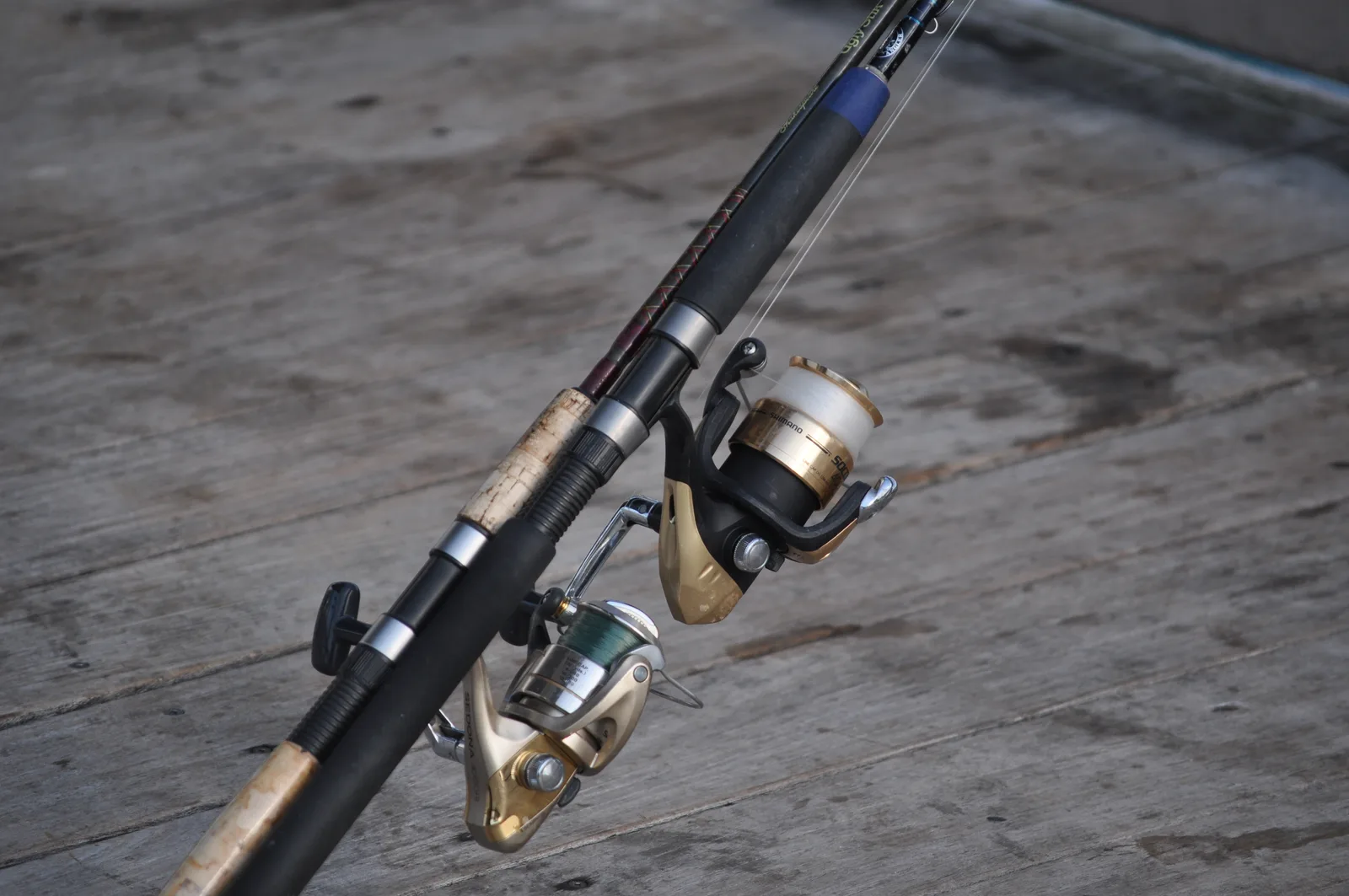
A saltwater spinning reel is a spinning reel built to keep salt water out of the three places it ruins: the drag, the bearings and the gears. On the box that reads as a sealed drag with carbon-fiber washers, sealed or shielded stainless bearings, an anodized aluminum body and rotor, brass or stainless gears and, on the better reels, an IP rating: IPX5 or IPX6 for spray, IPX8 for a reel that survives going overboard. A freshwater reel fished in salt seizes within a season; a sealed reel, rinsed, lasts a decade. The picks below come from the 2026 round-ups at Outdoor Life and Wired2Fish and from the makers’ spec sheets; this site has not tested any of them. By the end you will know which size to buy, what the sealing terms promise, how much drag you will actually use, and how to rinse a reel so it outlives the rod.
Salt does not break a reel on the water. It breaks it in the garage, a month later, a grain of crystal at a time inside the drag.
What “saltwater” means on the box
- Sealed drag. The stack of carbon washers sits under a gasketed cap; a wet drag stutters, then slips, then locks. The feature that matters most.
- Body and rotor. Anodized aluminum or magnesium; a graphite body flexes under 20 lb of drag and lets the gears bind. A one-piece body (Daiwa’s Monocoque) has fewer seams for salt to find.
- Bearings and gears. Stainless bearings, shielded or sealed, and fewer good ones beat many poor ones; brass or stainless gears, because zinc gears wear fast under salt and load.
- Line roller. Where salt collects first; a sealed roller bearing is the tell of a properly built reel. Shimano rates the Saragosa’s roller assembly to IPX8 on its own.
- IPX rating. The proof of all of the above, explained next. A reel without one is sealed as far as the maker’s adjectives go.
IPX5, IPX8 and what salt actually does
The IP code is a laboratory standard (IEC 60529). The first digit rates dust, and the X means the maker did not test for it; the second digit rates water. IPX5 is a 6.3 mm (0.25 in) jet of 12.5 liters a minute from 3 m (10 ft) for three minutes; IPX6 a 12.5 mm (0.5 in) jet at 100 liters a minute, a fire hose rather than a garden hose; IPX7 30 minutes under 1 m (3 ft) of water; IPX8 deeper and longer, to a depth the maker sets, usually up to 3 m (10 ft). So an IPX5 Spinfisher shrugs off a wave over the bow, and an IPX8 Saragosa can be dropped off the jetty, fished out and used. Neither rating says how long the seals last; that is what the rinse is for.
Salt gets into an unsealed reel as a film, not a flood. When the film dries it crystallizes, and the crystals grind like sand in the bearings and hold water against steel until it rusts. Shimano’s maintenance page warns that salt crystallizes even between the line and the spool, and advises stripping the line now and then on a reel fished in salt. A sealed reel keeps the film out of the gearbox and the drag; the rest is yours to rinse.
Which size
Sizes are a convention, not a standard. Shimano and Daiwa count in thousands, Penn in tens or hundreds, and a “5000” is a different reel at each brand (the second table shows how different). The bands below line up closely enough to buy by.
| Size | Braid | Fishing | Rod |
|---|---|---|---|
| 2500–3000 | 10–20 lb | Inshore: speckled trout, redfish, flounder, bonefish, school stripers from a boat | 7–7 ft 6 in (2.1–2.3 m) medium |
| 4000–5000 | 20–30 lb | Snook, big redfish, stripers from the beach and jetties, tarpon under 60 lb, bottom fish | 7–9 ft (2.1–2.7 m) medium-heavy |
| 5500–8000 | 30–50 lb | Surf stripers and bluefish, tarpon, small tuna, jigging, sharks from the beach | 9–11 ft (2.7–3.4 m) surf or 6–7 ft (1.8–2.1 m) jigging |
| 10000 and up | 50–80 lb | Offshore popping and jigging, big tuna, giant trevally | Heavy popping and jigging rods |
The logic: the surf needs 300 yd (275 m) of 30–50 lb braid because a striped bass or a shark runs with the current, and a 5500 holds it; the flats need a reel light enough to cast 300 times a day, and a 2500 is half the weight. On a pier or jetty the fish are the surf fish but the casts are short, so a 4000–5000 on a 7–8 ft rod does the work. The spinning reel sizes page has the general table with mono capacities. Ignore the number: read the weight, the capacity and the drag, and treat the reel as the counterweight to the rod.
A “5000” is not a 5000. The same label at four makers:
| “5000” model | Weight | Max drag | 30 lb braid |
|---|---|---|---|
| Shimano Saragosa SW A 5000XG | 15.9 oz (451 g) | 22 lb | 225 yd |
| Daiwa BG MQ 5000D-H | 15.3 oz (434 g) | 26.4 lb | 230 yd |
| Penn Battle IV 5000 | 18.8 oz (533 g) | 25 lb | 300 yd |
| Penn Spinfisher VII 5500 | – | 25 lb | 380 yd |
Penn’s reels run a size bigger than the label, so a Penn 4000–4500 does the job of a Shimano or Daiwa 5000.
The comparison
The makers’ own numbers, from the spec charts in the sources; a dash is a figure no maker or retailer page we could read gives.
| Reel (size) | Max drag | Weight | Sealing | Price |
|---|---|---|---|---|
| Penn Spinfisher VII (5500) | 25 lb | – | IPX5 body and spool | $210–290 |
| Penn Battle IV (4000) | 15 lb | 12.1 oz (343 g) | Hydro Armor seals, no IP rating | $150–200 |
| Shimano Saragosa SW A (5000XG) | 22 lb | 15.9 oz (451 g) | IPX8 body, seals at 12 points | $300–400 |
| Shimano Stradic FM (4000XG) | 24 lb | 9.7 oz (275 g) | Sealed drag, shielded bearings, no IP rating | $235–265 |
| Daiwa BG MQ (4000D-XH) | 26.4 lb | 10.1 oz (286 g) | One-piece body, nine internal seals | $250–350 |
| Daiwa Saltist MQ (4000D-XH) | 26.4 lb | 10.2 oz (289 g) | Magsealed main shaft, one-piece body | $360–450 |
| Van Staal VR50 | 25 lb | 8.9 oz (252 g) | Fully sealed body, spool and drag | $512–600 |
| Okuma Azores (5500) | 29 lb (13 kg) | 18.5 oz (524 g) | Hydro Block drag seal | – |
| Reel (size) | Gear ratio | Bearings | 30 lb braid |
|---|---|---|---|
| Penn Spinfisher VII (5500) | 5.6:1 | 5+1 sealed | 380 yd |
| Penn Battle IV (4000) | 6.2:1 | 5+1 sealed | 185 yd |
| Shimano Saragosa SW A (5000XG) | 6.2:1 | 5+1 shielded | 225 yd |
| Shimano Stradic FM (4000XG) | 6.2:1 | 6+1 shielded | 180 yd |
| Daiwa BG MQ (4000D-XH) | 6.2:1 | 6+1 | 200 yd |
| Daiwa Saltist MQ (4000D-XH) | 6.2:1 | 6+1 | 200 yd |
| Van Staal VR50 | 6.3:1 | – | – |
| Okuma Azores (5500) | 5.8:1 | 6+1 | – |
The Stella SW and Penn Authority from the reviewers’ round-ups sit above all of these at $700–800, with 29–30 lb of drag and IPX8.
The picks in detail
Penn Authority and Shimano Stella SW
The Authority is Outdoor Life’s best overall and Wired2Fish’s big-fish pick: 30 lb of drag in the 5500, IPX8, a full-metal body; the 10500 carries 60 lb of drag and 540 yd of 80 lb braid. The Stella SW is the reel by which the others are judged, with Outdoor Life’s line that no other spinning reel has proved more reliable: 29 lb in the 5000, IPX8, and a price to match. The Shimano reels page puts it at the top of the ladder.
Shimano Saragosa SW A
The reel to buy if the Stella is out of reach and the fishing is serious: an IPX8 body with gaskets at 12 points, a waterproof carbon drag, 22 lb and 15.9 oz in the 5000XG, 6.2:1, at $300–400. Outdoor Life’s inshore pick. Owner reviews say one word, “bulletproof”: 114 reviews at TackleDirect average a straight 5.0. The 6000HG (5.7:1, 16 oz) is the surf and jetty size.
Penn Spinfisher VII
The surf and pier reel of the East Coast, the one for a 10–11 ft surf rod: IPX5 body and spool, HT-100 carbon washers in a sealed spool, a full-metal body around CNC-cut gears, 25 lb of drag and 380 yd of 30 lb braid in the 5500, 5.6:1, at $210–290. IPX5 is a hose rating, not a dunk rating, and that is the life a surf reel leads: waves over it, sand on it, a rinse at the truck. The 4500 (6.2:1, 20 lb) is the pier size.
Penn Battle IV
The reel most anglers start in salt with: a full-metal body, Hydro Armor seals at the drag and gearbox, HT-100 drag, 15 lb and 12.1 oz in the 4000, 6.2:1, at $150–200. Not IP-rated, so a rinse-every-trip reel, not a dunk-it reel. The 4000 covers redfish, snook and school stripers; the 5000 (25 lb, 18.8 oz) is a budget surf reel. The rod and reel combo page names the Battle combo.
Daiwa BG, BG MQ and Saltist MQ
Not fully sealed, and every guide names the BG anyway: a machined aluminum body and a waterproof carbon drag at $150, Wired2Fish’s kayak pick, a reel that gets drenched every trip. The BG MQ ($250–350) is the same idea in a one-piece body with nine internal seals, 26.4 lb and 10.1 oz in the 4000; owner reviews at TackleDirect run 25 for 25 at five stars. The Saltist MQ ($360–450) adds a Magsealed main shaft, Daiwa’s magnetic-oil seal, at the same drag and weight. The Daiwa reels page has the ladder. Rinse all three.
Shimano Stradic FM
Shimano’s “trout to redfish” reel, not a surf reel: a metal Hagane body, a waterproof sealed drag, shielded bearings, 24 lb at 9.7 oz in the 4000XG, at $235–265, no IP rating. The inshore reel for the angler who also fishes fresh water and wants one reel for both.
Van Staal VR50
For the angler who wades the surf to the chest for stripers: a fully sealed body, spool and drag in machined 6061 aluminum, 8.9 oz, 25 lb, 6.3:1, at $512–600 on sale from $640–750. The Fisherman’s verdict is that the reel is completely sealed, and that is the point: it goes under in a wave and comes up working. The VR150 (4.8:1, 35 lb) is the plug-and-eel size.
Okuma Azores and ITX
The Azores is the cheap big reel: a diecast aluminum body, a Hydro Block drag seal, bearings Okuma rates ten times more salt-resistant than plain stainless, 29 lb (13 kg) of drag at 18.5 oz (524 g) in the 5500 and 44 lb (20 kg) in the 6500; a pier shark reel without a Saragosa budget. The ITX 2500 is Outdoor Life’s best-for-the-money inshore pick at about $139: a sealed drag, 18 lb, for the angler who fishes often and rinses.
Drag: the number you will use
Max drag sells reels and almost never gets used. The working rule, from The Fisherman’s striper column and most guides: 25–30% of the line’s breaking strength. On 20 lb braid that is 5–6 lb; on 30 lb, 7.5–9 lb; on 50 lb surf braid, 12.5–15 lb. A 25 lb max drag therefore covers 80 lb line, and an inshore angler on 20 lb braid uses a fifth of what the reel can give. With a lighter leader than the main line, set the drag by the leader, because the leader is what breaks. Set it with a $10 spring scale, not by feel: tie the line to the scale, pull through the guides with the rod at 45 degrees, and read the pull at which the spool starts to turn.
Rinsing and care in five steps
- Tighten the drag before the rinse, so the water stays out of the washers; loosen it again to store.
- Rinse with a light spray or a wet cloth, never a hose blast, never a soak. Shimano’s maintenance page says it plainly: cold fresh tap water, do not submerge the reel. Pressure forces salt past the seals; a soak carries it in.
- Wipe sand off the line roller, the bail and the spool lip with a soft cloth, without scrubbing.
- Dry, then one drop of oil on the line roller and the handle knob, a drop and no more. Oil on the drag washers is the end of the drag.
- Strip and respool once a season, and send the reel for service once a year if it fishes every week. Fresh braid over mono backing costs less than a spool.
The mistakes
- A freshwater reel in salt. It works for a season, then the drag sticks and the handle grinds. No sealed drag and no stainless bearings: keep it off the beach.
- A reel too big for the rod. A 6000 on a 7 ft inshore rod tips the outfit toward the reel and tires the wrist by lunch; the spinning rod page gives the inshore and surf lengths.
- Braid tied straight to the spool. It slips on a bare arbor and the spool turns under the line. Mono backing first, braid to the backing with a double uni, and fill to 1/8 in (3 mm) below the lip; the spooling page shows it.
- No leader. Thirty-pound braid against a jetty rock or a snook’s gill plate lasts one run. Three feet of 30–40 lb fluorocarbon on an FG knot is the standard inshore and surf leader.
Related
The reels hub compares the reel types and says when a baitcaster beats a spinner in salt; the braided line and leader pages carry the line choices by fishing; the striped bass page is where most of these reels end up.
Sources
- Outdoor Life (Ric Burnley), best saltwater spinning reels
- Wired2Fish, best saltwater spinning reels 2026
- J&H Tackle, sealed spinning reels explained
- Ardent, fishing reel sizes explained
- Tomo's Tackle, Penn Spinfisher VII spec chart
- Tomo's Tackle, Penn Battle IV spec chart
- TackleDirect, Penn Battle IV (Hydro Armor, brass main gear)
- Shimano Canada, Saragosa SW A specifications
- TackleDirect, Shimano Saragosa SW A (IPX8, owner reviews)
- Shimano Canada, Stradic FM specifications
- TackleDirect, Shimano Stradic FM (drag, owner reviews)
- Tackle Warehouse, Shimano spinning reel prices
- Tomo's Tackle, Daiwa BG MQ spec chart
- TackleDirect, Daiwa BG MQ (seals, owner reviews)
- Tomo's Tackle, Daiwa Saltist MQ spec chart
- Van Staal, VR series bailed spinning reel
- The Fisherman, Van Staal VR50
- Okuma, Azores spinning reel specifications
- IP code (IEC 60529), water ingress levels
- The Fisherman, setting your drag for stripers
- The Tackle Room, how to set your drag
- Shimano, reel maintenance