 By
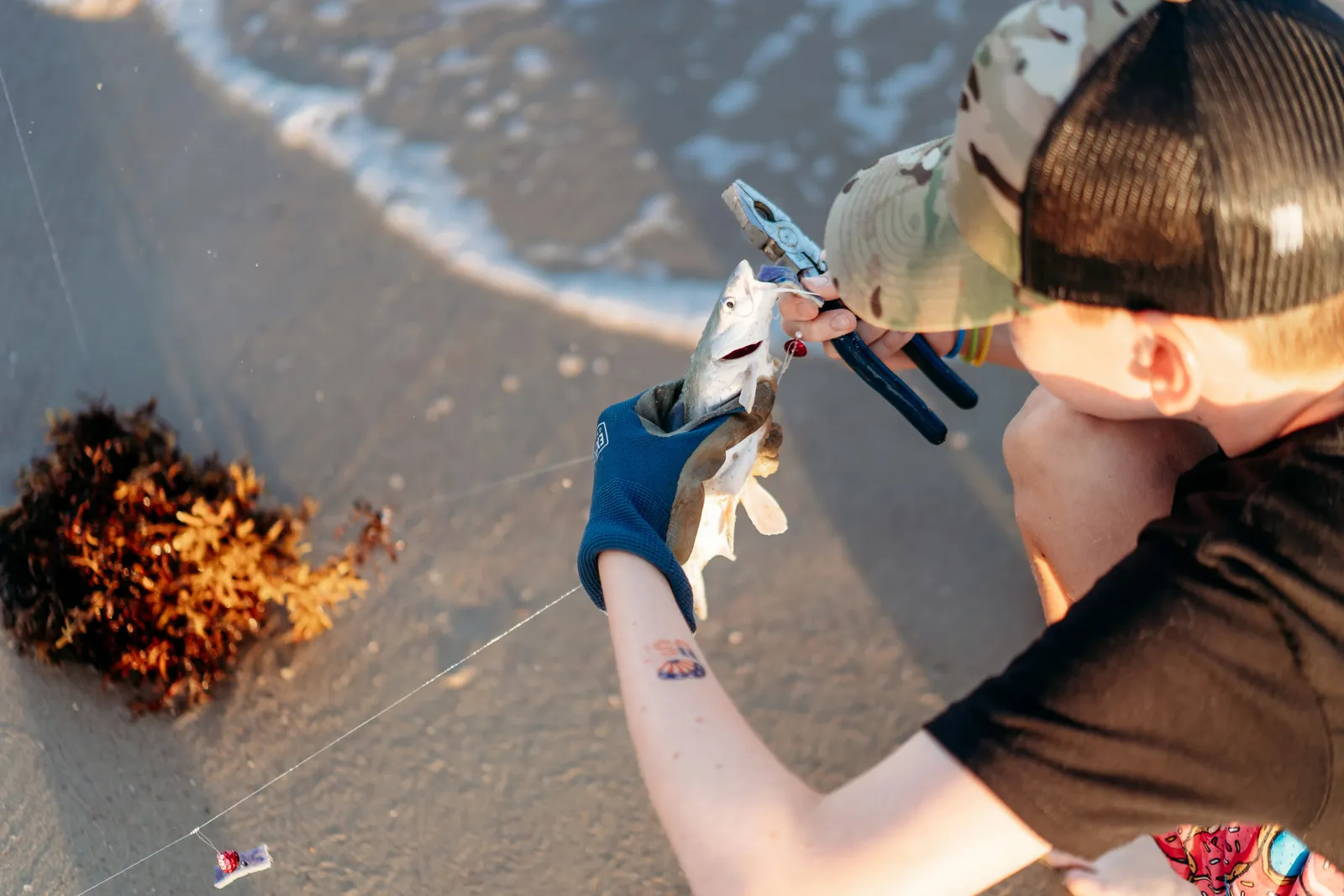
A fishing hook remover is a tool that gets the hook out of a fish without your fingers in its mouth. For most fishing, buy a slide-down dehooker or a pistol grip remover. Both cost about $8 to $11. I’d start with the Booms R05, two for $7.99. For a hook deep in the throat, no tool is the answer: cut the line.
Pull a swallowed hook out of a bluegill and 44 of every 100 are dead 10 days later. Cut the line and leave the hook, and it’s 12.5.
Which fishing hook remover for which fishing?
Pick by the fish, its teeth and how far you are from the water. Florida’s FWC puts it in one line: match the tool “to the angler, the fish being targeted, and the vessel.”
| Your fishing | What to get | Pick | Price |
|---|---|---|---|
| Bluegill, crappie, trout on small hooks | Forceps or a plastic disgorger | Eagle Claw Forceps | $10.99 |
| Bass, walleye, catfish from the bank | Slide-down dehooker | Booms R05 | $7.99 for two |
| Lures with treble hooks | Pistol grip with jaws | Eagle Claw Pistol Grip | $10.99 |
| Pike and other toothy fish | A long tool | Eagle Claw Aluminum 9.5” | $9.99 |
| Saltwater from a pier or the beach | A 9 in stainless dehooker | Rapala 9” Angler’s | $22.99 |
| Saltwater from a boat, grouper and snapper | Long-shaft dehooker | AFTCO Small Dehooker | $35 |
Prices from each maker’s page on Nov. 14, 2026.
Fishing from a kayak? Go short. FWC says a kayak wants a shorter dehooking tool, and a boat with a high side wants a longer shaft.
What kinds of hook remover are there, and how do they work?
Hook removers come in five main kinds. All of them do the same job: hold the hook so it can’t catch again on the way out. FWC says that is what a dehooking tool is designed for. The drawing below shows all five.
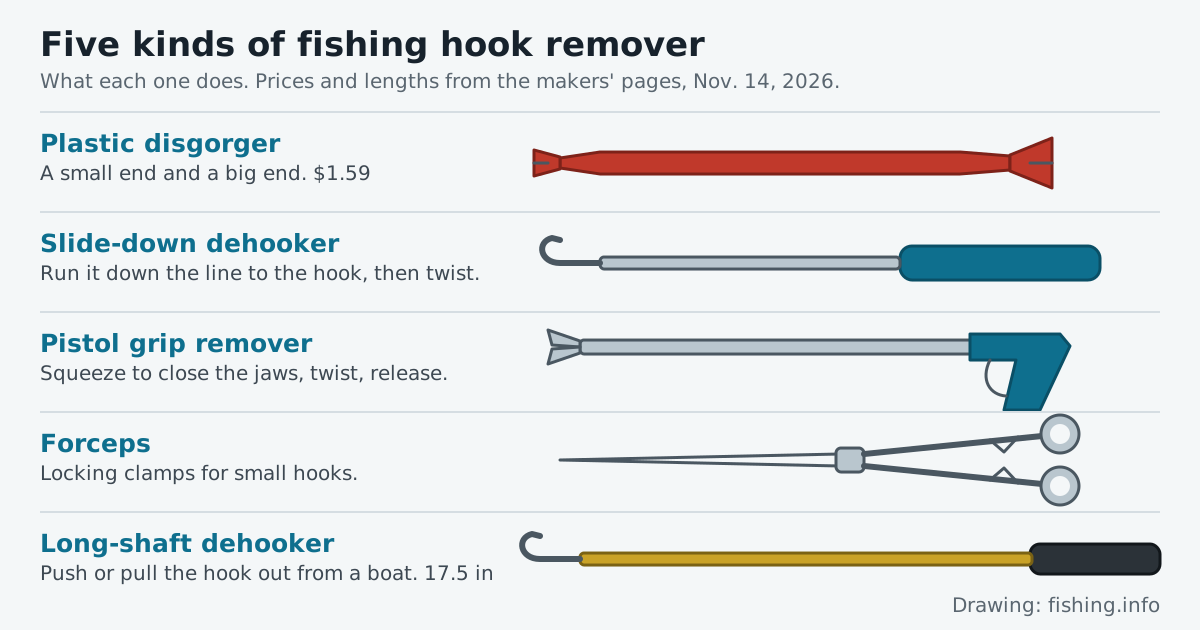
The five kinds of hook remover, from a $1.59 plastic disgorger to a 17.5 in long-shaft dehooker. Drawing: fishing.info.
- Plastic disgorger. A plastic stick with a small end and a big end. Eagle Claw’s red one costs $1.59, and Eagle Claw says it takes hooks out of deep-hooked fish and fish with sharp teeth.
- Slide-down dehooker. A handle with a hooked wire tip. Hook the line with the tip and slide it down to the hook. Then pull the line and the tool apart and twist, Booms says.
- Pistol grip remover. A long shaft with small jaws at the end and a squeeze handle. Squeeze to close the jaws on the hook, twist, release, Eagle Claw says. Eagle Claw says its pistol grip takes out hooks, lures and flies. It’s the kind I’d pick for trebles.
- Forceps. Locking clamps, often called hemostats. They lock shut on a small hook and stay shut while you back it out.
- Long-shaft dehooker. The boat tool. AFTCO’s Small Dehooker is 17.5 in (44 cm) and pushes or pulls the hook while the fish stays in the water. Rapala’s 9 in stainless one, with push and pull bends, is the shorter cousin for the pier.
And pliers count. “Even a pair of needle nose pliers is considered a dehooking tool,” FWC says. If you already own fishing pliers, you own a hook remover. A dedicated remover costs less: six of the eight here are $11 or under. And the long ones reach further than a 7 in pair of pliers.

Free PDF · Water temperature chart Which fish are biting at today's water temperature?
One reading, and the 16-page chart shows which of 26 fish are spawning, feeding hard or slowing down; for bass, crappie, bluegill and walleye, where they sit and what to throw. Every number sourced.
No card, nothing to buy, and the PDF is yours to keep. Confirm with one click and it's on its way. Then a few short emails and one a week on what's biting. Unsubscribe anytime. Privacy.
The comparison
All eight picks, read from the maker’s own page on Nov. 14, 2026. “Not listed” means the maker doesn’t print it.
| Hook remover | Kind | Length | Build | Price |
|---|---|---|---|---|
| Eagle Claw Red Plastic | disgorger, two ends | not listed | hard plastic | $1.59 |
| Booms R05 | slide-down dehooker | 6.9 in (18 cm) | non-slip handle | $7.99 for two |
| Booms R01 | jaws, serrated | 9.5 in (24 cm), black version | stainless steel | $8.99 / $9.99 |
| Eagle Claw Aluminum 9.5” | retractable design | 9.5 in (24 cm) | aluminum | $9.99 |
| Eagle Claw Pistol Grip | pistol grip, jaws | not listed | chrome-plated | $10.99 |
| Eagle Claw Forceps | forceps | not listed | not listed | $10.99 |
| Rapala 9” Angler’s | push and pull bends | 9 in (23 cm) | heavy-duty stainless steel | $22.99 |
| AFTCO Small Dehooker | long shaft, push or pull | 17.5 in (44 cm) | stainless hook, aluminum shaft | $35 |
Six of the eight cost $11 or less. The extra money buys length and metal.
The picks in detail
Booms R05 is the one I’d put in a bank angler’s pocket. It is 6.9 in long and comes two to a pack for $7.99. Booms says you never have to touch the fish, and it rates the tool for fish under 20 lb. The maker’s page shows no owner reviews yet.
Eagle Claw Red Plastic costs $1.59. Buy two and leave one in every box. Eagle Claw says it handles deep-hooked fish and fish with sharp teeth, and that its two sizes of end work for any fish.
Eagle Claw Pistol Grip is the one I’d carry for lures. Eagle Claw says it removes hooks, lures and flies, and jaws that close on the hook give you something to hold on a treble. The right-angle handle gives you a clear view of the hook, Eagle Claw says. It doesn’t list a length.
Eagle Claw Aluminum 9.5” gives you reach for $9.99. Pike and catfish have mouths you want to stay out of. Minnesota DNR’s pike advice is short: “Remove hooks quickly with long-nosed pliers, not your fingers.”
Eagle Claw Forceps suits a trout or panfish angler. Forceps have a strong following with trout anglers for delicate fish and fine wire hooks, Outdoor Life’s Pete Robbins writes. The page lists only the price, $10.99.
AFTCO Small Dehooker is the boat tool. It is 17.5 in, with a stainless hook, an anodized aluminum shaft and an EVA grip. AFTCO says it works for live bait and lures. For billfish and sharks AFTCO sells a $50 Dehooker head in 316 stainless that fits its deck brush handle.
Rapala 9” Angler’s Hook Remover is the one for salt from the pier or the beach, at $22.99. It is heavy-duty stainless steel with push and pull bends, and Rapala says the 9 in length suits most saltwater species. It costs two to three times what the bank tools do, so buy it if you fish salt.
Booms R01 is the cheap stainless one with serrated jaws, $8.99. The black version is 9.5 in.
How do you use a hook remover?
Keep the fish in the water if you can. Pennsylvania’s angler magazine says it plainly: “Keep the fish in the water as long as possible.” Then:
- Pinch the barb first, at home, with pliers. A barb squeezed down makes the hook easier to remove. Our barbless hooks page shows how.
- Find the hook. In the lip or the jaw, use the remover. Deep in the throat or the gut, skip to the next section.
- Slide-down tools: hold the line tight, slide the tip down the line onto the hook, then pull the line and the tool apart and twist.
- Jaw tools and forceps: close the jaws on the hook. Back the point out the way it went in. FWC’s words: “Back the hook through the original wound.”
- No tool at all? Grab the shank and turn the hook upside down. “Usually the fish will slide off the hook,” the Pennsylvania guide says.
On a lure with more than one treble, FWC suggests taking off one or two of the hooks. Cut one point off each treble that’s left and the lure comes out of the fish easier.
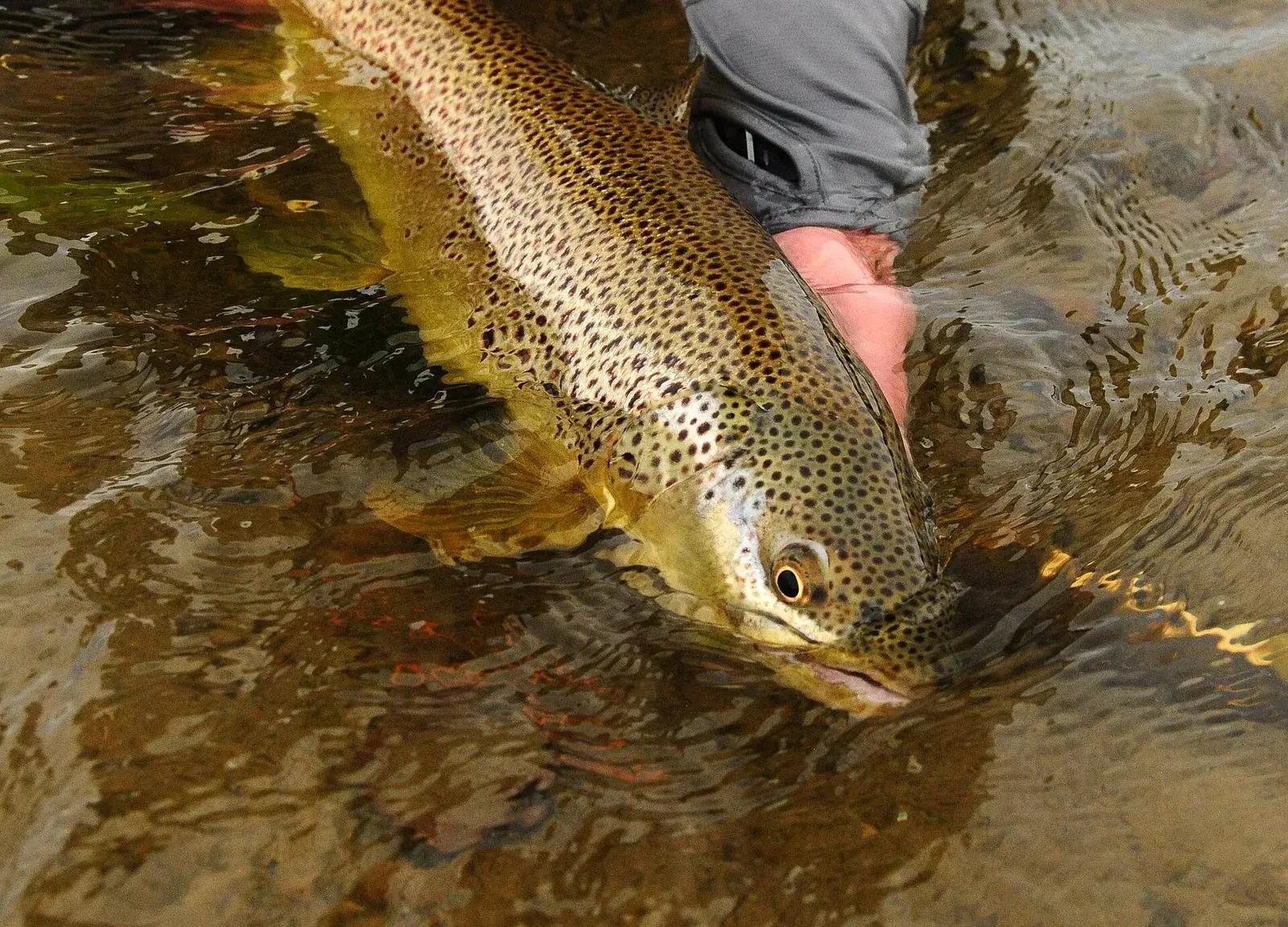
A brown trout going back on Seedskadee National Wildlife Refuge, Wyoming. Photo: Tom Koerner / USFWS, public domain.
When should you cut the line instead?
When the hook is in the throat or the gut. FWC’s advice is to cut the leader “as close to the hook as possible and leave the hook in the fish.” Long tries at getting the hook out “often do more harm than good,” it adds.
The numbers back it up. Of deep-hooked bluegill with the hook pulled out, 44 percent were dead after 10 days. With the line cut 1 cm (less than half an inch) from the mouth, 12.5 percent. Fish hooked in the lip died at 4 percent.
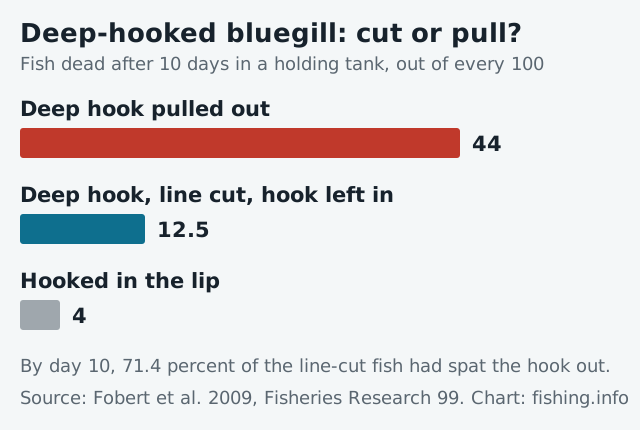
Chart: fishing.info, from Fobert et al. 2009.
The hook doesn’t stay forever. Of the line-cut bluegill, 45.5 percent had spat it out after 48 hours and 71.4 percent by day 10. Florida’s snook test points the same way: four of 12 deep-hooked fish died when the hook came out. None died when the leader was cut.
Two more rules from FWC. Don’t lift a gut-hooked fish out of the water by the leader. And carry line cutters next to your remover. The catch and release page has the rest of the release. The circle hook page shows how to get fewer deep hooks to begin with.
Do you need a dehooking tool by law?
In some places, yes. Fishing for reef fish in federal waters of the Gulf? You must have at least one dehooking device on the boat, and use it (50 CFR 622.30). The South Atlantic has a matching rule for anyone who catches or has on board fish from the snapper-grouper group (50 CFR 622.188).
The rule also says what counts. The device must hold the hook with the barb shielded so it can’t catch again. “The dehooking end must be blunt, and all edges rounded.” And it must be sized for the hooks used in that fishery. Check that your tool meets that wording before the trip. The grouper page lists the rest of the gear you need there.
Do you need a hook remover if you own pliers?
Pliers get most hooks out, and they cut line and pinch split shot too. A dehooker reaches further and keeps your hand out of the mouth. I’d carry pliers plus one remover. The remover saves the fish time out of the water, and FWC says less handling can help a fish survive. Pliers or forceps is a question for the fishing pliers page.
| Tool | Best for | Weak spot |
|---|---|---|
| Fishing pliers | most fishing, plus cutting line | a 7 in pair keeps your hand near the mouth |
| Slide-down dehooker | bass, walleye, catfish, single hooks | Booms rates its R05 for fish under 20 lb |
| Long-shaft dehooker | boats, teeth, spines, reef fish | FWC wants a shorter tool on a kayak |
Can you make your own? You don’t need to. A plastic disgorger costs $1.59, and FWC counts needle-nose pliers as a dehooking tool. Keep whichever you choose in the same pocket of your tackle box every trip.
What about a hook in your hand?
That one is for a person, not a remover. Doctors have a field method for it, and our fishing hooks page walks through it step by step. Three rules come first. A hook in an eye goes straight to an eye doctor. On a treble, tape or cut the other points first. And anyone near you stays out of the hook’s line of flight. Afterward, check when you last had a tetanus shot, and get a booster if you need one. That’s the doctors’ advice.
The rest of the small gear worth carrying is on the fishing accessories page.
How we chose
We read the kind, length, build and price of each remover from the maker’s own page on Nov. 14, 2026. Where a page lists no length or no owner reviews, we say so. Advice on which tool for which fish follows Florida FWC and Minnesota DNR, and the rules come from the federal code.
We did not test these hook removers by hand. The picks follow the job. A cheap slide-down tool for the bank, jaws for trebles and stainless for salt. Reach for teeth and boats, and a cut line for a deep hook.

Free PDF · 16 pages
Stop guessing. Know what's biting before your first cast
A whole Saturday on the water with nothing to show for it. One reading tells you who's feeding.
The Water Temperature Fishing Chart. Take one water temperature reading, find it on the chart, and see which of 26 freshwater fish are spawning, feeding hard or slowing down.
- Where bass, crappie, bluegill and walleye sit, and what to throw. Trout: the reading where you stop.
- Why a 3 ft drop beats a cold front, and what to throw each day of the front
- The three thermometer mistakes that make a reading lie
The chart's numbers come from state fish and wildlife agencies and fisheries research: 61 sources, each listed on the site.
No card, nothing to buy. Confirm with one click and the PDF is on its way, one version for your phone and one to print, yours to keep. Then a few short emails and one a week on what's biting, with an unsubscribe link in every one. Privacy.
Related
Section guide
Fishing Accessories: The Small Gear That Decides the DayThe fishing accessories worth carrying: net, pliers, scale, thermometer, tackle box and the rest, with the one spec that matters on each and what it is for.
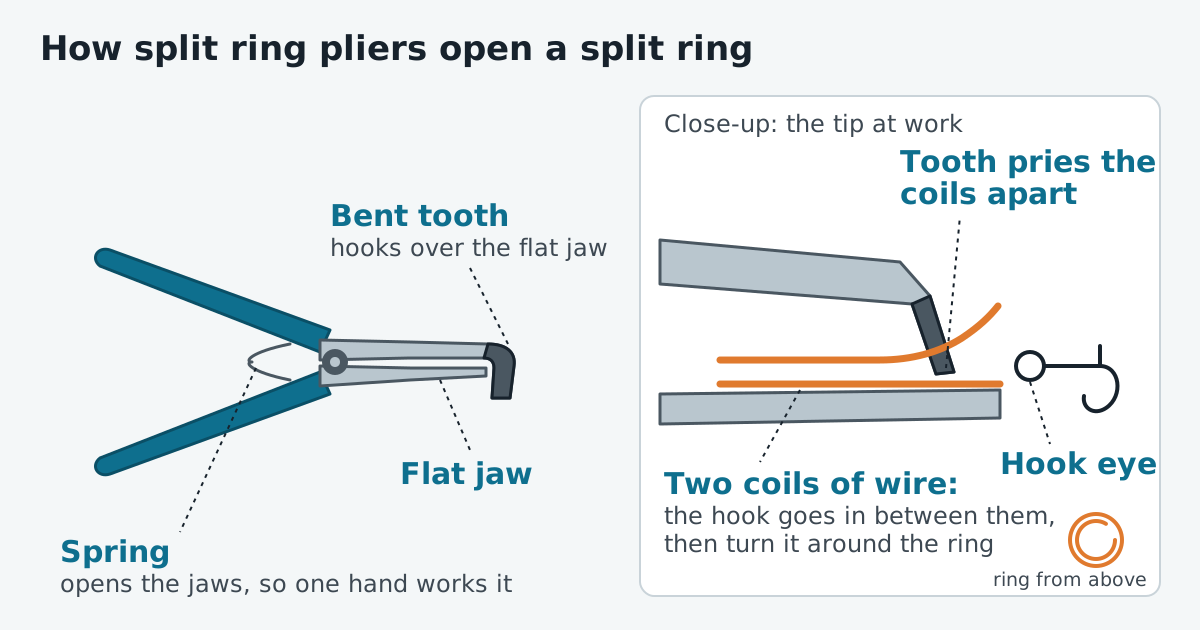 Best Split Ring Pliers: What Opens Which Ring, $9.99 to $59.99
Split ring pliers have a bent tooth that pries a split ring open so you can swap a treble. Nine tools compared at the maker's price, with ring sizes.
 Fish Scale: Best Digital, Spring and Lip-Grip Picks for Every Angler
The fish scale to buy for your fishing: a $27 digital for most anglers, a cull scale for tournaments, and how to weigh a fish safely and get a true number.
 Fillet Knife: How to Pick the Best Fish Fillet Knife, Manual or Electric
A fillet knife for most anglers is a 7 in flexible blade; 4 to 6 in for panfish, 9 in for big saltwater fish. 8 picks, manual and electric, $14 to $204.
 Fishing Net: Which Landing Net to Buy, Rubber or Nylon, and What Size
The fishing net most anglers need is a rubber-mesh landing net sized to their fish. What two mesh studies found, hoop sizes by species, and 7 picks.
 Fishing Stringer: The Right One for Bank, Boat and Wading, and How to Use It
A $3 chain fishing stringer through the lower jaw suits most anglers. Pike lived two hours on one, but a quarter died later. Picks and how to use it.
 Best Fishing Thermometers: From a $14 Stream Tube to the Fish Hawk TD
A $14 encased stream thermometer serves most anglers; only a depth probe reads where summer bass and walleye sit. Five types compared, with picks.
Sources (18)
- Booms Fishing, R05 Fish Hook Remover (specifications, use and price)
- Booms Fishing, R01 Stainless Steel Fish Hook Remover Extractor
- Eagle Claw, Red Plastic Hook Remover
- Eagle Claw, Pistol Grip Hook Remover
- Eagle Claw, Aluminum Hook Remover 9.5"
Show all 18 sourcesShow fewer sources
- Eagle Claw, Forceps Hook Remover
- AFTCO, Small Dehooker (features, length and price)
- AFTCO, Dehooker (adaptor for the deck brush handle)
- Florida Fish and Wildlife Conservation Commission, Fish Handling
- Florida Fish and Wildlife Conservation Commission, Reducing catch-and-release mortality (snook)
- Fobert, E., Meining, P., Colotelo, A., O'Connor, C. and Cooke, S. J. (2009), Cut the line or remove the hook? An evaluation of sublethal and lethal endpoints for deeply hooked bluegill, Fisheries Research 99:38–46 (Queen's University Biological Station summary)
- eCFR, 50 CFR 622.30, Required fishing gear (Gulf reef fish)
- eCFR, 50 CFR 622.188, Required gear, authorized gear, and unauthorized gear (South Atlantic snapper-grouper)
- Pennsylvania Angler & Boater, Unhooking a Fish (March-April 2004), via Texas A&M AgriLife Extension
- Gammons, M. and Jackson, E. (2001), Fishhook Removal, American Family Physician 63(11):2231-2237
- Pete Robbins, Best Fishing Pliers, Outdoor Life
- Rapala, 9” Angler’s Hook Remover
- Minnesota DNR, MinnAqua Species Profile: Northern Pike