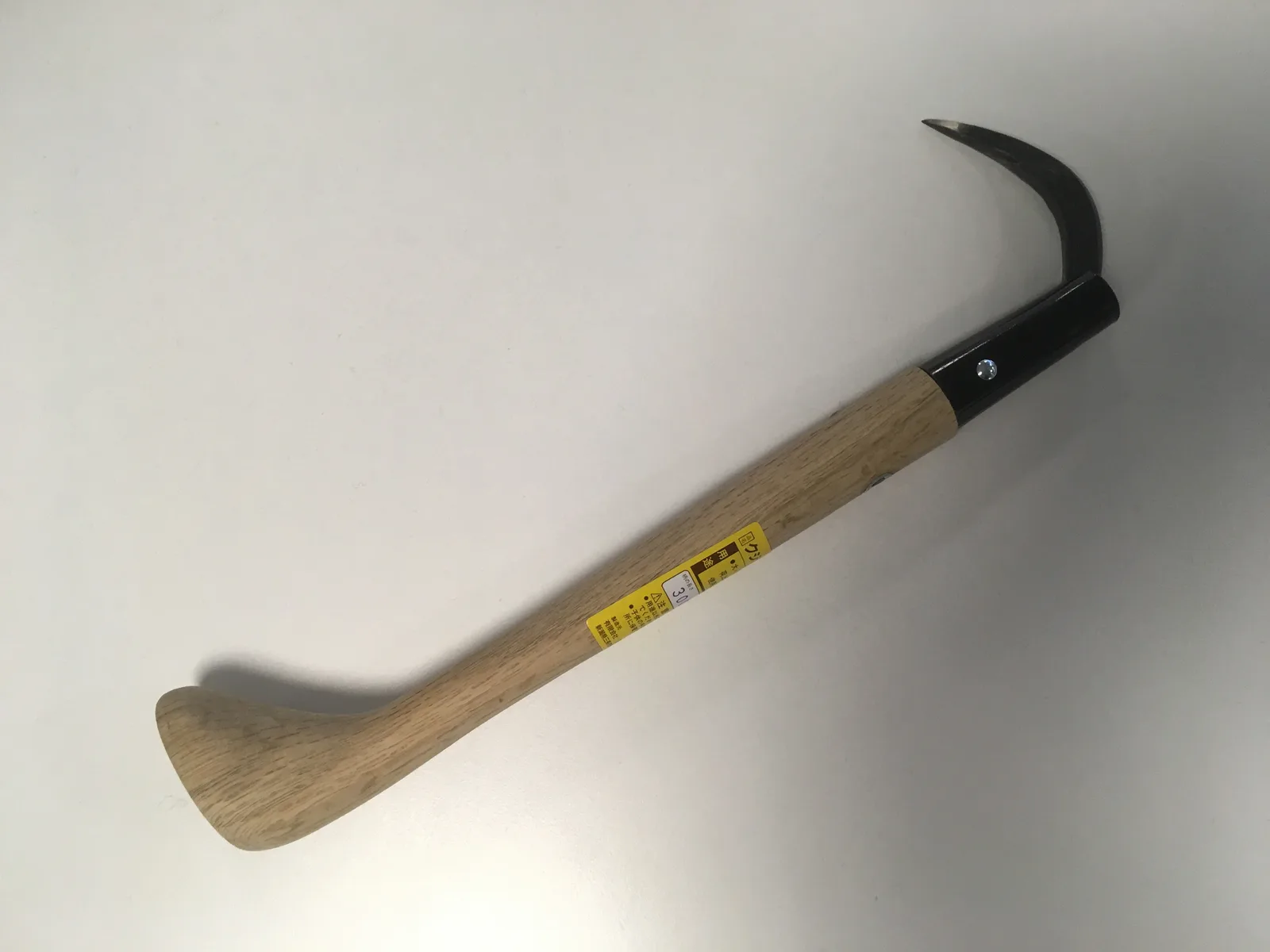
Ikejime is the Japanese way of killing a fish you plan to eat: a spike into the brain, a cut to bleed it, an optional wire down the spinal cord, then an ice slurry. Australia’s national code for recreational fishing names a brain spike and a firm knock on the head as the two preferred ways to kill a fish. Done within a minute of landing, it ends the struggle that burns through the muscle’s energy, so the flesh stiffens later and keeps longer.
Flathead flounder killed instantly with a cut to the hindbrain reached peak rigor at 48 hours in a Kyoto trial (2018, reported 2019). Flounder left to die on ice got there at 24.
What does ikejime do to the flesh?
A fish that fights and then suffocates spends its muscle’s energy store, ATP, and builds up lactic acid. When the ATP is gone, the muscle locks into rigor mortis and the slide toward spoilage speeds up. The spike stops the brain’s drive. Bleeding removes the blood that carries bacteria and off-flavors, and cold slows everything after.
That makes it worth doing for a fish you will keep and eat, most of all one eaten raw or a few days after the catch. Chef Dannel Krishnan told the Michelin Guide there “isn’t much difference” when he cooks a fish with or without it on the first day. “The difference comes in only in the third, fourth and fifth day of aging.”
It is never for a fish you will let go: catch and release is the opposite job.
What does ikejime mean, and what is shinkei jime?
Andrew Tsui of the Ike Jime Federation renders the word as “live killing” in FishTalk. The jime part comes from 締, “to tighten, to close” (Sushi-pedia). Wiktionary gives the English pronunciation as ee-kay-JEE-may; ikijime.com says it is pronounced “iki jimi.”
In Japan, ikejime is the umbrella word for killing a live fish on purpose to keep its quality. The spike step is nōjime, which Sushi-pedia glosses as “brain killing,” followed by the bleed. Shinkei jime (shinkei means nerve) adds the wire as a third step: a thin wire run down the canal above the backbone to destroy the spinal cord. In American usage “ikejime” often means the spike alone.
Free card: what 26 species do at your water temperature
Plus one email a week on what's biting now. No sales pitches. Privacy.
What do you need?
- A spike. The agencies’ budget tool is an ice pick or a sharpened screwdriver. Brand spikes run from $19.99 (JYG Brain Spike) to $29 (AFTCO Ike Jime Spike).
- A wooden club, or a priest (a baton with a metal head), for the knock before or instead of the spike.
- A sharp knife for the gill cut.
- A wire, for shinkei jime. AFTCO’s Circuit Breaker, made with the Ike Jime Federation, runs from $29 for the 18-gauge striper-and-snapper size to $89 for a 50 in (127 cm) tuna wire. Johnny Jigs’ NeuroSpike wire tool is $35.99. No wire? Totos of Japanese Anglers’ Secrets used stainless rigging wire about 1 mm thick, sold in tackle stores.
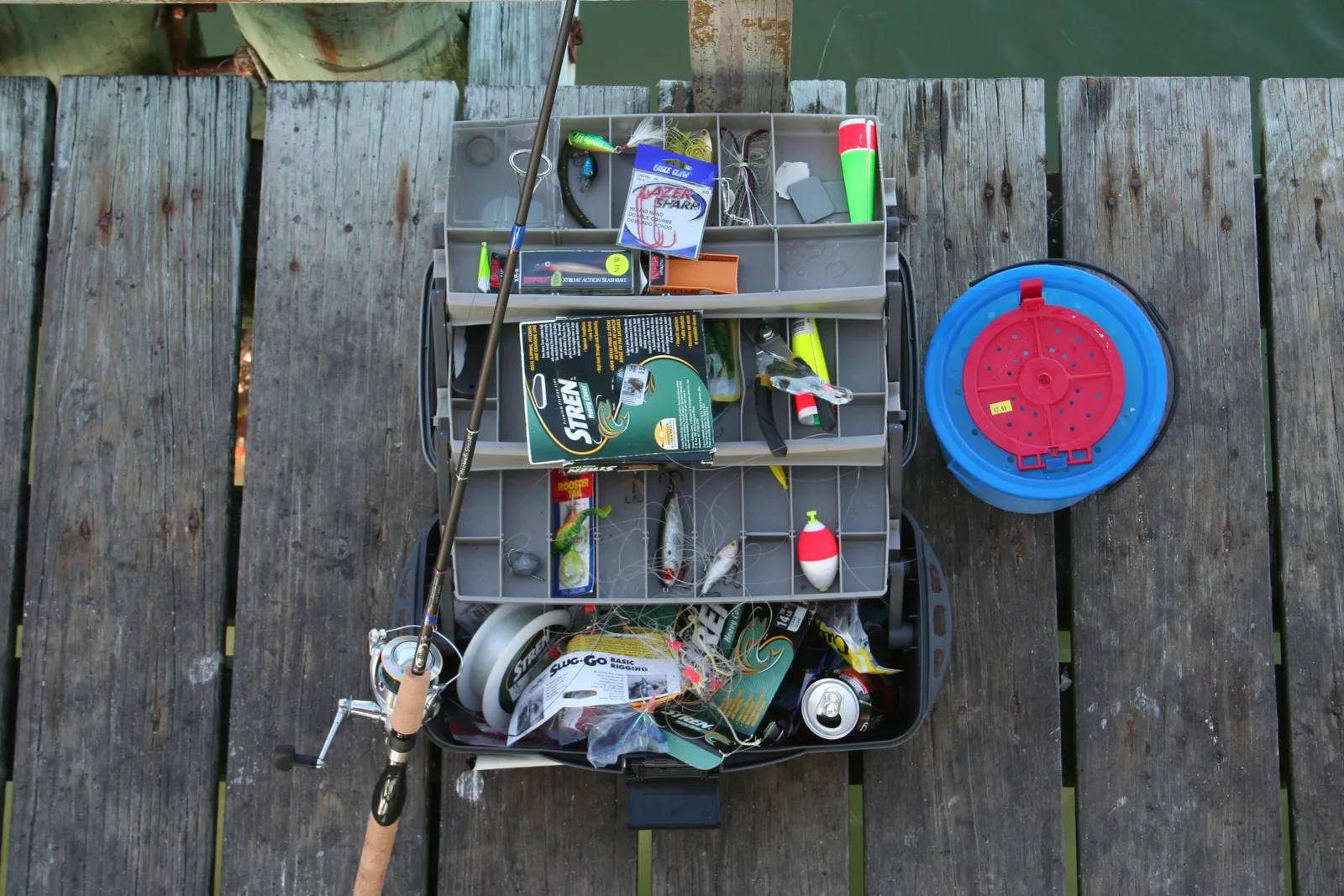
- A bucket of water to bleed in, and a cooler with ice and water for the slurry.
Spending runs from about $20 for a spike alone to $49.99 for JYG’s Ikejime Pro Kit: spike, bleeding knife and wire. A screwdriver, a club and a bag of ice do the agencies’ version.
How do you spike a fish?
The kill, bleed and chill below follow Australia’s national code (through ikijime.com), RSPCA Australia and FAO. The consciousness check and the gill cut on both sides are SPCA New Zealand’s. The wire step is the one AFTCO and Maryland DNR describe.
- Get ready before the fish lands. Have spike, knife and slurry ready, and keep the fish in the water or the net until the tool is in your hand. ikijime.com asks for the kill “preferably within a minute of it being caught.”
- Choose: knock or spike. A firm blow just above the eyes with a club is, in ikijime.com’s words, “the easiest method of humane killing.” It advises a knock first on channel catfish, which have a strong skull. It says the same of large, energetic snapper, mahi-mahi, tuna and halibut. If the fish is still conscious, strike again.
- Spike at the species point. Push the spike in quickly and firmly at the spot in the table below, then wiggle it side to side to destroy the brain. On offshore fish, Louisiana Sea Grant aims at the soft spot above the eyes at about a 30-degree angle.
- Check the kill. The fins flare and the mouth gapes, then the body goes limp. Tilt the fish: an eye that rolls as you tilt it, or a gill cover still pumping, means it is conscious. The gill sign does not apply to tuna, which ram-ventilate: they swim to push water over the gills. Spike or strike again.
- Bleed at once. Lift the gill cover and cut through the gill arches on both sides; on a big fish, cut a main artery, and on a tuna, cut under the pectoral fin. Hold it head down in water while the heart pumps: 5–10 minutes or until the flow stops (Louisiana Sea Grant), 10–15 for a small fish (FishTalk).
- Run the wire, if you want shinkei jime. Cut down to the backbone at the tail, not through it, and find the small hole above the bone. Push the wire up the canal toward the head and work it back and forth until the twitching stops.
- Chill in slurry. Mix at least one part ice to one part water; ikijime.com asks for two parts ice to one, and FAO calls four to one “the best slurry.” Keep it near 32 °F (0 °C) but never below, and add no salt. Louisiana Sea Grant takes a normal-size fish out within 2 hours.
- Drain, bag and ice it. Bury the fish straight in ice, about 2 lb of ice per pound of fish. FDA’s guidance for any seafood is 40 °F (4 °C) or below, eaten within 2 days or frozen.
What should you see when it works?
A good spike makes the fish flare its fins and open its mouth, shudder, and go limp; the color may change. After that there is no eye roll when you tilt it and no gill movement. In a German trout study, those two signs disappeared when the brain stopped responding to light, so they are a fair field check. A heartbeat is not: the AVMA notes that a fish’s heart can keep contracting after brain death.
It is not always instant. In a 2025 study that read brain waves, manual and machine ikejime left every rainbow trout insensible within 2 minutes. But in the authors’ words, “neither reliably achieved immediate insensibility.” In hybrid striped bass of 1.1–2.1 kg (2.4–4.6 lb), about 25–43% stayed sensible after the spike. The authors’ advice: stun first. Knock a big, hard-headed fish before you spike it.
Whether a fish feels pain is contested, and do fish feel pain sets out both camps. What the same study measured is time: fish left to suffocate showed distress for up to 13–16 minutes.
Where is the brain? Spike points by species
A fish’s brain sits behind and above its eyes, and it is small. The rule of thumb: on a bass, trout or panfish it is 1–2 eye-widths back and about one above; on a walleye, striper, channel catfish or flounder it is about 3 back.
The table reads ikijime.com’s x-ray-matched diagrams. Side view: from the center of the eye to the center of the marker, in widths of the fish’s own eye. Top view: along the midline, back from the eyes. Use the side view on fish that lie flat on their side, the top view on round fish and flatfish.
| Fish | Side view, from the eye | Top view | Knock first? | Wire (maker’s size) |
|---|---|---|---|---|
| Largemouth and smallmouth bass | 1½–2 eye-widths back, ¾ above: the marker’s lower edge about level with the top of the eye | Midline, about 2 behind the eyes | Either works | Not sized by the makers |
| Striped bass | 3–3½ back, 1½ above: a small eye | — | Either; big ones are energetic | 18-gauge, 20 in (51 cm) |
| Walleye | 3 back, 1½ above: the brain sits far back and high | Midline, about 3 behind the eyes | Either works | 22-gauge, 20 in |
| Rainbow trout | 1½–2 back, 1 above | Midline, behind the eyes | Either; not slurry alone | 22-gauge, 20 in |
| Channel catfish | About 3 back, ¾ above: as far behind the eye as the eye is from the snout tip | Midline, about 3 behind the eyes (as far as the eyes are from the snout tip) | Knock; spike only with a robust spike | Not sized |
| Black crappie | 1–1½ back, about 1 above | — | Either; slurry alone may do above 70 °F (21 °C) | Not sized |
| Bluegill | 1–1½ back, 1 above | — | Same as crappie | Not sized |
| Red snapper | 2–2½ back, 1½ above | — | Knock big ones first (easier) | 18-gauge, 20 in |
| Mahi-mahi | 1½ back, 1½ above, at the base of the forehead | — | Knock first is easier | 1 mm, 36 in (91 cm) |
| Yellowfin tuna | 1 back, 1 above | The pale soft patch just behind the eyes | Knock big ones first | 14-gauge, 30–50 in (76–127 cm) |
| Summer flounder | — | About 3 behind the upper eye, slightly above its line | Either works | 18-gauge, 20 in |
The wire sizes are AFTCO’s (Johnny Jigs’ for mahi-mahi). AFTCO adds a landmark that works on any fish: the brain lies near where the top of the preoperculum, the curved bone between the eye and the gill cover, meets the lateral line. FAO puts it on a medium fish about 2 cm (¾ in) behind the eye, spiked diagonally from the right side.
Is ikejime worth it? What the studies measured
The measured gains are in stiffness and freshness over days, mostly from Japanese fisheries labs. Bass, walleye and catfish are not among the fish studied.
| Study | Fish | Compared | What was measured |
|---|---|---|---|
| Noguchi and Kumaki, Kyoto (trial 2018, report 2019) | Flathead flounder at 4–5 °C (39–41 °F) | Died on ice; hindbrain cut; hindbrain cut, bled and wired | Peak rigor at 24 h on ice, 48 h for both cut groups; K value at 30 h: 17% cut only, 7% wired |
| Ando et al. 1996 | Yellowtail, red sea bream, plaice | Wire vs none | Full rigor 6–12 h later in yellowtail and sea bream; plaice went into rigor sooner |
| Nakayama et al. 1996 | Red sea bream at 3 °C (37 °F) | Spike and wire vs none | Full rigor 12–19 h behind the controls; firmer flesh |
| Gräns et al. 2025 | Rainbow trout, hybrid striped bass | Spike, knock, suffocation | Trout insensible within 2 min; 25–43% of bass still sensible |
| Jung-Schroers et al. 2020 | Rainbow trout on German farms (8 percussive stunnings, 141 fish) | Knock | 92.2% (130 of 141) showed no sign of consciousness; 41.8% of 79 fish examined had mis-hits or injuries |
| Gulf of Maine Research Institute | Black sea bass, 3 per group, 20 days at 32 °F (0 °C) | Spiked vs whole on ice | Quality-defect score at day 20: 12 spiked, 18 whole (lower is fresher) |
The K value is the Japanese freshness index. About 20% or less is the benchmark for eating fish raw, and 40% for cooking it. Both hindbrain-cut groups of Kyoto flounder were raw-grade at 30 hours. At 54 hours the wired fish read 30%, the cut-only fish 37%.
So is it worth it? For texture and keeping, the measurements say yes, and the gain shows after a day or more. The wire is the marginal step: it delayed rigor in yellowtail and sea bream but brought it on sooner in plaice. None of these studies measured taste.
Mistakes to avoid
- Missing the brain. A fish still moving its gills or rolling its eyes was missed: spike again or knock it at once.
- Bleeding without a stun. RSPCA Australia lists it as not humane. Bled alone, a fish can take more than 15 minutes to lose consciousness (The Fisherman).
- Skipping the slurry, or icing a trout alive. Slush cools a fish 4–5 times faster than ice alone (Louisiana Sea Grant). Straight into slurry can suit small warm-water fish, ikijime.com says, but it “may not be effective or suitable for large fish and/or cold-adapted species (e.g. trout).”
- Letting it die on a stringer or in a bucket. ikijime.com calls a slow death in air or a bucket “unacceptable”: it stresses the fish, lowers eating quality and shortens storage life. Keep it alive on a fishing stringer or kill it and ice it; pick one.
- Too cold, too long. FAO warns that partial freezing at −1 to −6 °C (30 to 21 °F) encourages spoilage, and a long soak bleaches red skin and clouds the eyes.
How old is ikejime, and is it legal to sell?
None of the sources here puts a date on the spike itself. The wire step is in Japanese fisheries papers from the mid-1990s. The “350 years” that circulates appears in a 2017 Michelin Guide article, which says such techniques “are said to have developed some 350 years ago” and cites no source.
The US milestone is Maryland’s Chapter 430 of 2025. It added Health-General §21-305(b)(7): a DNR-licensed fisherman who “harvests and processes finfish on a vessel by ikejime for direct sale to restaurants” needs no food-establishment license. Before it, Maryland DNR wrote, “only recreational fishermen can use the process in the state on their own catch.” The law permits ikejime; it requires nothing of anglers.
When is a knock and a bleed enough?
For a walleye or a bass headed for tonight’s pan, a club, a gill cut and a slurry do the agencies’ job; the wire buys days you will not use. Is bass good to eat and are pike good to eat cover which fish to keep.
A channel catfish gets the knock: ikijime.com says its skull is strong and a spike needs to be robust. Bluegill and crappie from summer water over 70 °F (21 °C) may go straight into slurry. For flatfish the spike and bleed are the sure gain; the wire hastened rigor in plaice. And a fish you mean to release gets none of this.
The basics hub has the rest of the handling fundamentals.
Free download
The water temperature card
Read your water temperature and the card tells you who is spawning, who is feeding and what to throw. 26 species, 16 pages, for your phone and the tackle box.
Plus one email a week on what's biting now. No sales pitches. Privacy.
Related
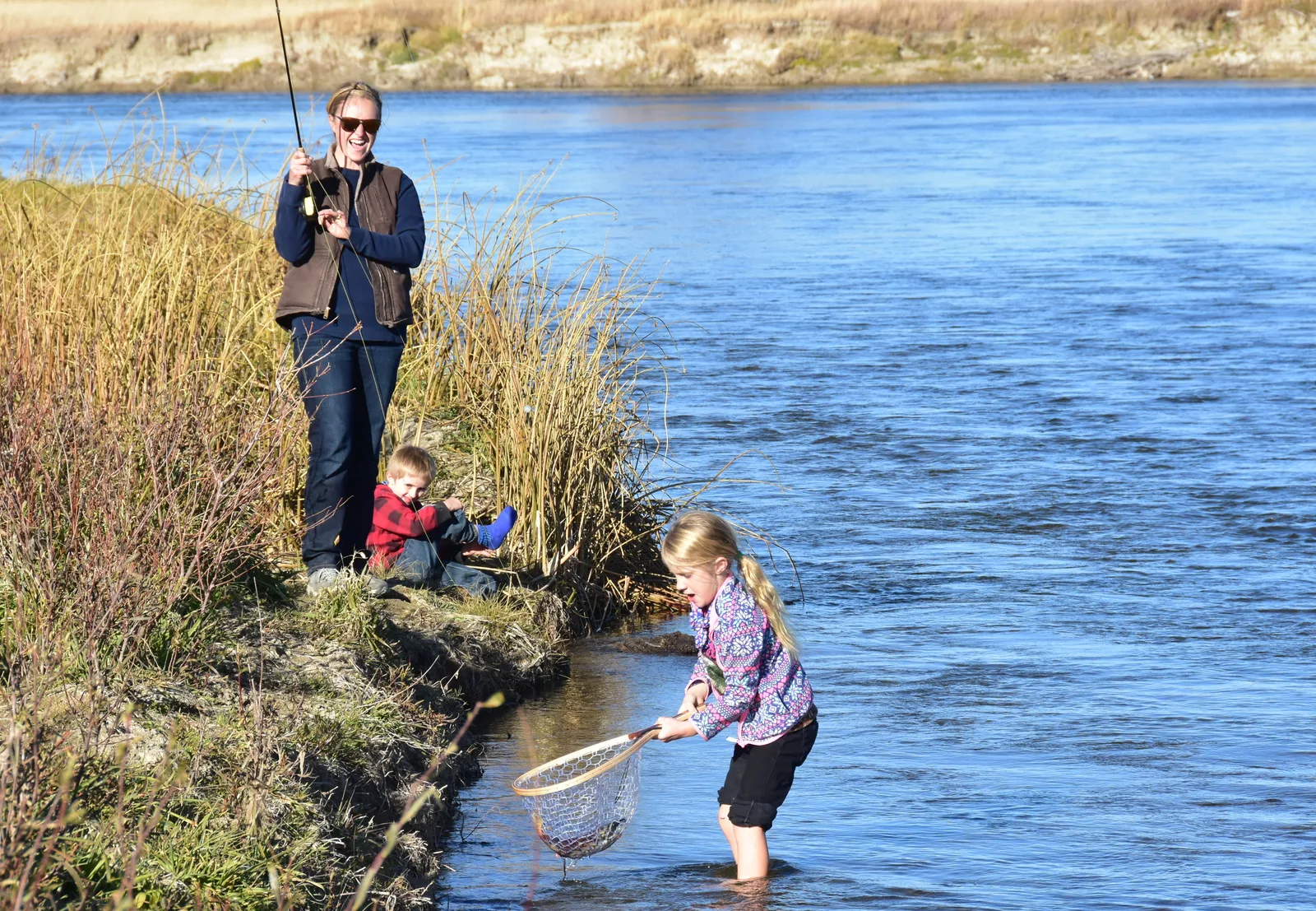
Section guide
Fishing Basics: Handling, Releasing and the First Day on the WaterThe fishing basics every angler needs before the first cast: handling fish, catch and release with the survival numbers, licenses, and the first-day kit.
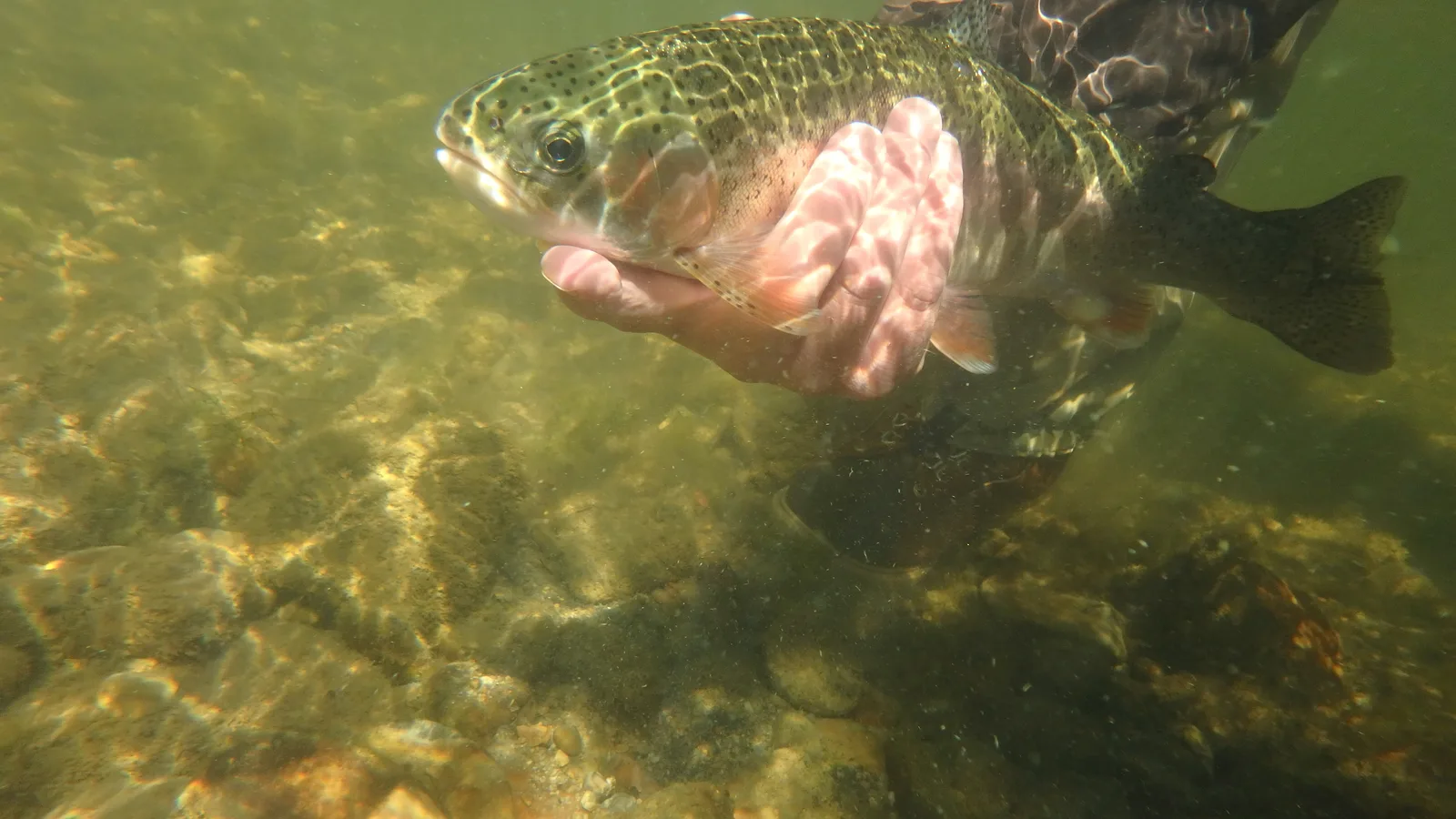 Catch and Release Fishing: How Many Fish Survive, and How to Do It
Catch and release fishing by the numbers: survival rates by species and hook location from the published studies, and the ten-step release that raises them.
 Fishing Terms: 690+ Words, Slang and Acronyms Anglers Use
Fishing terms and slang, A to Z: 690+ words in plain English, from bail and drag to hawg, dink and honey hole, plus 32 acronyms anglers use.
 Fishing for Beginners: Your First Day, From License to First Fish
Fishing for beginners in one day: the kit, the license, where bluegill bite, the bobber rig, the first cast and fish, and a box on taking a child.
Sources
- ikijime.com (DigsFish Services), Iki jime: the humane way to kill fish (Australia's National Code of Practice methods, the one-minute rule, spiking technique, ice slurry)
- ikijime.com species pages: brain location diagrams and dispatch notes for largemouth bass, walleye, rainbow trout, channel catfish, striped bass, red snapper, mahi-mahi, yellowfin tuna, summer flounder, bluegill and black crappie
- RSPCA Australia, What is the most humane way to kill a fish intended for eating? (updated May 1, 2019)
- Lloyd, J. (2015), Euthanasia of fish caught recreationally, James Cook University (the priest, the blow above the eyes)
- SPCA New Zealand, Best practice recommendations for recreational anglers (signs of consciousness, gill arches cut on both sides, the ram-ventilator exception)
- FAO, Care of the catch, in Fisheries technologies for developing countries (spiking, bleeding, slurry ratio and temperature)
- AVMA, Guidelines for the Euthanasia of Animals, 2020 edition, section S6.2 Finfish
- Louisiana Sea Grant / LSU, Handling your offshore catch (spike angle, bleed time, slush ratio and time, ice per pound)
- FDA, Selecting and serving fresh and frozen seafood safely (40 °F, two days)
- Noguchi, S. and Kumaki, Y. (2019), Effects of different killing methods on the freshness of the flathead flounder, Kyoto Prefecture Marine Center Report 41 (trial of February 2018)
- Ando, M. et al. (1996), Influence on post-mortem rigor of fish body and muscular ATP consumption by the destruction of spinal cord in several fishes, Fisheries Science 62(5):796–799
- Nakayama, T., Toyoda, T. and Ooi, A. (1996), Delay in rigor mortis of red sea-bream by spinal cord destruction, Fisheries Science 62(3):478–482
- Gräns, A. et al. (2025), From tradition to innovation: effects of manual and automated ikejime on welfare and product quality of rainbow trout and hybrid striped bass, Aquaculture 613:743458 (online November 22, 2025)
- Jung-Schroers, V. et al. (2020), Is humane slaughtering of rainbow trout achieved in conventional production chains in Germany? BMC Veterinary Research 16:197
- Gulf of Maine Research Institute, Measuring quality: black sea bass shelf life
- Maeda, T. et al. (2014), Post-catch fish handling for high quality fish products, Journal of National Fisheries University 62(4):155–158 (bleeding cuts in tuna)
- Poli, B. M. et al. (2005), Fish welfare and quality as affected by pre-slaughter and slaughter management, Aquaculture International 13:29–49
- Michelin Guide Singapore, Technique Thursdays: Ike jime (January 12, 2017; the '350 years' line, chef Dannel Krishnan)
- Maryland DNR, Japanese ike jime method offers humane way to produce high-quality fish (February 26, 2025)
- Maryland General Assembly, Chapter 430 of 2025 (HB 506), Health-General §21-305(b)(7)
- FishTalk Magazine, Ike jime (Andrew Tsui, Ike Jime Federation: 'live killing', bleed time)
- AFTCO, The complete guide to ike jime (landmark, wire from the tail, spike price) and Circuit Breaker wire sizes
- AFTCO, Ike Jime Circuit Breaker (gauge by fish, prices)
- JYG Pro, ike jime collection (Brain Spike, Ikejime Pro Kit prices)
- JYG Pro, Ikejime: honoring tradition, elevating culinary excellence, and the IKEJIME PRO kit (September 25, 2023; the kit's spike, bleeding knife and wire)
- Johnny Jigs, NeuroSpike ikejime wire tool
- The Fisherman (Leon Lian), Inshore: harvest humanely (bleeding without a stun)
- Japanese Anglers' Secrets (Totos), Ike jime part 2: what 'closing' does to the fish (December 4, 2012; 1 mm stainless rigging wire as the spinal wire)
- Sushi-pedia, Shinkeijime (nōjime, 'brain killing'; shinkei, 'nerve'; jime from 締, 'to tighten, to close')
- Wiktionary, ikejime (pronunciation)