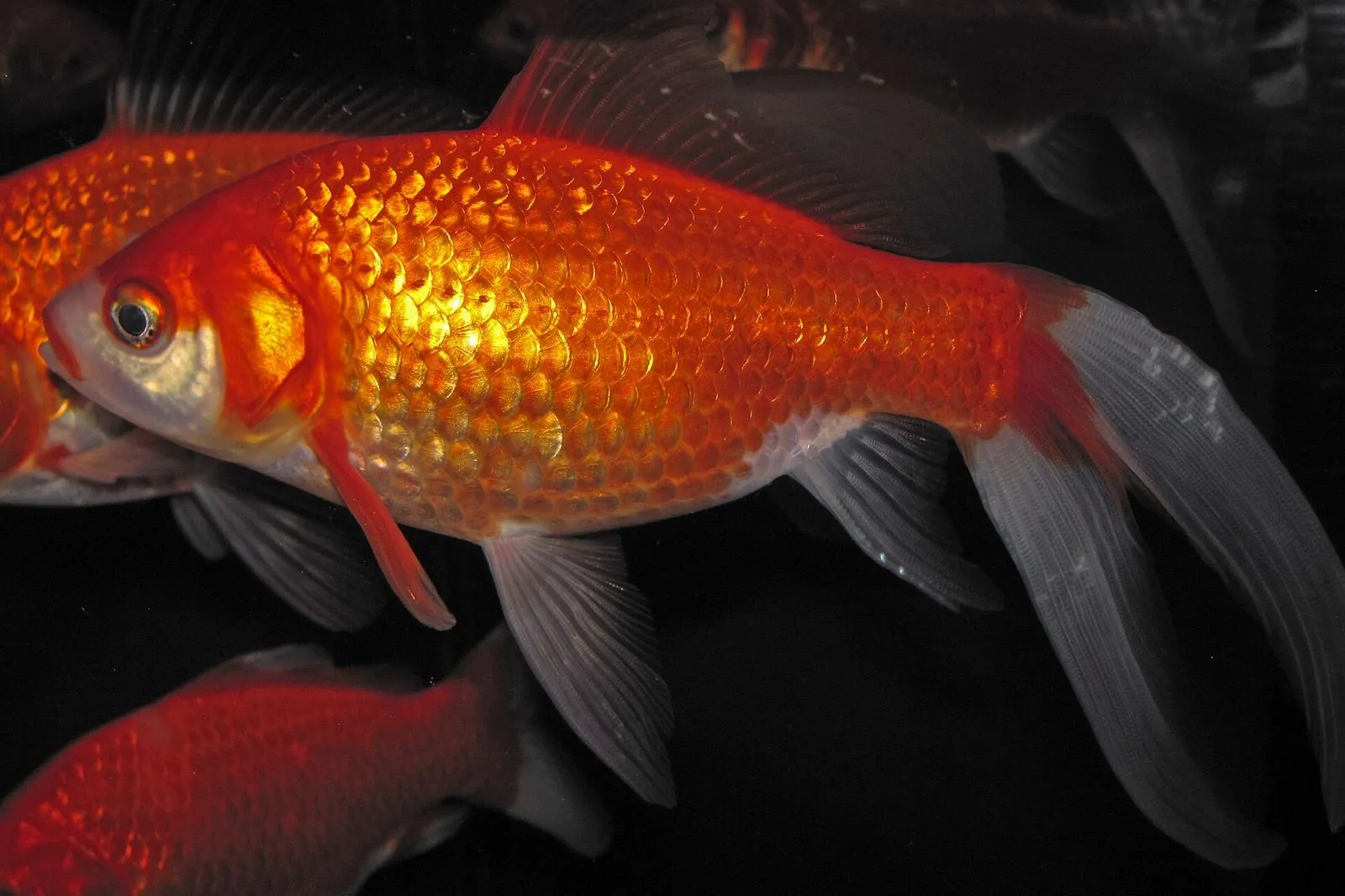
Yes: every fish, from a minnow to a 60 lb (27 kg) catfish, has a complete brain behind its eyes, and it learns with it. It has no neocortex, the wrinkled outer layer that humans think with, and it is small, about a fifteenth the weight of a bird’s or mammal’s brain at the same body size. But it holds memories for months, it learns where danger is, and it remembers a hook. That last part changes how you fish a busy lake.
Six goldfish learned to drive a wheeled tank across a room to a target. They steered to the right spot from new starting points and did not fall for the decoys (Givon et al. 2022).
What does a fish brain look like?
A fish brain has the same main parts as ours, just laid out in a line. At the front sit the smell lobes; then the forebrain, then the parts that handle sight, balance and swimming. The forebrain is where the fish keeps its map. Its outer layer is called the pallium. Fish have no neocortex, but the side part of the pallium, the lateral pallium, does the job of our hippocampus: it stores where things are.
Size is where fish and mammals part ways. A 2021 review put a fish brain at roughly 1/15 the mass of a bird’s or mammal’s brain at the same body weight. Two groups break the rule. Sharks carry big brains for fish. And the elephantnose fish, an African river fish, has a brain that outweighs a human’s when you measure it against body weight.
Small does not mean empty. The same brain runs a nightly rest, as whether fish sleep shows, and it runs learning.
Do fish have a 3-second memory? No
The story says a goldfish forgets everything after three seconds, so every lap of the bowl is new. No study ever found this. Goldfish trained to a feeding cue or a maze hold the task for weeks to months. Then in 2022, Shachar Givon’s team at Ben-Gurion University went further. They built a “fish operated vehicle”: a small water tank on wheels, with a camera above it. When the goldfish swam toward one wall of its tank, the vehicle drove that way.
Six goldfish learned to drive it across a room to a colored target on the wall. Food was the reward. They reached the target from new starting points, corrected after bumping walls, and ignored decoy targets of other colors. A brain that forgets in three seconds cannot do that. It has to hold the goal, remember what worked, and fix its mistakes.
Free card: what 26 species do at your water temperature
Plus one email a week on what's biting now. No sales pitches. Privacy.
Are fish smart?
Smart is a slippery word, so stick to what has been tested. The cleaner wrasse, a small reef fish, passed the mirror mark test. A colored mark was put on its throat where it could only see it in a mirror. Fish that had learned the mirror tried to scrape the mark off on a rock. In the 2022 replication, 17 of 18 fish did it, a better pass rate than any animal outside the great apes. Masanori Kohda’s team, who ran both studies, are careful about what it means. Passing the test, they write, need not prove self-awareness the way we feel it.
Beyond that the ground gets soft. Stories about fish that count or use tools exist, but most are single reports without a controlled test. The honest answer: fish learn, remember for months, navigate, and one species recognizes itself in a mirror. Whether that is “smart” is a word choice, not a finding.
Do fish remember being caught?
Yes, and this is the part every angler should know, because catch-and-release teaches the fish too. In 1970 the Dutch biologist J. J. Beukema stocked carp in ponds and fished them. A carp that had been hooked once was harder to catch for the rest of the study, up to a year. Pike in his second study learned the same lesson. Fifty years later, Magnus Lovén Wallerius and his team measured how fast the lesson sinks in. Carp were caught once on hook and line, released, and fished again. Within two hours their catchability had dropped 57–62%. It stayed down for 5–7 days.
Then came the surprise. Carp that had never been hooked, but had watched a tankmate get caught, were also about 55% less likely to take the bait in the two hours after. By the end of the week that effect had faded. A fish does not have to feel the hook to learn from it. Seeing a neighbor yanked out of the water is enough.
What did the tests find, species by species?
| Species | Test | Result | Source |
|---|---|---|---|
| Goldfish | Drive a wheeled water tank on land to a target, past decoys | Six fish learned it; they reached the target from new starts and ignored decoys | Givon et al. 2022 |
| Goldfish | Trained feeding cues and mazes | Remembered for weeks to months, not three seconds | Fish-intelligence overview |
| Common carp | Hooked once, then fished again in ponds | Harder to catch for up to a year | Beukema 1970 |
| Common carp | One catch-and-release, then fished again | Catchability down 57–62% within 2 hours; lasted 5–7 days | Lovén Wallerius et al. 2020 |
| Common carp | Watched a tankmate get caught, never hooked | Took the bait about 55% less often in the next 2 hours; gone by 5–7 days | Lovén Wallerius et al. 2020 |
| Northern pike | Hooked once, then fished again | Learned to avoid the hook | Beukema 1970 |
| Cleaner wrasse | Mirror mark test | 17 of 18 scraped at a mark they could only see in a mirror | Kohda et al. 2019, 2022 |
Why does a lure “stop working” on a busy lake?
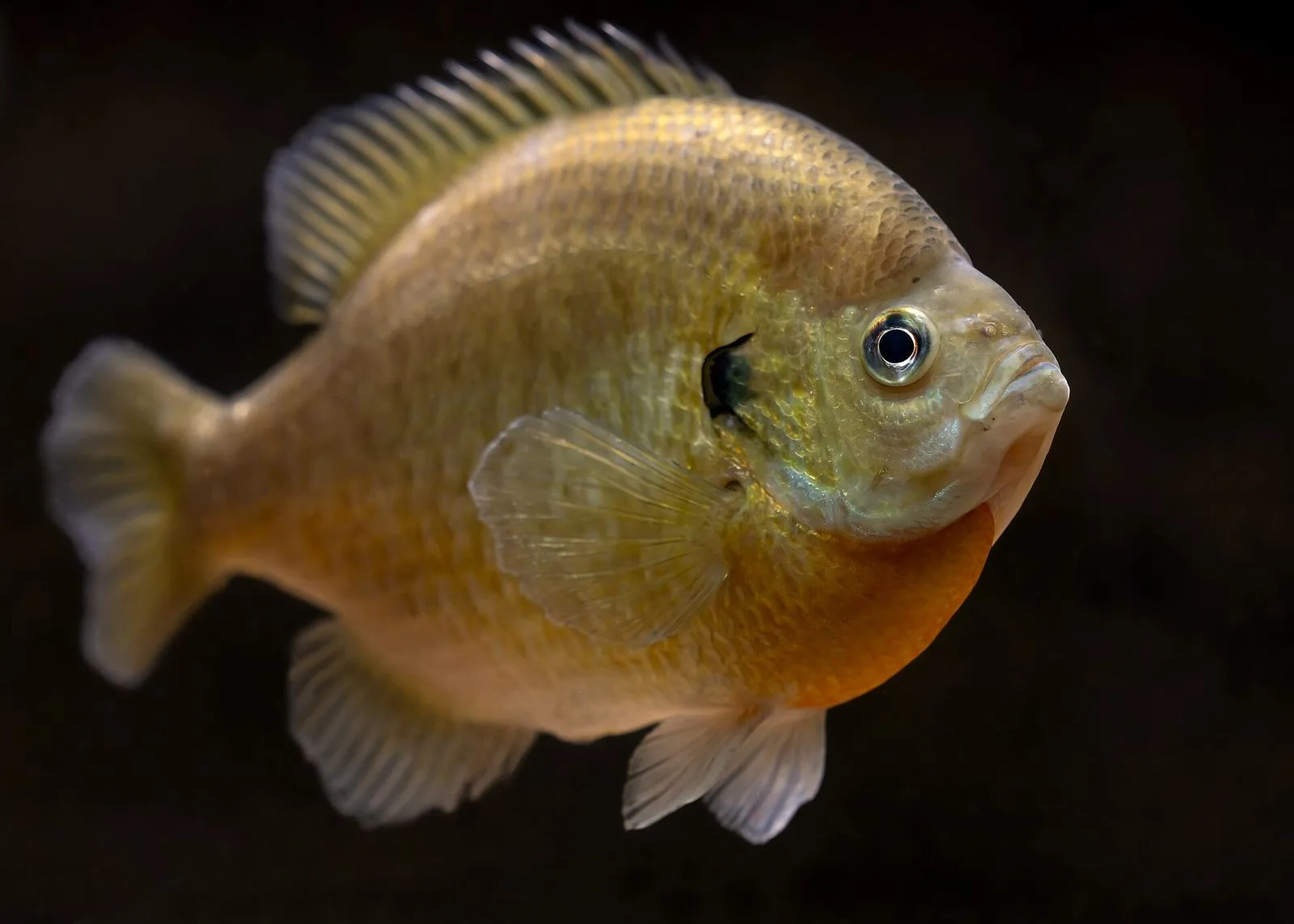
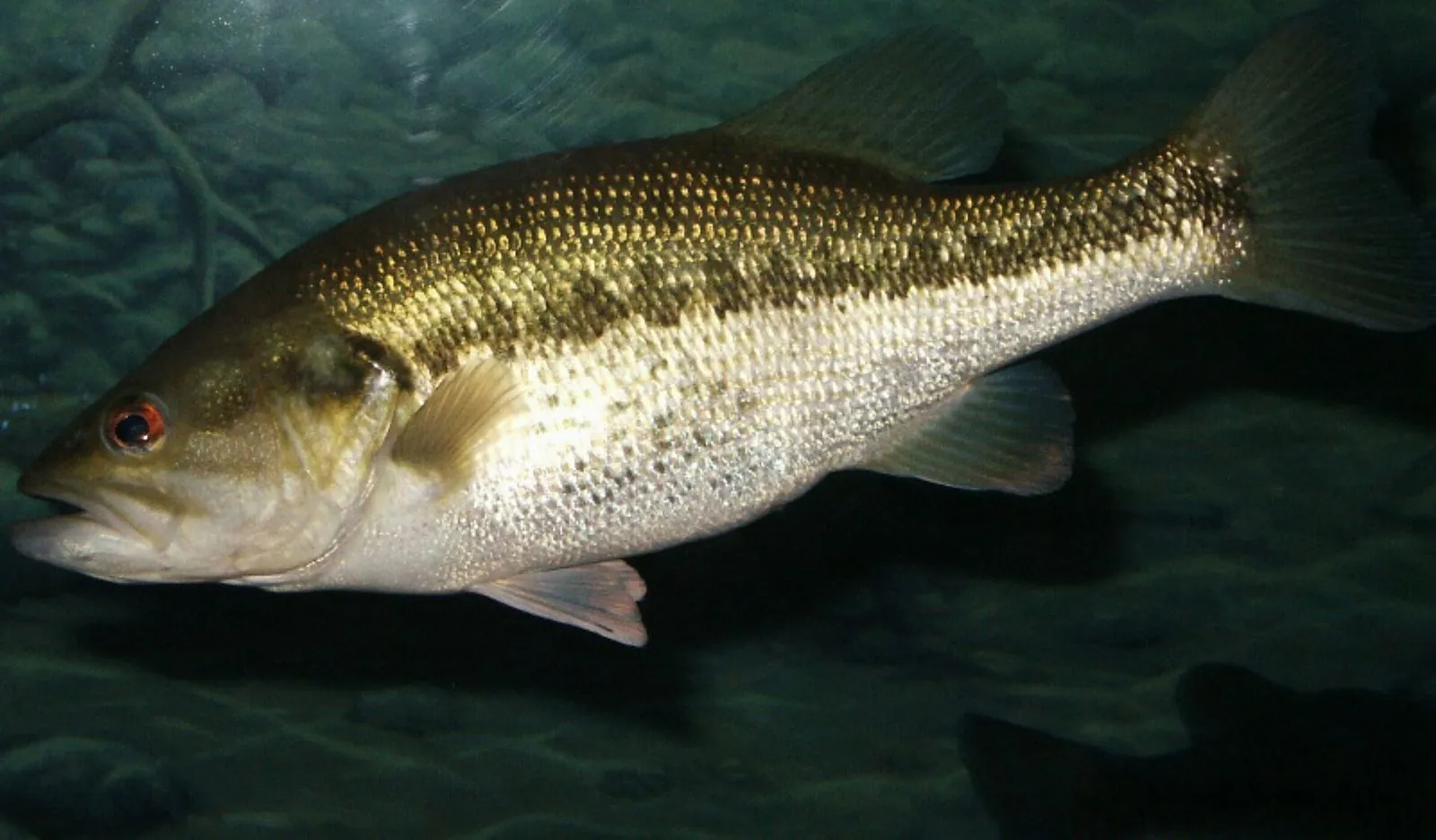
Now put the numbers on your home water. A public lake with a boat ramp and a weekend crowd gets fished every day. Every bass, carp or pike in it has been hooked or has watched a neighbor get hooked. The carp studies say a fish that was hooked is 57–62% less likely to bite for the better part of a week, and one that only watched is about 55% shyer for the next few hours. A pond fished every Saturday never gets its 5–7 days off. That is a pressured lake, and it is why a lure that caught ten fish in May catches none in August. The fish did not leave. They learned that shape, that rattle and that color.
Beukema’s year-long carp are the warning. A long fight and a long time in the air may be remembered for a season. So on hard-fished water, decide in this order:
- Judge the pressure before the first cast. A ramp, a bait shop nearby, tournament signs, worn bank spots: assume these fish have seen the common lures and learned them.
- Change the lure’s shape and sound before you change the spot. The fish learned one profile and one noise. A different type of lure is a new lesson they have not had; moving 200 yd (180 m) shows the same lure to fish with the same memory.
- If the shape must stay, change the color or size. The goldfish learned a target by color and ignored the decoys. A color or size the fish has not been hooked on is not yet on the danger list.
- Fish the days and hours the crowd does not. The 5–7 day dip means Monday morning fish, or a bay nobody drives to, have partly forgotten the weekend.
- Go barbless and unhook the fish in the water. The fish learns either way, so keep the lesson short. A barbless hook comes out in seconds, and a fish returned fast and unhurt is one you can catch again next month.
- Keep the fight short and the air time shorter. A carp caught once stayed shy for up to a year. A quick, calm release is the best chance that this fish goes back to feeding soon.
A fish that learns is not bad news. It is the reason a lake still has fish in it after decades of fishing, and the reason the angler who changes first catches first. More of what fish can do, with a number for each, is in the fish facts collection.
Free download
The water temperature card
Read your water temperature and the card tells you who is spawning, who is feeding and what to throw. 26 species, 16 pages, for your phone and the tackle box.
Plus one email a week on what's biting now. No sales pitches. Privacy.
Related
Section guide
Fish Facts: The Questions Kids Ask About Fish, Answered With the ScienceFish facts with a number and a source for each: how fish sleep, breathe, hear and feel, and what every answer means when you hook and release one.
 Do Fish Drink Water? Freshwater Fish, Saltwater Fish and Sharks
Do fish drink water? Freshwater fish barely do, saltwater fish drink all day, sharks cheat with urea. The numbers, and what it means for bait and livewells.
 Do Fish Drown? How Fish Suffocate, and How to Revive a Tired One
Do fish drown? Not by the dictionary, but they suffocate three ways: low oxygen, damaged gills, no water flow. How long a fish lasts in air, how to revive one.
 Do Fish Fart? Yes, Herring Do It on Purpose, and a Bloated Bass Needs Help
Do fish fart? Herring do, on purpose, and scientists won a prize for proving it. Which fish pass gas, where it goes, and what to do with a bloated bass.
 Do Fish Feel Pain? What the Studies Found, and What Decides Whether a Released Fish Lives
Do fish feel pain? They sense damage and react; whether they suffer is contested. The trout study, both camps, and what decides if a released fish lives.
 Do Fish Get Cold? What Winter Does to a Fish, and the Ones With Antifreeze in Their Blood
Do fish get cold? Yes: a fish is as cold as its water and feels it as slowness. What fish do in winter, who carries antifreeze, and how to fish cold water.
 Do Fish Have Bones, Hearts and Blood? What Is Inside a Fish
Do fish have bones? Most do; sharks run on cartilage and 16 icefish have clear blood. How skeleton, heart and blood work, and what it means for your fillets.
Sources
- Givon et al. (2022), From fish out of water to new insights on navigation mechanisms in animals, Behavioural Brain Research (the goldfish driving study)
- Lovén Wallerius et al. (2020), Learning and hook avoidance in common carp after catch-and-release, Transactions of the American Fisheries Society (with the Beukema 1970 carp and pike findings)
- Kohda et al. (2019), If a fish can pass the mark test, what are the implications for consciousness and self-awareness testing in animals?, PLOS Biology
- Kohda et al. (2022), Further evidence for the capacity of mirror self-recognition in cleaner fish, PLOS Biology
- Relative brain size in fishes, Brain, Behavior and Evolution (2021)
- Fish intelligence (overview, with the goldfish memory reports)