 By
A California fishing license costs $64.54 for a resident and $174.14 for a nonresident in 2026. It’s good for 365 days from the day you buy it. You need one from age 16. Buy it online, by phone at (800) 565-1458, or at a license agent such as a tackle shop.
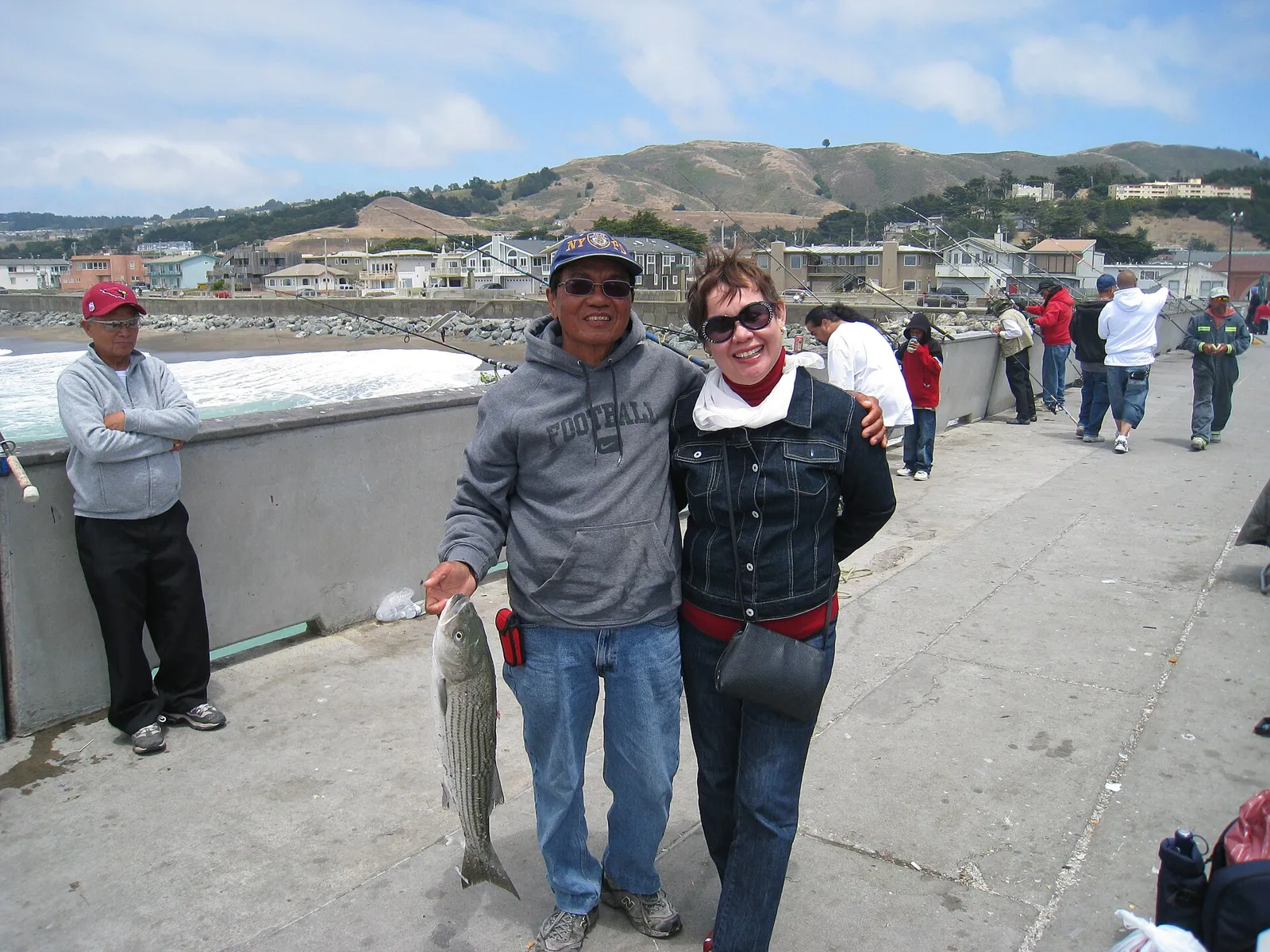
Fish from a public pier on the California coast and you need no license at all. Size limits, bag limits and report cards still apply.
Most freshwater anglers need that one license. Two rods, the ocean off Southern California, crab traps and a few fish (steelhead, sturgeon, lobster, North Coast salmon) each add a small item on top. For the seasons, the limits and the waters, start at the California fishing page.
How much is a California fishing license in 2026?
Here are CDFW’s prices for 2026, with the 2027 price beside them. California raises its fees a little each year, so the agency already lists both.
| License | Resident 2026 | Nonresident 2026 | 2027 price |
|---|---|---|---|
| 365 days, ages 16 and up | $64.54 | $174.14 | $66.96 resident, $180.36 nonresident |
| One day | $21.09 | $21.09 | $21.86 |
| Two days in a row | $32.40 | $32.40 | $33.48 |
| Ten days in a row | — | $64.54 | $66.96 |
| Disabled veteran, 50% or more | $10.04 at CDFW, $10.54 at an agent | same | $10.30, $10.80 |
| Recovering service member | $10.04 at CDFW, $10.54 at an agent | same | $10.30, $10.80 |
| Low-income senior, 65 and up | $10.04 | — | $10.30 |
A dash means there’s no such license. The one-day and two-day licenses cost residents and visitors the same. The ten-day license is for nonresidents only, and it costs exactly what a resident pays for a full year.
Most of these prices already include a 5% agent handling fee and a 3% application fee.
Why does it go up every year? State law ties the fees to an inflation index. Most years that means 2 to 3 percent. In 2023 it jumped 8.48 percent.
Which license should you buy?
Pick by how many days you’ll fish. The math below uses only CDFW’s own 2026 prices.
| Your trip | Buy this | Why |
|---|---|---|
| One day, resident or visitor | One day, $21.09 | the cheapest way to fish once |
| Two days in a row | Two days, $32.40 | $9.78 less than two one-day licenses |
| Three days, two of them in a row | Two days plus one day, $53.49 | $11.05 less than the resident year. Three separate days cost $63.27 |
| Four days or more, resident | 365 days, $64.54 | two two-day licenses cost $64.80 |
| Visitor, 4 to 10 days in a row | Ten days, $64.54 | 26 cents less than two two-day licenses, and days 5 to 10 come free |
| Visitor, two trips of up to ten days | Two ten-day licenses, $129.08 | $45.06 less than the year |
| Visitor, up to five weekend trips | A two-day license each time, $32.40 | five cost $162.00, still under the year |
| Visitor, three trips or more of 3 to 10 days | 365 days, $174.14 | three ten-day licenses cost $193.62 |
The short licenses come with a bonus on the coast. Fish the ocean south of Point Arguello in Santa Barbara County on the year license and you need the $7.30 Ocean Enhancement Validation too. On a one-day or two-day license you don’t. A resident’s ocean year in Southern California really costs $71.84.
Free PDF · Water temperature chart Which fish are biting at today's water temperature?
One reading, and the 16-page chart shows which of 26 fish are spawning, feeding hard or slowing down; for bass, crappie, bluegill and walleye, where they sit and what to throw. Every number sourced.
No card, nothing to buy, and the PDF is yours to keep. It's in your inbox a minute later. Then a few short emails and one a week on what's biting. Unsubscribe anytime. Privacy.
What do you need on top of the license?
Most anglers need nothing more. These add-ons are for one kind of fishing each.
| Add-on | 2026 | 2027 | You need it for |
|---|---|---|---|
| Second Rod Validation | $20.26 | $21.09 | two rods in inland waters |
| Ocean Enhancement Validation | $7.30 | $7.56 | the ocean south of Point Arguello |
| Recreational Crab Trap Validation | $2.98 | $2.98 | crab traps, not hoop nets |
| Steelhead Report Card | $10.29 | $10.29 (to April 30, 2027) | steelhead in rivers that run to the ocean |
| Sturgeon Fishing Report Card | $8.13 | $8.38 | any white sturgeon |
| North Coast Salmon Report Card | $9.21 | $9.46 | salmon in the Smith, Klamath and Trinity |
| Spiny Lobster Report Card | $12.70 | $13.22 | spiny lobster |
The Second Rod Validation is the one inland anglers miss. You need it to fish two rods or lines in lakes and rivers. It doesn’t work on waters where only artificial lures or barbless hooks are allowed. In the ocean you don’t need it at all.
The Ocean Enhancement Validation covers only the ocean south of Point Arguello. North of it, a plain license is enough.
The crab trap validation is for traps only. Hoop nets and crab loop traps don’t need it. Since Jan. 1, 2026 you don’t need it when you trap crabs from a party boat (a Commercial Passenger Fishing Vessel).
The three validations run 365 days from purchase, like the license. The report cards don’t. Each one keeps its own season, whatever day you bought your license.
How do the report cards work?
A report card is a paper card you fill in as you fish, then turn in. It counts the fish for CDFW. You need one for steelhead, sturgeon, spiny lobster, and salmon on the Klamath, Trinity and Smith rivers. For king salmon in the ocean or on other rivers, you don’t need the salmon card.
Carry the paper card itself. The CDFW License App shows that you bought one, but CDFW says that proof doesn’t replace the physical card. Fill it in with ink that won’t run.
Report online or by mail by Jan. 31 of the next year. The lobster card is due April 30. Miss the lobster deadline and you pay a $21.60 non-return fee on next season’s card.
Sturgeon fishing is catch-and-release only. The card runs with the sturgeon season, Oct. 1 to June 30, and is due by July 31.
What changes for steelhead in 2027?
The steelhead card gets a new season on Jan. 1, 2027, and it starts to cover rainbow trout too. In California a steelhead is any rainbow trout over 16 in (41 cm) in anadromous waters, the rivers that sea-run fish swim up from the ocean.
| Card | Price | Covers |
|---|---|---|
| 2026 card | $10.29 | steelhead in anadromous waters, through Dec. 31, 2026 |
| 2027 short-season card | $10.29 | steelhead or rainbow trout in anadromous waters, Jan. 1 to April 30, 2027 |
| 2027–28 full-season card | $0 with the short-season card, from July 1, 2027 | Aug. 1, 2027 to April 30, 2028 |
From 2027 on, the card is needed from Aug. 1 to April 30, for steelhead or rainbow trout in those waters. From May 1 to July 31 you need no card at all.
So a rainbow from anadromous water in winter now needs the card, even one under 16 inches. And from the May 2028 reporting period, a card not turned in by May 31 costs a $21.60 non-return fee.
Who needs a California fishing license?
Everyone 16 and older needs one to fish in California, in fresh water or the ocean. The same goes for taking clams, crabs, lobster and other shellfish, and frogs.
Kids under 16 need no license. They may even fish two rods in inland waters without the validation, except where only artificial lures or barbless hooks are allowed. But a kid fishing for steelhead, sturgeon, lobster, or salmon on the North Coast rivers needs the report card like everyone else.
Who counts as a resident?
You’re a resident after six months in a row living in California, right before you buy. Two groups count as residents from day one: anyone on active military duty with the U.S. Armed Forces, and anyone enrolled in the Job Corps.
Everyone else pays the nonresident price. For a visitor, that makes the short licenses worth a look, as the table above shows.
Can you fish in California without a license?
Yes, in a few cases. The fish rules still apply in every one of them.
| Where or when | License needed | What still applies |
|---|---|---|
| A public pier in ocean waters | none, no validations either | every limit, season and report card |
| Free fishing days: July 3 and Sept. 4, 2027 | none | every limit, closure and report card |
| Kids under 16 | none | report cards |
| Lake Tahoe and Topaz Lake | California or Nevada license | Nevada also wants its trout stamp |
| Colorado River, California-Arizona line | California or Arizona license | fish from either shore |
Ocean waters, for the pier rule, include San Francisco and San Pablo bays, inland as far as the Benicia-Martinez Bridge. On a free fishing day, anyone can fish without a license. The 2026 ones were July 4 and Sept. 5. On the Colorado River, the old Special Use Validation ended after 2013.
What counts as a public pier?
Not every structure on the water. A public pier, in CDFW’s rules, is publicly owned and connected to the shore above high tide. It’s free and open to everyone, and it was built for fishing the ocean.
Jetties and breakwaters count only when they form the outermost wall of an ocean harbor, are connected to land, and are free to walk on. Docks, sea walls, promenades and inner jetties don’t count. On those, you need a license.
No license on the pier doesn’t mean no rules. A sturgeon from a pier needs the sturgeon card, and a lobster needs the lobster card. Size and bag limits still apply.
Free and reduced-fee licenses
California gives some anglers a license for little or nothing. You prove you qualify first.
- Reduced fee, $10.04 at a CDFW office or $10.54 at an agent: honorably discharged veterans with a service-connected disability of 50% or more, residents or not. Recovering service members get it too. Send CDFW your VA letter, or a letter from your commanding officer or a military doctor. After that, buy it anywhere licenses are sold.
- Reduced fee, $10.04, low-income seniors: residents 65 and older who get SSI or CAPI benefits. Only at a CDFW License Sales Office, renewed each year, with fresh proof each time.
- Free: anyone who is blind or developmentally disabled, and residents who can’t get around without a wheelchair, walker or crutches. Also low-income Native American residents. The first free license comes from CDFW’s License and Revenue Branch by mail or upload. Allow 15 business days.
Free and reduced-fee licenses don’t cover the add-ons. You pay the regular price for a validation or report card.
Is there a senior fishing license in California?
Only for low-income seniors. A resident of 65 pays the full $64.54 unless they get SSI or CAPI. There’s no general senior discount and no age at which a license stops being required.
Where age does pay is the lifetime license. It’s cheapest for kids under 10 and for anyone 62 and up:
| Lifetime license, residents | 2026 | 2027 |
|---|---|---|
| Ages 0 to 9 | $709.00 | $734.00 |
| Ages 10 to 39 | $1,160.25 | $1,201.25 |
| Ages 40 to 61 | $1,045.00 | $1,082.00 |
| Ages 62 and up | $709.00 | $734.00 |
| Fishing Privilege Package | $478.75 | $495.50 |
At 2026 prices, a 62-year-old’s lifetime license costs about as much as 11 years of licenses. The Fishing Privilege Package adds a lifetime Second Rod Validation, Ocean Enhancement Validation, North Coast Salmon Report Card and Steelhead Report Card.
The first lifetime license must be bought at a CDFW License Sales Office. Each year after that, you claim it, and it runs 365 days from that day.
Where do you buy a California fishing license?
You have four ways to buy:
- Online, on CDFW’s Online License Sales and Services site.
- By phone at (800) 565-1458. The license comes by mail within 15 days, so don’t count on it for this weekend.
- At one of CDFW’s license agents, such as a sporting goods store, a big discount store or a bait and tackle shop. Agents take cash. CDFW’s license agent finder shows the stores near you.
- At a CDFW License Sales Office. No cash there: checks, money orders, or a Visa or Mastercard card.
Have ID ready. A driver’s license works, as do a U.S. passport, a military ID or a foreign government photo ID. CDFW also asks for your phone number, for the national saltwater angler registry. A buyer under 18 can show a parent’s ID instead.
Buying for someone else takes their CDFW customer number (the GO ID) and date of birth. Don’t have them? Buy a gift voucher. It’s good for a year and swaps for a license online, at an agent or at a CDFW office.
How do you carry it?
Keep a valid license on you while you fish. You don’t have to wear it, but it must be in your immediate possession. You can also show the license and validations in the CDFW License App. Report cards are the exception: those stay on paper.
The paper license is waterproof thermal paper. Heat darkens it until it’s hard to read, so keep it away from heat and never heat-laminate it. Lost it? A duplicate costs $14.30.
Good to know: A license can’t be refunded, even if you never use it. Check the dates and the name before you pay.
When does your license expire?
Exactly 365 days after you buy it. A license bought on June 1 runs through May 31 the next year. That’s been the rule since 2023, when California dropped the calendar-year license.
So there’s no rush at New Year’s. Buy it the week of your first trip and you get the full 365 days. Signed up for auto-renewal? The new license is mailed about 45 days before the old one runs out, and it starts the day after.
Quick answers
How much is a California fishing license for a nonresident? $174.14 for 365 days in 2026, $64.54 for ten days in a row, $32.40 for two days and $21.09 for one day.
How much is a California fishing license for seniors? The full $64.54, unless you’re 65 or older and get SSI or CAPI. Then it’s $10.04 at a CDFW office.
Can I keep my California fishing license on my phone? Yes, the license and validations, in the CDFW License App. Report cards stay on paper.
Can I buy a California fishing license online? Yes, on CDFW’s Online License Sales and Services site.
Do I need a license to fish from a pier in California? Not on a public pier in ocean waters. You still need a report card for sturgeon or lobster, and every size and bag limit applies.
Do I need a license if I only catch and release? Yes. California’s law counts trying to catch a fish as taking it, so letting it go doesn’t change anything.
Is a California fishing license good in other states? Only on shared water. It works anywhere on Lake Tahoe and Topaz Lake, and from either shore of the Colorado River where it forms the Arizona line. Anywhere else, the other state’s rules apply.
Does one license cover fresh water and the ocean? Yes. Add the Ocean Enhancement Validation south of Point Arguello, unless you’re on a one- or two-day license.
For the trip itself, the California fishing page has the seasons and the limits by fish. The fishing by state page lines up every state’s license fee. Bound for the Delta, the striped bass pages cover the fish most anglers there are after.

Free PDF · 16 pages
Stop guessing. Know what's biting before your first cast
A whole Saturday on the water with nothing to show for it. One reading tells you who's feeding.
The Water Temperature Fishing Chart. Take one water temperature reading, find it on the chart, and see which of 26 freshwater fish are spawning, feeding hard or slowing down.
- Where bass, crappie, bluegill and walleye sit, and what to throw. Trout: the reading where you stop.
- Why a 3 ft drop beats a cold front, and what to throw each day of the front
- The three thermometer mistakes that make a reading lie
The chart's numbers come from state fish and wildlife agencies and fisheries research: 64 sources, each listed on the site.
No card, nothing to buy. The PDF is in your inbox a minute later, one version for your phone and one to print, yours to keep. Then a few short emails and one a week on what's biting, with an unsubscribe link in every one. Privacy.
Related
Section guide
California Fishing: Seasons, Limits, the License and the Waters to KnowCalifornia fishing in one place: what's open all year, the trout stream opener, the bass and striper limits, the $64.54 license and the trophy waters.
Sources (4)
- California Department of Fish and Wildlife, Sport Fishing Licenses and Report Cards (2026 and 2027 fees, read Nov. 27, 2026)
- California Department of Fish and Wildlife, Free Fishing Days
- California Department of Fish and Wildlife, 2026 California Freshwater Sport Fishing Regulations (PDF, updated July 10, 2026; license information pp. 8, 13–14)
- California Department of Fish and Wildlife, Online License Sales and Services