 By
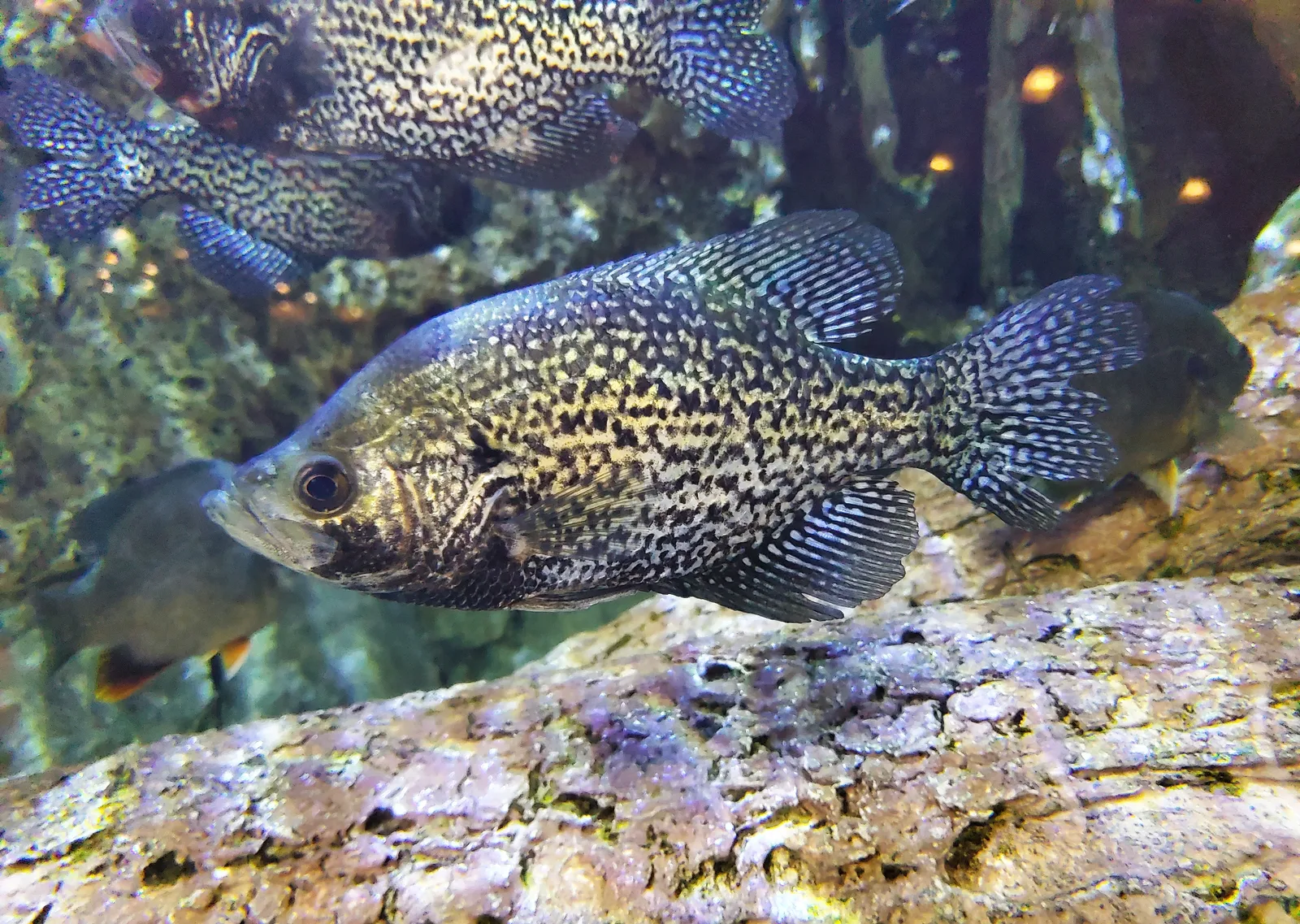
Of the six crappie rigs worth knowing, tie the slip float first. The others are variations for deeper water, two depths at once, or a moving boat. Every one of them does the same job. It holds your minnow or small jig at the exact depth of the fish. The six are the slip float, the fixed bobber, the double-minnow dropper, the Kentucky rig, the drop-shot minnow and the multi-rod spread called spider rigging.
Keep the droppers short. Crappie guide Jason Sandage ties the loops on his two-hook rig about an inch long. A long leader lets a fish swim around with your bait and you don’t feel it, CrappieNOW’s Tim Huffman reports.
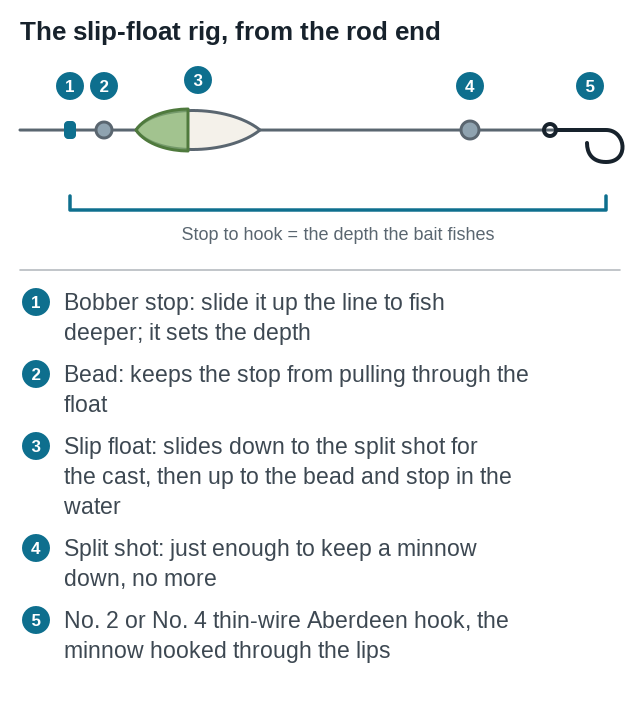
Drawing: fishing.info
Which rig, where?
| Rig | Where and when | Weight | Hooks and leaders | Whose rig |
|---|---|---|---|---|
| Slip float | Brush, docks and timber deeper than 5 ft (1.5 m) | Split shot, just enough | No. 2–4 thin-wire Aberdeen | David Schlake, Wired2Fish |
| Fixed bobber | Shallow spawning cover; bank fishing | Split shot | Light-wire hook or a 1/32–1/16 oz jig | Missouri agency |
| Double minnow | Suspended fish over ledges and open water, 15–30 ft (4.5–9 m) | Bell sinker at the bottom | Two droppers, the lower one longer | David Schlake |
| Kentucky rig | Stumps and brush, 8–10 ft (2.4–3 m) tight-lined; slow-trolled in winter | ¾–1 oz (21–28 g) bell sinker | Two short droppers, 18 in (46 cm) apart | Don Gasaway; guide Jason Sandage |
| Drop-shot minnow | Pilings, bridge pillars, sharp breaks | ⅛ oz (3.5 g) shallow, ½ oz (14 g) past 25 ft or in current | One hook above the weight | David Schlake |
| Spider rig spread | Scattered schools on flats and channel edges | 1 oz bank sinker, or a ¼–¾ oz egg sinker | Two to four drop lines of 12–18 in, or two leaders of 12 and 15 in | Keith Sutton, Bass Pro |
Read the table by the cover. A float is for fish holding beside or above cover at a depth you know. A two-hook rig is for fish you’re still searching for, or fish stacked at two depths. A moving boat with many rods is for schools scattered across a flat. Whatever you tie on, the bait goes at the fish’s depth or just above it.
Fishing from the bank? The slip float and the fixed bobber are the two rigs to start with. Cast past the cover and let the float hold the depth. Spider rigging needs a boat.
What you need
- Line: use 4–6 lb monofilament or fluorocarbon on float rigs. That’s Schlake’s number. Pennsylvania’s agency gives 4–8 lb for black crappie and 2–6 lb for white. Spider rigs run 4–8 lb in Sutton’s article and 6–10 lb in FishUSA’s guide.
- Hooks: thin-wire Aberdeen hooks, long-shanked and light enough to bend free of a snag. Schlake uses No. 2 or No. 4 under a float. Spider rigs carry 1/0 to 2/0. Hook numbers run backward, so a No. 4 is smaller than a No. 2.
- Float rigging: a bobber stop, a small bead, a slip float and split shot.
- Sinkers: ¾–1 oz bell sinkers for the Kentucky rig and ⅛–½ oz drop-shot weights. For spider rigs you’ll want egg sinkers and three-way swivels.
- Minnows: use 1–2 in minnows in spring and early summer, and up to 3 in in fall and before the spawn, Schlake writes. The crappie bait page covers live bait in full.
- A rod: a light spinning rod for floats and casting. Spider rigging takes 10–16 ft rods in holders.
| Rig | Hook size | Whose numbers |
|---|---|---|
| Slip float | No. 2 or No. 4 thin-wire Aberdeen | Schlake |
| Kentucky rig | 2/0 | Gasaway |
| Simple spider rig | 1/0–2/0 Aberdeen | Sutton |
| Mullins–Lucius spider rig | 1/0 | Sutton |
| Store-bought spreader | No. 8 to 2/0, snelled Aberdeen | Eagle Claw |
Free PDF · Water temperature chart When do crappie bite?
One reading, and the 16-page chart shows which of 26 fish are spawning, feeding hard or slowing down; for bass, crappie, bluegill and walleye, where they sit and what to throw. Every number sourced.
No card, nothing to buy, and the PDF is yours to keep. Confirm with one click and it's on its way. Then a few short emails and one a week on what's biting. Unsubscribe anytime. Privacy.
The slip-float rig, step by step
The slip float lets you fish deep and still cast. A bobber stop on the line sets the depth. When you cast, the float slides down toward the hook. In the water it slides back up to the stop.
- Tie on the bobber stop first, a few feet up the main line. A stop knot of thread or a rubber stop both work. It has to pass through your rod guides.
- Thread a small bead, then the slip float. The bead keeps the stop from pulling through the float’s hole.
- Tie the hook to the end of the line: a No. 2 or No. 4 thin-wire Aberdeen. A thin hook tears a crappie’s thin mouth less, Schlake notes, and it bends out of brush instead of breaking your line.
- Pinch on split shot a short way above the hook. Use as little as keeps the minnow down. Too much restricts its natural movement, Schlake warns.
- Set the depth above the fish. Slide the stop until the distance from stop to hook puts your minnow at the school’s depth or slightly above. Crappie “don’t like to feed down,” Schlake writes: “they want the bait above them, where they can see and rise to it.”
- Hook the minnow through the lips, bottom jaw to top lip. That way it swims forward and stays alive longer.
- Cast past the cover and let the float settle while the line slides through it to the stop.
When the float dips or slides away, reel the slack tight and sweep the rod. Don’t jerk it. A crappie’s thin mouth tears easily.
In water shallower than your rod is long, a fixed bobber clipped onto your line does the same job. Bobbers “are not just for young or inexperienced anglers,” Missouri’s agency says: “There are days when crappie will only pick up a jig or minnow that is hovering nearly motionless.” The classic version is a 1/32 or 1/16 oz jig under the float in spring spawning cover. The crappie jigs page sizes the jig.
Two hooks at two depths
The double-minnow rig
For suspended crappie in 15–30 ft of water, Schlake puts two minnows on one line. Tie two dropper loops in the main line with a surgeon’s knot or a triple overhand. Hang one minnow on a short leader from the upper loop and a second on a slightly longer leader from the lower loop. Then tie a bell sinker to the end.
Drift it at 0.3–0.6 mph. Any faster lifts the rig away from the fish. Schlake suggests you lip-hook one minnow and tail-hook the other so they move differently. In stained water, he also suggests a bead or a small blade on the lower leader.
The Kentucky rig
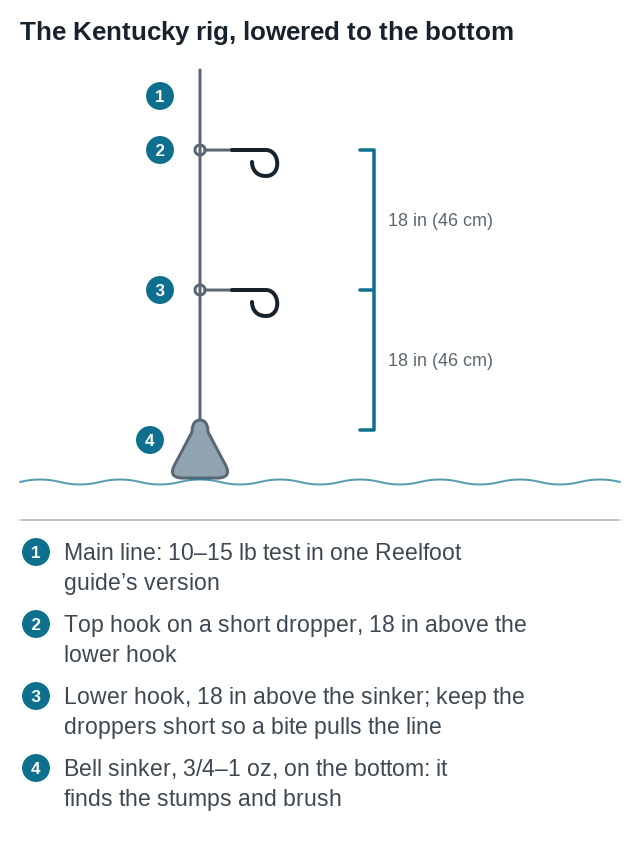
The Kentucky rig puts the weight at the bottom and your hooks above it. Tie a 1 oz bell sinker to the end of a 25–30 lb leader. Two 6 in droppers carry 2/0 hooks: the first 18 in above the sinker, the second 18 in above that. That’s the Kentucky Lake version Don Gasaway describes in Midwest Outdoors. He fishes it in about 8 to 10 ft of water, tight-lined straight down into cover, with a minnow on both hooks.
Guide Jason Sandage fishes Grenada and Reelfoot. In winter he slow-trolls the same layout on 10–15 lb line with a ¾ or 1 oz sinker, CrappieNOW reports. What he changes is the dropper: loops of about an inch, so a crappie that takes your bait pulls the line at once. The heavy sinker is the point of the rig. It started as a tool for bouncing the bottom to find depth, contours and cover.
The store-bought crappie rig
What tackle shops sell as a “crappie rig” is the same two-hook idea in wire: a spreader rig. Eagle Claw’s version has a crane swivel on top for your main line and a snap at the bottom for the sinker. Two spreader arms hold snelled gold Aberdeen hooks on mono leaders away from the main line. It comes in hook sizes from No. 8 to 2/0. It saves you tying and keeps two minnows from tangling. A rig you tie yourself lets you choose the loop length, the line weight and the gap between hooks, which is what Sandage changes. Want his short loops? Tie your own.
The double-jig rig
The same two-depth idea works with jigs. FishUSA ties two jigs on one line, 12–18 in (30–46 cm) apart, to offer two baits at two depths. It also notes that two hooks on one line aren’t legal everywhere, so check your rules before you tie it. The crappie jigs page sizes the heads.
| Two-hook rig | What holds the hooks | Best for |
|---|---|---|
| Kentucky rig, tied | Dropper loops in the line, 18 in apart | Short loops, your own line and spacing |
| Store-bought spreader | Two wire arms under a swivel | Quick rigging, two minnows untangled |
| Double-jig rig | Two jigs, 12–18 in apart | Two baits at two depths, no live bait |
The drop-shot minnow
For crappie tight to bridge pillars, pilings and sharp breaks, Schlake hangs a minnow on a drop-shot rig, with the hook tied above the weight. Tie the hook on with a Palomar knot and leave a long tag. Then thread the tag back through the hook eye from the top, so the hook stands out level. He uses ⅛ oz in slack water or shallow brush and ½ oz past 25 ft or in current, with braid and a fluorocarbon leader for feel.
Spider rigs: many rods, one boat
Spider rigging means slow-trolling with long rods fanned out from the boat like a spider’s legs. Sutton writes that you can use from two rods to 16, but six to eight are the usual number. Check the rules first. Some lakes limit how many rods one angler may fish, and some limit hooks per line. On Mississippi’s Sardis, Grenada, Arkabutla and Enid lakes, an angler may fish no more than four rods, with two hooks or lures on each. Tennessee allows at most three hooks per rod unless a water’s own rule says otherwise.
Sutton gives two rigs. The simple one has a 1 oz bank sinker on the end of your main line, with two to four drop lines of 12–18 in above it. They hang about 18 in apart, shorter on top. Each carries a jig or a 1/0–2/0 Aberdeen hook with a minnow.
The better one, in his words, comes from Arkansas tournament anglers Chris Mullins and Ricky Lucius. It hangs from a three-way swivel:
- From the bottom eye, an 18 in leader runs through a ¼–¾ oz egg sinker to a barrel swivel, then 15 in more to the first 1/0 hook.
- From the side eye, a 12 in leader carries the second 1/0 hook.
- Put a crappie tube on each hook, with the hook eye inside the tube.
- The rig snaps to your main line, so you can swap it for a heavier one when the wind rises.
Speed is the open question. Start at about 1.5–2 mph and experiment, Sutton says. FishUSA’s guide keeps it slower, at 0.2–1 mph. Speed “probably is the most important aspect of spider rigging,” Sutton writes. He also warns that your boat trolls faster with the wind than against it at the same throttle.
How to hook a minnow
Hook it through the lips on a rig that sits still, and behind the dorsal fin on a rig that moves. That’s Schlake’s rule. The crappie bait page has the full hooking guide.
How far down should the bait be?
Fish deep in summer and winter, shallow in spring and fall. Missouri’s agency gives the pattern:
| Season | Where Missouri’s crappie are | Set the bait |
|---|---|---|
| Spring spawn | 1–2 ft (0.3–0.6 m) deep in stained water; 20 ft (6 m) or more in very clear water | At the cover, under a float |
| Summer | Brush in 15–20 ft (4.5–6 m) of water | About 10–15 ft (3–4.5 m) down |
| Fall | Docks, in the upper 10 ft (3 m) | Shallow, just under the dock |
| Winter | 20–40 ft (6–12 m), shallower in warm spells | Near the fish, moved very slowly |
At night, set your first baits at 20–30 ft in clear water, 10–20 ft in stained water and 5–10 ft in muddy water, Sutton says. He expects the lights to draw the fish closer to the surface. For spawning temperatures, see the crappie water temperature page. The crappie fishing guide sets out each season.
Mistakes to avoid
- The bait below the fish. Slide the bobber stop down until your minnow rides at or above the school.
- Too much lead under a float. It keeps your minnow from moving the way it should. Take off a shot.
- Long droppers on a two-hook rig. A fish swims off with your bait and you don’t feel it. Keep your loops short, as Sandage does.
- A thick hook. It tears out of a papermouth and won’t bend free of brush. Use thin-wire Aberdeens.
- One speed both ways. With the wind, your boat trolls faster than against it. Adjust the motor on every turn.
When something else wins
When crappie are scattered and active, a cast jig covers more water than any rig. The crappie jigs page covers casting and vertical jigging. For summer and for stained water, the best crappie lures page has the crankbaits and spinners that win those windows. The crappie hub has the fish itself.
Gear for crappie
Gear guide
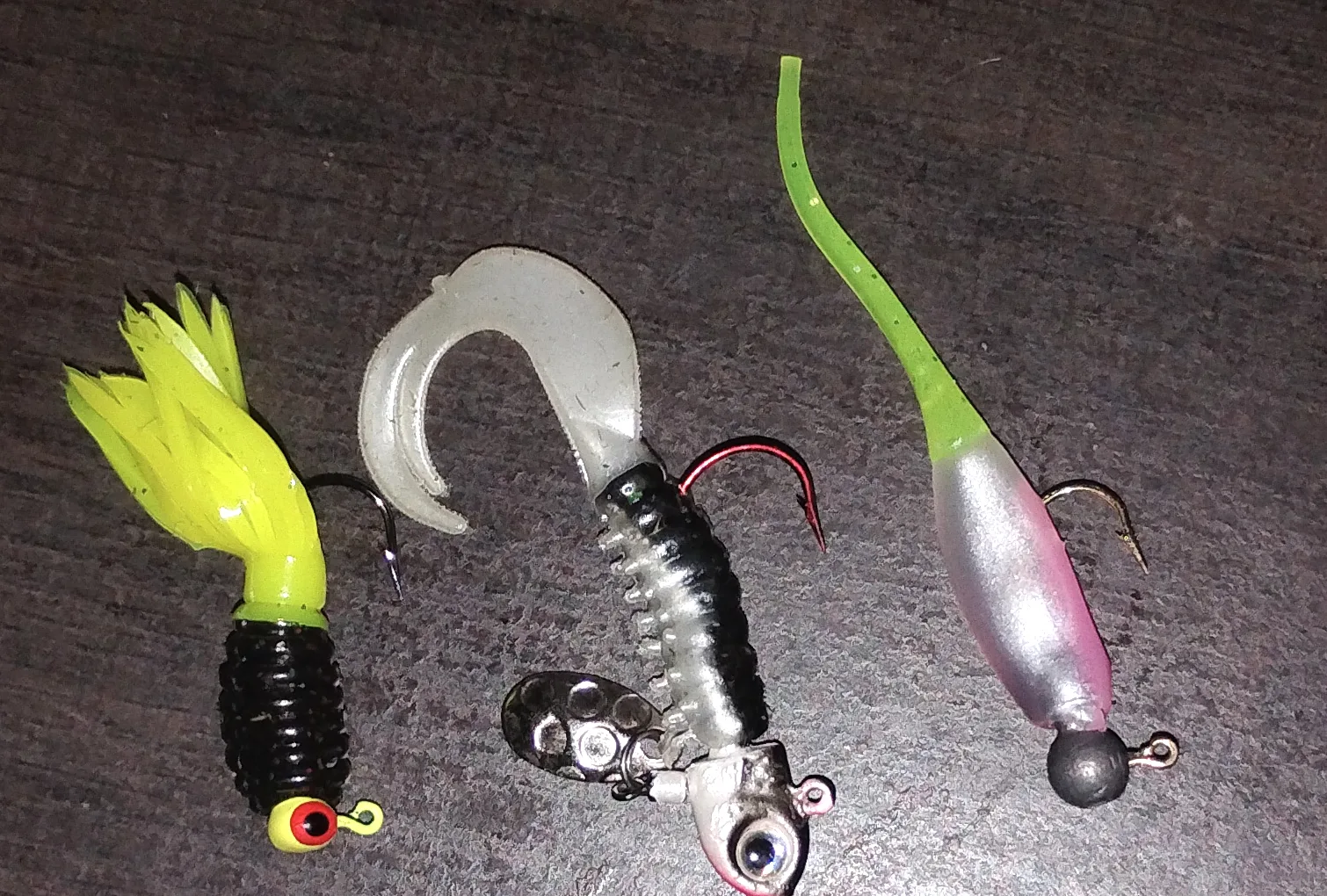
Best Crappie Lures: Six Picks Beyond the Plain Jig, and When Each One WinsBest crappie lures by season: a 1/32–1/8 oz jig all year, a Road Runner or Beetle Spin in stained water, a Bandit 300 trolled in summer. Sizes and prices.

Free PDF · 16 pages
Stop guessing. Know what's biting before your first cast
A whole Saturday on the water with nothing to show for it. One reading tells you who's feeding.
The Water Temperature Fishing Chart. Take one water temperature reading, find it on the chart, and see which of 26 freshwater fish are spawning, feeding hard or slowing down.
- Where bass, crappie, bluegill and walleye sit, and what to throw. Trout: the reading where you stop.
- Why a 3 ft drop beats a cold front, and what to throw each day of the front
- The three thermometer mistakes that make a reading lie
The chart's numbers come from state fish and wildlife agencies and fisheries research: 64 sources, each listed on the site.
No card, nothing to buy. Confirm with one click and the PDF is on its way, one version for your phone and one to print, yours to keep. Then a few short emails and one a week on what's biting, with an unsubscribe link in every one. Privacy.
Related
Section guide
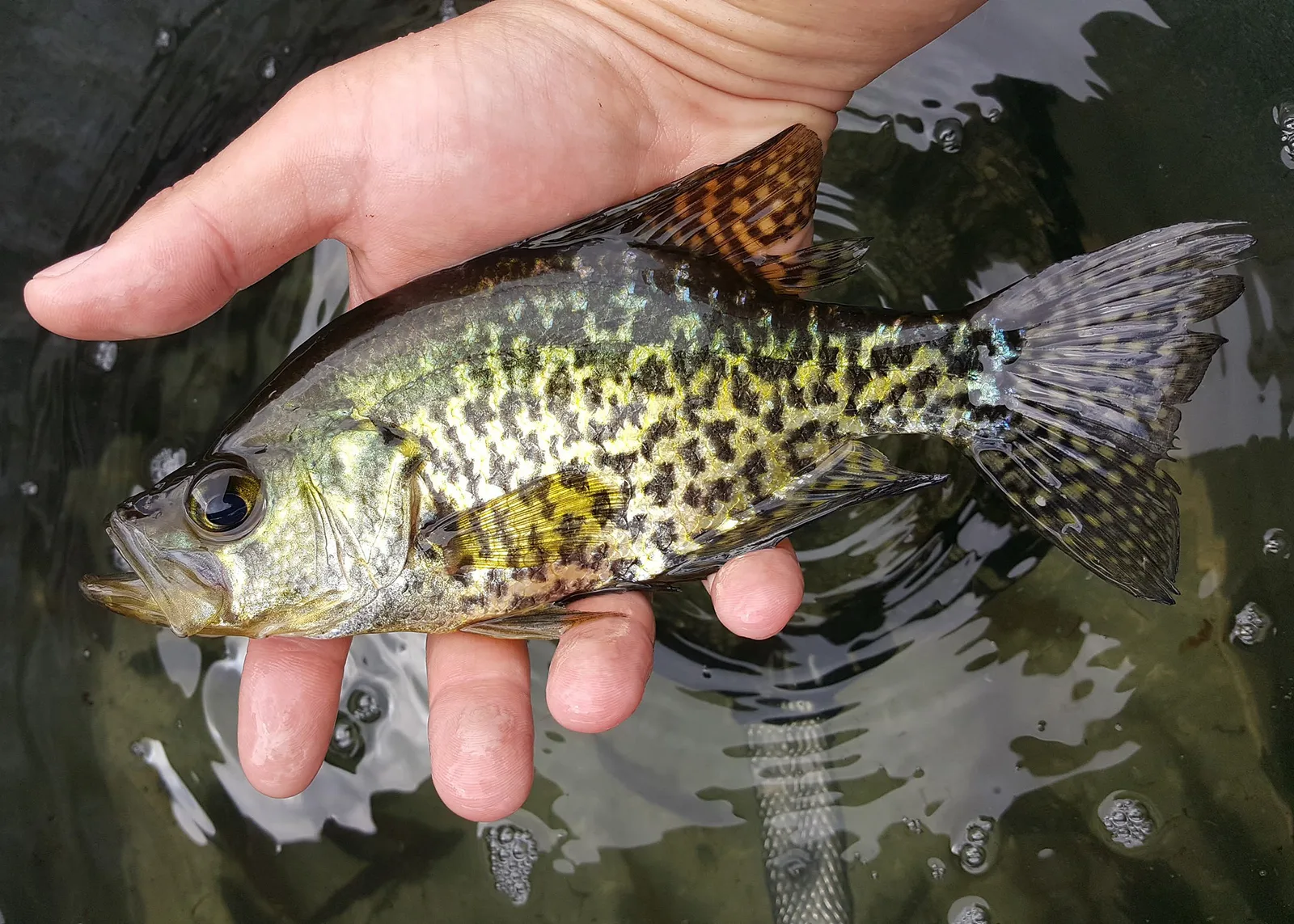
Crappie: Black or White, Where They Are Each Season, How to Catch ThemCrappie fish, black and white: how to tell them apart, where they hold each season, the spawn by water temperature, how to catch them, the limits.
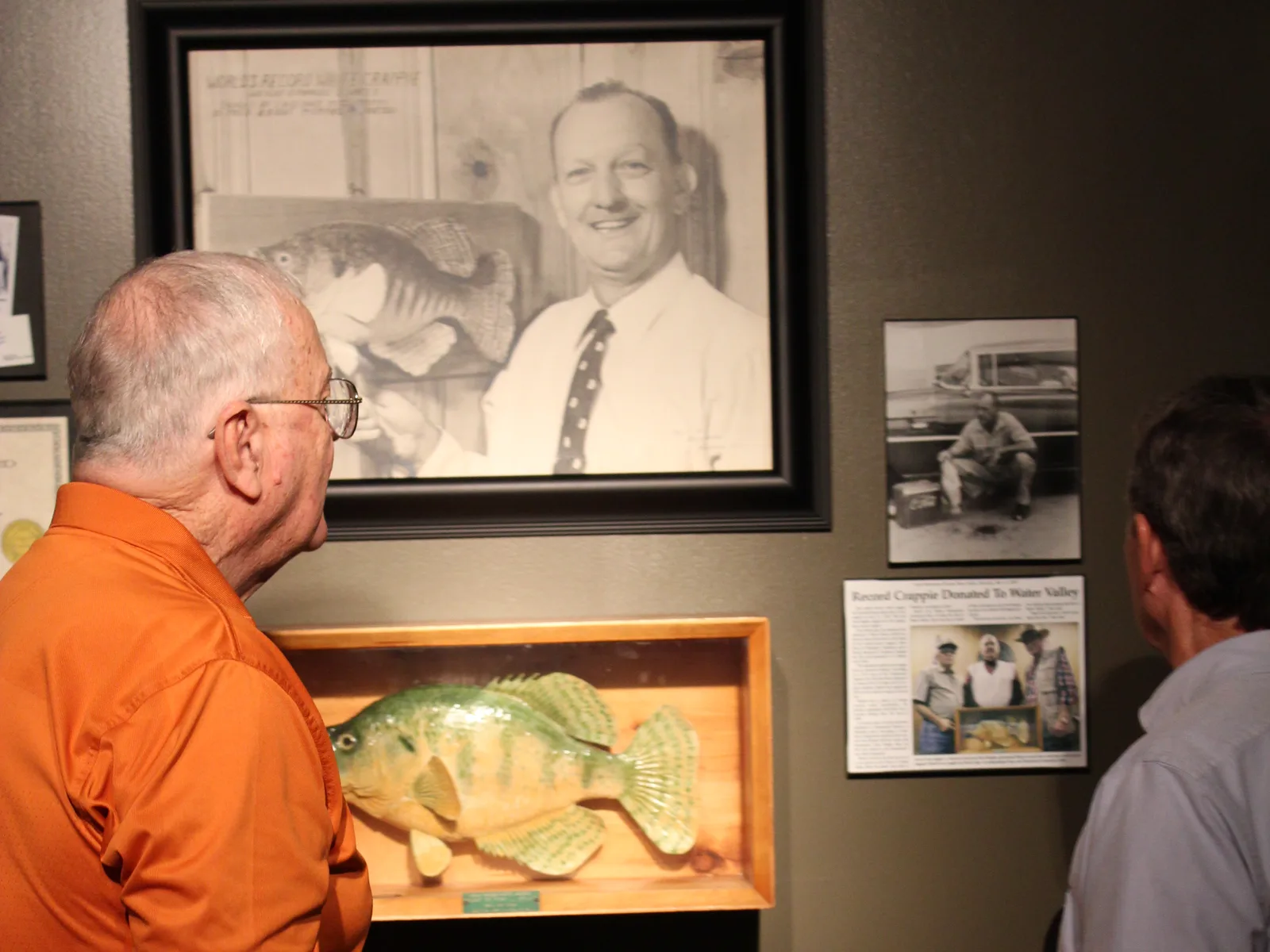 World Record Crappie: 5 lb 7 oz Black, 5 lb 3 oz White, and the Fish That Never Counted
The world record crappie is a 5 lb 7 oz black crappie from Tennessee, 2018. The white crappie record, 5 lb 3 oz, has stood since 1957.
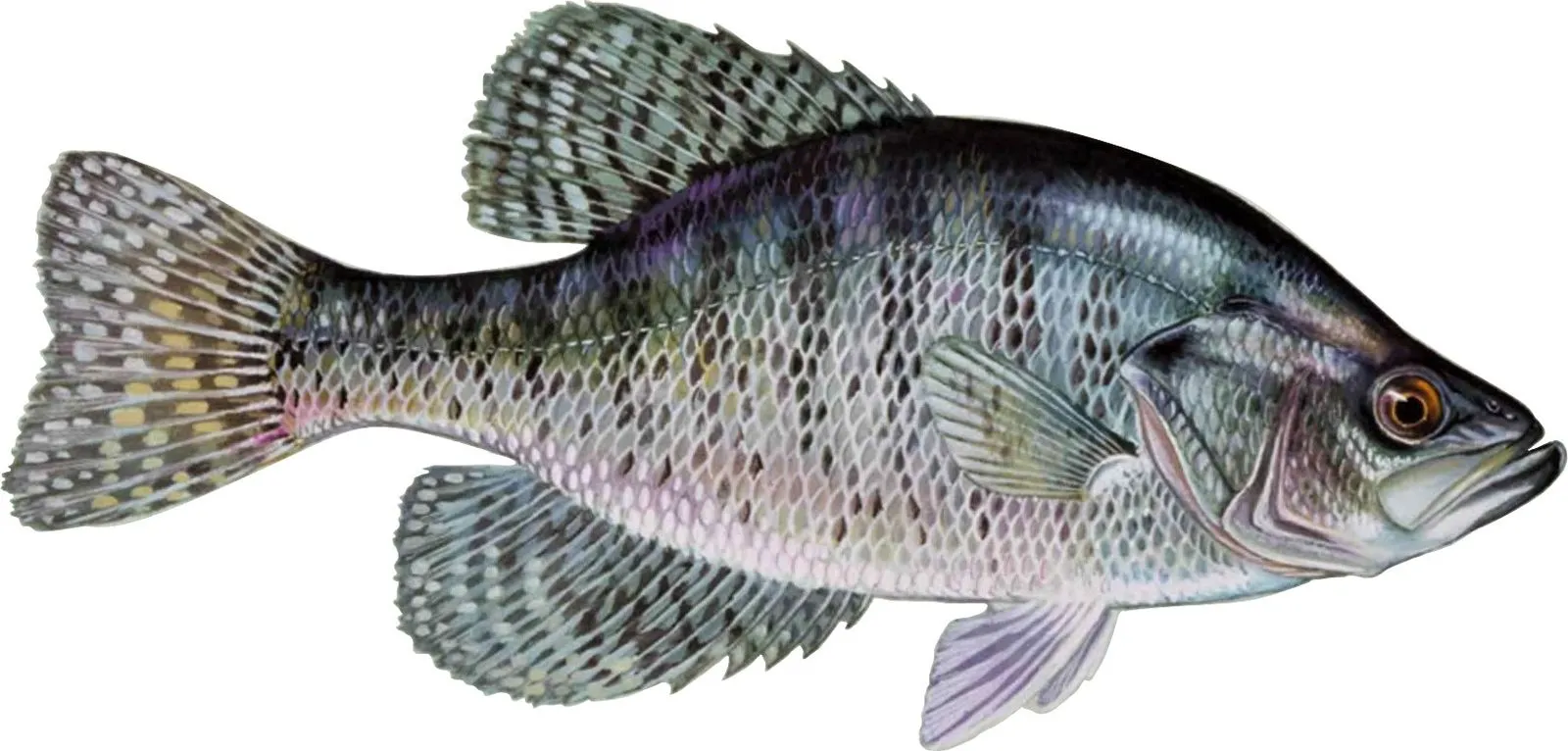 White Crappie: How to Identify One, Where It Lives, How Old It Is
White crappie have 5 or 6 dorsal spines and faint bars and rule muddy reservoirs. See how old a 14-inch fish is, how to catch one and the 1957 record.
- Best Crappie Lures: Six Picks Beyond the Plain Jig, and When Each One Wins
Best crappie lures by season: a 1/32–1/8 oz jig all year, a Road Runner or Beetle Spin in stained water, a Bandit 300 trolled in summer. Sizes and prices.
 Crappie Jigs: Which Body, Which Head Weight, and How to Fish Them
Crappie jigs explained: the five plastic bodies and what each does, head weight by depth and line, hooks, knots and colors, and how to fish them.
 Black Crappie: How to Identify One, Where It Bites, How Old It Is
How to tell a black crappie from a white, where it holds each season, how old a 12- or 13-inch fish is, the 5 lb 7 oz record and whether to keep it.
 Crappie Fishing: Where They Are Each Season and How to Catch Them
Crappie fishing season by season: how deep the fish sit, what to throw, the light tackle that works, and why a jig a foot too low gets ignored.
Sources (11)
- David Schlake, Best Crappie Rigs, Wired2Fish (August 8, 2025): slip float, double minnow and drop-shot minnow rigs, hooking minnows
- Keith Sutton, Spider Rigging Crappie, Bass Pro Shops 1Source (updated April 3, 2026): the simple spider rig and the Mullins and Lucius double-lure rig
- FishUSA, Mastering Spider Rigging for Crappie (updated October 2026): rods, line, rigs, the double jig rig, trolling speed
- Don Gasaway, Kentucky Lake: Fall's Often-Overlooked Secret, Midwest Outdoors (September–October 2020): the Kentucky rig
- Tim Huffman, Double Rigs for Winter Crappie, CrappieNOW: guide Jason Sandage's Kentucky Lake rig
Show all 11 sourcesShow fewer sources
- Missouri Department of Conservation, Crappie: tips for fishing (depth by season, bobbers, split shot and minnows near the thermocline)
- Pennsylvania Fish and Boat Commission, Catch PA fish: crappie (line, hook and lure sizes)
- Keith Sutton, Crappie Fishing After Dark, Bass Pro Shops 1Source (depth under lights by water clarity)
- Eagle Claw, Crappie Rig (part 06010): maker's specification for the pre-tied wire spreader rig
- Mississippi Administrative Code, 40 Miss. Code R. 3-1.4, Statewide Creel Limits: poles and hooks on Sardis, Grenada, Arkabutla and Enid lakes
- Tennessee Wildlife Resources Agency, 2026 Tennessee Fishing Guide: statewide limits and regulations (hooks per rod)