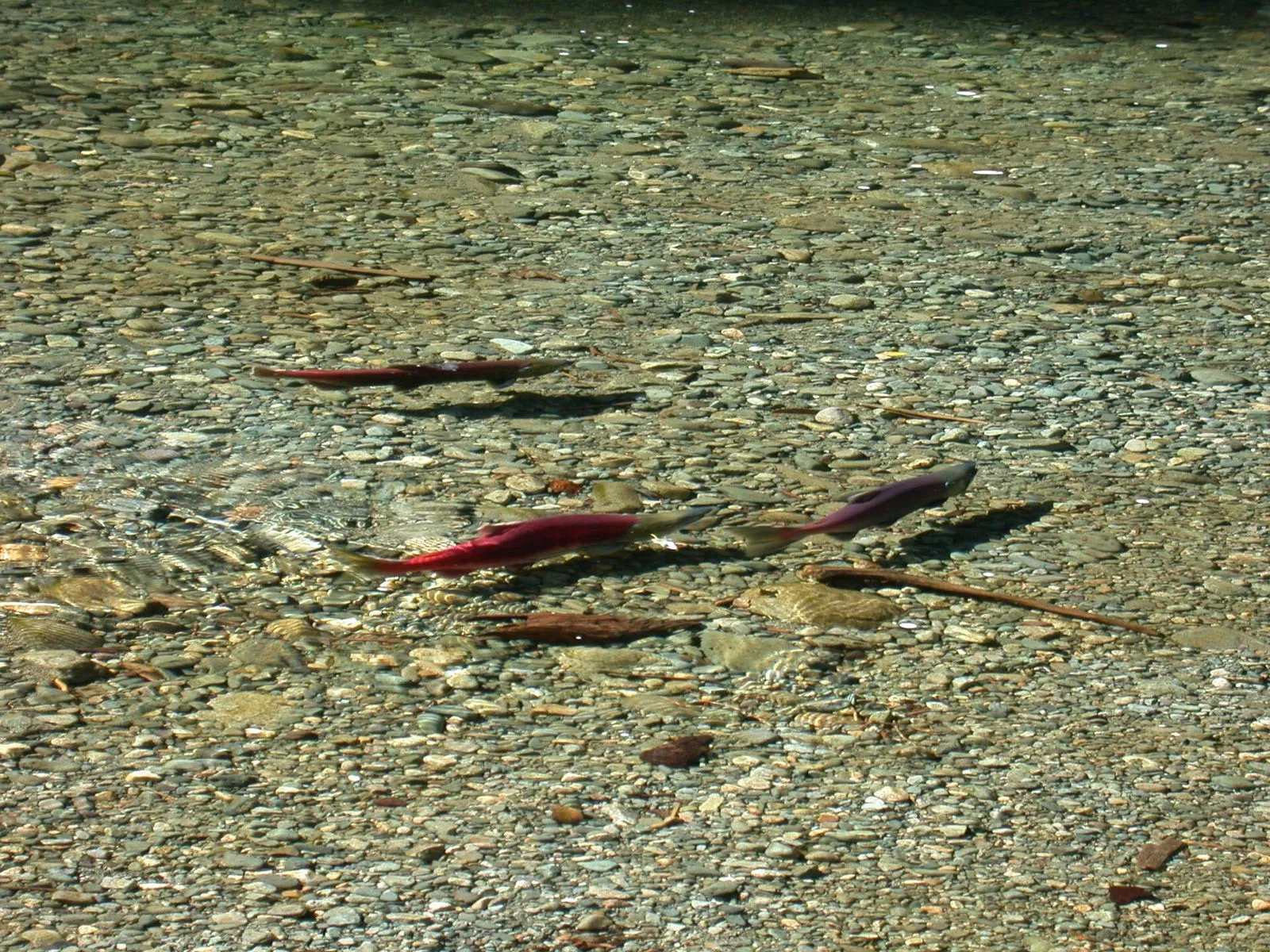
Most fish reproduce by laying eggs in the water, and the male fertilizes them right there. The female sheds her eggs, the male releases a cloud of milt over them, and the two never touch. That is how bass, bluegill, walleye, perch, carp and catfish all begin. Sharks and rays fertilize inside the female, and guppies and many sharks give birth to live young.
A female walleye carries 23,000 to 50,000 eggs for every pound she weighs. A big female carp can shed a million in a single spawn.
How do fish mate?
Fish mating is mostly timing and place. When the water warms in spring, a male and a female swim side by side over the spot they have chosen. She releases eggs; at the same moment he releases milt, the fish word for sperm. The eggs are fertilized in the water, not inside her body. This is called external fertilization, and it is the rule for nearly every bony fish.
It works because fish lay so many eggs. Most are eaten, buried in silt or washed away, so a fish makes thousands and lets the numbers do the work.
Do fish lay eggs or give birth?
Most lay eggs. Sharks and rays are the big exception: the male fertilizes the eggs inside the female, the way mammals do. Some sharks then lay a leathery egg case, the “mermaid’s purse” found on beaches. Many others keep the young inside until they are born, already swimming. Aquarium guppies and mollies do the same: a female drops a brood of tiny fish, not eggs. Both groups are called live-bearers. So nearly every fish you will catch in a lake hatched from an egg, and a small club of fish were born.
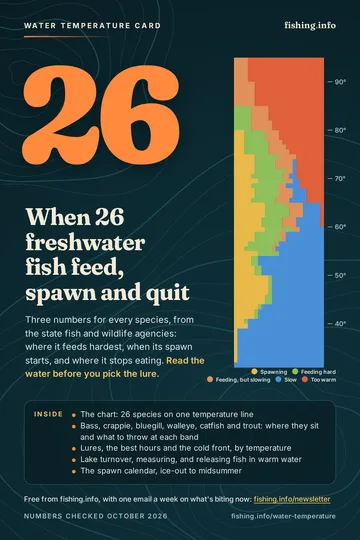
Free card: what 26 species do at your water temperature
Plus one email a week on what's biting now. No sales pitches. Privacy.
How many eggs does a fish lay?
More than you would guess, and the bigger the female, the more she carries. Biologists count eggs per pound of fish.
- A largemouth bass lays 2,000 to 7,000 eggs per pound (4,400–15,400 per kg) of body weight.
- A walleye carries 23,000 to 50,000 per pound (50,000–110,000 per kg). A 5 lb (2.3 kg) female can hold a quarter of a million eggs.
- A yellow perch lays everything in one long, jelly-like ribbon. The ribbon runs up to about 7 ft (2.1 m) long, with about 23,000 eggs in it.
- A common carp sheds about 300,000 eggs in a typical spawn. The biggest females carry a million and more.
- A bluegill female drops only 10 to 30 eggs each time she dips into a nest. But she dips again and again, often in more than one nest.
That quarter-million walleye is the thinking behind slot limits: one big female out-lays ten small ones, so she goes back.
Which fish build a nest, and who guards it?
Some fish are parents for a few weeks, and the father does the work.
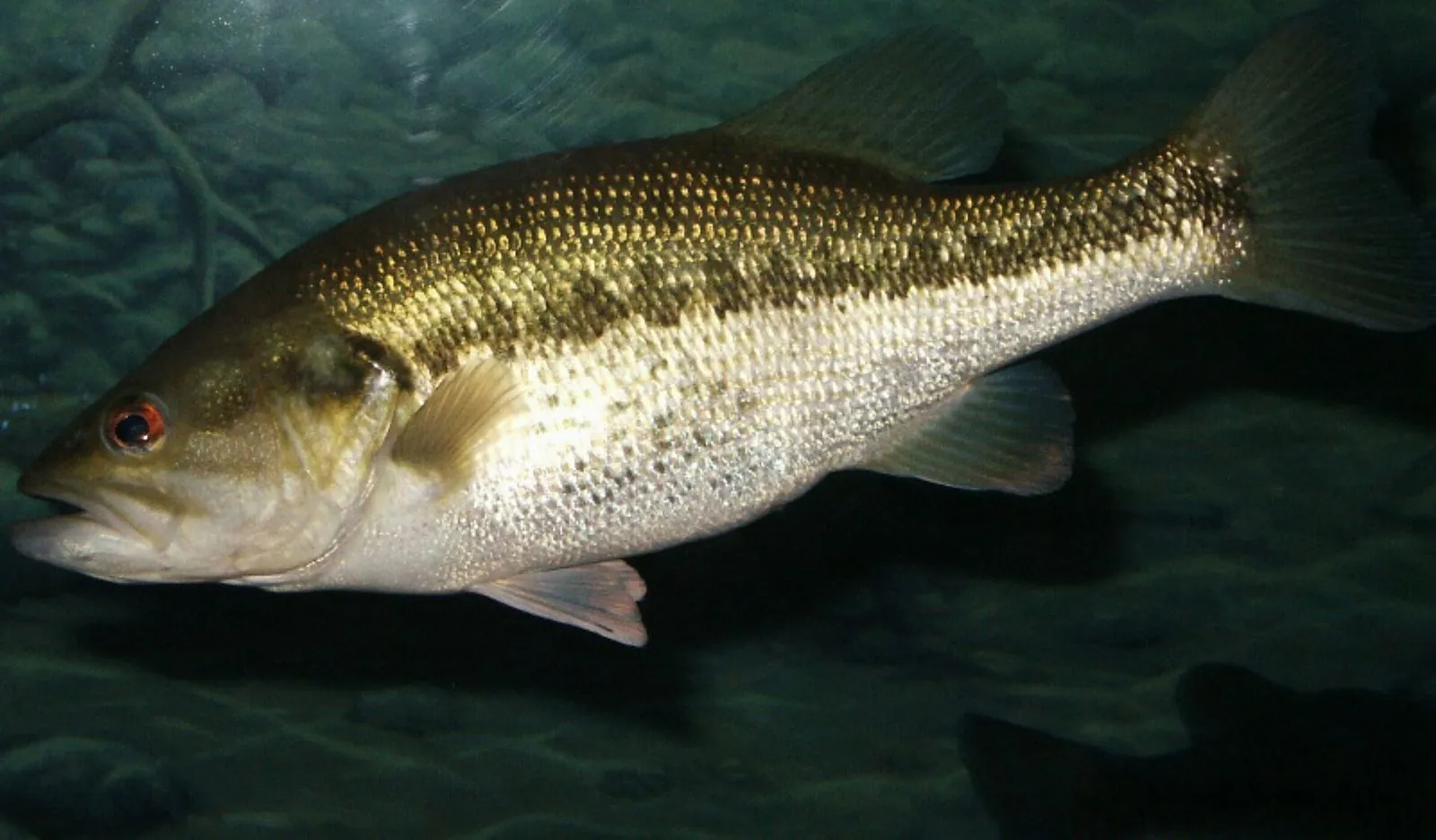
A male largemouth bass picks a spot in 1–4 ft (0.3–1.2 m) of water and sweeps a round bed in the gravel with his tail. The female lays and leaves. He stays, fanning the eggs with his fins so silt does not smother them, and chasing off anything that comes near, from a bluegill to your lure.
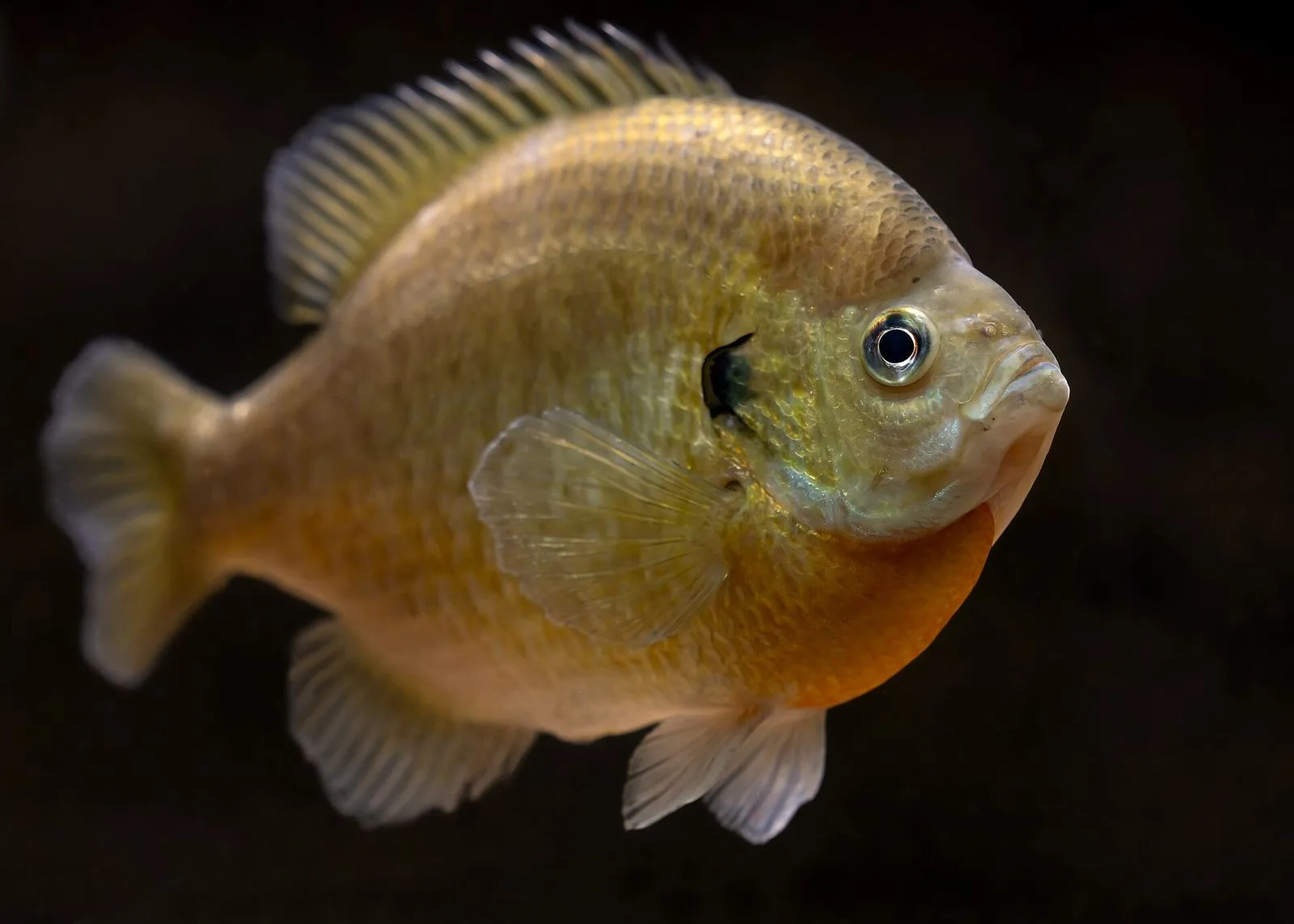
Bluegill do it as a neighborhood. Males sweep saucer-shaped nests 8–18 in (20–45 cm) across, packed side by side in 1–4.5 ft (0.3–1.4 m) of water. From a dock the colony looks like a honeycomb of pale circles. Each male guards his disk for about 10 days, until the fry swim up and scatter.
A channel catfish father wants a roof. He finds a hole in a bank, a hollow log or an old muskrat den, and the female lays a sticky egg mass inside. He guards the doorway until the eggs hatch. Guard duty is total: a smallmouth on a nest defends it day and night and skips its usual rest (do fish sleep?).
| Species | Eggs | Nest or scattered | Who guards |
|---|---|---|---|
| Largemouth bass | 2,000–7,000 per lb (4,400–15,400 per kg) | Round bed swept in 1–4 ft (0.3–1.2 m) | The male, fanning and chasing, until the fry leave |
| Bluegill | 10–30 per dip, many dips | Disk nests 8–18 in (20–45 cm) wide, in colonies at 1–4.5 ft (0.3–1.4 m) | The male, about 10 days |
| Channel catfish | One sticky mass | A cavity: bank hole, hollow log, old den | The male, at the entrance |
| Walleye | 23,000–50,000 per lb (50,000–110,000 per kg) | Scattered over rubble in 1–5 ft (0.3–1.5 m) | Nobody |
| Yellow perch | About 23,000 in one ribbon up to 7 ft (2.1 m) | Ribbon draped over weeds and brush | Nobody |
| Common carp | About 300,000; big females a million or more | Scattered over shallow weeds | Nobody |
| Guppy, many sharks | Live young, no eggs laid | No nest; born swimming | Nobody after birth |
Which fish scatter their eggs and leave?
Walleye and yellow perch take the other road. A walleye pair scatters its eggs over rubble in 1–5 ft (0.3–1.5 m) of water and swims away. The eggs drop between the stones, where moving water keeps them clean. Perch drape their ribbon over weeds and brush and leave it, too. Their bet is numbers, not babysitting.
Can a fish change sex?
A few fish switch. Gag grouper all start life female. When the big male of a social group dies, a large female turns male and takes his place. Wrasses do it faster: one 2021 study timed a full switch at about 60 days. Nothing in a bass pond does this; a bass is male or female for life.
How do you fish the spawn without wrecking it?
Every spring, the spawn pulls fish into shallow water on a schedule, which is why anglers watch water temperature the way farmers watch the calendar. Each species has its own band; the water temperature chart lists them, and when bass spawn gives the month by region. The fish you find in spring may be a parent on duty.
A male bass on a bed hits almost anything that lands near his eggs. That is defense, not hunger, and it is why bed fishing works. But every minute he is off the bed on your line, the bluegill move in on his eggs.
A bluegill colony is the best day of the year for a kid with a bobber; bluegill spawn temperature tells you when to look for the pale disks. A perch ribbon over the weed tops says the perch spawned days ago and are close. Six steps keep a spawn working while you fish it:
- Check the rules first. Some northern states close bass season until the spawn is over. Where it is open, bed fishing is legal; the choice is yours.
- Look before you cast. Pale circles in 1–4 ft (0.3–1.2 m) are beds; a honeycomb of them is a bluegill colony. Cast to the edge and you still catch fish.
- Use tackle that ends the fight fast. A bed fish played for five minutes is a bed left open for five minutes. Heavy enough line, barbs pinched flat.
- Keep the fish in the water and skip the long photo. Unhook it over the side, one picture at most, then back it goes.
- Release a bed fish on its bed. Put a male bass or bluegill back where you hooked him, not fifty yards down the bank. He settles back over the eggs in minutes.
- Take from the colony, not the guards. If you keep bluegill for the pan, keep the mid-size fish. The biggest males are the ones holding the disks.
More fish questions, answered with numbers, are in the fish facts collection.
Free download
The water temperature card
Read your water temperature and the card tells you who is spawning, who is feeding and what to throw. 26 species, 16 pages, for your phone and the tackle box.
Plus one email a week on what's biting now. No sales pitches. Privacy.
Related
Section guide
Fish Facts: The Questions Kids Ask About Fish, Answered With the ScienceFish facts with a number and a source for each: how fish sleep, breathe, hear and feel, and what every answer means when you hook and release one.
 Do Fish Drink Water? Freshwater Fish, Saltwater Fish and Sharks
Do fish drink water? Freshwater fish barely do, saltwater fish drink all day, sharks cheat with urea. The numbers, and what it means for bait and livewells.
 Do Fish Drown? How Fish Suffocate, and How to Revive a Tired One
Do fish drown? Not by the dictionary, but they suffocate three ways: low oxygen, damaged gills, no water flow. How long a fish lasts in air, how to revive one.
 Do Fish Fart? Yes, Herring Do It on Purpose, and a Bloated Bass Needs Help
Do fish fart? Herring do, on purpose, and scientists won a prize for proving it. Which fish pass gas, where it goes, and what to do with a bloated bass.
 Do Fish Feel Pain? What the Studies Found, and What Decides Whether a Released Fish Lives
Do fish feel pain? They sense damage and react; whether they suffer is contested. The trout study, both camps, and what decides if a released fish lives.
 Do Fish Get Cold? What Winter Does to a Fish, and the Ones With Antifreeze in Their Blood
Do fish get cold? Yes: a fish is as cold as its water and feels it as slowness. What fish do in winter, who carries antifreeze, and how to fish cold water.
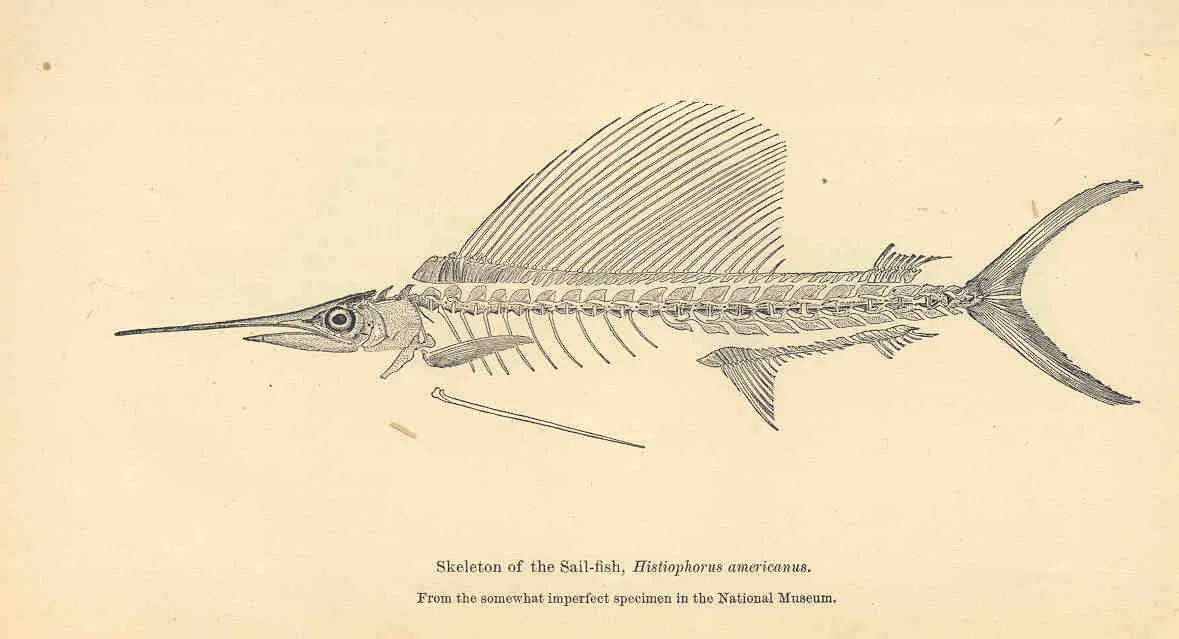 Do Fish Have Bones, Hearts and Blood? What Is Inside a Fish
Do fish have bones? Most do; sharks run on cartilage and 16 icefish have clear blood. How skeleton, heart and blood work, and what it means for your fillets.
Sources
- Britannica, Fish: Reproduction
- Merck Veterinary Manual, Breeding and reproduction of fish
- NCpedia / North Carolina Wildlife Resources Commission, Largemouth bass
- North Dakota Game and Fish, The bluegill spawn
- North Dakota Game and Fish, Yellow perch
- Iowa DNR, Walleye
- Iowa DNR, Channel catfish
- USGS Nonindigenous Aquatic Species, Common carp fact sheet
- FSU Coastal and Marine Laboratory, Gag grouper ecology
- Scientific Reports (2021), Sex change in groupers and wrasses