 By
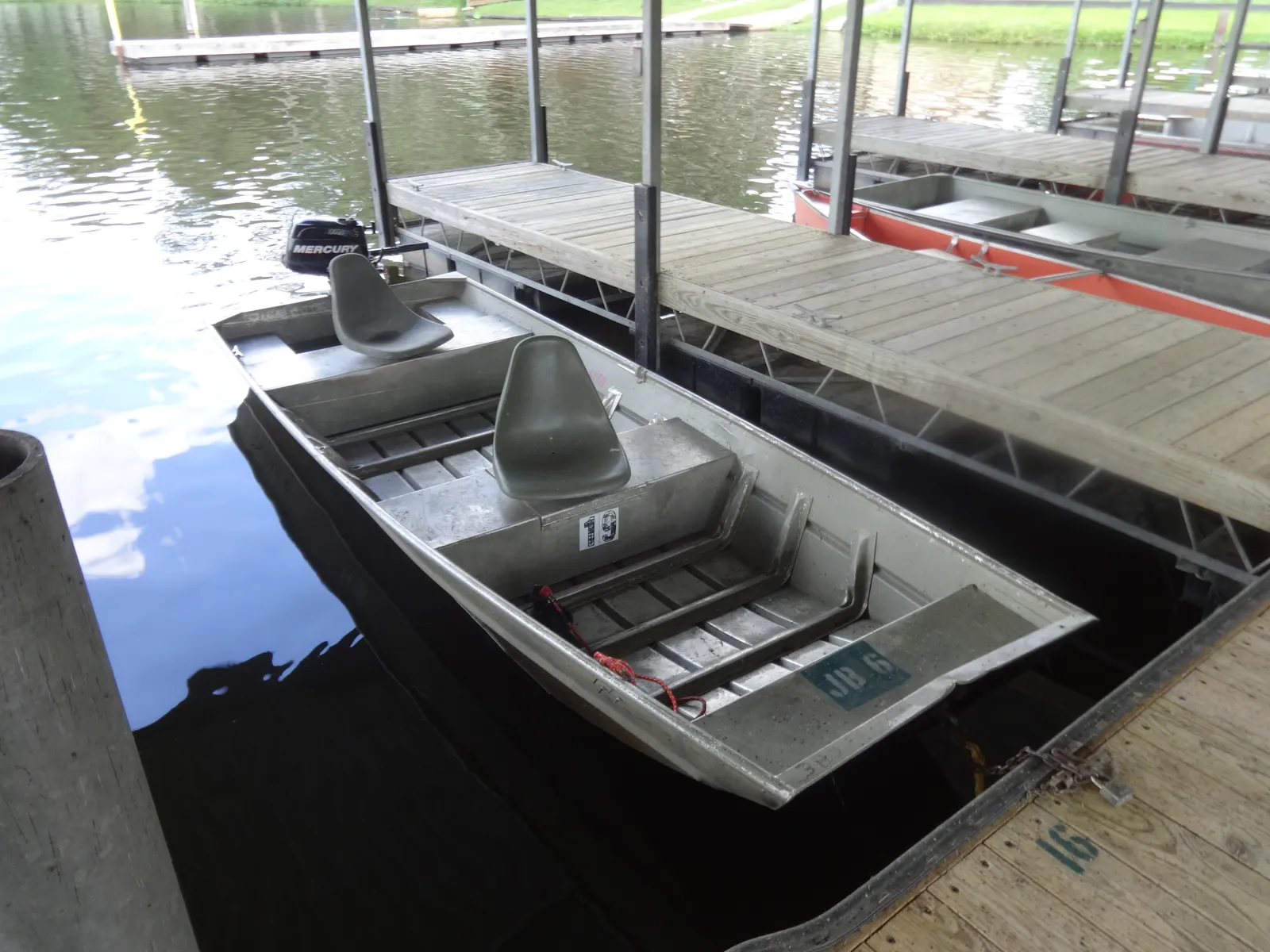
A jon boat is a flat-bottomed boat with a square bow and a square stern, usually aluminum, built for calm, shallow water. A new 14 ft hull from Tracker lists at $1,995, weighs 165 lb and draws about 5 inches. That makes it the cheapest, lightest way onto a pond, a creek or a slow river. The catch: wind pushes it around, and the flat bottom slaps in waves.
A 14 ft Tracker jon is plated for three people, but only 345 lb of them. Two 180 lb adults are already over.
The specs on this page come from the makers’ own spec sheets and the federal capacity rules.
What is a jon boat?
A jon boat is the simplest boat with a motor you can buy: a flat bottom, square ends and one or more bench seats. Salt Water Sportsman’s field guide puts them at 8 to 24 ft. Most are aluminum. Some are wood, fiberglass or polyethylene plastic. It runs on oars, a small outboard or an electric trolling motor, and the guide’s verdict on where it belongs is short: “protected waters”.
The flat hull is the whole story. It floats in a few inches of water and sits steady when you stand to cast. It also rides over waves instead of cutting through them, which keeps a jon boat on calm water. Outdoor Life calls jon boats “one of the most stable boats on the water”. It also warns you: “Wind will blow a jon boat across the water, and the flat hull slams through waves.”
Anglers use them on ponds, small lakes, creeks and rivers. Duck hunters and bowfishermen use the same hull. Tracker sells its 17 ft Grizzly 1754 Utility as “an ideal choice for hunting, fishing, or bowfishing”. If a boat word here is new, the boat words list explains it. Among the types of fishing boats, the jon is the flattest, lightest and cheapest.
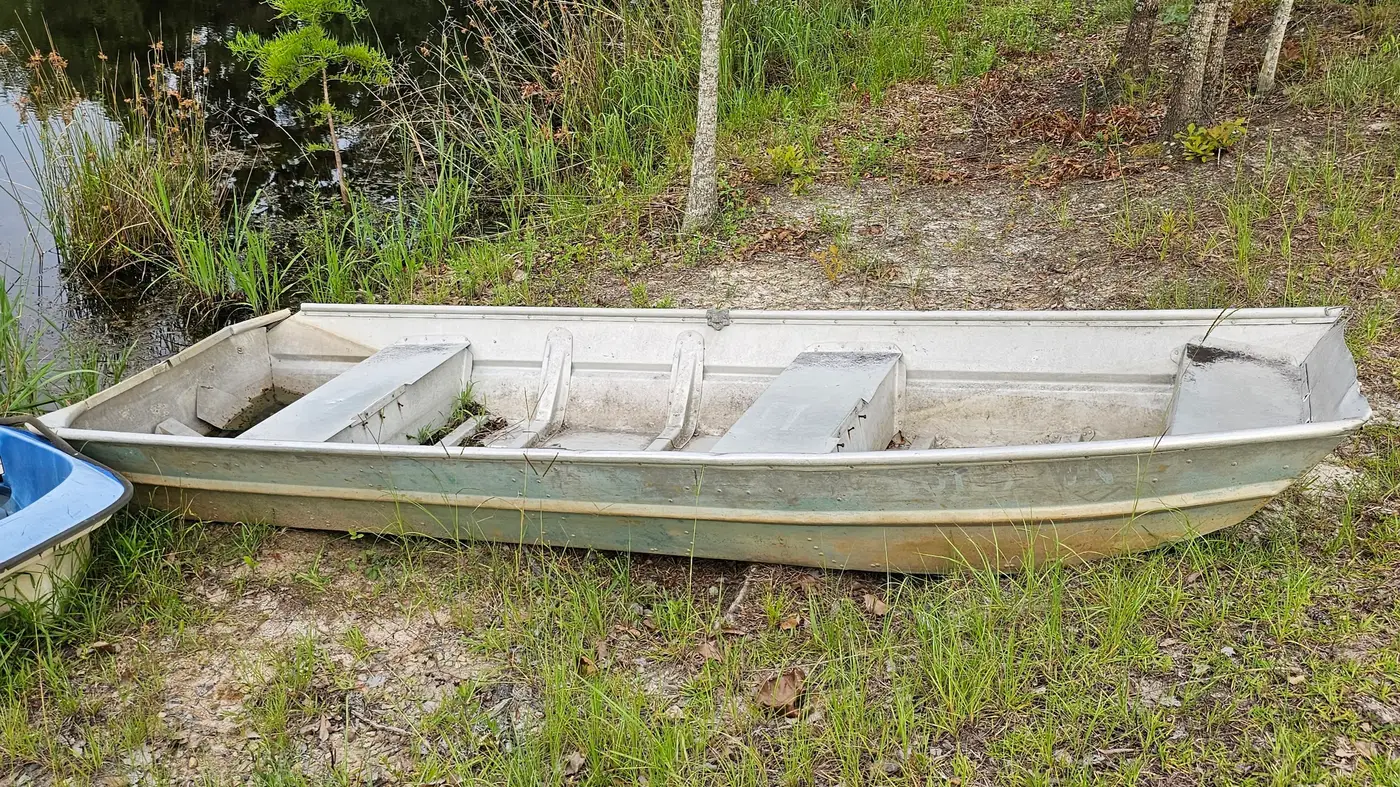
A typical small aluminum jon boat on a pond bank: square bow, flat floor, bench seats. Photo: JJonahJackalope, Wikimedia Commons (CC BY-SA 4.0).
What size jon boat do you need?
Pick the size by the people you bring and the water you fish. Length is only half of it. Look at these numbers on a spec sheet before you look at the price:
- Bottom width decides how steady the boat feels when you stand. Tracker’s 10, 12 and 14 ft Grizzlies share the same 3 ft bottom. Only the length changes. The 15 ft model steps up to 3 ft 6 in. The 1754 has 4 ft 6 in.
- Interior depth is how high the sides stand inside the boat. It runs 15 to 16.75 in across the Grizzly line, so none of them is a big-water boat.
- Transom height decides which motor shaft fits. It’s 15.5 in on the small Grizzlies and 21 in on the 1754. Measure your own before you buy a motor. The trolling motor section below turns that height into a shaft length.
- Fuel tells you less: the 10 to 15 ft Grizzlies all take the same 6-gallon portable tank, so fuel won’t decide between them.
Here is Tracker’s Grizzly line, all-welded aluminum, straight from the maker’s spec sheets. “People” is the plate’s head count with the pound limit behind it. Beam is the width at the widest point.
| Model (year) | Length × beam | Max hp | People (lb) | Price, hull only |
|---|---|---|---|---|
| Grizzly 10 Jon (2027) | 9 ft 10 in × 4 ft 4 in | 3.5 | 2 (330 lb) | $1,495 |
| Grizzly 12 Jon (2027) | 11 ft 11 in × 4 ft 4 in | 5 | 3 (365 lb) | $1,795 |
| Grizzly 14 Jon (2027) | 13 ft 10 in × 4 ft 5 in | 15 | 3 (345 lb) | $1,995 |
| Grizzly 15 Jon (2027) | 15 ft × 5 ft | 25 | 3 (400 lb) | $2,495 |
| Grizzly 1754 Utility (2027) | 17 ft 1 in × 6 ft 6 in | 50 | 6 (800 lb) | $6,995 |
The same five boats on what they float in and what they carry in all. Draft is how deep the hull sits in the water. “Total load” is the plate’s maximum weight: people, motor, fuel and gear together.
| Model | Draft | Total load |
|---|---|---|
| Grizzly 10 | 5.75 in (15 cm) | 380 lb (172 kg) |
| Grizzly 12 | 6.5 in (17 cm) | 480 lb (218 kg) |
| Grizzly 14 | 5.12 in (13 cm) | 580 lb (263 kg) |
| Grizzly 15 | 6.62 in (17 cm) | 775 lb (352 kg) |
| Grizzly 1754 | not listed | 1,300 lb (590 kg) |
Which size fits you?
Here’s how the sizes sort out:
- 10 ft: one angler on a pond. At 115 lb it’s the lightest of the line. With 330 lb of people allowed, it’s really a one-adult boat with a kid or a dog.
- 12 ft: one or two light anglers. It weighs 130 lb. With 480 lb of total load, two adults and a cooler is about it.
- 14 ft: the all-rounder. At 165 lb, it’s the most boat that is still easy to launch. You get two anglers, a small outboard or a trolling motor, and room for gear up to 580 lb in all.
- 15 to 16 ft: two anglers with real gear. A wider bottom, a 25 hp rating, and on the Grizzly 15 a 9.5-gallon wet well for the catch.
- 17 ft and up: bigger water and bigger crews. The 1754 is a different boat. Its bottom has a shallow V of 7 degrees, and it takes 50 hp and six people. The 670 lb hull needs its own trailer.
Free PDF · Water temperature chart Which fish are biting at today's water temperature?
One reading, and the 16-page chart shows which of 26 fish are spawning, feeding hard or slowing down; for bass, crappie, bluegill and walleye, where they sit and what to throw. Every number sourced.
No card, nothing to buy, and the PDF is yours to keep. It's in your inbox a minute later. Then a few short emails and one a week on what's biting. Unsubscribe anytime. Privacy.
Welded or riveted?
Aluminum jon boats are either welded, with the seams fused, or riveted, with the sheets joined by rows of rivets. Tracker welds everything. Lund, boats.com reported from its plant in 2011, held its boats together “with rivets and screws”, except for a welded seam down the keel. Each side tells you why it’s right.
Tracker’s pitch, on its Grizzly 12 page: riveted hulls “may develop leaks or weak points over time”, while its welded one “forms a solid and seamless foundation.” The riveted answer, as boats.com heard it on that Lund tour: rivets “are easy to replace and in a pinch you can plug leaking rivets with epoxy.” The other half of the pitch: “welds can crack or break, and when that happens good luck finding a welder who can do a good job fixing it.” Both are sales arguments. Neither page shows a test that settles it.
What you can compare is the sheet. The hull thickness is on the spec sheet. Tracker’s gets thicker with size, from 0.063 in on the small jons to 0.100 in on the 1754. Thicker sheet weighs more and takes more abuse. On a used boat, the seams and rivets tell you more than the brochure, and there’s a checklist for that further down.
The plates differ between brands too. Lund rates its jons higher than Tracker rates hulls of about the same length:
| Length | Tracker Grizzly (welded) | Lund jon |
|---|---|---|
| About 10 ft | 3.5 hp, 2 people | 5 hp, 2 people (1040) |
| About 12 ft | 5 hp, 3 people | 10 hp, 2 people (1240) |
| About 14 ft | 15 hp, 3 people | 25 hp, 4 people (1448) |
Width is most of the gap. Lund’s 1448 is 70 in across, and Tracker’s Grizzly 14 only 53. Each plate follows that hull’s own transom width and the maker’s own rating, so compare the plates, not the lengths. The next section shows why the numbers move so much.
How much horsepower can a jon boat take?
The plate on the transom tells you the most horsepower the boat may carry. On a boat under 20 ft, a federal formula sets that ceiling. On a tiller boat the maker may put a lower number on the plate, never a higher one. The formula starts with one number, the factor: boat length in feet times the transom width in feet.
- Factor of 52 or less: look it up in the Coast Guard’s table. 46 to 52 gives 15 hp, 43 to 45 gives 10, 40 to 42 gives 7.5.
- Flat bottom, factor 52 or less: drop one step. That’s the jon boat rule. 15 hp becomes 10.
- Factor over 52.5, tiller steering or a transom under 20 in: a flat-bottomed boat gets half the factor minus 15. The result may be raised to the next multiple of 5.
- Factor over 52.5, a steering wheel and a transom of at least 20 in: twice the factor minus 90. That’s why console jons are rated so much higher.
Worked on four round-number tiller jons (our arithmetic, from the federal table):
| Hull (length × transom) | Factor | The math | Ceiling |
|---|---|---|---|
| 12 ft × 4 ft | 48 | Table says 15, minus one step for a flat bottom | 10 hp |
| 14 ft × 4 ft | 56 | 0.5 × 56 − 15 = 13, raised | 15 hp |
| 16 ft × 5 ft | 80 | 0.5 × 80 − 15 = 25 | 25 hp |
| 18 ft × 6 ft | 108 | 0.5 × 10⁸ − 15 = 39, raised | 40 hp |
What the formula gives real jons
Line that up with the real boats. Lund’s 11 ft 9 in 1240 is plated at 10 hp, right at the ceiling for a 12 ft hull with a 4 ft transom. Tracker plates its 12 ft Grizzly at 5 hp, under the 12 × 4 row. Tracker doesn’t list the transom width, so you can’t work out that boat’s own ceiling from the sheet. Tracker’s 14 ft Grizzly at 15 hp matches the 14 ft row. The transom is narrower than the beam, so the beam on a spec sheet gives you only an upper bound for the factor.
Now put a steering wheel on that 16 × 5 ft hull, with a 20 in transom. The formula gives 2 × 80 − 90 = 70 hp, against 25 with a tiller. That’s a ceiling, not a promise. Tracker’s 16 ft Grizzly 1648 SC, a side-console boat with a 21 in transom, is plated at 50 hp.
How many people fit in a jon boat?
The plate gives a head count and a pound figure, and the pounds are what count. The rule sets the head count from the pound figure: add 32 lb, divide by 141 and round. On the Grizzly 14 that’s 345 plus 32, divided by 141, which is 2.67, so three people.
So “three people” assumes three people of about 115 lb each. Two 180 lb adults are 360 lb, already over the Grizzly 14’s 345. In practice a 14 ft jon is a two-angler boat, and only if both are on the light side, or one adult and two kids.
The maker can plate lower than the formula allows. Tracker’s 10 ft Grizzly works out to three by the formula but is plated for two. Plates outside the US can differ too: Tracker lists its 12 and 14 ft Grizzlies at three people for the US and two for Canada.
Your gear has its own limit. The plate’s maximum weight covers people, motor, fuel and gear together: 580 lb on the Grizzly 14. A 15 hp outboard, a full 6-gallon tank, a battery and a cooler eat into that fast.

A rental jon boat on Douthat Lake, Virginia, with a trolling motor on the transom. Photo: Virginia State Parks, Wikimedia Commons (CC BY 2.0).
What does a jon boat cost?
A new 10 to 15 ft jon hull costs $1,495 to $2,495 at Tracker’s 2027 prices. The 17 ft Grizzly 1754 Utility lists at $6,995. That’s the hull alone. Then add:
- A motor. A small outboard or a trolling motor and its battery. Neither is in the hull price.
- A trailer. Tracker lists a single-axle trailer for its small jons at $1,295. The one for the 1754 is $2,095. Freight for the trailer is extra.
- Dealer prep and freight on the boat itself, which the dealer quotes.
- Registration, once a motor goes on.
At the top end, jons turn into rigged boats with consoles and big outboards. Tracker’s 2027 console jons start with the Grizzly 1648 SC at $15,995, with a 20 hp motor and trailer. They top out with the 21 ft 5 in Grizzly 2072 CC Sportsman Kicker at $55,395, with a 150 hp motor. At that point you’re shopping the aluminum fishing boats next to bass boats, not jon boats.
What trolling motor does a jon boat need?
A 30 lb transom-mount trolling motor on one 12-volt battery covers most jon boats up to 14 feet. Minn Kota’s rule is at least 2 lb of thrust for every 100 lb of fully loaded boat. A fully loaded Grizzly 14 is 165 lb of boat plus 580 lb of load, 745 lb in all. By the rule you need 15 lb (our arithmetic). Minn Kota’s chart starts at 30 lb for boats up to 1,500 lb and 14 ft. Want more for wind or current? Minn Kota says to add “a little extra thrust”.
On a jon, the motor goes on the transom. Bass Pro calls transom mounts “Common on small boats and jon boats”. You steer with a tiller handle, and they’re easier to install than a bow mount. Get the shaft length right, or the prop churns at the surface:
- Load the boat the way you fish it.
- Measure from the top of the transom, where the motor clamps, down to the waterline.
- Pick the shaft from the chart. Between sizes, Bass Pro says, take the longer shaft.
| Transom to waterline | Shaft length | Note |
|---|---|---|
| 0–10 in (0–25 cm) | 30 in (76 cm) | Minn Kota and Bass Pro |
| 10–16 in (25–41 cm) | 36 in (91 cm) | Minn Kota and Bass Pro |
| 16–22 in (41–56 cm) | 42 in (107 cm) | Minn Kota and Bass Pro |
| 22–28 in (56–71 cm) | 55 in (140 cm) | Bass Pro; Minn Kota says ask the factory |
Minn Kota wants the center of the motor at least 12 in under the surface. Thrust and voltage decide the rest of the trolling motor choice, and the battery decides how long it runs.
Do you need to register a jon boat?
Yes, once it has a motor, in most states, and a trolling motor counts. “Generally, boats must be registered in their state if they have a gasoline, diesel, or electric motor, including a trolling motor,” Discover Boating says. Texas spells it out. Rowboats and punts without a motor are exempt at any length, and so are other boats under 14 ft “when paddled, poled, oared or windblown”. But “Adding an outboard or trolling motor to any of these vessel types negates the exemption.” Check your own state’s rules before the first launch.
The federal gear rules for a jon boat are short:
- Life jackets: one wearable life jacket for each person aboard. Kids under 13 wear theirs while the boat is moving. A boat of 16 ft or more also carries a throwable cushion or ring.
- Fire extinguisher: none, on an open outboard boat under 26 ft that can’t trap fuel vapor. You need one if a closed compartment under the seats can hold a portable tank. A double bottom that isn’t sealed or filled with flotation counts too.
- Night signals on the coast: on coastal waters, a boat under 16 ft needs night distress signals between sunset and sunrise.
Is a jon boat worth it?
For calm, shallow water and a small budget, yes. A new 10 to 14 ft hull costs under $2,000 at Tracker. It floats in about 5 to 7 in of water, and you can carry the smallest ones in a pickup bed. For big lakes and windy days, no: it slaps in waves, wind blows it around, and a tiller jon’s horsepower ceiling stays low.
| Where you fish | Jon boat? | Why |
|---|---|---|
| Ponds, creeks, marshes | Yes | Floats in 5 to 7 in of water |
| Slow rivers | Yes | Flat, stable, cheap to power |
| Big, windy lakes | No | Slaps in chop; a deep-V cuts it |
| Bass lakes, running far | Step up | A 16 ft 8 in bass boat like Tracker’s Classic XL takes 50 hp |
Buying used? Run these checks on any aluminum hull. The first four come from Outdoor Life’s buying advice:
- Press on the seams, the transom and around the rivets for flexing or soft spots.
- Look for patch jobs, corrosion and cracks in the welds.
- If it can’t go in the water, run a few inches of water into the hull and look for leaks.
- If it comes with a trailer, check the lights, tires and wheel bearings.
- Read the capacity plate before you pay. A boat with a missing plate leaves you guessing on the motor.
Jon boat or bass boat?
A jon boat trades speed and comfort for price, weight and shallow water. Put Tracker’s 14 ft Grizzly next to its lowest-priced Bass Tracker, the 16 ft 8 in Classic XL, and the gap is plain. The jon weighs 165 lb and the bass boat 780 lb. The jon is rated for 15 hp, the bass boat for 50. The jon hull lists at $1,995. The bass boat comes as a package with a 40 hp motor and trailer at $17,995.
The extra money buys a 4 ft 6 in bottom instead of 3 ft, casting decks and a motor big enough to cross a lake. You give up a boat light enough to slide off a bank, and the 5 in draft. If you fish one pond or one stretch of river, the jon wins. If you fish a big reservoir and want to run, look at a bass boat.
Where does the jon boat come from?
Both spellings are in use: johnboat and jon boat. Flat-bottomed boats like it became popular in the Ozarks in the late 1800s. They carried float fishermen, duck hunters and timber on the shallow waters of the Missouri Valley.
Weighing other boats too? Here are the types of fishing boats side by side.

Free PDF · 16 pages
Stop guessing. Know what's biting before your first cast
A whole Saturday on the water with nothing to show for it. One reading tells you who's feeding.
The Water Temperature Fishing Chart. Take one water temperature reading, find it on the chart, and see which of 26 freshwater fish are spawning, feeding hard or slowing down.
- Where bass, crappie, bluegill and walleye sit, and what to throw. Trout: the reading where you stop.
- Why a 3 ft drop beats a cold front, and what to throw each day of the front
- The three thermometer mistakes that make a reading lie
The chart's numbers come from state fish and wildlife agencies and fisheries research: 64 sources, each listed on the site.
No card, nothing to buy. The PDF is in your inbox a minute later, one version for your phone and one to print, yours to keep. Then a few short emails and one a week on what's biting, with an unsubscribe link in every one. Privacy.
Related
Section guide
Fishing Boats: The Types, What They Cost, and How to Pick Your FirstFishing boats compared: jon, bass, aluminum deep-V, flats skiff, bay boat and center console, with real maker specs, draft and prices from $1,495.
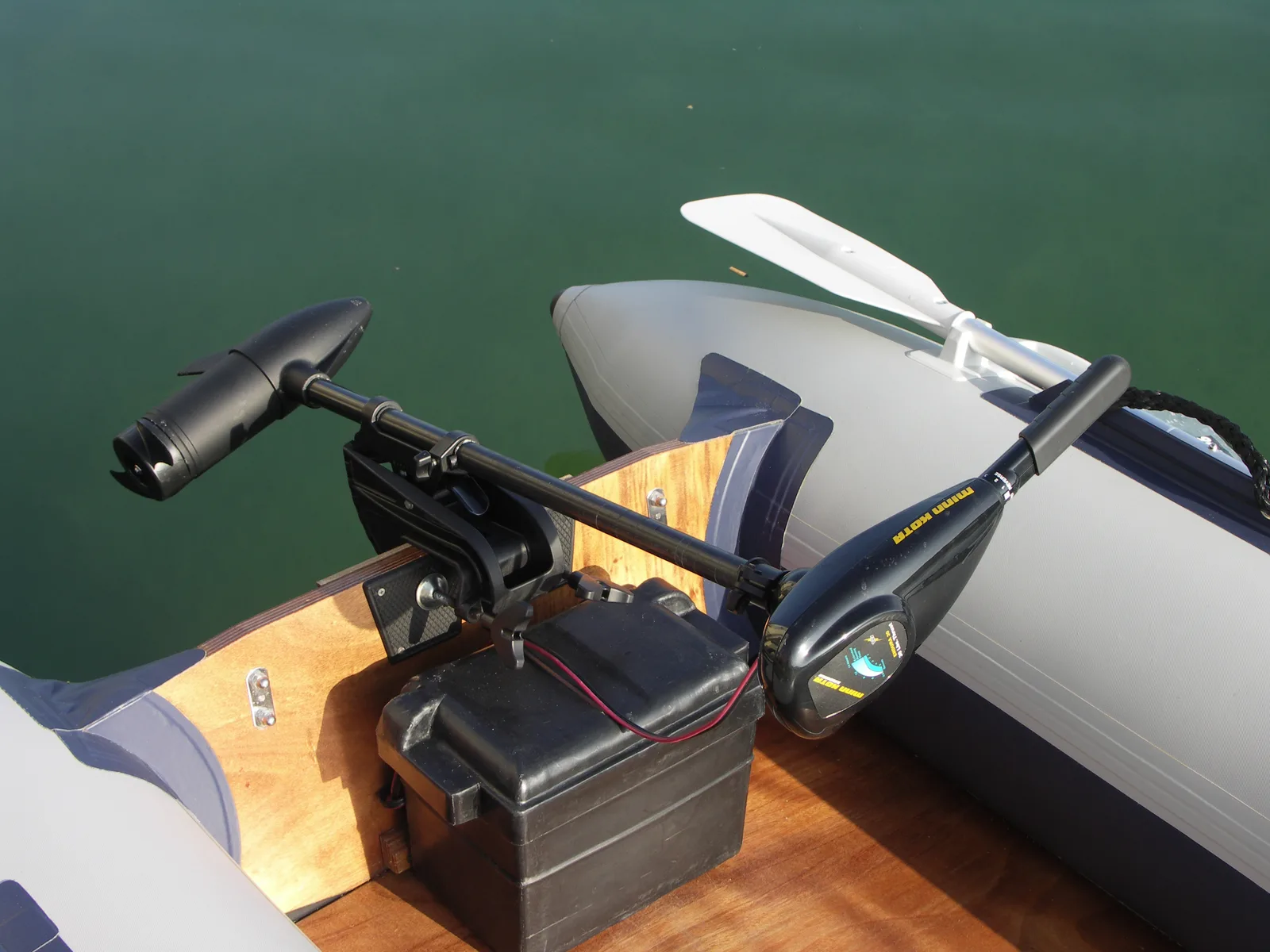 Trolling Motor: How Much Thrust, Which Shaft, Bow or Transom
Trolling motor guide: 2 lb of thrust per 100 lb of loaded boat, 12, 24 or 36 volts, the shaft length chart, bow or transom, and prices from $169.99.
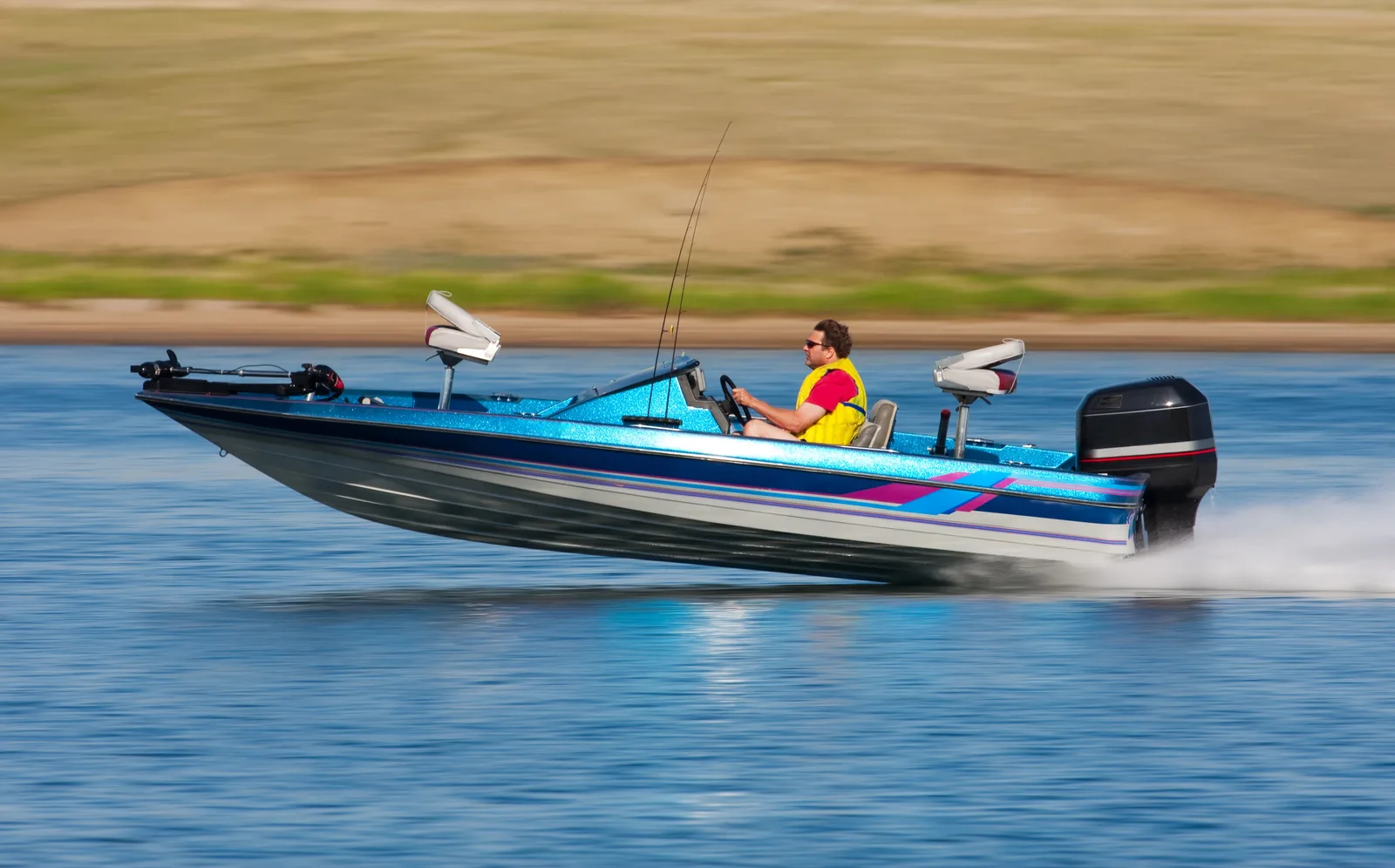 Bass Boat: What It Is, What It Costs and How Fast It Goes
A bass boat is a low, fast lake boat for two anglers. What a new one costs with motor and trailer, aluminum vs fiberglass, top speed and the rules.
Sources (22)
- Salt Water Sportsman (Alex Suescun), Field Guide to Fishing Boats: jon boat (updated Jul 13, 2022)
- Tracker Boats, jon boat lineup (2027 model year)
- Tracker Boats, Grizzly 10 Jon (2027) specifications
- Tracker Boats, Grizzly 12 Jon (2027) specifications
- Tracker Boats, Grizzly 14 Jon (2027) specifications
Show all 22 sourcesShow fewer sources
- Tracker Boats, Grizzly 15 Jon (2027) specifications
- Tracker Boats, Grizzly 1754 Utility (2027) specifications
- Tracker Boats, Grizzly 1648 SC (2027) specifications
- Lund Boats, Jon boat series (1040, 1240, 1448, 1648)
- 33 CFR 183.53, horsepower capacity
- 33 CFR 183.41, persons capacity, outboard boats
- 33 CFR 183.21, capacity information: applicability
- 33 CFR 175.15, personal flotation devices required
- 33 CFR 175.110, visual distress signals required
- 33 CFR 175.320, fire extinguishing equipment required, recreational vessels (Cornell LII)
- Discover Boating, Boat Registration Guide (updated Mar 10, 2026)
- Texas Parks and Wildlife, boat registration requirements
- Minn Kota, Motor Size selection guide (Rev. 8.21.2020)
- Bass Pro Shops 1Source, How to Choose the Right Trolling Motor
- boats.com (Charles Plueddeman), Lund vs Crestliner (Apr 9, 2011)
- Outdoor Life, Best Jon Boats of 2026
- Wikipedia, Johnboat