Fish have something real that looks a lot like feelings: a netted fish pumps out stress hormones, and a fish that watched a friend get hooked avoids the bait. One small reef fish seems to know itself in a mirror. Whether a fish feels any of that the way you feel a fright, no experiment has answered. Scientists on both sides say so.
Carp that only watched a tankmate get hooked were about 55% less catchable afterward. A fish can learn to fear a hook it has never touched.
Do fish have feelings? Yes to states, unknown to feelings
Culum Brown’s 2015 review of the science on fish minds starts with a split. “Feelings” has two halves. One half is an emotional state: a change in the body and brain that steers what the animal does next. Fear makes a fish hide. Stress makes it stop eating. Those states can be measured, and fish have them. The other half is the feeling itself, the inside view. Nobody can measure that in a fish, or in a dog. For fish it has to be inferred. Victoria Braithwaite and Culum Brown infer yes. James Rose and Brian Key infer no. Same evidence, opposite readings.
Do fish get scared?
Yes, by the body’s own measure. When a fish is chased, netted or crowded, the stress hormone cortisol floods its blood, along with sugar for a burst of energy. Cory Suski and colleagues sampled tournament largemouth bass within five minutes of weigh-in. Cortisol and glucose sat far above the levels in undisturbed bass.
A bold fear study came from Sonia Rey’s team in 2015. They netted 72 zebrafish briefly, then released them into a tank with warm and cool zones. The stressed fish swam to water about 4 to 7 °F (2 to 4 °C) warmer than the calm fish chose. Anxious mammals do the same: body temperature climbs. Rey called it “emotional fever” and argued it points to some form of consciousness.
Brian Key and colleagues answered in 2017. A stressed fish that seeks warmth, they said, may simply be speeding its recovery, a reflex with no feeling attached. Both papers passed peer review. Neither has settled it.
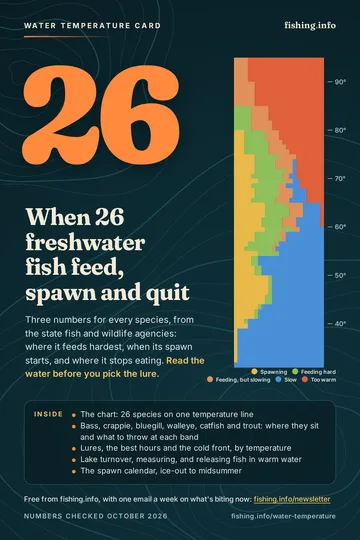
Free card: what 26 species do at your water temperature
Plus one email a week on what's biting now. No sales pitches. Privacy.
Do fish recognize themselves?
One species passes the test used on chimpanzees and toddlers. In the mirror mark test, an animal gets a mark it can only see in a mirror. If it tries to remove the mark, it has recognized the reflection as its own body. Masanori Kohda’s team gave the test to the cleaner wrasse, a finger-length reef fish that picks parasites off bigger fish. In 2019 the wrasse tried to scrape the mark off after checking the mirror. In the 2022 replication, 17 of 18 fish passed.
Kohda’s own caution matters as much as the result. His team writes that passing the test need not mean the fish is self-aware the way a person is. It may recognize its own body without any sense of “me.”
Do fish learn from each other?
They do, and the study was done on carp with a hook. Magnus Lovén Wallerius and colleagues in 2020 let some carp watch a tankmate get caught on a baited hook. The watchers were never hooked themselves. Afterward they avoided the bait, and their catchability fell by about 55% for a short time. Carp that had been caught once were harder still: 57 to 62% less catchable within two hours, an effect that held five to seven days. Fear, in a fish, can be learned by watching. How long such lessons last is the story of fish brains and memory.
Do fish feel pain?
Trout have pain receptors. Lynne Sneddon, Victoria Braithwaite and Michael Gentle found 58 on the head and lips of rainbow trout in 2003. Acid on the lips made the fish rub them on the gravel and stop feeding for about 170 minutes; morphine took the behavior away. Rose and Key reply that a receptor is not a feeling. Only 4 to 5% of a fish’s pain fibers are the slow C-fibers that carry burning pain; in mammals it is about 50%. The pain evidence carries the full argument and the survival numbers by hook location.
What did the key studies find?
| Study | What was tested | Result | The catch |
|---|---|---|---|
| Rey et al. 2015 | 72 zebrafish netted briefly, then offered warm and cool water | Stressed fish chose water 4–7 °F (2–4 °C) warmer, “emotional fever” | Key et al. 2017: a recovery reflex, not an emotion |
| Kohda et al. 2019 and 2022 | Cleaner wrasse given the mirror mark test | 17 of 18 passed in 2022 | The authors: passing need not mean self-awareness |
| Lovén Wallerius et al. 2020 | Carp that watched a tankmate get hooked | About 55% less catchable, short term; hooked carp 57–62% for 5–7 days | Shows learning, not what the carp felt |
| Sneddon, Braithwaite and Gentle 2003 | Rainbow trout lips, acid and bee venom | 58 receptors; feeding stopped for about 170 min; morphine ended it | Rose 2014, Key 2016: nociception is not pain |
| Suski et al. 2003 | Tournament largemouth within 5 min of weigh-in | Cortisol and glucose far above controls; lactate high for up to 8 h | Measures stress, not suffering |
Why does a hooked fish fight?
Not because it is angry. A fish on a line is running from something it cannot see, at full power, with a mouth it cannot open. Every run is an escape attempt, powered by white muscle that works without oxygen and piles up lactate. It is the same burn you feel in a sprint. The fish is not fighting you; it does not know you are there. The fight ends when the fish is spent, not when it gives up. That is why the length of the fight decides what happens next.
What does the stress do after you let a fish go?
The bass in Suski’s study tell the story. Cortisol and glucose are up within minutes. Lactate keeps rising for up to 8 hours and is back to normal only after about 24 hours. For a day, that fish is a marathon runner at the finish line. It swims slower, holds current worse, and is easier for a heron to catch.
Air makes it worse. In one experiment, rainbow trout were exercised to exhaustion and then held out of the water. With no air, 88% survived. After 30 seconds of air, 62%. After 60 seconds, 28%. The review by Cook, Lennox, Hinch and Cooke puts the sensible limit at about 10 seconds. B.A.S.S. livewell research, reported in AFTCO’s Bass Care 101, found that bass fought for one minute survived better than bass fought for three.
So whatever a fish feels, the practical answer is the same: short fight, short air time, quick release. The catch and release numbers show what each step is worth by species.
How do you release a fish so it recovers?
- Use tackle that ends the fight in about a minute. Match line and rod to the fish and set the drag firm. One minute of fight beat three in the B.A.S.S. livewell research.
- Unhook the fish in the water when you can. Ten seconds of air is the limit; count it out loud. Barbless hooks or crimped barbs come out faster.
- Wet your hands and leave the towel in the bag. Slime is the fish’s skin protection, and a dry grip strips it. Hold a bass by the lower jaw, a trout with a hand under the belly, and never touch the eyes or gills.
- Take the photo over the water, in one breath. Have the camera ready before the fish comes up. If it is not ready, the fish waits in the water, not on the bank.
- Cut the line on a deep-hooked fish. Across 274 published estimates, one review found hook location was the biggest killer. A hook left in the throat beats a hook dug out of it.
- Hold the fish upright, nose into the current, until it swims off. Hold it still; do not pump it back and forth. Water flowing over the gills does the work. Warm water slows recovery: 84 °F (29 °C) is the ceiling B.A.S.S. research names for a livewell.
A fish that stresses, learns and remembers also rests, which is why fish sleep in their own way. The rest of the questions kids ask are in the fish facts collection.
Free download
The water temperature card
Read your water temperature and the card tells you who is spawning, who is feeding and what to throw. 26 species, 16 pages, for your phone and the tackle box.
Plus one email a week on what's biting now. No sales pitches. Privacy.
Related
Section guide
Fish Facts: The Questions Kids Ask About Fish, Answered With the ScienceFish facts with a number and a source for each: how fish sleep, breathe, hear and feel, and what every answer means when you hook and release one.
 Do Fish Drink Water? Freshwater Fish, Saltwater Fish and Sharks
Do fish drink water? Freshwater fish barely do, saltwater fish drink all day, sharks cheat with urea. The numbers, and what it means for bait and livewells.
 Do Fish Drown? How Fish Suffocate, and How to Revive a Tired One
Do fish drown? Not by the dictionary, but they suffocate three ways: low oxygen, damaged gills, no water flow. How long a fish lasts in air, how to revive one.
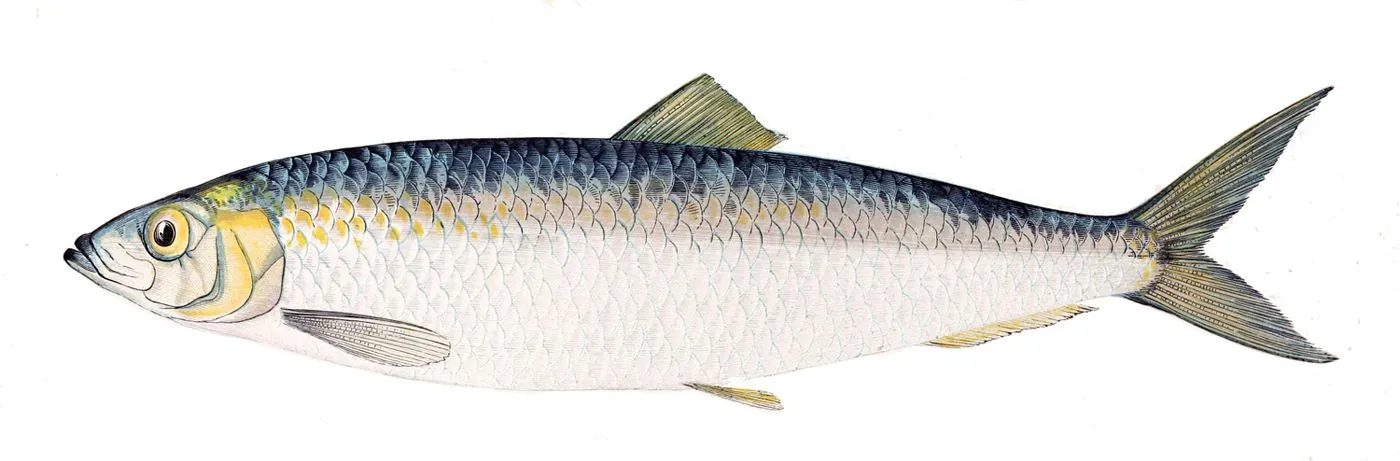 Do Fish Fart? Yes, Herring Do It on Purpose, and a Bloated Bass Needs Help
Do fish fart? Herring do, on purpose, and scientists won a prize for proving it. Which fish pass gas, where it goes, and what to do with a bloated bass.
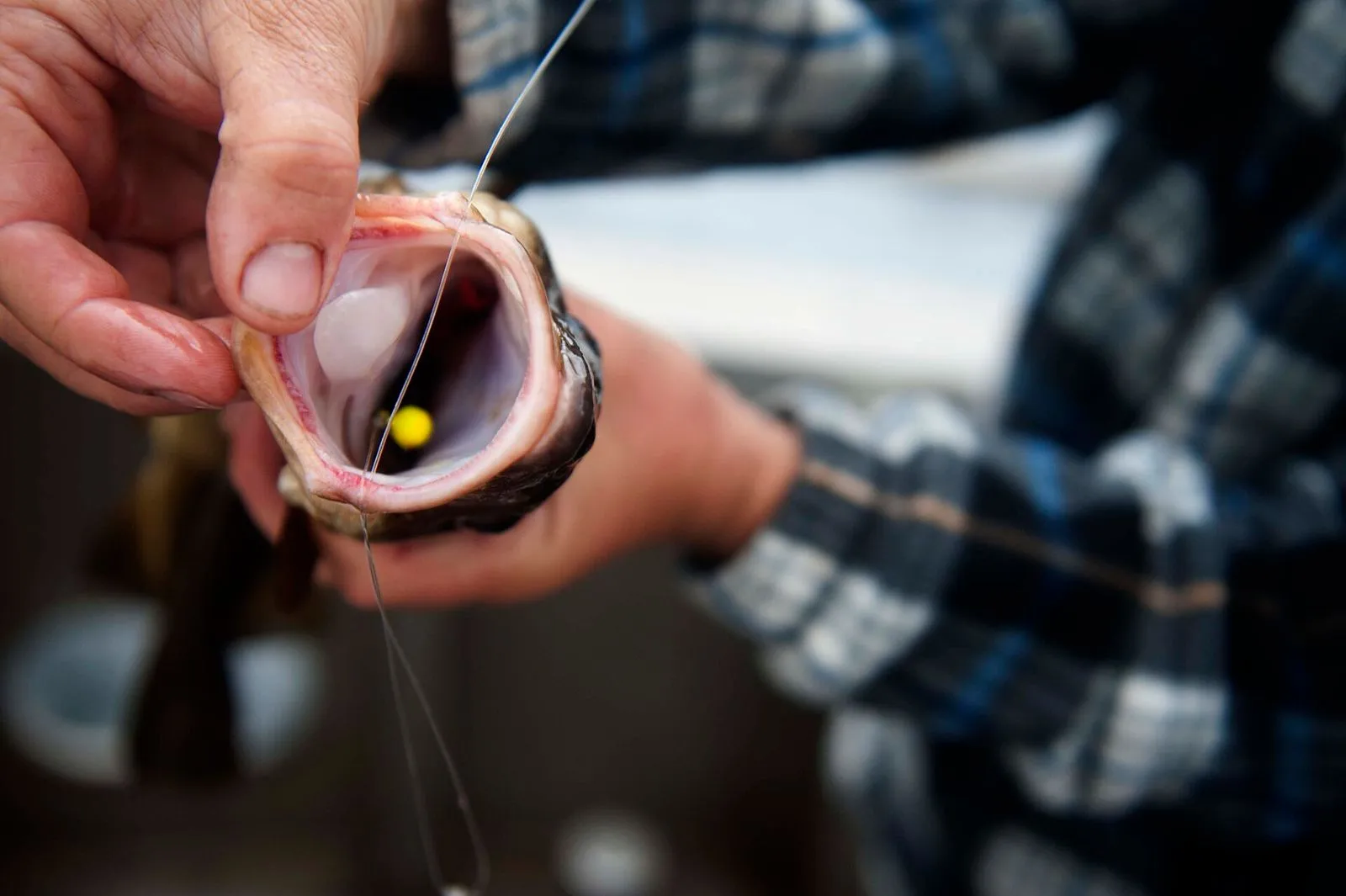 Do Fish Feel Pain? What the Studies Found, and What Decides Whether a Released Fish Lives
Do fish feel pain? They sense damage and react; whether they suffer is contested. The trout study, both camps, and what decides if a released fish lives.
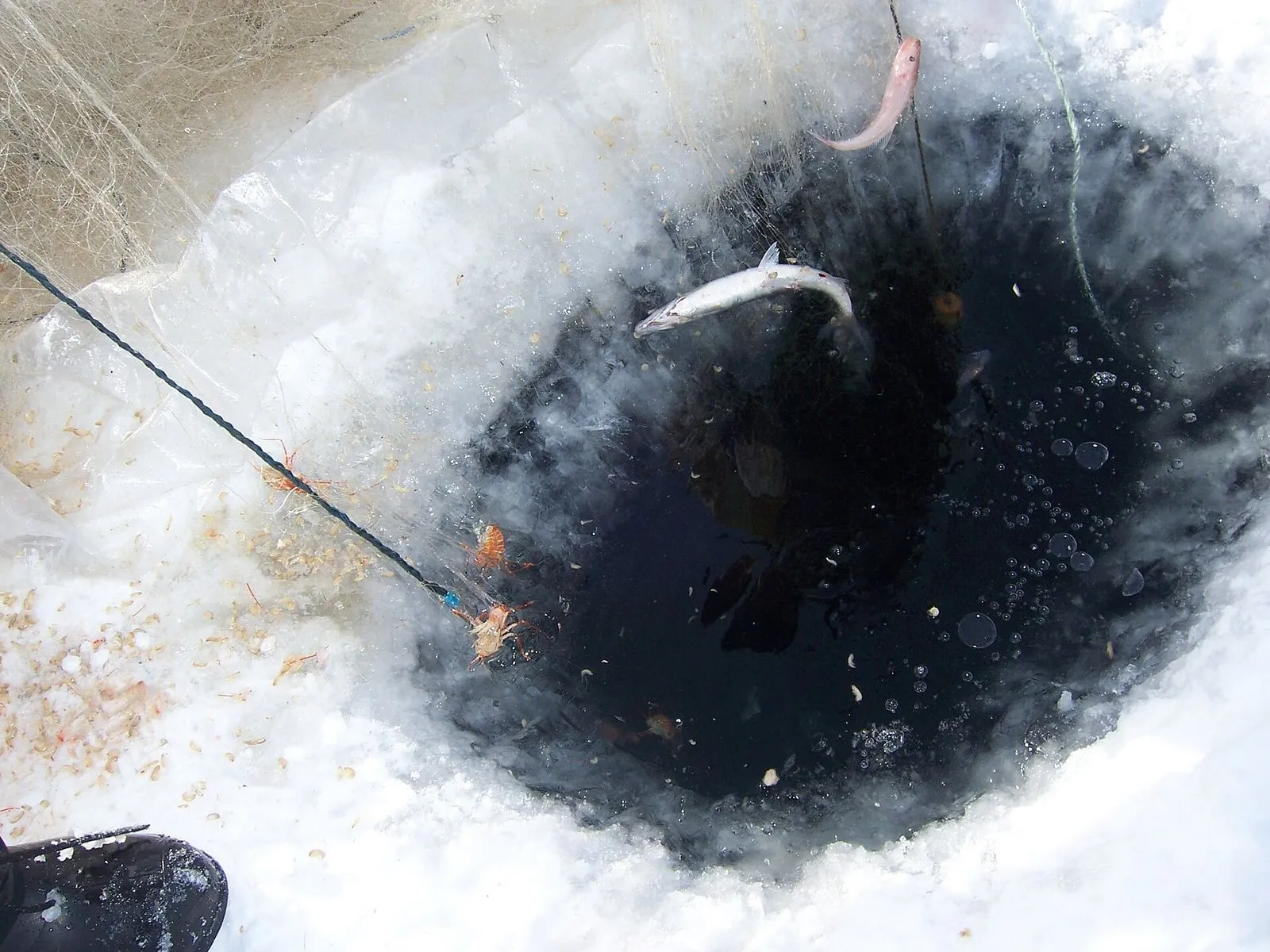 Do Fish Get Cold? What Winter Does to a Fish, and the Ones With Antifreeze in Their Blood
Do fish get cold? Yes: a fish is as cold as its water and feels it as slowness. What fish do in winter, who carries antifreeze, and how to fish cold water.
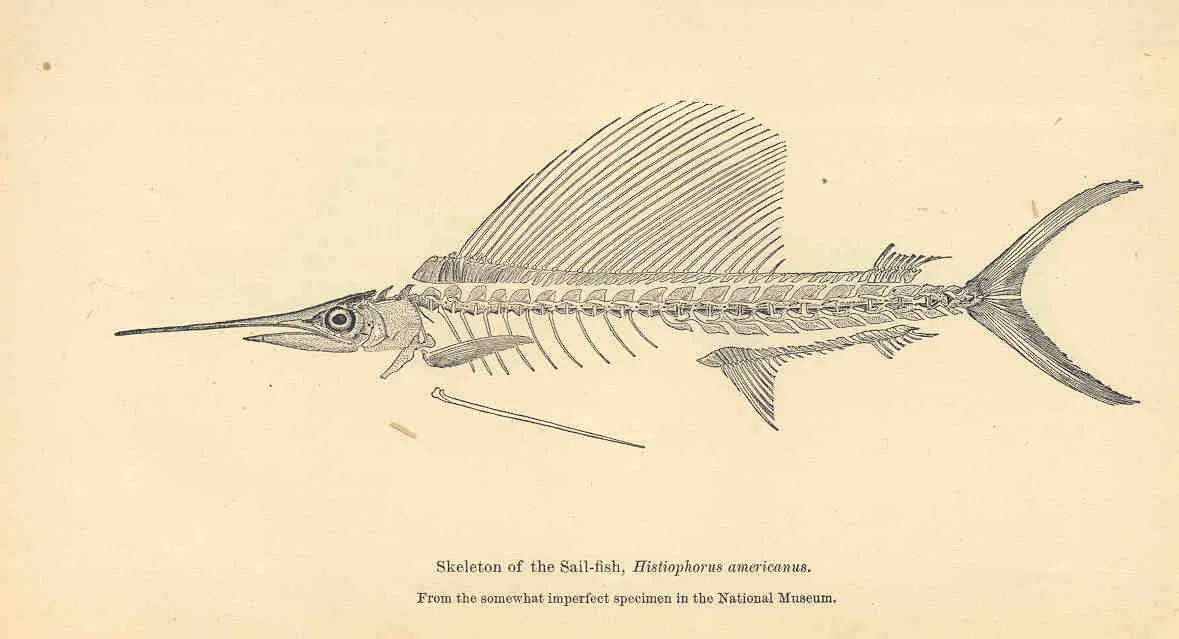 Do Fish Have Bones, Hearts and Blood? What Is Inside a Fish
Do fish have bones? Most do; sharks run on cartilage and 16 icefish have clear blood. How skeleton, heart and blood work, and what it means for your fillets.
Sources
- Brown, C. (2015), Fish intelligence, sentience and ethics, Animal Cognition
- Rey, S. et al. (2015), Fish can show emotional fever: stress-induced hyperthermia in zebrafish, Proceedings of the Royal Society B
- Key, B. et al. (2017), Fish do not show emotional fever: reply on thermal preference, Proceedings of the Royal Society B
- Kohda, M. et al. (2019), If a fish can pass the mark test, what are the implications for consciousness and self-awareness testing in animals?, PLOS Biology
- Kohda, M. et al. (2022), Further evidence for the capacity of mirror self-recognition in cleaner fish, PLOS Biology
- Lovén Wallerius, M. et al. (2020), Socially induced hook avoidance in common carp, Transactions of the American Fisheries Society
- Suski, C. D. et al. (2003), Physiological changes in largemouth bass caused by live-release angling tournaments, North American Journal of Fisheries Management
- Sneddon, L. U., Braithwaite, V. A. and Gentle, M. J. (2003), Do fishes have nociceptors?, Proceedings of the Royal Society B
- Rose, J. D. et al. (2014), Can fish really feel pain?, Fish and Fisheries
- Key, B. (2016), Why fish do not feel pain, Animal Sentience
- Braithwaite, V. (2010), Do Fish Feel Pain?, Oxford University Press
- Ferguson, R. A. and Tufts, B. L. (1992), Physiological effects of brief air exposure in exhaustively exercised rainbow trout, Canadian Journal of Fisheries and Aquatic Sciences
- Cook, K. V., Lennox, R. J., Hinch, S. G. and Cooke, S. J. (2015), Fish out of water: how much air is too much?, Fisheries
- Bartholomew, A. and Bohnsack, J. A. (2005), A review of catch-and-release angling mortality, Reviews in Fish Biology and Fisheries
- AFTCO, Bass Care 101 (B.A.S.S. livewell research)