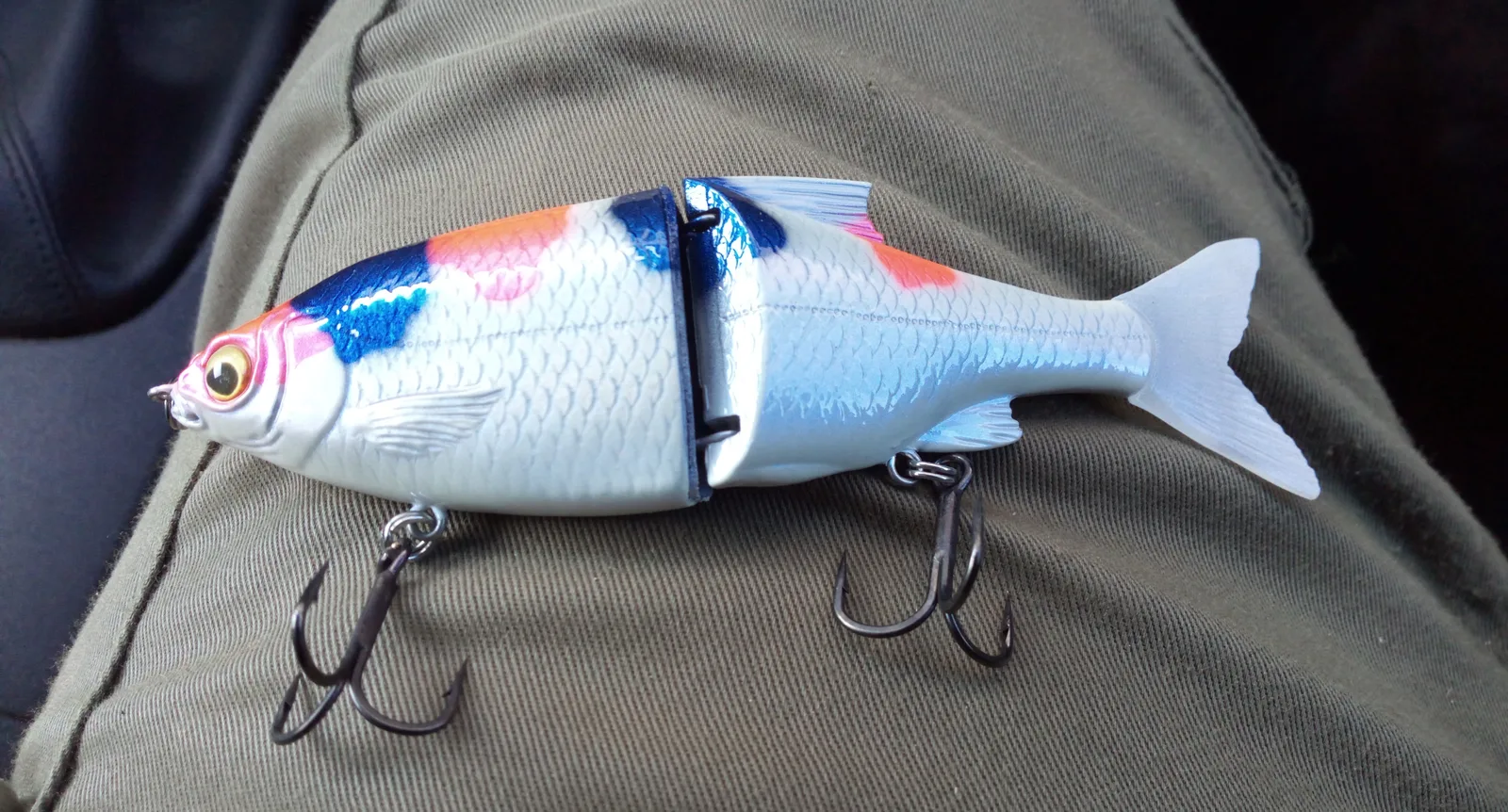
Glide baits are hard-bodied swimbaits with a single joint in the middle, and the joint is the whole design: reeled slowly, the tail section swings and the front section is pushed off line, so the bait glides a foot to the left, then a foot to the right, in a wide, lazy S that looks like a big baitfish cruising rather than fleeing. Wired2Fish’s swimbait taxonomy puts them opposite the multi-joint segmented baits, which swim with a tight wiggle; a glide bait is the one that wanders. They are thrown for the largest bass in the lake, in sizes from 5 to 12 in (13–30 cm) and at prices from $10 to $250, on rods rated in ounces, and the technique is a rhythm the Tackle Warehouse gear guide sums up in five words: pump, speed up, slow down, yank, pause. Below: how the glide works, the five retrieves and when each one works, what to do with a follower, tackle by bait weight, sink rates model by model, when a glide bait beats a swimbait, seasons and water temperature, the ladder of baits by price, and the mistakes.
A glide bait does not swim away from the bass. It wanders past, and the bass that has been following for twenty feet decides it will not get another chance.
How the glide works
The two halves are hinged so the tail can swing about ninety degrees; a slow, steady pull makes the tail kick to one side, which turns the head to the other, and the bait glides on that heading until the next pull swings it back. The width of the S depends on the speed (slower is wider) and on the bait’s shape. Wired2Fish’s beginner’s guide splits glide baits into two families by that shape: long, thin baits like the 9 in 6th Sense Draw coast 12 to 15 in (30–38 cm) to each side, because a heavy, streamlined body carries its momentum; tall, deep-bodied baits like the 7 in SPRO KGB Chad Shad stall out at about half that distance, because more face pushes against the water. The long bait is the one for drawing fish from far off on flats, points and ditches; the tall one is for aggressive fish, accurate short casts and working through laydowns, where a wide glide hangs on every limb.
The second thing the body decides is the fall. A floating glide bait rises to the surface the moment you stop; a slow-sink model keeps gliding downward on the pause, which is where the bite comes on a cold day. TackleTour timed the slow-sink Gan Craft Jointed Claw 178 at roughly a foot every one to two seconds. The Deps Slide Swimmer goes further: its soft skin peels back to a weight system you can change to set the sink rate yourself, and a tungsten ball on a spring in its throat keeps sending out pressure waves while the bait sits still.
The retrieve
- Cast long, to a point, a wind-blown bank, a bait school or a shade line, and let a sinking bait fall to the depth you want, counting it down.
- Reel slowly and steadily so the bait glides in its S; a turn of the handle every second or so on a 6:1 reel.
- Pump the rod every few glides, a short pull that snaps the bait into a wider turn, then let it settle back into the rhythm.
- Speed up and slow down through the retrieve; a burst of two fast turns then a slow glide is the change a follower eats on.
- Yank and pause. A sharp rod snap makes the bait turn to face the follower; pause a second, and set on the weight. Tackle Warehouse’s guide calls the turn the trigger.
- Never let it stall. A glide bait hanging dead in the water is a piece of plastic; keep it moving, even slowly, until it is at the boat, and work it in a figure eight there for the follower.
Butch Brown, who has more than 1,600 bass over 10 lb (4.5 kg) on record and fishes a Slide Swimmer almost exclusively, works the bait with the reel rather than the rod: a half turn or a quarter turn of the handle at a different speed gives the bait a different move each time. Here are the five retrieves that come up in every guide, and when each one works.
| Retrieve | How you do it | When it works |
|---|---|---|
| Straight slow glide | A handle turn a second; the bait wanders its full width. Wide-glide baits like a slower reel, 6.3:1 or under | Cold or lethargic fish; drawing bass from far off on flats, points and ditches; the search retrieve |
| Reel chop | Repeated half turns of the handle, a half-second stop after each; the bait scurries and darts | Aggressive fish, spotted bass in particular; tight cover with a tall-bodied bait |
| Twitch-twitch-pause | Six or seven steady turns, a pause, two short sharp twitches of the rod tip or reel; every 10 to 12 turns in open water | The bait reaching the strike zone, a laydown or the tip of a point; the first move to try on a follower |
| Burn and kill | Reel fast for a few turns, then stop dead so the bait coasts and sinks | Clear water, warm water, a reaction bite from fish that follow at speed |
| The 180 turn | A sharp snap on slack line so the bait spins nearly 180 degrees and faces the follower, then a pause | A bass a foot behind the bait; the last card before the boat |
The straight glide and the reel chop are Wired2Fish’s and Brown’s; the double twitch every six or seven turns is how Game & Fish’s Matt Little fishes cover; the burn is Mike Iaconelli’s clear-water reaction retrieve on the Nessie. In-Fisherman’s pike guides add the rule for the pauses: shorter in warm water, when the fish are aggressive, and longer in cold water, when they are not.
Followers, and how to turn them
A glide bait draws fish that will not eat, and the day is counted in followers as well as bites. Brown’s method is to watch for shadows behind and beneath the bait as it comes back: a bass tracking 10 ft (3 m) behind is probably not going to commit, but one a foot behind is the fish you snap the bait round for. A quarter turn, a twitch or a pull, anything that makes the bait do something different for a second, is what turns a follower into a bite. Tackle Warehouse’s rule for the same moment is never to let the bait stall; stretch the retrieve with a quick twitch and pause instead. Game & Fish adds that a glide bait will turn nearly 180 degrees to face a pursuer when it is stopped and twitched, which is why the 180 is the closer.
The follower that will not eat has still told you where a big bass lives. Brown uses the glide bait as a finder as much as a catcher and goes back to the fish later; Little returns an hour or two on, from a different angle or with a different bait. A weightless Senko dropped on the spot the follower turned away is the classic second cast.
Tackle
| Bait weight | Rod | Reel | Line |
|---|---|---|---|
| Under 3 oz (85 g), 5–7 in baits | 7 ft 9 in to 7 ft 10 in (2.36–2.39 m) heavy, moderate; rated to 2–3 oz, such as the Milliken Pro 7 ft 10 in at ½–2 oz | 200 size, 7.5:1 | 17 lb fluorocarbon, 20 lb near heavy cover |
| 3–7 oz (85–200 g), 7–10 in baits | 7 ft 9 in (2.36 m) extra-heavy, fast; rated 3–7 oz, such as the Milliken Pro 7 ft 9 in | 300 size, 6.3:1 | 20 lb fluorocarbon |
| 6–10 oz (170–280 g) magnums | 7 ft 11 in to 8 ft (2.41–2.44 m) extra-heavy, rated 2–10 oz; Brown’s rod is a G. Loomis 957 | 400 size with the wide spool, such as a Calcutta 400 | 20 lb fluorocarbon (Brown), or 80 lb braid to a 25–30 lb mono leader (Game & Fish) |
The rule from the Tackle Warehouse gear guide: the bait’s weight should sit in the middle of the rod’s rating, a 4 oz bait on a rod rated 2–6 oz. The two rows at the top are the outfits Wired2Fish’s beginner’s guide landed on: a 200-size baitcasting reel is plenty for a 2.4 oz Chad Shad, and the 7.5:1 ratio suits the chop, while the wider-gliding baits over 3 oz want the slower 6.3:1 so the bait has time to coast across. Tackle Warehouse’s own figure is 7:1 or faster, with the caution that a 400 reel with a big spool and a 5:1 ratio picks up as much line per turn as a smaller, faster reel; inches per turn is the honest number.
Brown’s case for fluorocarbon is that it sinks the bait, feels more and stretches less, and that mono and copolymer are stretched out by the middle of the day from casting a 6 oz lure; he never goes above 20 lb. Mono’s stretch is still the kinder choice on treble-hooked baits when a big fish jumps, which is why Game & Fish’s magnum outfit ends in a mono leader. Tie it with a loop knot or a heavy snap so the head swings free; a tight knot narrows the glide. Sharp, strong trebles, and a net.
Sink rates, model by model
| Bait | Length | Weight | Fall |
|---|---|---|---|
| Gan Craft Jointed Claw 178 | 7 in (18 cm) | 2 oz (57 g) | Floating, or slow sink at about 1 ft (30 cm) per 1–2 seconds |
| Deps Slide Swimmer 250 | 10 in (25 cm) | 6.3 oz (179 g) as tested | Slow sink, falls level; weights under the skin adjust it |
| River2Sea S-Waver 168 | 6¾ in (17 cm) | 1⅝ oz (46 g) | Sinks slowly when left alone; runs in the top foot, wakes with the rod up |
| River2Sea S-Waver 200 | 8 in (20 cm) | 3½ oz (99 g) | Same as the 168 |
| Savage Gear 3D Glide Swimmer | 5¼, 6½ and 8 in (13, 16.5 and 20 cm) | 1, 1¾ and 3 oz (28, 50 and 85 g) | Slow sink; Savage Gear sells the slow sink as room for long pauses |
| 6th Sense Flow Glider 130 | 5.15 in (13 cm) | 1.6 oz (45 g) | Slow sink; depth set by retrieve speed |
Lengths and weights are the makers’ (6th Sense, Savage Gear) and Tackle Warehouse’s listings (River2Sea, Savage Gear’s per-size weights); the Jointed Claw and Slide Swimmer figures are TackleTour’s measured reviews, since neither Japanese maker publishes an English spec page. Read the fall column as the question to ask before buying: a floating bait for grass tops and the spawn, a slow sinker for everything else, and a bait you can weight yourself for the day the fish sit at 12 ft (3.7 m) and will not come up.
When a glide bait beats a swimbait
Brown’s line is the cleanest: when the water is cold, put a soft swimbait like the Huddleston in their face; when the bass start moving, the glide bait shines. A soft paddle tail swims a straight line at any speed and sinks to the fish; a glide bait needs room to wander and fish that will come up to look. So the glide wins in 10 ft (3 m) of water or less, with at least 2 ft (60 cm) of visibility by Brown’s standard and 4 ft (1.2 m) by Little’s, over flats, points and grass where a bass can see it from a distance. A segmented multi-joint swimbait wins in stained water, where its tighter wiggle is felt rather than seen, and a soft bait wins below 50 °F (10 °C) and anywhere the fish are deep and holding tight. The swimbaits page sets all four kinds side by side.
Seasons and water temperature
Tackle Warehouse’s answer is twelve months, with spring through fall the best of it and a slow retrieve the way through winter. Brown’s comfort zone is 9 to 16 ft (2.7–4.9 m) in spring and fall, and within 6 ft (1.8 m) of the surface in summer, when he throws the bait over deep milfoil and grass pockets from noon to half past two; it is the one bait he trusts for double-digit bass in the heat. VanDam’s six-season bands put big moving baits in pre-spawn and fall, which on the bass water temperature table is the 50–60 °F (10–16 °C) staging band in spring, when the biggest females of the year sit on the first drop next to the flats, and the 65-to-55 °F (18 to 13 °C) cooling band in fall, when they chase shad into the creek arms. Above 80 °F (27 °C) the bite shrinks to shade and low light, and the glide bait goes high over grass. Stained water is segmented-bait water at any temperature.
The ladder
| Bait | Size | Price | Notes |
|---|---|---|---|
| Berkley Nessie | 5–9 in | $9–30 | A soft-tailed glide at the price of a crankbait; the beginner’s bait |
| River2Sea S-Waver 168 and 200 | 6.6 and 8 in | $10–46 | The most-fished glide bait in the country; glides well out of the box |
| SPRO KGB Chad Shad, Lil Guy | 5–8 in | About $60 | Mid-price, hand-tuned, a sharper turn |
| Deps Slide Swimmer 115–300 | 4.5–12 in | $55–250 | The Japanese reference; a soft outer skin over a hard body |
| Gan Craft Jointed Claw 70–303 | 2.75–12 in | $34–270 | The other reference; the original modern glide bait |
Prices are the gear guide’s and move. The cheap ones glide; the dear ones glide a little better, are finished by hand, and are bought by anglers who have already caught a big fish on the cheap one. Brown’s first outing with the Slide Swimmer 250, in March 2010, put four bass over 10 lb in the boat, and the bait sold for $70 to $300 on eBay before it reached American shops.
Mistakes to avoid
- Reeling steadily all the way. The change is the trigger; pump, speed up, pause.
- A rod that is too light. A 3 oz bait on a rod rated to 1 oz casts badly and breaks the rod eventually.
- A tight knot. It narrows the glide; loop knot or snap.
- Bombing a tall bait into the wind. It spins like a potato chip and twists the line; the long, thin baits are the ones for distance.
- Casting across the point instead of along it. Brown fishes parallel to the bank so the bait stays in the zone the most fish can see; a cast from deep water to the bank crosses it in seconds.
- Letting a hooked fish jump. A 6 oz lure comes out on the second jump; rod low, keep the fish coming, net it before it thrashes.
- Giving up on followers. They come back the next cast, an hour later, or on the figure eight at the boat.
- Fishing it in stained water. A glide bait is a sight bait; the segmented swimbait for mud.
Related
The swimbaits page sets the glide bait beside the soft paddle tails and the segmented baits; the soft plastics hub and the lures hub map the families. The largemouth bass page covers the fish that follows these baits, the 10 pound bass page the one they are thrown for, and the rods hub the swimbait rods that throw them.
Related
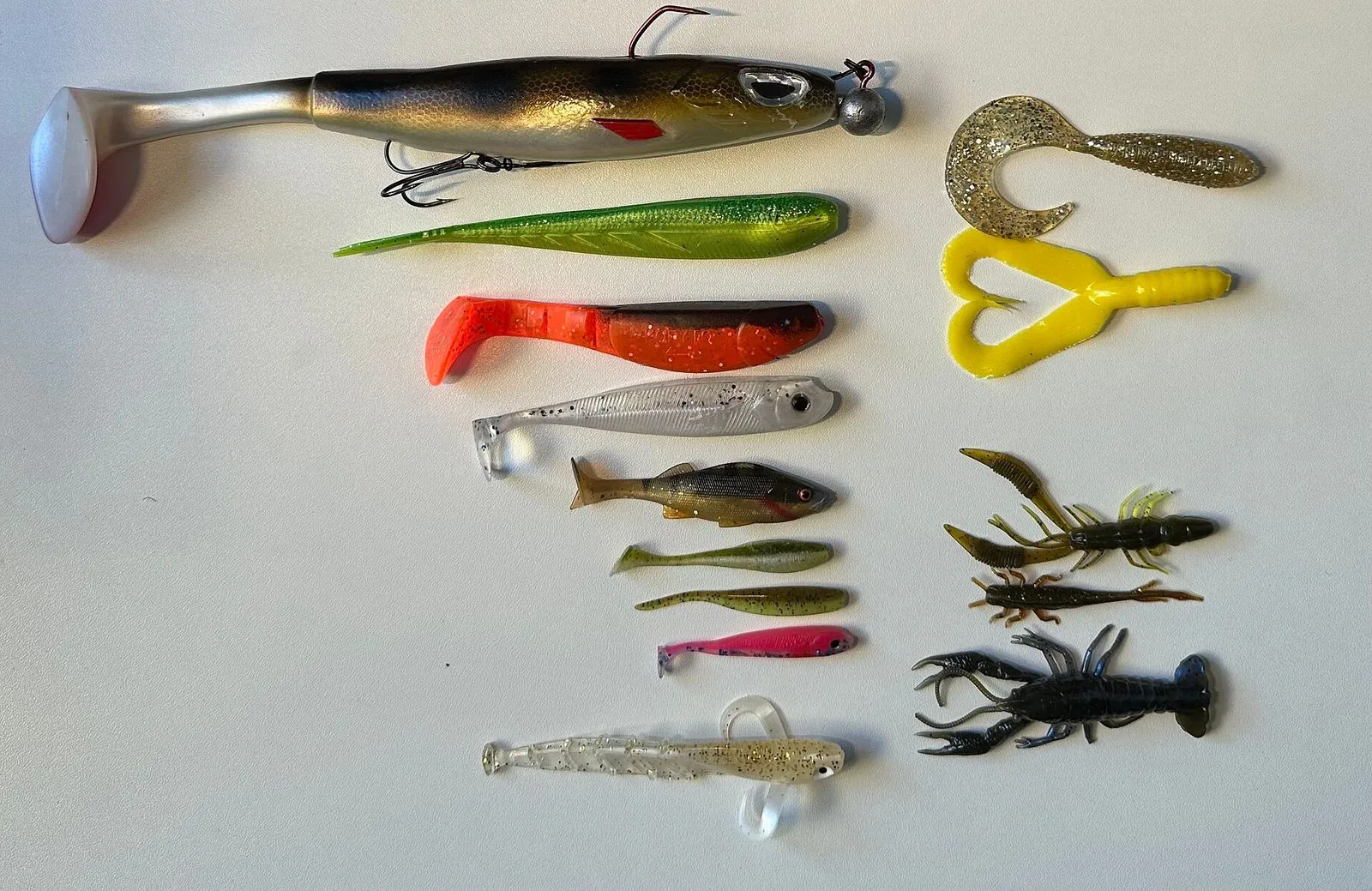
Section guide
Soft Plastic Lures: Types, Materials and How to Rig ThemSoft plastic lures from the 1949 Creme worm to today's swimbaits and glide baits: the types, what plastisol and salt do, how each is rigged, and the tackle.
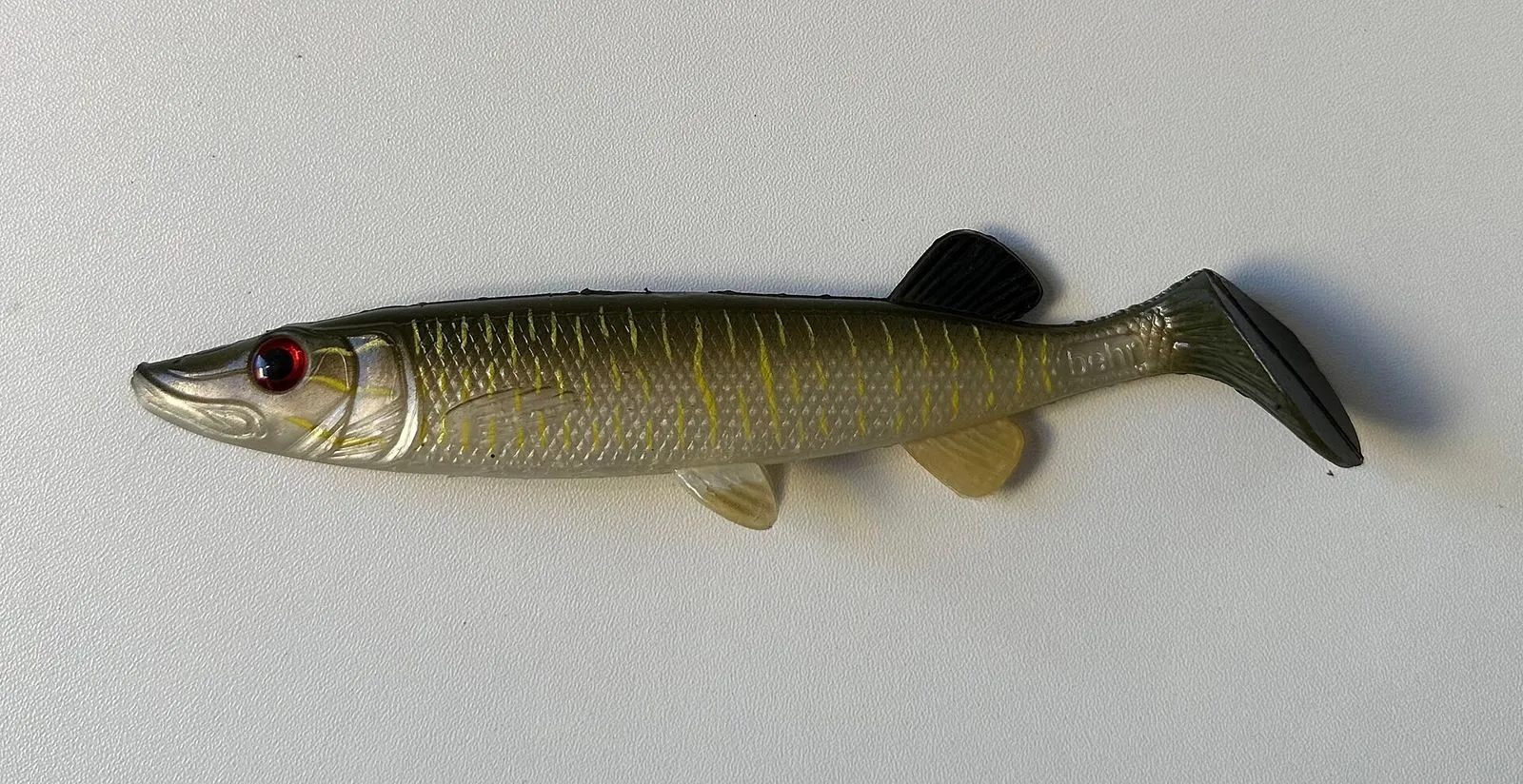 Swimbaits: Soft Paddle Tails, Glides and Segmented Baits Explained
Swimbaits by family: soft paddle tails on a jighead, hollow bellies, pre-rigged Huddlestons, hard segmented baits and glides. Sizes, rigs, rods, retrieves.
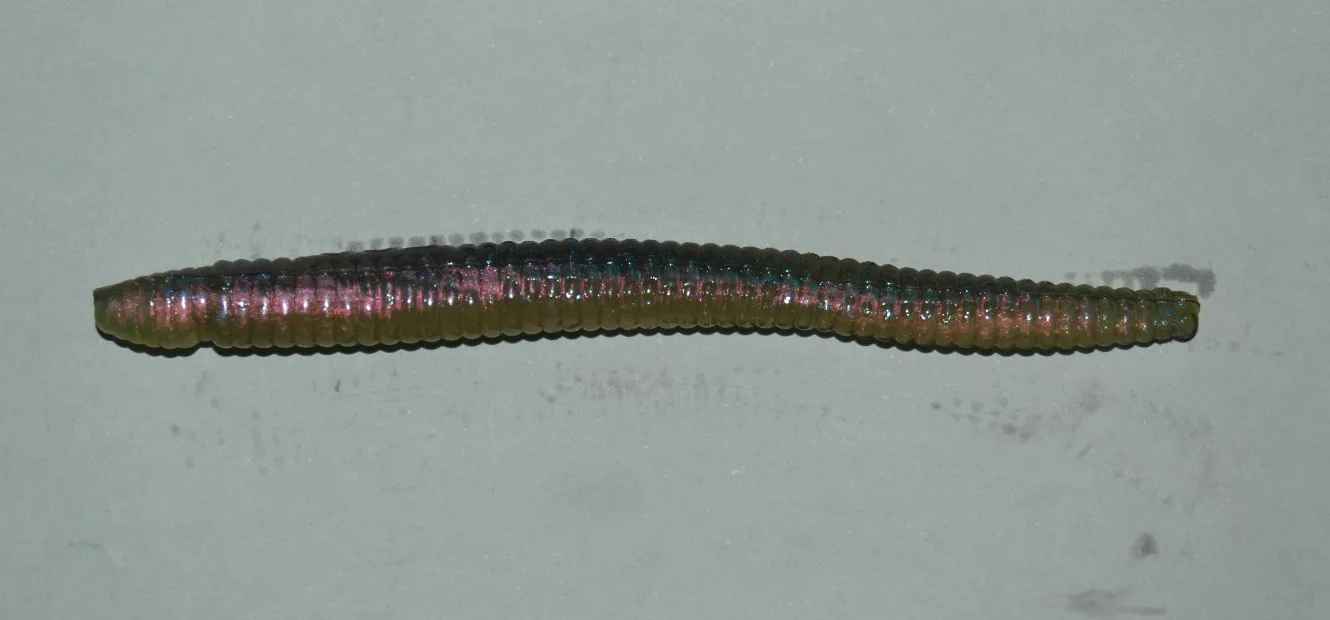 Yamamoto Senko: Why It Works and the Six Ways to Rig It
The Yamamoto Senko explained: the salt-loaded stick bait designed to fall flat and quiver, the six rigs from wacky to drop shot, the tackle and the retrieve.
Sources
- Tackle Warehouse, glide bait patterns and techniques
- Wired2Fish (Steven Slayton), best swimbaits for bass fishing
- Wired2Fish (Shaye Baker), a beginner's guide to fishing glide baits
- Wired2Fish (Jason Sealock), Butch Brown on fishing glide baits for giant bass
- Game & Fish, old-school glide baits for bass
- Mike Iaconelli, six retrieves for the Berkley Nessie
- In-Fisherman, glide bait cadence and pause length by water temperature
- 6th Sense, Milliken Pro rod series (lure and line ratings)
- 6th Sense, Flow Glider 130
- Savage Gear, 3D Glide Swimmer
- Tackle Warehouse, River2Sea S-Waver sizes and weights
- Tackle Warehouse, Savage Gear Glide Swimmer sizes and weights
- TackleTour, Gan Craft Jointed Claw 178 review
- TackleTour, Deps Slide Swimmer 250 review
- Bassmaster, KVD's 6-season bass guide