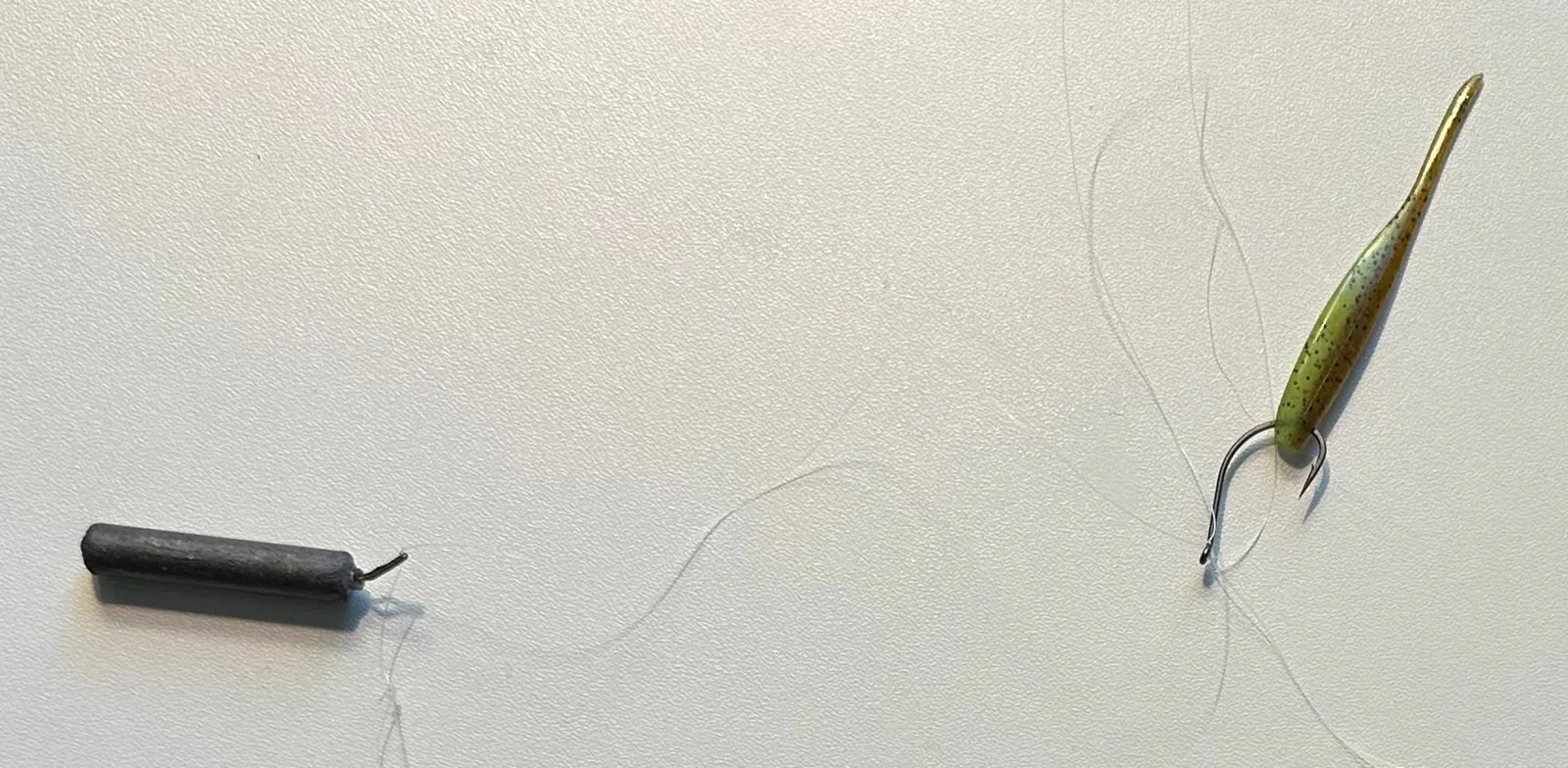
A drop shot rig turns the usual arrangement upside down: the weight goes on the end of the line, and the hook is tied 12–18 in (30–46 cm) above it. The bait hangs off the bottom, where the fish are looking. It is the finesse rig for deep, clear and pressured water, and the one tournament anglers reach for when the bite is hardest. It is also the rig that made forward-facing sonar deadly.
The weight sits on the bottom and the bait hangs a foot above it, twitching in place. Fish that will not pick anything up off the sand take that.
When is a drop shot the right rig?
Kevin VanDam’s six-season framework, set out on the bass hub, makes the drop shot a winter and summer rig. Those are the seasons when bass sit deep on vertical structure and ledges. It is also a spawn and post-spawn rig, for fish that will not chase.
The water-temperature table for bass gives the bands. Below 45 °F (7 °C) the fish are deep, and the rig is fished on the spot, as slowly as it gets. From 60 to 65 °F (16–18 °C) it goes onto the beds with a short drop and a small bait. Above 80 °F (27 °C) it goes back out to the breaks and the thermocline edge, where smallmouth stack. In the fall, Cliff Pirch fishes it for suspended fish on a 12–14 in (30–36 cm) drop: “if they’re looking up, they’ll bite it a little bit better.”
What do you need?
- A drop-shot hook, #1 or 1/0, light wire, straight eye; an octopus hook of the same size works (hooks hub).
- A drop-shot weight with a clip eye, 1/8–1/4 oz (4–7 g) to start, 1/16–1/2 oz (2–14 g) across conditions.
- A finesse bait under 6 in (15 cm): a straight-tail worm, a small stick bait, a minnow-shaped plastic (soft plastics hub).
- A 6 ft 10 in to 7 ft (2.1 m) medium-light, extra-fast spinning rod, a 2500 or 3000 reel, and 15 lb braid to a 6–8 lb fluorocarbon leader, or straight 6–8 lb fluorocarbon (rods, line).
The same rig scales to brush and grass. As Michael Iaconelli’s power-shot, it even goes into matted vegetation on a baitcaster. One principle, three sets of parts, with the hooks that Brandon Palaniuk, Kevin VanDam and Iaconelli use:
| Part | Finesse (open water) | Weedless (brush, grass) | Power-shot (heavy cover) |
|---|---|---|---|
| Hook | #2–1/0 light-wire drop-shot or octopus, nose-hooked (Palaniuk: VMC size 2) | 1/0–2/0 worm hook with a keeper, Texas-rigged (VanDam: Mustad Grip Pin) | 3/0–5/0 heavy-gauge EWG (Iaconelli) |
| Weight | 1/8–3/8 oz (4–11 g) tungsten teardrop or cylinder, clip eye | 1/4–3/8 oz (7–11 g) pencil through grass, cylinder in brush | 3/8–1 oz (11–28 g), tied on, never clipped |
| Drop, hook to weight | 12–18 in (30–46 cm) | 12–18 in; longer over submerged grass | 6–12 in (15–30 cm), to cut snags |
| Line | 10–15 lb braid to a 6–8 lb fluorocarbon leader | 15 lb braid to an 8–10 lb leader | 15–17 lb fluorocarbon; 20–25 lb in mats |
| Rod | 6 ft 10 in to 7 ft medium-light, extra-fast, spinning | the same | 7 ft to 7 ft 6 in medium-heavy casting rod |
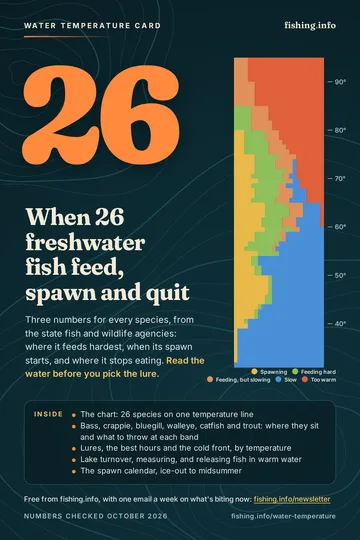
Free card: what 26 species do at your water temperature
Plus one email a week on what's biting now. No sales pitches. Privacy.
How do you tie a drop shot?
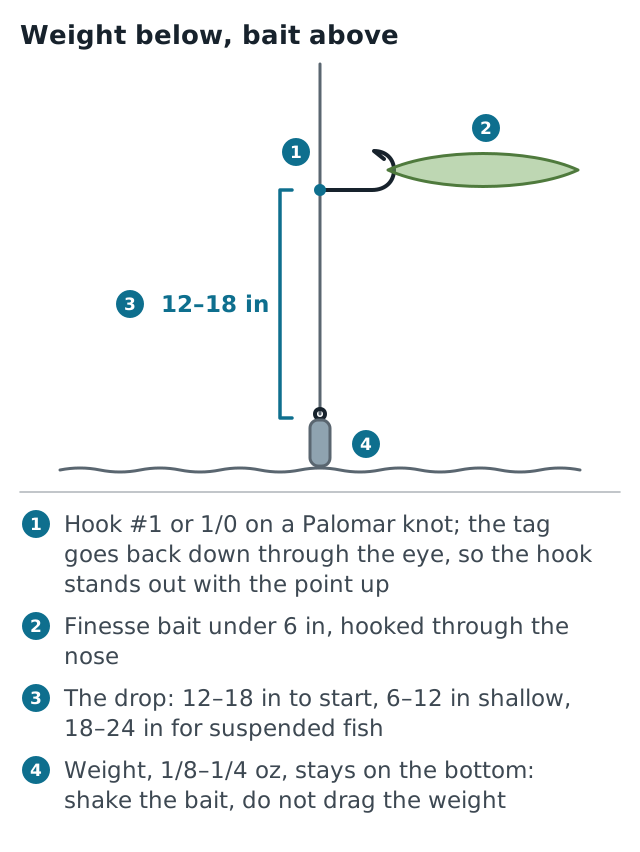
The hook above, the weight below, and the drop between them. Drawing: fishing.info.
- Cut a leader of about 4–6 ft (1.2–1.8 m) of 6–8 lb fluorocarbon if the main line is braid, and join it with an FG knot. Palaniuk runs 12–15 ft (3.7–4.6 m) of leader. On a full fluorocarbon spool, skip this step.
- Pass the line through the hook eye from the point side, leaving a tag of 18–30 in (46–76 cm) below the hook, and tie a Palomar knot. VanDam adds a No. 12 barrel swivel 2–3 ft (0.6–0.9 m) up the line against twist.
- Feed the tag end back down through the hook eye, from the point side, before you pull the knot tight. This is the trick: the hook now stands out from the line at a right angle, point up, instead of hanging.
- Set the drop length. Trim the tag so the weight will hang 12–18 in (30–46 cm) below the hook; shorter for fish on the bottom, longer for suspended fish.
- Add the weight by pinching the tag into the weight’s clip eye. The clip lets a snagged weight pull free and saves the rig. In heavy cover, tie it on instead.
- Nose-hook the bait through the tip so it hangs straight and free, or Texas-rig it lightly on a hook with a keeper if there is cover.
- Check that the hook stands out at ninety degrees and the bait is horizontal. If the hook hangs down, retie with the tag through the eye.
How do you fish it?
Let the weight reach the bottom on a slack line, then leave it where it is. Take up the slack until you feel it. Shake the rod tip with small movements so the bait quivers in place; pause; shake again. Walker Smith’s guidance is “light shakes of your rod tip” and never dragging the weight: the bait hovers, the weight stays put.
There are three ways to fish it:
- Vertical, on fish you have marked. This is Palaniuk’s deep-smallmouth program. He drops a 3¼ in bait on a size 2 light-wire hook and a 3/8 oz tungsten weight “right on top of the fish” in 40 ft (12 m), and watches the bass react on the screen. He never snaps the rod; he reels down on the bite.
- Cast and work it back. Cast past the spot, let the weight settle and shake. Then move the rig a foot (30 cm) at a time by lifting the rod, never by reeling it along the bottom. Remember VanDam’s angle: on a long cast the line slopes, and an 18 in drop holds the bait only 4–5 in up. Lengthen the drop or shorten the cast.
- Power-shot in cover. Iaconelli’s version uses a 7 ft (2.1 m) baitcasting rod, 15–17 lb fluorocarbon and a 3/0–5/0 heavy-gauge extra-wide-gap hook. A 1/2 oz (14 g) or heavier sinker and an 8–10 in worm or a Beaver get pitched into brush, under docks and into holes in milfoil. For mats he goes to 20–25 lb fluorocarbon and a 1 oz (28 g) tungsten sinker, never braid, which floats and spoils the fall. Then the same discipline: a slight bow in the line, an occasional shake without moving the sinker. In Iaconelli’s words: “Most fishermen shake a drop shot way too much.”
What does a bite feel like?
A bite is a heaviness, a slow pull or a line that goes slack. Reel down until the rod loads and lift. There is no hard hookset, because the light-wire hook penetrates on pressure.
How heavy a weight, and how long a drop?
| Conditions | Weight | Drop length | Bait |
|---|---|---|---|
| Shallow, under 10 ft (3 m), calm | 1/8 oz (4 g) | 6–12 in (15–30 cm) | 4 in straight-tail worm, small stick bait |
| 10–25 ft (3–8 m), the standard | 1/4 oz (7 g) | 12–18 in (30–46 cm) | 4½–6 in straight-tail worm |
| Deep, 25–40 ft (8–12 m), or wind | 3/8–1/2 oz (11–14 g) | 18–24 in (46–61 cm) | Minnow-shaped plastic, 3–4 in |
| Rock and rubble | Bell or teardrop weight, 1/4 oz (7 g) | 12–18 in | Craw or worm; Texas-rig the hook |
| Suspended fish on sonar | 1/4–3/8 oz (7–11 g) | 18–36 in (46–91 cm) | Minnow plastic; hold it in front of the fish |
| Smallmouth on clear flats | 3/16–1/4 oz (5–7 g) | 12 in (30 cm) | Green pumpkin or natural worm, 4 in |
| Current | One size heavier | 12 in (30 cm) | Compact bait |
The rule for the drop: match it to where the fish are holding above the bottom. On sonar that is a measurement. Without it, start at a foot and lengthen when bites stop. The pros’ own numbers, with who gives each:
| Situation | Drop | Who says so |
|---|---|---|
| Vertical over marked fish | 6–12 in (15–30 cm), so bait and weight arrive together | Mystery Tackle Box |
| Bed fish, dirty water | Short; shortened from his 10–12 in standard | James Niggemeyer |
| Northern lakes, bass eating crawfish | “Very short,” the fish feed on the bottom | VanDam |
| A long cast into 10 ft (3 m) | 18 in (46 cm) of line leaves the bait only 4–5 in (10–13 cm) up, because of the line angle; lengthen it | VanDam |
| Clear-water smallmouth | Long, so more fish can see it | VanDam, Niggemeyer |
| Great Lakes goby bottoms | 24 in (61 cm) “greatly reduces the amount of goby bites” | Mystery Tackle Box |
| Suspended bass on forward-facing sonar | 6–8 in (15–20 cm) on a 1/16–1/8 oz weight, swum at their level | Marcantonio, Western Bass |
Which weight shape, and why tungsten?
Walker Smith’s rule stands: cylinder weights are the stealthiest and the most snag-prone, round weights do everything adequately, and bell weights hold on rock. Palaniuk uses tungsten teardrops exclusively, for snag resistance and for how they telegraph the bottom. He runs them from 1/8 oz in the shallows to 3/8 oz in 40 ft (12 m). VanDam takes a pencil weight through grass and tungsten on rock and shell, where it “clicks” and fishes a size lighter. A smaller lump for the same weight snags less and tells the hand more.
Which bait goes on it?
Nose-hooking out-fishes weedless rigging, and every pro quoted here agrees: the bait stays free and moves on its own. Palaniuk brings the point in through the bottom of the nose and out the top, so the bait sits in line with the shank. He fishes a 2–4 in bait when the fish want little, and threads a 6–7 in worm on a Neko-style hook when they want a meal. VanDam wants “few legs or appendages” and a tail that quivers.
| Bait | Length, pack | What it is for |
|---|---|---|
| Roboworm Straight Tail Worm | 4½ and 6 in, 10 per bag | The West Coast standard, drop shotting first in the maker’s list of rigs; a salt burst on the bite makes fish hold on. Roboworm calls Aaron’s Magic “the top selling color in soft plastic history” |
| Zoom Finesse Worm | 4½ in, 20 per pack | A slim, salt-impregnated small Trick Worm; twenty to a pack, the one to learn on, and it rigs on a shaky head too |
| Strike King KVD Dream Shot | 4 in (also 5 in), 10 per pack | Flat bottom, hinged tail that moves on the slightest twitch; VanDam’s and Niggemeyer’s first choice |
| Z-Man Finesse ShadZ | 4 in, 8 per pack | Buoyant ElaZtech minnow that stands up off the hook, “10X tough” by Z-Man’s claim; the minnow shape for fish on the screen |
| Berkley PowerBait MaxScent Flat Worm | 4¼ in, 8 per pack | Scented, flat-bottomed, falls nose first; Berkley’s own recommendation is a drop-shot hook |
Which rod, reel and line?
St. Croix sells the drop shot rod as a specialist. Its Mojo Bass series carries a 6 ft 10 in (2.08 m) medium-light extra-fast spinning model named Dropshot Finesse, rated 6–20 lb line and 1/16–3/8 oz lures. Palaniuk fishes one rod, a 6 ft 10 in Alpha Angler DSR, with a Daiwa Exist 3000 and 15 lb Seaguar Smackdown braid. His leader is 6–12 lb fluorocarbon, 6 lb in the clearest water. Skeet Reese refuses a 4/0 or 5/0 hook on 8 lb line: “you’re going to lose 70 to 80 percent of the bites you get.”
Where did the drop shot come from?
Japanese tournament anglers worked it out in the 1990s, on lakes where the bass had seen everything. James Niggemeyer’s history column for Major League Fishing tells the California side. In the early 1990s, Southern California fished Don Iovino’s doodling rig and the split-shot rig. The drop shot, “definitely a Japanese development,” arrived through Aaron Martens in the mid-1990s, and “it was like no one threw a split shot or doodled anymore.”
There were no drop-shot weights to buy. Niggemeyer crimped 1/4 oz split shot onto No. 14 barrel swivels and tied his line to the swivel.
With forward-facing sonar
Niggemeyer’s friends in the 1990s spun the console graph around to watch fish pass under the boat, and dropped on them. Forward-facing sonar made that the standard tournament way to fish the rig. Marc Marcantonio’s “DropSwimming,” written up in Western Bass, is what the screen made possible. He puts a minnow bait on a #2 or #4 Gamakatsu G-Finesse hook, with a 1/16–1/8 oz weight and 6–8 in (15–20 cm) of drop. Cast past a suspended bass and let it sink to the fish’s level. Then shake and reel slowly, so the bait swims just above the fish’s nose.
Mistakes to avoid
- Dragging the weight. It pulls the bait to the bottom, and the rig fishes like a Texas rig. Shake in place.
- Hook tied without the tag back through the eye. It hangs down, the bait fouls the line, and hookups suffer.
- Heavy line. 12 lb fluorocarbon on a drop shot kills the bait’s movement and the fish see it; use 6–8 lb, or braid to a light leader.
- A stiff rod, or a big hook on light line. A medium-light with a soft tip shakes the bait without moving the weight; a 4/0 hook on 8 lb line loses most of the bites.
- Too much action. The most common error is working it like a jig. Less is more; the bait moves on its own.
When does another rig win?
The Ned rig sits the bait on the bottom instead of above it, for fish feeding down, and the shaky head does the same with a bigger worm. For spawning bass in a few feet of water, the wacky rig is the choice.
When the fish are chasing, the moving baits on the jerkbait and crankbait hub cover more water. The drop shot also catches walleye, crappie, perch and inshore fish; the hook sizes scale up with the bait, and the other finesse rigs are on the rigs page.
Free download
The water temperature card
Read your water temperature and the card tells you who is spawning, who is feeding and what to throw. 26 species, 16 pages, for your phone and the tackle box.
Plus one email a week on what's biting now. No sales pitches. Privacy.
Related
Section guide
Fishing Rigs: Texas, Carolina, Drop Shot, Ned and WackyFishing rigs explained: the Texas, Carolina, drop shot, Ned and wacky rigs, the weight for each depth, and which rig fits which cover and fish.
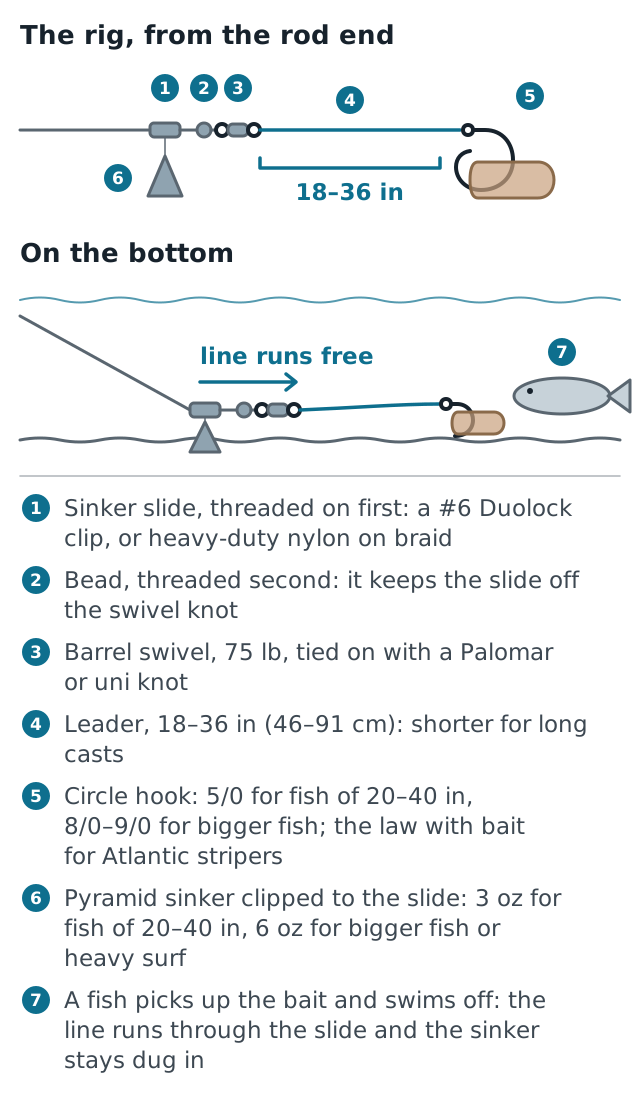 Fish Finder Rig: How to Tie It, Sinker Weights and Leader Length
How to tie a fish finder rig for the surf in seven steps, a size for every part, sinker weight by surf, leader length, and when a circle hook is the law.
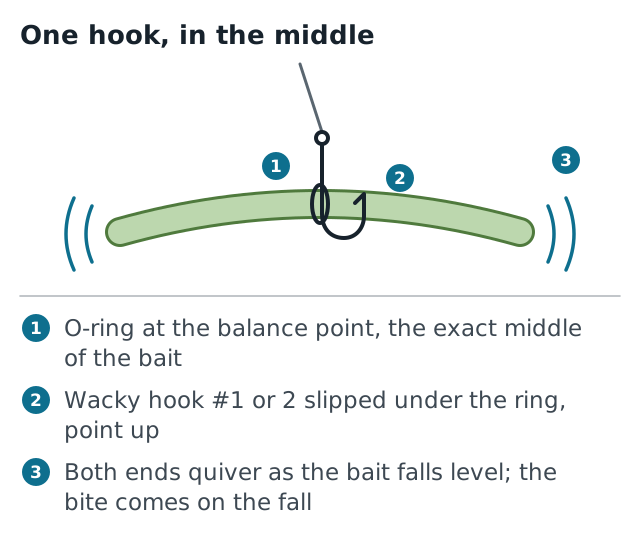 Wacky Rig: How to Rig It, and When It Beats a Texas Rig
The wacky rig hooks a stick bait through its middle so both ends quiver on the fall. The O-ring method, hook and line, weightless or weighted, when to use it.
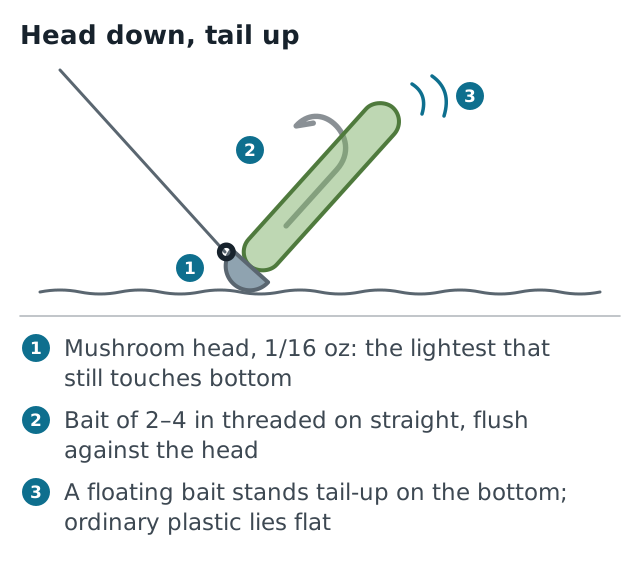 Ned Rig: How to Fish It, the Right Jig Head and Where It Came From
The Ned rig: a 2–4 in buoyant bait on a 1/20–1/5 oz mushroom head, the heads and baits in tables, six retrieves, the tackle, and the 2006 day it began.
- Carolina Rig: How to Tie It, Leader Length and When to Use It
How to tie a Carolina rig, every part with its size, the leader by season and clarity, five baits, the drag-and-sweep retrieve, and when a Texas rig is better.
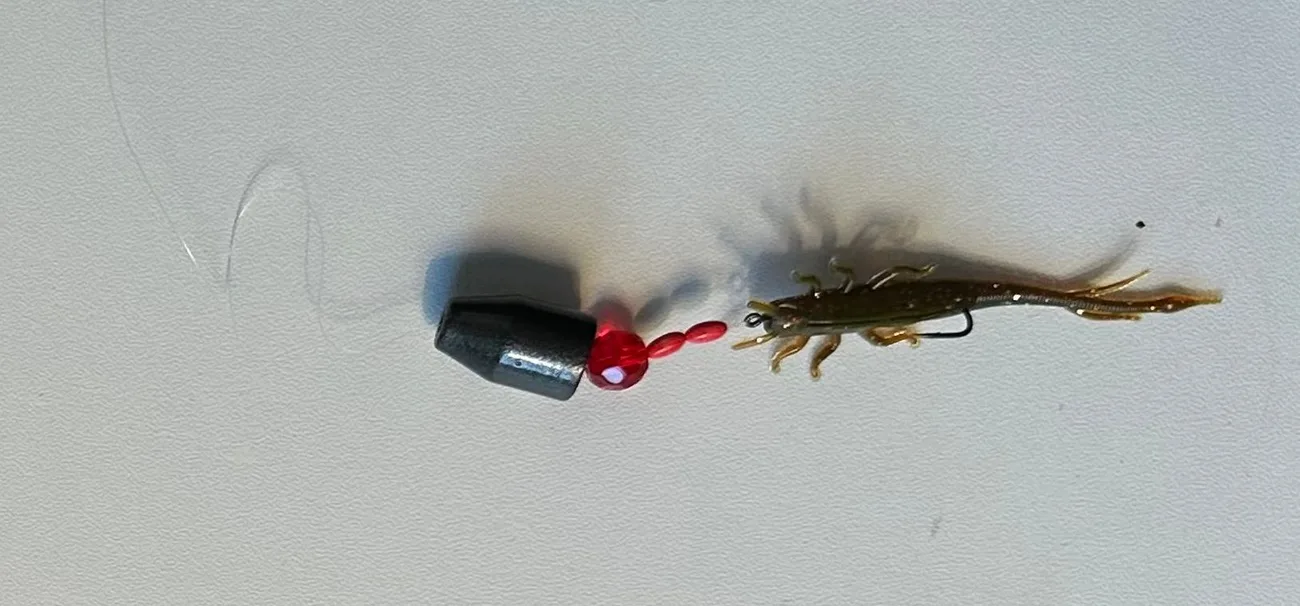 Texas Rig: How to Rig It, Which Weight and Hook, and How to Fish It
How to tie a Texas rig, which bullet weight and hook to use by depth and cover, how to fish it slowly on the bottom, and where the rig came from.
Sources
- Wired2Fish (Walker Smith), Drop shot rig fishing and rigging tips
- Wired2Fish (Ryan DeChaine), Best drop shot rig setups: Palaniuk's A-list
- Major League Fishing (James Niggemeyer), The history of the drop-shot
- Bassmaster (Kevin VanDam), Rigging considerations for drop shotting
- Bassmaster, Drop shot tips from the pros (Palaniuk, Lucas, Reese)
- Bassmaster (Michael Iaconelli), Drop shotting with power
- Bassmaster, KVD's 6-season bass guide
- Tackle Warehouse, Drop shot gear guide
- Tackle Warehouse, Power shot gear guide
- Mystery Tackle Box, How long should my drop shot leader be?
- BassResource (Cliff Pirch), Drop shotting in the fall for suspended fish
- Western Bass magazine, winter 2024 (Marc Marcantonio), Enhancing forward facing sonar
- Mossy Oak, Brandon Palaniuk's drop shot for deep smallmouth
- Western Outdoor News, Rigs: Brandon Palaniuk's drop-shot outfit
- St. Croix, Mojo Bass spinning rods (JOS610MLXF spec row)
- Roboworm, Straight Tail Worm
- Zoom Bait Company, Finesse Worm
- Strike King, KVD Dream Shot
- Z-Man, Finesse ShadZ
- Berkley, PowerBait MaxScent Flat Worm
- On The Water, Drop-shot bass basics
- Wikipedia, Dropshotting