The Texas rig is a soft plastic bait on a worm hook with a bullet-shaped weight sliding on the line in front of it, rigged so the hook point is tucked back into the plastic. That last detail is the whole invention: the rig slides through grass, brush and laydowns that would snag any exposed hook, and the point clears the plastic on the hookset. It is the most used bass rig in the country and still the one that wins: at the 2025 Bassmaster Elite event on Lake Tenkiller, six of the final ten anglers were fishing a Texas-rigged soft plastic. Below: how to rig it, which weight and hook for the water in front of you, how to fish it, and where it came from.
Bury the hook point back into the plastic and the rig slides through grass, brush and laydowns that would snag any exposed hook. That one detail is the whole invention.
What you need
- A bullet weight, 1/16 to 2 oz (2–57 g), in lead or tungsten. Tungsten is smaller for the same weight and, in Wired2Fish’s words, transmits bottom contact “a lot better than lead”; it costs more.
- A worm hook: an offset round-bend hook for straight and ribbon-tail worms, an extra-wide-gap (EWG) hook for bulkier creature baits, craws and beaver-style baits, where more plastic has to clear the gap on the hookset. Sizes 3/0–5/0 for most baits; the hooks hub covers the shapes.
- A soft plastic: a 6–10 in worm, a creature bait, a craw or a stick bait. The soft plastics hub lists the families.
- A bobber stop or rubber peg, optional, to fix the weight against the bait in heavy cover.
- A 7 ft to 7 ft 3 in medium-heavy casting rod with a fast tip, a 7:1 baitcaster and 15–20 lb fluorocarbon, or 40 lb braid to a 12–17 lb leader in cover; the rods and line hubs explain the choices.
How to tie a Texas rig, step by step
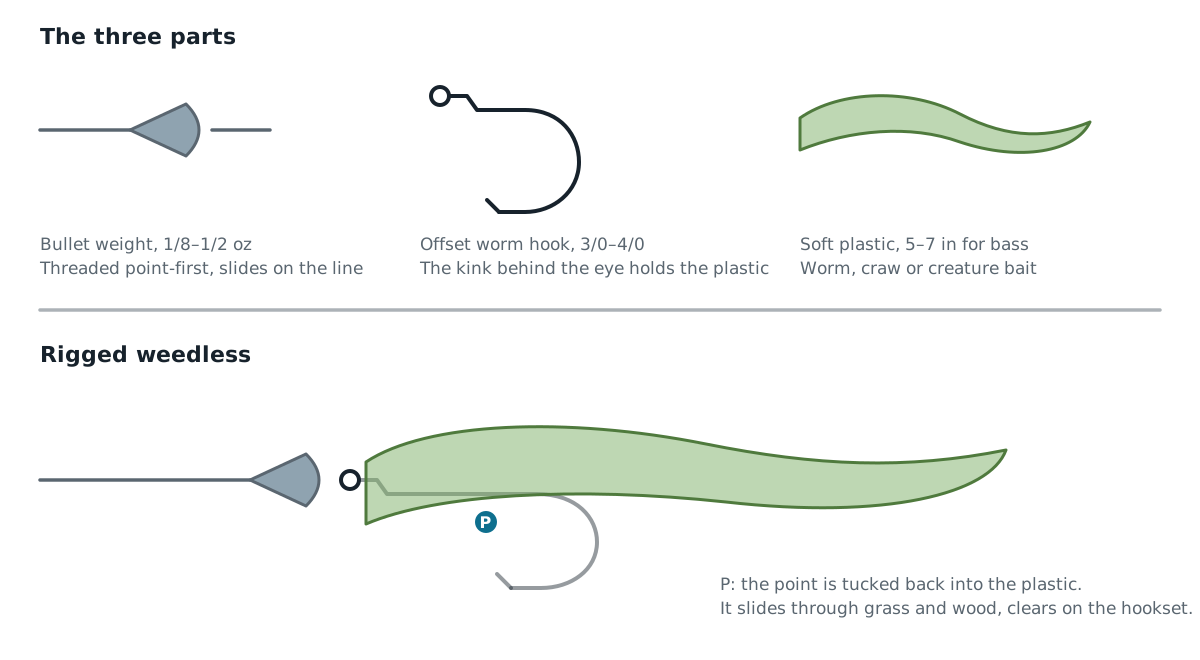
The three parts, and the finished rig with the point buried. Drawing: fishing.info.
- Thread the bullet weight onto the main line, point first, so the narrow end faces the rod tip. Add a bobber stop above it if you want the weight pegged.
- Tie on the hook with a Palomar knot, wetted before it is pulled tight.
- Enter the nose. Push the hook point into the center of the bait’s nose and bring it out through the side about 1/4 in (6 mm) down.
- Slide the bait up over the bend and onto the hook’s elbow or bait keeper, then turn the hook so the eye sits in the nose of the bait and the bait hangs straight.
- Lay the hook along the bait to find where the point will re-enter, so the plastic sits straight with no bow; a bowed bait spins on the retrieve.
- Push the point back into the body, straight through, and either leave it just under the skin (“tex-posed”, for open water and better hookups) or bury it a fraction below the surface for thick cover.
- Check it hangs straight and swims true on a short cast; re-rig if it twists. Repeat step 3 a little lower if the bait sits crooked.
Choosing the weight
Bassmaster’s weight-selection guide is the table most anglers work from. The rule behind it: the lightest weight that keeps contact with the bottom, and heavier when depth, cover or wind takes that contact away.
| Situation | Bullet weight | Why |
|---|---|---|
| Finesse baits, stick baits, slow fall | 1/32–1/8 oz (1–4 g) | The fall is the presentation |
| Shallow water, 5 ft (1.5 m) or less | 1/8 oz (4 g) | Enough to feel the bottom without killing the action |
| Around 20 ft (6 m) | 1/4, 5/16 or 3/8 oz (7–11 g) | Reaches the bottom on a cast |
| Deeper than 20 ft, or dragging big worms | 1/2 oz (14 g) | Contact at depth |
| Stroking a worm off the bottom | 1/2–3/4 oz (14–21 g) | Weight gives the lift-and-fall its speed |
| Sparse cover | 1/2 oz (14 g) | Pegged, so weight and bait stay together |
| Matted grass, moss, hydrilla canopy | 1–2 oz (28–57 g), pegged | Punches through the mat to bass underneath |
| Wind | One size heavier than the depth calls for | Line bowed by wind hides the bite |
Peg the weight in heavy cover so weight and bait go through the same hole; leave it free in open water so the bait can fall on a slack line while the weight sits still, which is when a lot of bites come.
How to fish it
The Texas rig is fished on the bottom and slowly; Virginia’s wildlife agency puts it in one line, “the Texas rig is best fished using a slow retrieve”. Cast past the target, let the rig fall on a semi-slack line and watch the line as it sinks, because bites on the fall show as a tick or a line that jumps sideways. Then work it back with the rod, not the reel: lift the tip to drag or hop the bait a foot, lower the tip and reel up the slack, pause, repeat. In grass, pull it through the stalks and let it fall into the holes. On a laydown, pitch it to the trunk and let it fall down the branches. Bites feel like a tap, a mushy weight or line moving off; reel down until the rod loads and set the hook with a firm sweep, because the point still has to clear the plastic. The jigs and rigs hub sets the Texas rig beside the Carolina rig, the Ned rig and the drop shot, each with its season.
Mistakes to avoid
- The bait rigged crooked. It spins, twists the line and looks wrong. Re-rig until it hangs straight.
- Too much weight. The bait falls like a stone and the bite disappears with it. Go lighter until you lose contact, then one size heavier.
- Reeling the retrieve. The rod moves the bait; the reel only takes up slack.
- Burying the hook too deep. In open water leave the point just under the skin, or the hookset never clears the plastic.
- A hook too small for the plastic. A 4 in worm takes a 2/0–3/0, a 7 in worm or a creature bait a 4/0–5/0; the gap has to hold the plastic and still bite.
When to use something else
A Carolina rig covers water faster and drags the bottom on flats; a shaky head or a Ned rig gets bites in clear, pressured water where the Texas rig is too much; a jig with a craw trailer is the same idea with a skirt and a bigger profile for flipping. All of them are on the jigs and rigs page. When bass are chasing moving baits in pre-spawn and fall, the chatterbait and spinnerbait hubs cover the alternatives.
Where it came from
The plastic worm came first. Nick and Cosma Creme molded the first one in their Akron, Ohio, basement in 1949 and sold the six-inch Wiggle Worm by mail from 1951. Texas anglers, fishing the flooded timber of new reservoirs, learned to rig it weedless with the hook back in the body, demand in Texas exploded in 1959, and Creme opened a plant in Tyler, Texas, within the year. Nobody’s name is attached to the rig itself; the state’s is.
Sources
- Wired2Fish, The Texas rig: how to rig and fish
- Bassmaster, The Texas rig part 3: weight selection
- Virginia DWR, Try throwing a Texas rig
- Texas Parks & Wildlife magazine, Plastic worm inventor changed bass fishing
- Bassmaster, Best of 2025 Elite Series top lures
- Tactical Bassin, Best fishing line: braid, mono or fluorocarbon